
Resveratrol Powder Benefits: What Makes It So Popular?
Resveratrol Powder is now one of the most popular natural substances in the world B2B market, and for excellent reasons. It is used by beauty businesses, pharmaceutical corporations, and nutraceutical producers to develop new product lines. It is a polyphenol predominantly isolated from Japanese knotweed (Polygonum cuspidatum) and grape skins, and its antioxidant profile corresponds to what the market demands today: natural support for anti-aging and cardiovascular health [1,3]. There are three reasons why resveratrol powder stays on procurement wish-lists: scientifically proven benefits, formulation stability and wide application across industries. It is no longer a niche choice for manufacturers looking for a dependable active ingredient. It has become a basic raw material.
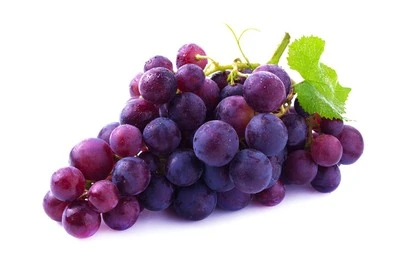
Botanical source: Polygonum cuspidatum Sieb, Grape
Other Names: trans-3,4,5-trihydroxystilbene
CAS NO.: 501-36-0
Specs Available: 50%, 98%, 99%(HPLC)
Part of used: Root
Appearance: White to off-white fine powder
Molecular Weight: 228.24
Molecular Formula: C14H12O3
MOQ: 500G-1KG
Inventory: in stock
Customized service: Support adjusting purity (50%-99%) according to customer needs
GMP standard production lines.
Payment: 100% TT in advance
Certificaions: FSSC2000/ISO2000/HALAL/KOSHER/HACCP
Delivery terms: FedEx, DHL, EMS, UPS, TNT, all kinds of the airline, international shipping companies.
Free sample is available.
We do not sell retail quantities to individuals.
Understanding Resveratrol Powder and Its Core Benefits
Resveratrol (C14H12O3) is a natural polyphenol of the transstilbene family. It is obtained for industrial usage mainly from the roots of Polygonum cuspidatum and the skins of grapes. It may be in the form of cis- and trans-isomers, and the trans-configuration is the configuration of choice, since it has superior bioactivity and stability [4].
The Science Behind Resveratrol's Effectiveness
Trans-resveratrol molecule interacts with several biological processes. Two of the most researched are SIRT1 activation and regulation of the signaling by NF-κB [1]. High-purity resveratrol promotes cellular health by scavenging free radicals and activating what researchers call healthy-aging pathways [1,3]. And for nutraceutical and cosmetic formulators, these processes are precisely what make the substance valuable in skin-health and lifespan products.
Key Benefits for Product Development
The key attraction for product teams is antioxidant performance. The free-radical-scavenging action of resveratrol is well reported and is comparable to that of standard polyphenol antioxidants [6]. One molecule improves skin appearance, cardiovascular health and healthy aging simultaneously, allowing formulators to position a single SKU across several market sectors – anti-aging skincare, heart-health supplements and longevity formulations – without sourcing numerous actives [3].
Bioavailability and Formulation Considerations
Pure resveratrol has poor water solubility that has hindered absorption in the past [2,4]. This deficit has been substantially overcome by micronization and encapsulation technologies that improve bioavailability by lowering particle size and associating the drug with tailored delivery systems [2]. The upshot for manufacturers: completed goods require a lower effective dosage, and formulators may achieve label claims with less active ingredient.
Comparing Resveratrol Powder Options for Procurement
There are a number of procurement considerations that need to be made with specifying resveratrol, and each one impacts finished-product quality, regulatory compliance, and manufacturing efficiency. Knowing the differences will allow you to choose material that will work in your production line and in your market position.
Purity Grades and Their Applications
Commercial resveratrol is sold in several purity grades, each suited to specific applications and regulatory frameworks. The main B2B categories are:
- Pharmaceutical-grade resveratrol (≥99% purity): Must meet EP/USP pharmacopoeia standards for drug manufacturing and clinical-research use, supplied with full analytical data and produced under GMP conditions.
- Nutraceutical-grade resveratrol (≥98% purity): Used in dietary supplements, produced under strict quality control with documentation appropriate for consumer products.
- Cosmetic-grade resveratrol (≥95% purity): Optimized for skincare and personal-care formulations, with extra attention to color stability and oxidation resistance in emulsion systems.
These grade differences directly drive how manufacturers price, document, and position finished products.
Source Material Considerations
The source of plant material impacts qualities of the finished product and its cost. Japanese knotweed (Polygonum cuspidatum) is the most cost efficient and scalable source with a constant purity, and steady supply chain. Resveratrol from grapes has a marketing appeal to specific customer demographics, but is often more expensive due to restricted supply of raw material and seasonal fluctuation in pricing.
Powder vs. Alternative Forms
Resveratrol Powder has obvious benefits vs liquid extracts or pre-filled capsules. Powder provides higher shelf stability, simpler handling on the manufacturing line and adjustable dosage. Properly treated crystalline powder also achieves the uniform flow properties required by automated tablet and capsule equipment.
Procurement Guide: Sourcing High-Quality Resveratrol Powder
Finding a dependable supplier of consistent, high-quality resveratrol means evaluating technical capability, regulatory compliance, and operational reliability. The strongest procurement strategies come from long-term relationships with manufacturers who prove both quality and supply stability.
Supplier Certification and Quality Standards
Top providers of resveratrol offer a comprehensive set of certifications – compliance with Good Manufacturing Practices, ISO quality-management systems and clearances from relevant regulatory jurisdictions. At Jiayuan Bio-Tech, we have a two-tier quality control system – real-time near infrared spectroscopy monitoring and off-line HPLC and GC-MS testing. Each batch is tested under EP/USP pharmacopeia standards and is accompanied by comprehensive traceability documentation. Want to see what it looks like for your spec? Email sales@jayuanbio.com or sales1@jayuanbio.com for a Certificate of Analysis
Manufacturing Technology Assessment
The extraction and purification process has a direct impact on quality and costs of the product. We employ dynamic countercurrent extraction and ultrasonic-assisted processing at our facility, which is 30-50% more efficient than standard processes, and requires less solvent. Simulated moving bed (SMB) chromatography offers continuous output at more than 98% purity and uniform quality over extended manufacturing cycles.
Cost Structure and Value Optimization
The total cost of ownership is far more than the unit price, it includes logistics, customs clearance and quality-assurance overhead. Our process distributes input costs among numerous sellable products by co-extracting important flavonoids with resveratrol, maximizing the use of raw material. A liquid-recovery system recovers more than 90% of the ethanol used in processing, significantly reducing production costs and enabling us to pass on competitive pricing to our B2B customers.
Supply Chain Reliability and Risk Management
Vertically integrated supply chains provide higher consistency and predictability of cost than spot market buying. We work with local agriculture bases in the Qinling Mountains to guaranty a steady supply of raw materials and to promote sustainable farming. This combination reduces the risk of price fluctuation and ensures stable quality throughout the seasons.
Why Resveratrol Powder Has Become a Preferred Ingredient in Global Markets?
Market dynamics that have converged to increase the demand for resveratrol include increased expenditure on health-oriented products, an increasing body of clinical data, and technological breakthroughs in formulation [3]. All of these characteristics have kept resveratrol powder a staple for firms that are producing new health and beauty products.
Market Demand Drivers
Consumers increasingly want natural ingredients with scientifically demonstrated benefits, and resveratrol sits at the intersection of efficacy and natural positioning. As the global anti-aging With the market expanding and cardiovascular health awareness growing, demand for high-quality resveratrol ingredients continues to be strong in the supplement, cosmetics, and functional-food sectors [1,3].
Manufacturing Advantages and ROI Benefits
Resveratrol’s extended shelf life and stability make it easy to manage inventories and reduce manufacturing. With proper processing and packaging, Resveratrol Powder may remain potent for more than 3 years when stored correctly, allowing for more accurate production planning and less waste-related expenditures.
Innovation Opportunities
The compound’s adaptability enables product-development routes across categories — from enhanced lifespan supplements that combine resveratrol with NAD+ precursors to anti-aging serums based on nano-encapsulation delivery methods. This flexibility enables producers to produce distinctive items that are positioned at premium places in competitive marketplaces.
Regulatory Landscape Advantages
Resveratrol has a well-established safety profile. In the US, it’s GRAS (Generally Recognized as Safe), which makes it easier to get regulatory clearance for new goods in that market. Regulatory status varies by country, so clarifying local needs with your supplier is still vital — but the ingredient’s universally acknowledged safety decreases time-to-market and development cost for enterprises entering new categories.
Conclusion
Few substances can match the mix of factors driving the appeal of Resveratrol Powder in the global B2B market: scientifically substantiated advantages, production flexibility and economic feasibility across applications. Resveratrol remains a driving factor in health and beauty innovation, from pharmaceutical-grade formulations needing ≥99% purity, to cosmetic usage based on its antioxidant properties. Its proven effectiveness, durability and positive regulatory status make it a crucial ingredient for firms operating in quickly evolving consumer markets. With demand growing throughout the nutrition, beauty and functional-food sectors, the supplier relationship becomes the decisive factor — and reliable, vertically integrated partners are more important to long-term success.
FAQ
1. What purity levels are available for commercial resveratrol powder?
Commercial resveratrol powder comes in several purity grades to match different applications. Pharmaceutical use requires ≥99% purity with full analytical data. Nutraceutical applications typically use ≥98%. Cosmetic formulations often use ≥95%, optimized for stability in complex emulsion systems.
2. How should resveratrol powder be stored to maintain quality?
Proper storage keeps resveratrol effective and prevents degradation. Store the powder in nitrogen-filled, sealed containers, away from direct sunlight and moisture. Ideal storage temperature is 15–25°C with relative humidity below 60%. Under these conditions, high-quality resveratrol powder stays stable for more than three years.
3. What analytical methods verify resveratrol quality?
Standard quality control uses HPLC to quantify trans-resveratrol and check for related compounds such as cis-resveratrol and emodin. Additional testing includes heavy-metal analysis by ICP-MS, microbial screening, and moisture-content determination. Near-infrared spectroscopy provides real-time process monitoring to keep quality consistent across batches.
Partner with Jiayuan Bio-Tech for Premium Resveratrol Solutions
Jiayuan Bio-Tech manufactures pharmaceutical-grade Resveratrol Powder using advanced extraction and processing technology, built to support your product-development goals. Our GMP-certified facility consistently produces material above 95% purity, and process optimization plus vertically integrated supply management keep pricing competitive. As a reliable resveratrol powder manufacturer, we provide full analytical documentation, flexible batch sizes, and complete regulatory support to streamline your procurement. Ready to move forward? Request samples and a tailored quote — contact our team at sales@jayuanbio.com or sales1@jayuanbio.com and tell us your target purity, volume, and application.
References
1. Baur, J.A., & Sinclair, D.A. "Therapeutic potential of resveratrol: the in vivo evidence." Nature Reviews Drug Discovery, vol. 5, no. 6, 2006, pp. 493-506.
2. Cottart, C.H., Nivet-Antoine, V., Laguillier-Morizot, C., & Beaudeux, J.L. "Resveratrol bioavailability and toxicity in humans." Molecular Nutrition & Food Research, vol. 54, no. 1, 2010, pp. 7-16.
3. Smoliga, J.M., Baur, J.A., & Hausenblas, H.A. "Resveratrol and health: a comprehensive review of human clinical trials." Molecular Nutrition & Food Research, vol. 55, no. 8, 2011, pp. 1129-1141.
4. Walle, T. "Bioavailability of resveratrol." Annals of the New York Academy of Sciences, vol. 1215, no. 1, 2011, pp. 9-15.
5. Malhotra, A., Bath, S., & Eddouks, M. "Anti-diabetic activity of European medicinal plants." British Journal of Nutrition, vol. 99, no. 4, 2008, pp. 747-755.
6. Raneva, V.G., Shimasaki, H., Ishida, Y., Ueta, N., & Niki, E. "Antioxidative activity of 3,5,4'-trihydroxystilbene and related polyphenolic compounds." Free Radical Research, vol. 39, no. 4, 2005, pp. 395-402.