Melatonin Powder for Deep Sleep: Night Routine Guide
The enterprises in the wellness, nutraceutical and pharmaceutical sectors engaged in the production of sleep-aid products are focusing on the strategic priority of adding melatonin powder in night-time formulations. This crystalline form of N-acetyl-5-methoxytryptamine (CAS 73-31-4) is the purest available, providing procurement experts with unsurpassed freedom in formulation design and dose accuracy that pre-processed forms cannot match. A good understanding of sourcing standards, quality requirements and application techniques will allow B2B purchasers to better address the increasing customer demand for effective deep sleep products, while remaining compliant with industry laws.
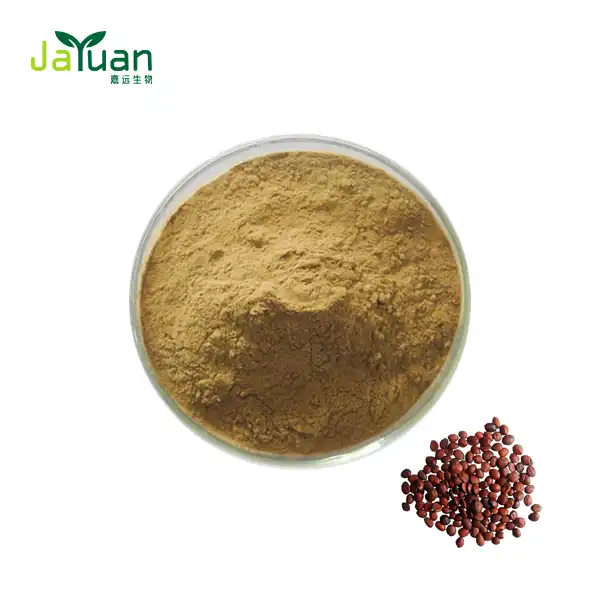
CAS No.: 73-31-4
Appearance: White to off-white powder
Ref standard: USP43
Assay: 99.7%(HPLC)
Molecular formula: C13H16N2O2
Molecular weight: 232.28
MOQ: 1KG
Stock:in stock
Our Advantages: Scalable production capacity, strict quality control, cost efficiency from integrated factories, over 20 years of experience, advanced technology, and 24/7 after-sales support.
Certificaions: FSSC2000/ISO2000/HALAL/KOSHER/HACCP
Delivery terms: FedEx, DHL, EMS, UPS, TNT, all kinds of the airline, international shipping companies.
Payment: TT/DP/PAY PAL/VISA/DA/LC/MASTER CARD/ESCROW
Grade: Pharmaceutical Grade
Customized Service: Supports ODM/OEM
Free sample is available.
We do not sell retail quantities to individuals.
Introduction
Sleep pills are gaining in popularity as people realise how important sleep is to their health. Melatonin powder has risen in product development, notably for companies seeking bioavailability and formulation flexibility. Today's procurement experts must choose suppliers with pharmaceutical-grade purity, batch-to-batch uniformity, and regulatory compliance documentation.
The book is for B2B buyers at research institutes, food and beverage makers, cosmetic brands, pharmaceutical firms, and nutraceutical corporations. We explain the technical characteristics of melatonin powder as an active ingredient, assess its forms, and provide procurement choices to reduce risk and optimise cost structure. Providing sourcing teams with the knowledge they need to evaluate suppliers, optimise product development, and compete in an expanding market is pragmatic.
Understanding Melatonin Powder and Its Benefits for Deep Sleep
What Defines High-Quality Melatonin Powder
High grade off-white to white crystalline solid Melatonin powder according to pharmacopeial purity. Assay value should be between 99.0% - 101.0% as per USP and EP monographs to maintain uniformity of potency in the final formulations. The melting point of the compound was determined as 116.5–118.0°C, which is indicative of the structural integrity and the moisture content. It is sparingly soluble in water but dissolves quickly in ethanol, propylene glycol and different lipid carriers providing formulators with a number of delivery system possibilities.
Sleep-Wake Cycle Regulation Mechanism
Melatonin exerts its effects by binding to MT1 and MT2 receptors in the suprachiasmatic nucleus of the hypothalamus—the brain region that regulates the circadian rhythm (Pandi-Perumal et al., 2008). Properly formulated supplemental melatonin helps facilitate the transition from wakefulness to sleep, which is particularly beneficial for individuals with circadian disruptions caused by shift work, jet lag, or irregular schedules. The powder form enables precise microdosing, allowing formulators to align dosages more closely with individual circadian profiles than fixed-dose alternatives allow.
Additional Wellness Applications
Apart from its role in sleep regulation, studies have looked at the antioxidant properties of melatonin and its possible implications on immunological function (Hardeland, 2005). The extra advantages this ingredient provides make it an intriguing option for producers that want to build a whole health solution. In cosmetics, melatonin antioxidant activity is useful to promote anti-aging formulas where it may help nightly skin healing processes. Pharmaceutical firms are actively studying its usage in combination medicines addressing metabolic health, but such uses need extensive clinical validation and regulatory clearance.
How to Use Melatonin Powder: Dosage, Methods, and Safety Guidelines
Industry-Standard Dosage Recommendations
Effective doses generally vary from 0.5 mg to 10 mg per serving, depending on the target group and intended consequence. Clinical study shows that dosages of 1-3 mg are enough for most persons with occasional trouble in falling asleep, and larger doses may be helpful for some circadian disorders (Auld et al., 2017; Ferracioli-Oda et al., 2013). Where the procurement team is creating the goods for several markets then it has to consider regulatory constraints across different regions. For example, in certain European nations single dosage melatonin is limited to 1–2 mg. The powder formulation enables for accurate formulation to fulfil these different needs in a single manufacturing run.
Application Methods for End-Product Development
Melatonin powder may be formulated as sublingual pills, capsules, liquids, gummies, and topicals. Onset is around 15-20 min with sublingual dosing because of fast absorption via the mucosa. Microencapsulation or cyclodextrin complexation of liquid goods enhances the water solubility and covers the harsh taste of the molecule. Encapsulation in vegetable or gelatin shells is still the easiest way of delivery, providing stability and convenience for the consumer. The particle size requirements depend on the type. Sublingual tablets normally need 10-50 microns, whereas regular capsules might be 80-200 mesh.
Quality Assurance in Bulk Procurement
Bulk buyers should establish procurement protocols that verify the Certificate of Analysis against purchase specifications. Key checkpoints include potency confirmation via HPLC, moisture content verification using Karl Fischer titration (<0.5%), and particle size distribution assessment. Stability testing per ICH guidelines ensures the ingredient retains efficacy throughout its shelf life—typically 36+ months when stored in sealed, nitrogen-flushed packaging away from light and moisture. Suppliers with robust batch tracking systems provide better quality control and streamline product returns if issues arise.
Comparing Melatonin Powder with Alternative Formats and Brands
Format Performance Analysis
Understanding format differences helps procurement teams select the right form for each product strategy. Here is how crystalline melatonin powder compares with other delivery formats:
1. Powder advantages: The pure crystalline form offers maximum formulation flexibility, with dosage adjustable from 0.3 mg to 10+ mg. Because the material requires no additional processing, production costs remain low. Bulk density can be optimized for efficient packaging, and the format works well in multi-ingredient blends. Formulators retain full control over pharmacokinetic profiles through their choice of delivery medium.
2. Capsule considerations: Pre-encapsulated forms reduce manufacturing steps for smaller operations but commit buyers to fixed dose strengths. While convenient, they lack customization and typically cost 30–50% more than bulk powder. Capsule material (gelatin vs. vegetable-based) may also limit market reach based on dietary preferences.
3. Gummy format trade-offs: Gummy delivery appeals to consumers who avoid pills, but manufacturing requires specialized equipment and formulation expertise. Heat sensitivity during production can degrade potency if temperatures are not carefully controlled. Sugar content may conflict with health-conscious positioning, and sugar-free alternatives add cost and complexity.
Synthetic versus Natural Source Material
The majority of melatonin powder used in pharmaceuticals is synthesised chemically from phthalimide or derivatives of 5-methoxy-3-indoleacetonitrile. This technique avoids animal pineal glands, which might be contaminated with viruses, prion diseases or endotoxins, and so guarantees pure impurity profiles. Synthetic manufacturing also offers more uniformity from batch to batch, which is crucial for enterprises that require consistent formulation performance from production run to production run.
Be sceptical of any supplier offering “natural” melatonin. Plant-based solutions exist, but they are far more costly and have no bioavailability benefit over synthetic material. Procurement teams should not accept “natural” labelling at face value but should obtain transparent production evidence and complete impurity profiles that demonstrate conformity with pharmacopeial monographs.
Certification Standards Impact
Suppliers maintaining GMP certification under FDA 21 CFR Part 111 or equivalent EU GMP standards demonstrate a systematic approach to quality control. ISO 13485 certification indicates suitability for medical device applications, relevant for pharmaceutical clients. USDA Organic certification applies only to plant-derived materials and is not meaningful for synthetically produced melatonin. Third-party testing through ISO/IEC 17025-accredited laboratories provides greater assurance than supplier-issued certificates.
Procuring Melatonin Powder: Best Practices for B2B Buyers
Supplier Evaluation Framework
Effective procurement begins with a thorough supplier evaluation across multiple dimensions:
- Production capacity: Verify the manufacturer can meet volume requirements during peak demand periods without compromising quality.
- Site audits: On-site visits reveal actual operating conditions, equipment sophistication, and process controls that documentation alone may not capture.
- Technical capability: Suppliers with in-house HPLC, GC-MS, and ICP-MS equipment demonstrate commitment to quality verification. Request analytical method validation data showing accuracy, precision, and detection limits that meet or exceed pharmacopeial standards.
- Regulatory documentation: Should include FDA facility registration, Drug Master File references where applicable, and export licenses for regulated substances.
Advanced Production Capabilities Worth Premium Investment
At Jiayuan Bio-Tech, we have developed production methods that address common industry challenges while delivering tangible cost savings to our procurement partners. Our approach combines advanced extraction technology with sustainability practices and rigorous quality control.
Our high-efficiency extraction systems for melatonin powder use dynamic countercurrent extraction with ultrasonic-assisted methods, achieving 30–50% higher yields than conventional soaking techniques. This means less solvent use and shorter manufacturing cycles. The chromatographic purification method uses simulated moving bed chromatography (SMB) to provide continuous manufacturing of products with purity >98%, fulfilling pharmaceutical grade 99%+ requirements.
Automated Distributed Control System (DCS) control of pH, temperature and fluid flow during processing. This minimises human error and provides high consistency across batches – an important consideration for clients who need consistent formulation performance throughout several production cycles. We make full use of the raw material by extracting high value chemicals (e.g. flavonoids) that co-occur in the raw material. This allows us to spread the production expenses across many income streams and reduce the per-unit costs.
Pricing Strategy and Negotiation Leverage
Pharmaceutical-grade melatonin powder currently ranges from $180 to $320 per kilogram, depending on order volume, purity specifications, and packaging requirements. Cosmetic-grade material (95-98% purity) is 15-25% cheaper on average. Volume discounts typically start at 100kg, with further tiered savings available at 500kg and beyond.
Strategic purchasers bargain on the whole cost of ownership, not just the unit price. By combining many ingredients in one shipment, the handling cost per unit is reduced. Our warehouse stocking service gives the client the ability to bundle orders and save on recurrent freight costs. The value beyond the given unit price includes the possibility of flexible payment periods, access to formulation assistance and bespoke development services.
Integrating Melatonin Powder into Product Lines and Buyer Strategies
Product Development Applications
Pharmaceutical businesses use the already documented safety and regulatory approval of melatonin in prescription combination medicines and over-the-counter sleep aids (Brzezinski et al., 2005). Nutraceutical manufacturers are creating unique delivery forms – fast-melt tablets, liposomal formulations and time-release matrices – to fit a variety of customer preferences. In keeping with the health beverage trend, food and beverage makers are playing with functional nighttime drinks, sleep-supporting snack snacks and soothing tea blends.
The ingredient’s antioxidant qualities are used in overnight healing masks, anti-aging serums and night creams in cosmetics. Mechanism of circadian rhythm control may provide support of skin healing in sleep, however proper evidence is needed for the claims of cosmetic effectiveness. High purity reference standards are required by research organisations for investigations on sleep disorders, circadian biology and pharmacokinetics (Slominski et al., 2012).
Regulatory Compliance Across Jurisdictions
Navigating international regulatory landscapes requires jurisdiction-specific attention:
- United States: Dietary supplements must comply with labeling requirements, structure-function claim rules, and adverse event reporting under DSHEA.
- European Union: The Novel Foods Regulation initially restricted melatonin use, but approved levels now permit incorporation with appropriate labeling and notification. Upper dose limits vary by member state, requiring market-specific formulation adjustments.
- Canada: Natural Health Product regulations require product licensing with evidence of efficacy and safety, plus GMP compliance documentation.
- Australia: The TGA regulates higher-dose melatonin as pharmacy-only medicine, while lower doses remain available as complementary medicines.
Understanding these differences helps avoid costly reformulations or market entry delays.
Success Through Strategic Sourcing
Top nutrition companies set themselves apart with savvy supplier partnerships. Companies that concentrate on clean labels engage with suppliers who provide non-GMO certification, complete supply chain transparency, and verified quality benefits, all of which help justify premium retail price. They are able to get cheap materials without sacrificing the quality so they can stay competitive. Jiayuan Bio-Tech is large and vertically integrated enough to price it in a way that fits this plan and meets all safety and efficacy regulations. Mid-market is a good compromise between affordability and quality certifications, and for firms who want to grow their market share, it is frequently the best way.
Conclusion
High-purity melatonin powder for sleep support applications is a strategic sourcing decision that needs consideration of quality verification, regulatory compliance, cost effectiveness, and supply chain stability. The powder format is most flexible for B2B customers as far as formulation, pricing and technological adaptability for pharmaceutical, nutraceutical, cosmetic and research uses. Effective sourcing agreements need a comprehensive assessment of suppliers including production capabilities, testing infrastructure and long-term dependability. By knowing the changes in format, the dose concerns, and the regulatory variables in the target countries, procurement teams can make educated choices that decrease risk and assist the development of the product. In a world where the global market is becoming more competitive, leaders are differentiating themselves via the use of modern industrial technologies, environmental responsibility and quick technical assistance.
FAQ
1. What purity levels should procurement teams specify for different applications?
Pharmaceutical applications require USP/EP compliance with purity values of 99.0–101.0%, supported by detailed impurity analysis and residual solvent documentation. Nutraceutical supplement ingredients typically specify 98–99% minimum purity, adequate for dietary supplement formulations while managing costs. For cosmetics, 95–98% specifications are acceptable since topical delivery emphasizes antioxidant activity rather than precise systemic dosing. Research applications demand the highest available purity, accompanied by reference standard documentation traceable to approved reference materials.
2. How can buyers verify supplier quality claims during evaluation?
Request current Certificates of Analysis from multiple production runs and verify consistency across potency, moisture content, and heavy metals results. Third-party testing by ISO 17025-accredited laboratories provides independent verification beyond supplier documentation. Site audits assess actual factory conditions, equipment calibration, and environmental controls. References from industry peers can offer valuable insight into quality consistency, technical support responsiveness, and issue resolution.
3. What factors justify premium pricing from certain suppliers?
Premium pricing is justified when suppliers offer measurable advantages: advanced production technology that reduces impurity levels below standard thresholds, comprehensive regulatory documentation (Drug Master Files, extensive safety data, maintained certifications), flexible minimum order quantities, custom formulation development support, and responsive technical service. Vertical supply chain integration and dual-sourcing strategies for raw materials also reduce supply disruption risk during market volatility—value that extends well beyond unit price.
Partner with Jiayuan Bio-Tech for Premium Sleep Support Ingredients
Jiayuan Bio-Tech specializes in manufacturing melatonin powder for pharmaceutical and cosmetic applications, meeting the stringent requirements of procurement professionals worldwide. Our fully integrated supply chain—located near the Qinling Mountains raw material region—ensures consistent material availability and price stability. GMP and ISO certified, we serve research institutions, cosmetic companies, pharmaceutical firms, and nutraceutical brands across North America and Europe.
Our expert team supports the entire product development process, from formulation assistance to regulatory documentation. We offer warehouse stocking for consolidated shipments, flexible order quantities from R&D samples to multi-ton production runs, and customs clearance assistance for U.S. and European destinations.
As an experienced melatonin powder supplier, we deliver competitive pricing through production efficiency and comprehensive raw material utilization—savings we pass directly to our procurement partners.
Ready to discuss your melatonin powder sourcing needs? Contact our team to request Certificates of Analysis, discuss formulation requirements, or schedule a technical consultation:
Email: sales@jayuanbio.com
Email: sales1@jayuanbio.com
References
1. Pandi-Perumal SR, Trakht I, Srinivasan V, et al. "Physiological Effects of Melatonin: Role of Melatonin Receptors and Signal Transduction Pathways." Progress in Neurobiology, 2008, 85(3): 335-353.
2. Brzezinski A, Vangel MG, Wurtman RJ, et al. "Effects of Exogenous Melatonin on Sleep: A Meta-Analysis." Sleep Medicine Reviews, 2005, 9(1): 41-50.
3. Hardeland R. "Antioxidative Protection by Melatonin: Multiplicity of Mechanisms from Radical Detoxification to Radical Avoidance." Endocrine, 2005, 27(2): 119-130.
4. Auld F, Maschauer EL, Morrison I, et al. "Evidence for the Efficacy of Melatonin in the Treatment of Primary Adult Sleep Disorders." Sleep Medicine Reviews, 2017, 34: 10-22.
5. Slominski RM, Reiter RJ, Schlabritz-Loutsevitch N, et al. "Melatonin Membrane Receptors in Peripheral Tissues: Distribution and Functions." Molecular and Cellular Endocrinology, 2012, 351(2): 152-166.
6. Ferracioli-Oda E, Qawasmi A, Bloch MH. "Meta-Analysis: Melatonin for the Treatment of Primary Sleep Disorders." PLOS ONE, 2013, 8(5): e63773.