
Astaxanthin Powder Bulk ROI: Is Bulk Buying Worth It
Buyers in pharmaceutical, nutraceutical, cosmetics, and research sectors may reduce per-unit expenses by 20–40% by ordering Astaxanthin Powder Bulk in bulk rather than individual purchases. But the key ROI issue is not only price per kilogram – it is if your production volume, your storage capacity and your supplier quality requirements warrant the investment. Bulk buying makes sense if you’ve got good production, climate-controlled storage, and a source whose purity and potency can be verified batch after batch. This tutorial explains the pricing factors, quality standards and decision making processes involved in determining the financial viability of bulk purchases for your business.
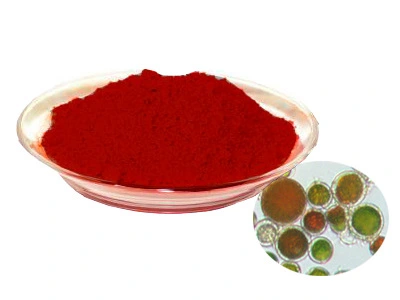
Purity: 1%-10%
Appearance: Dark red powder
CAS NO.: 472-61-7
Molecular Weight: 596.85
Molecular Formula: C40H52O4
MOQ: 500G-1KG
Inventory: in stock
Our Advantages: Scalable production capacity, strict quality control, cost efficiency from integrated factories, over 20 years of experience, advanced technology, and 24/7 after-sales support.
Certificaions: FSSC2000/ISO2000/HALAL/KOSHER/HACCP
Delivery terms: FedEx, DHL, EMS, UPS, TNT, all kinds of the airline, international shipping companies.
Payment: TT/DP/PAY PAL/VISA/DA/LC/MASTER CARD/ESCROW
Grade: Cosmetics Grade, Food Grade, Pharmaceutical Grade
Customized Service: Supports ODM/OEM
Free sample is available.
We do not sell retail quantities to individuals.
Understanding Astaxanthin Powder Bulk
Astaxanthin is the most powerful natural carotenoid antioxidant for commercial manufacture. This molecule is derived mostly from microalgae Haematococcus pluvialis and is distinguished by its conjugated double bond structure, which allows it to have excellent free radical scavenging ability, much better than that of zeaxanthin, lutein or beta-carotene.
Source and Production Methods
The source of Your Astaxanthin Powder Bulk directly affects its bioactivity. The natural astaxanthin from Haematococcus pluvialis is the (3S, 3’S) stereoisomer, which is the most accessible form to humans. Synthetic astaxanthin is generated from petrochemicals and results in a racemic mixture with just 25% of the active (3S, 3'S) structure.
The process of extraction is equally important. Supercritical CO2 is extracted at low temperatures, avoiding thermal degradation and leaving no solvent residues as in the case of ethanol or acetone. This protects the conjugated double bond structure that is important for the antioxidant power of astaxanthin.
Physical and Chemical Characteristics
High-grade Astaxanthin Powder Bulk is a dark red to violet-brown free flowing powder. Its chemical formula (C40H52O4) makes it lipophilic, therefore it has to be used with carrier oils, or specific encapsulation that is dispersible in cold water for aqueous applications.
Assay normal strengths ranging from 1% to 10%, industrial grades are most typically supplied at 2%, 2.5% or 5%. Pure astaxanthin crystals are unstable in handling and the powder is usually microencapsulated in starch, gum arabic or gelatin . “This coating stabilizes the active ingredient and provides a shelf life of 24 to 36 months when stored properly.”
Evaluating the ROI of Bulk Astaxanthin Powder Purchasing
A thorough ROI analysis goes beyond price per kilogram. You need to weigh short-term cash outlay against long-term gains in cost efficiency, production consistency, and supply stability.
Cost Advantages of Volume Purchasing
Bulk ordering of Astaxanthin Powder Bulk delivers savings through three channels:
- Unit price discounts: Orders above 25 kg typically see 15–25% volume pricing; orders of 100 kg or more unlock deeper tier discounts.
- Shipping efficiency: Consolidating four quarterly shipments into one annual delivery can reduce freight costs 40–60%.
- Format savings: Pre-encapsulated products cost 2–3× more per dose than raw powder. Companies with in-house encapsulation capture this margin directly.
Powder forms endure longer than liquid formats - 24–36 months compared to significantly shorter liquid shelf life – meaning less waste from outdated inventory.
Quality Considerations Affecting Investment Returns
Bulk savings disappear rapidly when quality concerns stop production or harm a brand's image. Full test documentation should be provided by all suppliers for each batch. Heavy metal contamination, microbial loads over permissible limits or sub-potency of astaxanthin all directly affect product performance and regulatory compliance.
At Jiayuan Bio-Tech, we do filter paper residue testing as part of our quality control. This indicates better purity than many rival products, indicative of a cleaner extraction and stronger antioxidant capacity. We frequently test for heavy metals, microbiological counts, solvent residues, and nucleic acid residues to ensure that they are far below regulatory limits. That uniformity from batch to batch preserves your investment and gives you predictable production results.
How to Choose the Right Astaxanthin Powder Bulk Supplier
When buying astaxanthin in bulk, the single most important choice you’ll make is who you choose as your supplier. The ideal partner will supply more than a low price – they will provide quality assurance, regulatory paperwork and operational stability.
Critical Supplier Evaluation Criteria
Start by verifying purity and potency through transparent testing. HPLC (High-Performance Liquid Chromatography) is the gold standard because it separates astaxanthin from other carotenoids and quantifies free versus esterified forms. Reliable suppliers also provide evidence that pheophorbide levels — a chlorophyll breakdown product that causes photosensitivity — stay below strict limits in every batch.
Certifications separate professional suppliers from marginal operators. Look for ISO and GMP compliance, food safety certifications, Certificates of Analysis (CoA), allergen statements, and ICP-MS heavy metal testing. Halal and Kosher certifications matter for certain markets. Suppliers should also demonstrate working knowledge of Prop 65 (California) and EU Pharmacopoeia standards.
Minimum Order Quantities and Payment Terms
MOQs depend on the size of the provider. Most industrial suppliers have minimums of 10–25 kg, however some may take smaller trial orders (5 kg) for certification. Bigger vendors with greater prices will usually have minimum of 25-50kg.
Payment arrangements vary from prepayment for new accounts to net-30 or net-60 for existing clients. Flexible terms that fit to your cash flow cycle immediately impact your ROI – the longer you can retain cash until payment, the more working capital you have for other purposes.
Best Practices for Using Astaxanthin Powder in Bulk
Maximizing the bulk ROI needs disciplined purchase, storage, quality monitoring and supplier management. These operating strategies turn decreased unit costs into a sustainable competitive advantage.
Dosing Guidelines Based on Application
Astaxanthin is used in different fields at different amounts depending on the benefits they want to achieve and how they want to give them. Manufacturers of dietary supplements usually make products that give 4 to 12 mg daily doses, which requires exact math based on powder assay %. For a 2% powder to fall in this range, 200 to 600 mg must be added to each serve. Lower amounts are used in cosmetics (0.1% to 0.5%) because antioxidant defense is good for skin health and doesn't cause color interference.
Protocols for Quality Monitoring
Astaxanthin dosage varies by end-use:
- Dietary supplements: 4–12 mg daily per serving. A 2% assay powder requires 200–600 mg of powder per serving to hit this range.
- Cosmetics: 0.1–0.5% concentration — enough for antioxidant skin benefits without color interference in formulations.
Protocols for Quality Monitoring
Establish a testing cadence to maintain consistency throughout bulk usage:
- On receipt: Verify that supplier CoA matches independent third-party testing on a representative sample.
- Quarterly: Re-test potency via HPLC to detect degradation trends.
- Ongoing: Monitor color stability — darkening signals oxidation. Log storage temperature and humidity continuously to catch environmental excursions before they affect material quality.
Microbial testing should accompany potency checks, especially for cosmetic and food applications where total plate counts must stay below 1,000 CFU/g. Regular heavy metal screening catches contamination introduced during storage or handling. Batch tracking systems let you trace finished product lots back to specific Astaxanthin Powder Bulk batches for rapid issue resolution.
Supplier Relationship Management
Frequent communication develops supplier relationships. Conduct quarterly reviews to examine quality trends, anticipate future volume demands, and explain industry developments. “Letting suppliers know in advance about changes to orders can help them manage inventory — and it can mean better pricing.
Give honest comments on the outcomes of end-product, good and bad. Helps vendors perfect their method and helps you acquire better stuff as time goes on. You may also maintain price competitive and have back up sources with samples from other providers. So there is a danger of quality variations with frequent switching that might offset little cost reductions. Balance pricing pressure and relationship stability according to your company’s risk tolerance.
Is Bulk Buying Astaxanthin Powder Worth It?
The decision comes down to alignment between your procurement strategy and your operational reality. Real-world scenarios illustrate when bulk makes sense — and when it doesn't.
Case Studies from the Business World
One mid-sized supplement company shifted from 10 kg quarterly orders to 50 kg semi-annual purchases. The result: 28% lower per-unit cost and 50% lower freight. The trade-off was upgrading to temperature-controlled storage — a one-time investment that paid back in eight months. Production consistency also improved because formulation teams worked from a single large batch rather than compensating for potency variations across smaller lots.
The flip side: a new cosmetics brand ordered Astaxanthin Powder Bulk 25 kg upfront, but production growth lagged behind projections. Nearly 40% of inventory approached expiry before use. The company pivoted to 10 kg orders — accepting a higher per-unit cost in exchange for less waste and more working capital for marketing. The lesson: bulk pricing only pays off when your volume forecast is accurate.
Optimal Conditions for Bulk Procurement
Bulk buying makes clear financial sense when these conditions align:
- Production volume: Monthly output above 500 units justifies larger, less frequent orders.
- Storage capability: Climate-controlled rooms with humidity and light control protect material throughout its shelf life.
- Quality control infrastructure: Incoming material inspection and ongoing inventory monitoring catch problems before they reach finished goods.
- Standardized formulations: A single large batch delivers more consistent results than adjusting for lot-to-lot variation in smaller orders.
- Reliable demand forecasting: Accurate projections let you order the right quantity without overcommitting.
When these factors are in place, bulk purchasing becomes a strategic advantage, not just a cost-cutting tactic.
When Smaller Quantities Make Sense
Bulk isn't always the right call. Smaller orders serve you better when:
- New product launches: Demand is uncertain — smaller orders limit exposure if the market doesn't respond.
- Formulation R&D: Specs may change; committing to large volumes locks you into material you might not use.
- Inadequate storage: Without climate control, product degradation can erase bulk savings entirely.
- Limited working capital: Cash flow flexibility may outweigh per-unit savings, especially for early-stage companies.
Business stage matters. Early-stage companies often lack the volume to justify bulk economics. As production scales, transitioning to larger orders at the right pace captures savings without overcommitting.
Conclusion
Buying Astaxanthin Powder Bulk delivers strong ROI when strategy and operational capability align. Volume discounts, lower freight, and production consistency all create real financial advantages. Success requires a supplier with rigorous quality testing, transparent certifications, and a partnership approach that extends beyond the transaction. Before committing to bulk, honestly assess your storage capacity, demand predictability, and working capital. When these factors come together, bulk purchasing becomes a strategic advantage that improves product quality, operational efficiency, and market competitiveness.
FAQ
1. What is the typical minimum order quantity for Astaxanthin Powder Bulk?
Most industrial suppliers set MOQs at 10–25 kg. Some accept trial orders as low as 5 kg for qualification. Larger suppliers with better pricing typically require 25–50 kg minimums. MOQs reflect packaging and handling efficiency — small orders cost suppliers more to process.
2. How can I verify the purity and potency of bulk astaxanthin powder?
Request HPLC test results, not UV-Vis spectrophotometry. HPLC separates astaxanthin from other carotenoids and quantifies free versus esterified forms. To confirm natural origin, check the stereoisomer profile — look for the dominant (3S, 3'S) configuration, not a synthetic racemic mix. Verify that the CoA includes ICP-MS heavy metal testing and confirms microbial total plate counts below 1,000 CFU/g.
3. Are there side effects associated with using astaxanthin in bulk formulations?
Astaxanthin has a strong safety profile in clinical studies. Unlike some carotenoids, it does not act as a pro-oxidant even at elevated doses. The primary concern is contamination — specifically pheophorbide, a chlorophyll derivative that causes photosensitivity. Buying from suppliers with rigorous purification and testing protocols eliminates this risk. Global regulatory approvals and extensive research support its safety for human use.
Partner with Jiayuan Bio-Tech for Superior Astaxanthin Powder Bulk Supply
For pharmaceutical companies, nutraceutical manufacturers, beauty brands, and research institutions seeking a reliable Astaxanthin Powder Bulk supplier, Jiayuan Bio-Tech delivers. Our ISO-compliant quality systems and GMP-certified production facilities ensure every batch meets strict purity standards — heavy metals, microbial counts, and solvent residues all well below regulatory limits.
Our filter paper residue testing confirms extraction purity that exceeds competing products, delivering stronger antioxidant activity. Two GMP production lines, backed by modern testing equipment and SGS and HALAL certifications, meet the requirements of global markets. Direct factory supply eliminates intermediary markups, and our warehouse stocking service reduces your shipping and customs costs. We support US and European customs documentation for smooth delivery to your facility.
We offer competitive pricing, custom formulations, multiple potency grades, and OEM processing services tailored to your production needs. Contact our team at sales@jayuanbio.com or sales1@jayuanbio.com to discuss your specifications, request sample testing, and discover how our Astaxanthin Powder Bulk solutions can improve your product quality while reducing procurement costs.
References
1. Ambati, R. R., Phang, S. M., Ravi, S., & Aswathanarayana, R. G. (2014). Astaxanthin: Sources, Extraction, Stability, Biological Activities, and Its Commercial Applications—A Review. Marine Drugs, 12(1), 128-152.
2. Capelli, B., Bagchi, D., & Cysewski, G. R. (2013). Synthetic Astaxanthin is Significantly Inferior to Algal-Based Astaxanthin as an Antioxidant and May Not Be Suitable for Human Nutrition. Nutrafoods, 12(4), 145-152.
3. Guerin, M., Huntley, M. E., & Olaizola, M. (2003). Haematococcus Astaxanthin: Applications for Human Health and Nutrition. Trends in Biotechnology, 21(5), 210-216.
4. Higuera-Ciapara, I., Felix-Valenzuela, L., & Goycoolea, F. M. (2006). Astaxanthin: A Review of its Chemistry and Applications. Critical Reviews in Food Science and Nutrition, 46(2), 185-196.
5. Shah, M. M. R., Liang, Y., Cheng, J. J., & Daroch, M. (2016). Astaxanthin-Producing Green Microalga Haematococcus pluvialis: From Single Cell to High Value Commercial Products. Frontiers in Plant Science, 7, 531.
6. Yuan, J. P., Peng, J., Yin, K., & Wang, J. H. (2011). Potential Health-Promoting Effects of Astaxanthin: A High-Value Carotenoid Mostly from Microalgae. Molecular Nutrition & Food Research, 55(1), 150-165.