Astaxanthin Powder Bulk for Nutrition Products Explained
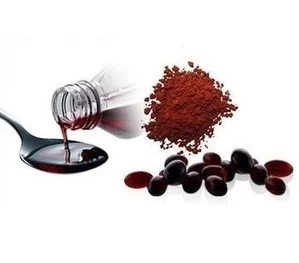
Bulk Astaxanthin Powder Bulk is a natural pigment mostly extracted from the microalga Haematococcus pluvialis. It is one of the most powerful antioxidants known, better than vitamin E and beta-carotene in quenching singlet oxygen. It is a high performance component used by pharma businesses, nutraceutical brands, cosmetic formulators and food producers. This deep red-to-violet powder is a It has a unique molecular structure which enables it to cross the whole cell membrane and protect both water-soluble and fat-soluble cellular components from oxidative damage.

Purity: 1%-10%
Appearance: Dark red powder
CAS NO.: 472-61-7
Molecular Weight: 596.85
Molecular Formula: C40H52O4
MOQ: 500G-1KG
Inventory: in stock
Our Advantages: Scalable production capacity, strict quality control, cost efficiency from integrated factories, over 20 years of experience, advanced technology, and 24/7 after-sales support.
Certificaions: FSSC2000/ISO2000/HALAL/KOSHER/HACCP
Delivery terms: FedEx, DHL, EMS, UPS, TNT, all kinds of the airline, international shipping companies.
Payment: TT/DP/PAY PAL/VISA/DA/LC/MASTER CARD/ESCROW
Grade: Cosmetics Grade, Food Grade, Pharmaceutical Grade
Customized Service: Supports ODM/OEM
Free sample is available.
We do not sell retail quantities to individuals.
Understanding Astaxanthin Powder Bulk: Properties and Benefits
At Jiayuan Bio-Tech we’ve seen demand for this chemical explode across a number of sectors. Astaxanthin Powder Bulk is being used by B2B buyers who are manufacturing nutrition goods because of its health advantages validated by clinical studies and ease of manufacture.
Source and Extraction Process
Microalgae, Haematococcus pluvialis, are cultured to accumulate astaxanthin under stress conditions (usually nitrogen deficiency and high light stress). Supercritical CO2 extraction is the gold standard in the industry, since it is done at low temperatures such that the integrity of the molecules is preserved and no solvent residues are left behind. This process yields a pure oleoresin which is subsequently microencapsulated with starch, gelatin or gum arabic.
Encapsulation converts the oleoresin into a free-flowing powder with test concentrations often ranging from 1% to 10%. This treatment inhibits oxidation of the very reactive carotenoid and extends the shelf life to 24 to 36 months. Unlike extraction with acetone or ethanol, supercritical CO2 leaves no chemical residues, and hence meets pharmaceutical and food-grade requirements.
Molecular Structure and Antioxidant Mechanisms
The molecular formula for astaxanthin is C40H52O4 and it has conjugated double bonds along with hydroxyl and keto groups at either end. The structure allows the molecule to cover the whole lipid bilayer, protecting the inner and outer layers of cell membranes at the same time.
Astaxanthin Powder Bulk research showed that is 550 times stronger than vitamin E and 40 times stronger than beta-carotene in quenching single oxygen. Unlike several antioxidants, it does not become a pro-oxidant at high quantities. The algae-derived powder includes the naturally occurring (3S,3’S) stereoisomer, which is more bioactive than the manufactured racemic combinations, which contain just 25% of this active form.
Key Factors to Consider When Procuring Astaxanthin Powder in Bulk
Quality standards separate smart procurement from costly mistakes. Professional buyers prioritize specific technical parameters that directly affect product performance.
Quality Grades and Purity Standards
HPLC (High-Performance Liquid Chromatography) is the preferable technique for testing since it differentiates astaxanthin from other carotenoids that UV-Vis spectrophotometry could misidentify. HPLC shows the ratio of free and esterified astaxanthin. Both are physiologically active but perform differently in formulations.
“Our Jiayuan Bio-Tech tests of filter paper residue show no visible impurities, which means thorough extraction and purification. This means that the final goods have a stronger antioxidant activity. ICP-MS measures heavy metals such as lead, arsenic, cadmium and mercury which are consistently less than 10ppm, well under Prop 65 and EU Pharmacopoeia standards.
Microbiological tests show overall plate counts < 1,000 cfu/g without irradiation. For firms selling “clean label” items, it is vital to verify that a product has not been irradiated. Levels of pheophorbide are also measured, since this breakdown product of chlorophyll may trigger photosensitivity responses.
Organic versus Non-Organic Variants
Brands aiming for premium customers might find certification of organic products useful, however both organic and non-organic products have identical biochemical activity. Organic farming excludes synthetic fertilizers and pesticides, which appeals to environmentally minded manufacturers. In general, non-organic manufacturing provides more stable yields and cheaper prices, suited for cost-sensitive applications.
The stereoisomer pattern is compatible with natural origin. Astaxanthin from algae mostly consists of the (3S,3'S) optical isomer, whereas petrochemical synthesized astaxanthin is a 1:2:1 combination of (3S,3'S), (3S,3'R) and (3R,3'R). The only (3S,3’S) form has the best absorption and effectiveness in the human body.
Comparing Bulk Astaxanthin Powder Suppliers: What B2B Buyers Must Know
Supplier choice impacts the long-term quality of the product and company results. A formal review method may help avoid expensive procurement errors and assure regulatory compliance.
Evaluating Supplier Credentials
GMP-compliant facilities maintain documented procedures for every production step. ISO certifications demonstrate systematic quality management, while organic certifications require full supply chain documentation from algae cultivation through final packaging.
During supplier evaluation, request facility audit reports, customer references, and regulatory compliance documentation. Established suppliers maintain long-term relationships with international clients across multiple regulatory jurisdictions. Jiayuan Bio-Tech holds ISO, SGS, and HALAL certifications, with two GMP-standard production lines ensuring consistent quality.
Pricing Structure and MOQ Considerations
Bulk price is dependent on order quantity, assay percentage and delivery conditions. The price varies depending on the concentration (2, 2.5 or 5%), the greater the concentration, the more raw material per kilogram. Understanding the link of the assay % to your formulation needs can minimize over-specification that unreasonably increases expenses.
Lower unit prices and inventory expenses balance out minimum order numbers. Factory-direct purchase means no distributor mark-ups and warehouse services decrease restocking logistics. Jiayuan Bio-Tech enables customers to buy various goods with fewer quantities per shipment, using unified packaging that minimizes shipping and customs fees.
Best Practices for Incorporating Astaxanthin Powder Bulk in Nutrition Products
Formulation skill is the difference between premium Astaxanthin Powder Bulk reaching its full potential or being a costly underperformer in your product.
Recommended Dosage Ranges
Based on clinical investigations, daily dosages of 4 to 12 mg are relevant for human nutrition. Some sports nutrition solutions for top athletes go up to 20 mg. Acceptable Daily Intake limits (by nation) are defined by regulatory authorities (e.g. EFSA). Add the % of your powder for the specified test to calculate your inclusion rates. For example, 200 mg of powder at 2% yields 4 mg active astaxanthin.
Human investigations reveal acceptable safety characteristics throughout a wide dosage range of Astaxanthin Powder bulk. Furthermore, formulators should take into consideration the intense pigmentation of the molecule. Large doses may induce transient skin colouration which may be of concern to customers.
Stability and Bioavailability Enhancement
Microencapsulation gives initial stability, but good production processes provide further protection of the component. Astaxanthin is better absorbed when it is combined with lipids, such as MCT oil, olive oil or phospholipids. This lipophilic chemical needs fat for maximum absorption, which is why softgel administration methods are especially effective.
Synergistic combinations with vitamin E, vitamin C and other antioxidants promote more effective defense mechanisms. Studies have shown that astaxanthin may replenish depleted vitamin E, prolonging the activity of both substances. Natural emulsifiers promote dispersion in water-based formulations and Cold Water Dispersible versions completely remove this formulation difficulty.
Key storage conditions include temperatures below 25 degrees Celsius, humidity under 60%, and protection from direct light. Nitrogen-flushed, aluminum-lined bags create an oxygen-free environment that prevents oxidative degradation.
How to Choose the Right Astaxanthin Powder Bulk Supplier for Your Business
Disciplined supplier selection lowers risk and finds partners who can support development long term.
Define Your Procurement Requirements
Firstly, decide on your technical requirements; the assay %, if you need organic certification and whether you need regular, microencapsulated or cold water dispersible. Match these up to your target market. High-potency powder is for premium goods and economical ratios for mass-market applications.
Market-by-market regulatory requirements vary greatly. Products sold in the EU have to fulfill different requirements than those sold in North America or Asia. Do your regulatory homework ahead of time to prevent expensive reformulation later.
Negotiate Terms and Build Partnerships
Initial discussions set pricing, payment conditions, minimum order quantities (MOQs), quality criteria. But what is more important is the long term connection. It allows for joint product creation, prioritization in case of supply restrictions and better price with increased quantities.
Regular communication is the key to transparency and trust. Plan quarterly assessments to include market trends, regulatory changes and product roadmaps. The deepest client-supplier relationships take years to develop, as organizations mature.
Look for adaptable contract terms that will expand with your business. As order quantities rise, establish price tiers and payment arrangements to recognize the strengthening relationship.
Conclusion
Finding the proper Astaxanthin Powder Bulk provider is a balance of quality control, regulatory compliance, cost and collaboration possibility. Astaxanthin extracted from Haematococcus pluvialis by supercritical CO2 has greater bioavailability and effectiveness compared to synthetic analogues. Procurement experts should validate stereoisomer profiles, require third-party testing, and assess supplier credentials such as ISO, GMP, and organic certifications. Successful formulation requires knowledge of stability criteria, bioavailability improvement methodologies and suitable dose ranges.
As awareness of this antioxidant continues to grow across food, cosmetics, nutraceutical, and pharmaceutical industries, strategic supplier partnerships backed by technical expertise provide a competitive edge. Contact Jiayuan Bio-Tech at sales@jayuanbio.com or sales1@jayuanbio.com to discuss your Astaxanthin Powder Bulk requirements.
FAQ
1. What distinguishes natural from synthetic astaxanthin powder?
Natural astaxanthin from Haematococcus pluvialis contains exclusively the (3S,3'S) stereoisomer, which offers superior biological activity. Synthetic forms produced from petrochemicals contain a racemic mixture with only 25% of the active (3S,3'S) form, significantly reducing bioavailability. Regulatory approvals also differ. Natural astaxanthin is approved for human nutrition, while synthetic versions are primarily restricted to aquaculture feed.
2. Why is powder assay listed as 2-5% rather than pure?
Pure astaxanthin degrades rapidly when exposed to air and light. Microencapsulation within starch, gelatin, or gum arabic matrices creates a stable powder with a 24 to 36 month shelf life. The assay percentage represents the active ingredient concentration by weight. Commercial products typically use 2 to 5% concentrations, balancing stability and potency for most applications.
3. How can buyers be sure that a product is pure?
Request an HPLC analysis to quantify astaxanthin content and distinguish it from other carotenoids. Ask for Certificate of Analysis reports covering heavy metals, microbial counts, solvent residue, and pheophorbide levels. Third-party laboratory testing provides independent verification beyond supplier documentation. Filter paper residue tests reveal impurities that can reduce antioxidant effectiveness.
Partner with Jiayuan Bio-Tech as Your Trusted Astaxanthin Powder Bulk Manufacturer
Jiayuan Bio-Tech supplies pharmaceutical-grade Astaxanthin Powder Bulk with rigorous quality control, factory-direct pricing, and comprehensive logistics support. Our GMP-compliant production facilities hold ISO, SGS, and HALAL certifications, ensuring every batch meets international regulatory standards. We handle customs clearance for clients across Europe, the US, and other global markets, shipping directly to your facility.
Our technical team provides formulation guidance, stability testing support, and custom solutions including OEM services tailored to your product requirements. Ready to start? Email sales@jayuanbio.com or sales1@jayuanbio.com to request samples, discuss project specifications, and learn how Jiayuan Bio-Tech can support your nutrition product development goals.
References
1. Ambati, R.R., Phang, S.M., Ravi, S., & Aswathanarayana, R.G. (2014). Astaxanthin: Sources, Extraction, Stability, Biological Activities, and Its Commercial Applications. Marine Drugs, 12(1), 128-152.
2. Guerin, M., Huntley, M.E., & Olaizola, M. (2003). Haematococcus astaxanthin: Applications for human health and nutrition. Trends in Biotechnology, 21(5), 210-216.
3. Naguib, Y.M. (2000). Antioxidant Activities of Astaxanthin and Related Carotenoids. Journal of Agricultural and Food Chemistry, 48(4), 1150-1154.
4. Capelli, B., Bagchi, D., & Cysewski, G.R. (2013). Synthetic Astaxanthin is Significantly Inferior to Algal-Based Astaxanthin as an Antioxidant and May Not be Suitable as a Human Nutraceutical Supplement. Nutrafoods, 12, 145-152.
5. Higuera-Ciapara, I., Felix-Valenzuela, L., & Goycoolea, F.M. (2006). Astaxanthin: A Review of its Chemistry and Applications. Critical Reviews in Food Science and Nutrition, 46(2), 185-196.
6. Yuan, J.P., Peng, J., Yin, K., & Wang, J.H. (2011). Potential health-promoting effects of astaxanthin: A high-value carotenoid mostly from microalgae. Molecular Nutrition & Food Research, 55(1), 150-165.