Astaxanthin Powder Bulk Buying Guide: Save More Smartly
When you buy a lot of carotenoids, the quality of the goods and your profit go down. Astaxanthin Powder, which comes from Haematococcus pluvialis microalgae and is nature's best antioxidant, is used in food, cosmetics, and nutraceuticals. Bulk purchases need to strike a mix between quality, cost, following the rules, and being able to rely on the provider. This keto-carotenoid is very reactive and can be damaged by light and oxidation, so supply chain molecular stability is very important. This guide helps teams in charge of buying things find Astaxanthin Powder that meets their needs without spending too much.
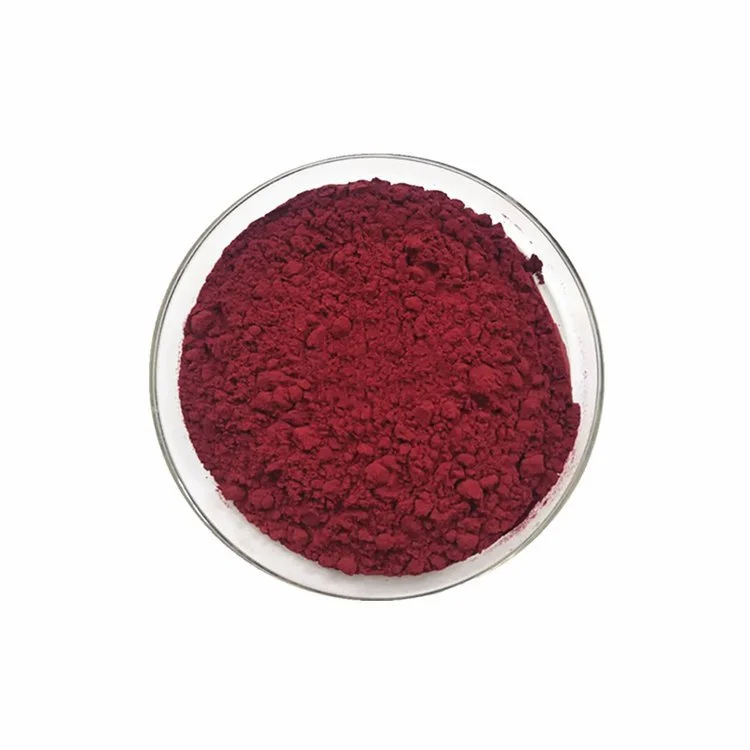
Purity: 1%-10%
Appearance: Dark red powder
CAS NO.: 472-61-7
Molecular Weight: 596.85
Molecular Formula: C40H52O4
MOQ: 500G-1KG
Inventory: in stock
Our Advantages: Scalable production capacity, strict quality control, cost efficiency from integrated factories, over 20 years of experience, advanced technology, and 24/7 after-sales support.
Certificaions: FSSC2000/ISO2000/HALAL/KOSHER/HACCP
Delivery terms: FedEx, DHL, EMS, UPS, TNT, all kinds of the airline, international shipping companies.
Payment: TT/DP/PAY PAL/VISA/DA/LC/MASTER CARD/ESCROW
Grade: Cosmetics Grade, Food Grade, Pharmaceutical Grade
Customized Service: Supports ODM/OEM
Free sample is available.
We do not sell retail quantities to individuals.
Understanding Astaxanthin Powder and Its Market Demand
Core Properties and Industrial Applications
Astaxanthin Powder addresses the instability of raw oleoresin. Spray-drying or beadlet microencapsulation turns lipophilic astaxanthin oil into powder. This addresses the industry's longstanding photodegradation and water dispersibility issues. After supercritical CO2 extraction, astaxanthin is microencapsulated in hydrophilic carriers such modified starch, gum arabic, or cyclodextrin complexes for better handling and shelf stability.
Market Drivers and B2B Demand Trends
Bulk purchases happen in many fields for a number of reasons. Cellular health knowledge is what makes the supplement market grow. Pharmaceutical-grade Astaxanthin Powder is needed for studies on heart health, brain health, and joint health. At the same time, the fact that natural astaxanthin is legal in some key markets and synthetic versions are not allowed in others has increased demand for powders made from microalgae.
Growth is expected to be more than 8% per year until 2028, with North America being the main market for goods. Powders are better for procurement teams than oils or pills because they are easier to formulate, last longer if stored properly, and cost less per unit of volume.
Critical Factors to Consider When Buying Astaxanthin Powder in Bulk
Quality Metrics and Purity Standards
The most important thing is that it be pure. Astaxanthin Powder usually has between 2% and 10% active astaxanthin. For medical uses, it has higher concentrations. Focus doesn't show everything, though. Heavy metals like arsenic, lead, cadmium, and mercury should be tested for by reputable sellers. Microbiological safety should also be checked for, along with leftover chemicals and external nucleic acids.
At Jiayuan Bio-Tech, our Xi'an facility tests every batch against international standards. We verify that heavy metals, microbial counts, solvent residues, and nucleic acid levels fall well below thresholds set by FDA, EFSA, and other regulatory bodies. Our filter paper residue tests consistently outperform competitors', indicating cleaner extraction and higher antioxidant potency. Independent testing confirms fewer contaminants, meaning the active compounds are more concentrated and more effective at scavenging free radicals.
Certification and Compliance Verification
Organic approvals (USDA Organic, EU Organic) are very important for brands that want to be seen as having clean labels. GMP certification shows that quality management is organised, and ISO certification shows that operating processes are standardised. Also, procurement teams should make sure that HACCP rules are followed for uses that are meant to be used with food and ask for proof of allergen control measures.
In addition to certificates, a supplier's professional skills can tell you a lot about how consistent the quality is. Look for bacteria labs, moisture analysers, and HPLC or UV-VIS spectroscopy equipment that is on-site. These investments show a dedication to consistent quality from batch to batch instead of relying only on tests by a third party.
Supplier Reliability Assessment
Check out possible partners' production skills, expert help, and the strength of their supply chains. When it comes to quality control and tracking, manufacturers who grow their own algae are better than middlemen. Ask for site audit reports or detailed facility documentation that includes information about the infrastructure for fermentation, the technology used for extraction (supercritical CO2 systems work better than solvent extraction), and the specifications for the microencapsulation equipment.
Case studies and real client examples are the best proof that someone can be trusted. Established makers should give you contacts from clients who have bought similar amounts of food, makeup, or drugs. In addition to price, look for partners who offer trials before you buy, open payment terms, and quick expert help.
How to Source Astaxanthin Powder Efficiently: Buying Process and Logistics
Identifying Reliable Suppliers and Platforms
Global B2B platforms are a reasonable starting point, but they shouldn't replace direct due diligence. Trade shows like SupplySide West, Vitafoods Europe, and CPHI Worldwide offer face-to-face meetings with manufacturers. In most cases, dealing directly with producers yields better pricing and deeper technical support than working through distributors.
When shortlisting suppliers, assess their specialization. Companies focused on algal biotechnology typically deliver better product stability than general plant extract companies that list astaxanthin among hundreds of products. Geography matters too: U.S. buyers benefit from FDA-registered facilities that streamline customs clearance, while European buyers may prefer EU-based producers familiar with EFSA requirements.
Negotiation Strategies and Volume Discounts
Effective negotiation starts with understanding how suppliers price their product. Production economics favor larger batch runs, which creates room for buyers willing to commit to volume. Rather than simply asking for a discount, consider these approaches:
- Long-term supply agreements: Committing to 12–24 month purchase volumes often secures preferential pricing. You lock in favorable rates; the supplier gains production visibility.
- Flexible shipping schedules: Staggered delivery dates reduce the supplier's warehousing costs—savings that can be passed along as price reductions.
- Multi-product bundling: If your formulations require multiple botanical extracts, combined orders save the manufacturer on logistics and can justify volume pricing.
Minimum Order Quantities and Payment Terms
Prices for Astaxanthin Powder usually start at 1 kg for research and development tests and go up to 25 kg for mass production. Large producers may set higher minimums, like 50 kg or 100 kg, to represent how much they make. Adjust MOQs based on how much you need to store and how much you need to make.
As the relationship grows, so do the terms of payment. You should expect to pay 100% up front or a 50% deposit, with the rest due before the goods are shipped. You can talk about net-30 or net-60 terms with partners you already know. Letters of credit cover both sides in bigger deals. Jiayuan Bio-Tech's factory-direct model gets rid of markups for distributors, which lowers your total cost of acquisition and gives you payment options that work with your business cycle.
Comparing Different Types of Astaxanthin Powder for Bulk Buyers
Natural Versus Synthetic Astaxanthin Sources
The difference between natural and manufactured astaxanthin is not just in their chemical structure; it also affects how well they are absorbed, how safe they are, and how they are regulated. The astaxanthin found naturally in Haematococcus pluvialis is mostly the 3S,3'S stereoisomer, which is attached to fatty acids. In its free form, synthetic astaxanthin is made up of three stereoisomers: 3S,3'S; 3R,3'R; and 3R,3'S.
Clinical tests show that natural esterified forms are better at getting into cells and being bioavailable. The way the molecule links with cell walls and shuttle proteins is affected by stereochemistry. Because of these differences, the EU only allows manufactured astaxanthin in animal feed, not in food or supplements for humans. There are no such limits on natural forms.
Powder Versus Oil and Other Delivery Formats
Astaxanthin is available as oleoresin oils, softgel capsules, and microencapsulated powders. For industrial applications, powder forms offer clear advantages. Microencapsulation converts viscous oils into free-flowing powders that handle better in manufacturing—easier weighing, accurate dosing, and compatibility with dry-blending processes. Cold-water-dispersible (CWD) powder variants enable beverage fortification that isn't possible with oil-based forms.
Astaxanthin Powder that has been made correctly can be just as soluble as oils, or even more so, if the right carrier systems are used. Technologies like nano-emulsion, cyclodextrin complexation, and phospholipid co-processing make it easy for the body to take in nutrients in the gut. For stability's sake, it's clear that powder that is properly sealed stays fresh longer than oils that are left out in the open, which means that finished goods last longer.
Evaluating Certified Manufacturers
When judging providers, don't just look at the unit price. GMP, ISO 9001, ISO 22000, and HACCP certifications for manufacturing show that quality control is done in a planned way. Specialised certifications like Organic, Non-GMO Project Verified, and Kosher/Halal give you more ways to position your product in the market. It's important to have the right analytical tools. Businesses that have their own RP-HPLC, mass spectrometry, and full microbial testing show that they care about quality.
Check the capability of production to avoid supply problems in the future. Your business can grow with suppliers who have specific growing sites that can produce more than a few metric tonnes per month. True partners are different from product sellers because they offer technical support. Look for teams that can help with recipe advice, stable testing, and regulation paperwork.
Optimizing Your Bulk Purchase: Dosage, Usage, and Safety Considerations
Standard Dosage Guidelines by Application
How much to take depends on what you want to achieve and how much help you need. Most diet pills have between 4 and 12 mg per day, with 8 mg being the generally agreed upon amount. recipes for eye health usually aim for 6 mg per day, while recipes with a lot of antioxidants may use 12 mg. The amount of powder that is mixed in is similar to these goals for the end product. This is because the raw material has a certain content.
How much to dose for cosmetics is different from how much to dose for food; it's based on how much of the product you'll use in a day. The amount of astaxanthin in anti-aging creams is usually between 0.001% and 0.0111%. In intensive treatment serums, the amount can reach 0.1%. To find out how much powder you need, start with the amount of finished product you want and work your way backwards, taking into account any powder that is lost during production.
Enhancing Bioavailability in Formulations
Astaxanthin is lipophilic, meaning it requires proper formulation to achieve good intestinal absorption. Co-administration with dietary fats significantly improves uptake—supplement formulations should include lipid carriers or recommend consumption with meals. Phospholipid complexation (phytosome technology) arranges molecules for easier membrane transit. Nano-emulsion delivery systems reduce particle size below 100 nm, dramatically increasing surface area and absorption.
Adding lecithin, medium-chain triglycerides, or omega-3 oils to the excipient matrix of pills and capsules makes them more bioavailable. When working with powder types that have a smaller percentage, these methods become even more important. Powders that dissolve in cold water are great for use in drinks because the capsule matrix helps with even distribution and tongue touch.
Safety Protocols and Regulatory Compliance
Another good thing about astaxanthin is that it is safe. Long-term tests on people at an amount of 40 mg per day showed no harm, and regulatory groups in big countries have approved its use. In the business world, formulators should keep a lot of records to back up any claims that final goods are safe.
Sources have to do with worries about allergens. Cross-contamination can be avoided by growing microalgae away from sources of soy, dairy, and gluten, but there are strict rules about how to handle them. At Jiayuan Bio-Tech, we use separate production lines and tough cleaning tests to make sure that allergens don't get into the goods that we sell to people who are sensitive. There are standard sheets, stable data, Certificates of Analysis, and proof of legal standing that we give to our target customers.
Conclusion
To get Astaxanthin Powder in large quantities, you need to do four main things: make sure it is pure by checking it carefully; get the best price by working directly with makers; keep all the paperwork needed for rules; and make sure the processes go smoothly. Procurement teams that focus on quality, not just price, can always find the best products at the best prices. They need to know what their recipes call for and how skilled the sellers are. Taxane is becoming more popular in medicine, food, skin care, and supplements. To get the best product and a stable supply chain, it is best to work with a company that can do all of these things.
FAQ
1. What concentration of astaxanthin should I choose for supplement manufacturing?
Your choice depends on dosage targets and formulation style. Most supplement manufacturers select 2–5% powder for multi-ingredient formulas, where dilution with other ingredients is easier. For single-ingredient astaxanthin capsules, 10% concentrations work best—they keep capsule size manageable. Start with your desired daily dose (typically 4–12 mg) and calculate the total capsule or tablet weight from there. Higher-strength powders cost more per kilogram but require less material per dose, so the cost per serving is often comparable or lower. Request samples at different concentrations to test flow properties and compatibility with your excipient system.
2. How can I verify the authenticity of natural versus synthetic astaxanthin?
Analytical testing using chiral HPLC for stereoisomer analysis is the gold standard. Natural Haematococcus astaxanthin is predominantly the 3S,3'S stereoisomer (>95%), while synthetic material contains equal amounts of 3S,3'S, 3R,3'R, and meso forms. Esterification state provides additional confirmation: natural astaxanthin occurs mainly as mono- and di-esters, while synthetic astaxanthin is typically in free form. Reputable suppliers include these details in their Certificates of Analysis. You can also check regulatory documentation—in the EU, natural astaxanthin is approved for human consumption, while synthetic versions are limited to aquaculture feed.
3. What storage conditions preserve astaxanthin powder quality?
Three factors drive degradation: oxygen, light, and heat. Store unopened packages in cool environments (below 25°C) away from direct sunlight. Once opened, minimize air exposure and consider nitrogen flushing or vacuum sealing for remaining material. Keep humidity below 60% RH to prevent moisture absorption, which can initiate oxidative reactions. Opaque or dark-glass packaging offers better protection than clear containers. Under optimal conditions, well-microencapsulated powder remains stable for 24 months from manufacture. Watch for color changes as an early warning: as astaxanthin degrades, the deep red color shifts toward orange or yellow, indicating declining antioxidant potency.
Partner With Jiayuan Bio-Tech for Superior Astaxanthin Powder Supply
Finding the right Astaxanthin Powder manufacturer means more than comparing price lists. You need a partner who demonstrates quality at every stage and backs it with comprehensive support and global logistics capability. Jiayuan Bio-Tech operates a natural plant extract facility in Xi'an with modern microalgae processing equipment, two GMP-certified production lines, and ISO, SGS, and HALAL certifications. We control the entire supply chain—from algae cultivation through to finished encapsulation—ensuring each batch meets pharmaceutical-grade standards.
Our routine filter paper residue testing consistently shows higher purity than market alternatives, directly translating to better antioxidant performance in your formulations. Through our international shipping partnerships, we deliver directly to your facility and assist with customs clearance for both U.S. and European destinations. Whether you need small quantities for R&D or metric tons for full-scale production, our warehouse stocking service reduces repeat shipping costs while maintaining product quality.
To discuss your specific requirements and receive complete specifications, stability data, and competitive pricing for our premium Astaxanthin Powder, contact our technical team at sales@jayuanbio.com or sales1@jayuanbio.com.
References
1. Ambati, R.R., Phang, S.M., Ravi, S., & Aswathanarayana, R.G. (2014). Astaxanthin: Sources, Extraction, Stability, Biological Activities and Its Commercial Applications—A Review. Marine Drugs, 12(1), 128-152.
2. Capelli, B., Bagchi, D., & Cysewski, G.R. (2013). Synthetic Astaxanthin is Significantly Inferior to Algal-Based Astaxanthin as an Antioxidant and May Not be Suitable as a Human Nutraceutical Supplement. NutraFoods, 12(4), 145-152.
3. Higuera-Ciapara, I., Félix-Valenzuela, L., & Goycoolea, F.M. (2006). Astaxanthin: A Review of its Chemistry and Applications. Critical Reviews in Food Science and Nutrition, 46(2), 185-196.
4. Hussein, G., Sankawa, U., Goto, H., Matsumoto, K., & Watanabe, H. (2006). Astaxanthin, a Carotenoid with Potential in Human Health and Nutrition. Journal of Natural Products, 69(3), 443-449.
5. Kidd, P. (2011). Astaxanthin, Cell Membrane Nutrient with Diverse Clinical Benefits and Anti-Aging Potential. Alternative Medicine Review, 16(4), 355-364.
6. Yuan, J.P., Peng, J., Yin, K., & Wang, J.H. (2011). Potential Health-Promoting Effects of Astaxanthin: A High-Value Carotenoid Mostly from Microalgae. Molecular Nutrition & Food Research, 55(1), 150-165.