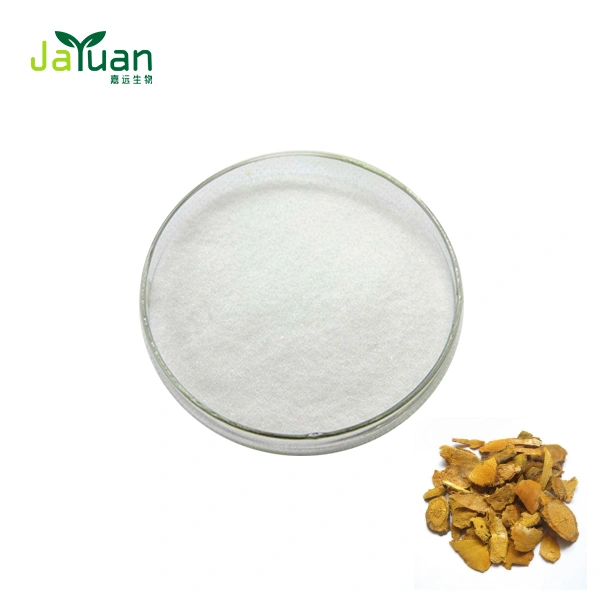

The Resveratrol Powder Uses in Supplements and Cosmetics
Resveratrol powder has gained prominence in the nutraceutical and cosmeceutical sectors because of its strong antioxidant activity and wide range of uses. This trans-isomer molecule, derived from principally Polygonum cuspidatum (Japanese knotweed) and grape skins, may be used by producers to develop solutions that target cardiovascular health, metabolic support and noticeable skin aging. B2B purchasers may use knowledge of the technical parameters, application, and sourcing of trans-resveratrol to create competitive product lines that meet strict quality criteria.
Understanding Resveratrol Powder and Its Core Benefits
Chemical Structure and Bioactivity
The preferred form in commercial formulations is the physiologically active isomer trans-resveratrol. The trans-form has enhanced penetration via the cell membrane as compared to its cis-form (formed during light exposure) that has dramatically less bioactivity. It is a lipophilic polyphenol and is little soluble in water (<0.03 mg/mL) but soluble in ethanol and organic solvents, which has a great impact on the formulation approaches. HPLC research shows that high-grade resveratrol powder is pure at 98% or more, meaning there is no disturbance from inactive chemicals or contaminants originating from the plant.
Trans-resveratrol has the molecular framework that enables it to alter the cellular signalling pathways linked to oxidative stress and inflammatory responses. The compound is classed as Class II in the Biopharmaceutics Classification System, with limitations in dissolution rates under gastrointestinal conditions; nonetheless, the existing production procedures provide micronized particles with D90 values fewer than 10 microns.
Cardiovascular and Metabolic Support
In clinical study, standardized resveratrol extract has been shown to promote cardiovascular function via numerous pathways. The chemical stimulates Sirtuin 1 pathways that regulate lipid metabolism and cellular energy balance. Trans-resveratrol is used in formulations for metabolic health by supplement producers, usually in doses of 100 to 500 mg daily. The supplier must offer pharmaceutical quality material of uniform potency from batch to batch during manufacture as per the below standards.
Skin Rejuvenation and Anti-Aging Properties
Resveratrol powder is a strong free radical scavenger in topical applications. It has tyrosinase inhibitory capabilities applicable for skin tone uniformity. Cosmetic formulators like its potential to promote skin collagen production and diminish the visual indications of photo-aging. The photosensitivity of the chemical calls for careful formulation with stabilizing agents and light protective packaging to ensure effectiveness throughout the product shelf life.
Comparing Resveratrol Powder with Other Forms and Related Ingredients
Powder Versus Capsule and Liquid Formats
For B2B customers, resveratrol powder provides specific benefits over pre-encapsulated or liquid versions. Raw powder form gives the most flexibility in formulation and allows producers to vary concentrations based on the particular needs of the product. If you are working with unique mixes that include resveratrol with other antioxidants that compliment it such as curcumin or NMN, it is easier for powder ingredients to meld together during the blending process.
The issue of bioavailability remains. Liquid extracts are frequently instantaneously soluble but often contain lower levels of active chemicals and need preservation methods. As a powder, the substance may be delivered utilizing targeted delivery techniques such as liposomal encapsulation or cyclodextrin complexation, to improve the rate of absorption in the intestine without impacting the stability of the ingredient during storage.
Natural Extract Versus Synthetic Production
Most commercially available trans-resveratrol is extracted from Polygonum cuspidatum because of better yield economics than products extracted from grapes. Our manufacturing facility includes a dynamic countercurrent extraction with ultrasonic aided procedures providing 30-50% better efficiency compared to conventional immersion processes. This minimizes solvent use, while keeping the profile of natural compounds sought in clean-label applications.
You can make resveratrol synthetically, but the market for natural goods is impervious to that. Plant resveratrol powder also corresponds to the consumer's taste for botanical ingredients, especially in formulas that are certified organic. Co-occurring polyphenols with potential synergistic antioxidant activity are also obtained via the natural method of extraction, however the standardization is focused on trans-resveratrol as the marker chemical.
Positioning Against Other Antioxidants
When considering resveratrol powder vs. alternatives like grape seed extract or green tea polyphenols, formulators must evaluate the individual bioactive pathways. Grape seed proanthocyanidins provide alternative antioxidant mechanisms and aqueous solubility properties to complement the lipophilicity of resveratrol. By strategically blending ingredients, product manufacturers are able to produce products with several mechanisms of action that appeal to a wide range of market sectors, from supplements supporting cardiovascular health and immune health to all-inclusive anti-aging skin care systems.
Applications of Resveratrol Powder in Supplements and Cosmetic Products
Nutraceutical Formulations
The major outlet for high purity resveratrol powder is nutritional supplement use. Each wellness category is addressed by manufacturers via the development of formulations. Dosage forms include tablets, capsules and functional beverage applications. Longevity supplements often mix resveratrol with NAD+ precursors to create synergistic blends that appeal to customers interested in health enhancement via metabolism.
Cardiovascular health formulations usually include 200-500 mg of standardized trans-resveratrol, with omega-3 fatty acids and Coenzyme Q10. Such complicated formulations necessitate providers capable of providing technical help in ingredient compatibility and stability testing processes. manufacture is GMP-certified with moisture content held below 0.5% to avoid deterioration during manufacture and storage, providing consistent batch-to-batch performance.
Weight control supplements contain resveratrol powder for its metabolic modulating abilities. When combined with green tea extract and conjugated linoleic acid, the chemical may be formulated into finished products targeting several pathways involved in fat metabolism and energy use. In such cases the 98% purity standard is highly significant, as it optimizes the release of active chemicals without requiring pill sizes that are excessively large and lead to poor compliance.
Cosmeceutical Applications
Resveratrol powder antioxidant power is used in topical skincare formulas to alleviate obvious signs of aging. Anti-aging serums generally include 0.5-2% of trans-resveratrol, either pre-dissolved in glycols or micro-encapsulated to counteract the compound’s natural hydrophobicity. This technological issue requires vendors that understand cosmetic formulation chemistry and can give application support beyond just selling ingredients.
Brightening formulations employ the tyrosinase inhibitory characteristics of resveratrol and add niacinamide and alpha-arbutin for a one-two punch against melanin. The propensity of the powder to discolour in aqueous media necessitates careful pH optimization and incorporation of chelating agents that prevent oxidative degradation. Our technical team helps cosmetic firms to design stable formulations that preserve the action of resveratrol over the standard 24-36 month product lifespan.
Resveratrol powder is also included in anti-inflammatory lotions and protective moisturizers to help enhance skin barrier integrity and minimize reactions to environmental stressors. These formulations benefit from the compound’s capacity to control inflammatory mediators and to directly neutralize free radicals. Its compatibility with peptides, retinoids and derivatives of vitamin C, gives the formulator the possibility to construct sophisticated multi-active systems to combat complicated causes of skin aging.
Handling and Formulation Best Practices
Successful product development with resveratrol powder requires attention to stability considerations. The compound exhibits photosensitivity and oxidative vulnerability, necessitating nitrogen-flushed packaging and amber glass containers during storage. Manufacturing environments should maintain temperatures below 25°C, with relative humidity controlled to prevent moisture absorption that accelerates degradation.
When developing liquid supplement formats or aqueous cosmetic formulations, manufacturers must implement solubilization strategies. Common approaches include complexation with beta-cyclodextrin, incorporation into nanoemulsion systems, or dispersion using non-ionic surfactants. These technical requirements underscore the importance of partnering with suppliers offering formulation support and application expertise rather than simply commodity ingredient sales.
Sourcing and Procurement Guide for Bulk Resveratrol Powder
Supplier Evaluation Criteria
Selecting the appropriate resveratrol powder supplier demands thorough due diligence beyond basic price comparison. Reputable manufacturers maintain vertically integrated supply chains, controlling raw material cultivation through final purification stages. Our facility's proximity to the Qinling Mountains—a major Polygonum cuspidatum cultivation region—ensures consistent botanical access while reducing supply chain vulnerabilities associated with distant sourcing.
Quality assurance systems represent the foundation of reliable supplier relationships. Look for partners implementing dual quality control methodologies that combine real-time process monitoring with comprehensive offline testing. Our production facility employs near-infrared spectroscopy for continuous extract concentration monitoring during processing, complemented by HPLC and GC-MS analysis confirming EP/USP pharmacopoeia compliance before release.
Certification and Regulatory Compliance
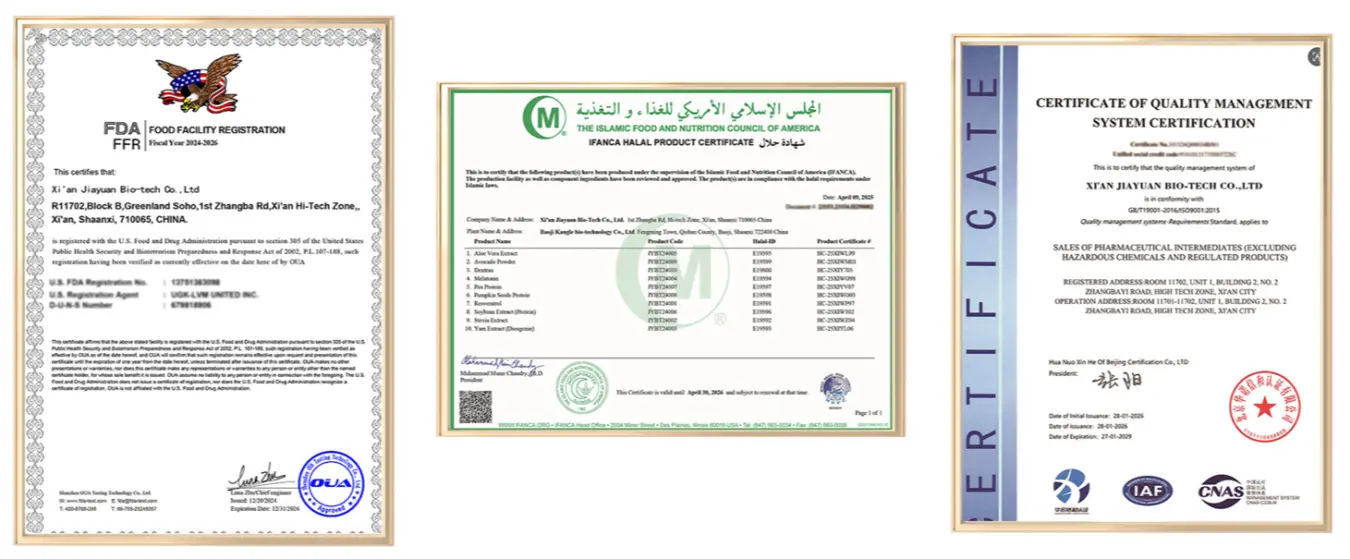
B2B procurement decisions must account for destination market requirements. European pharmaceutical manufacturers require suppliers holding GMP certification under EU guidelines, while U.S. nutraceutical brands prioritize NSF or USP verification programs. Our facility maintains ISO 13485 certification alongside GMP compliance, enabling ingredient sales across major regulatory jurisdictions without requiring buyers to navigate complex import documentation independently.
Organic certification adds value for brands targeting natural products markets, though it typically increases procurement costs by 15-25% compared to conventional botanical extracts. Clean-label initiatives and non-GMO verification represent additional certification layers that differentiate premium suppliers from commodity producers. When evaluating certification claims, request current certificates directly from certifying bodies rather than relying solely on supplier-provided documentation.
Cost Structure Analysis
Understanding resveratrol powder pricing requires examining multiple cost drivers beyond raw material expenses. Purity specifications exert the greatest influence on unit costs, with pharmaceutical-grade 99% material commanding premiums of 40-60% over cosmetic-grade 95% powder. This differential reflects the additional chromatographic purification steps required to achieve pharmaceutical specifications while maintaining the critical trans-isomer configuration.
Purchase volume significantly impacts achievable pricing, with quantity breaks typically occurring at 25 kg, 100 kg, and 500 kg threshold levels. Our 10-ton annual production capacity enables competitive bulk pricing through fixed-cost dilution, delivering unit costs substantially below small-scale specialty producers. Solvent recovery systems achieving 90% ethanol reclamation rates further reduce manufacturing expenses, benefits we transfer to B2B buyers through competitive wholesale pricing structures.
Logistics and customs clearance represent often-overlooked procurement costs. Working with suppliers offering delivered-duty-paid terms simplifies import procedures, particularly for buyers lacking international trade expertise. We maintain partnerships with major freight forwarders including FedEx, DHL, and UPS, providing door-to-door delivery with customs clearance support for European and North American destinations. This comprehensive service eliminates the hidden costs and delays associated with managing international logistics independently.
How to Choose the Right Resveratrol Powder for Your Business Needs
Matching Specifications to Applications
Selection of resveratrol powder should be driven by product development goals, not just pricing. For pharmaceutical businesses, clinical-grade supplements need 99% material, and full impurity profiles and residual solvent testing. Cosmetic manufacturers that produce luxury skincare products usually specify 95-98% purity grades, combining financial concerns with the performance expectations of discriminating customers.
Particle size parameters impact processing features and bioavailability results. Micronized resveratrol powder with D90 values less than 10 microns mixes more consistently into tablet matrices and capsule blends, and may also enhance dissolving rates inside gastrointestinal environments. Common mesh sizes ( 80-120 mesh ) are sufficient for most uses but may need extra processing steps in formulation .
Supplier Partnership Considerations
Beside product specs, you should also assess possible suppliers on the basis of their technical support skills and customization services. Manufacturers providing OEM formulation development support brands that lack in-house R&D capabilities, speeding time-to-market for innovative product ideas. Beyond basic ingredient transactions, we offer formulation consultancy, stability testing methodologies and regulatory paperwork help.
Strategic suppliers are distinguished from transactional vendors by after-sales assistance. Seek for partners that maintain technical hotlines, provide reformulation support should stability problems occur and can fast-track delivery for emergency production needs. Our customer service infrastructure offers fast responses to technical questions and includes multilingual support specialists to remove communication hurdles that may occasionally hamper international supplier agreements.
Emerging Market Trends
The desire for organically produced antioxidant compounds such as resveratrol powder is still being fueled by the clean-label movement. “Consumers are increasingly looking at the provenance of ingredients, with a preference for botanical extracts over synthetic ones, despite the potential price premium. And this tendency is an opportunity for businesses who build goods around themes of transparency and natural sources.
Another major trend is the use of combination formulations, in which resveratrol is combined with other synergistic substances such as pterostilbene, quercetin and curcumin. The multi-antioxidant mixtures are appealing to customers seeking broad-based health solutions rather than single-ingredient goods. Suppliers who provide pre-blended, standardized combinations make production easier and ensure that the ingredients are compatible, thanks to verified formulation standards.
As environmental awareness trickles down into B2B buying departments, sustainable manufacturing techniques are influencing purchase choices. We handle wastewater in a zero liquid discharge manner and compost the extraction wastes at our facilities, fulfilling the corporate sustainability commitments that are becoming more prevalent among the big supplement and cosmetic businesses. Green manufacturing certificates may be used for marketing and meet the standards of corporate responsibility.
Conclusion
Resveratrol powder is a flexible ingredient for the nutraceutical and cosmeceutical industries and is used in cardiovascular supplements, metabolic health formulae and sophisticated anti-aging skin care systems. Material procurement is successful when suppliers are evaluated on quality certificates, manufacturing capacity, technical support infrastructure and supply chain dependability rather than price alone. The trans-isomer’s unique bioactivity profile and the rising popularity of clean-label trends make this botanical extract a crucial ingredient for businesses looking for natural antioxidant solutions. Understanding formulation needs and regulatory issues and new trends in the marketplace allows B2B buyers to make intelligent sourcing selections that will help ensure long-term product success and brand distinction in competitive marketplaces.
FAQ
1. What is the typical shelf life of bulk resveratrol powder?
When stored properly in sealed, nitrogen-flushed containers below 25°C and protected from light exposure, high-purity resveratrol powder maintains stability for three years or longer. The moisture control specification of ≤0.5% proves critical for extended shelf life, as hygroscopic degradation accelerates oxidative breakdown of the sensitive trans-isomer.
2. How can I verify the authenticity and purity of resveratrol powder from suppliers?
Request Certificates of Analysis showing HPLC testing results against certified reference standards, specifically confirming trans-resveratrol content and absence of the inactive cis-isomer. Reputable suppliers provide batch-specific documentation including residual solvent testing, heavy metal analysis, and microbiological screening. Consider engaging third-party laboratories for independent verification testing when establishing new supplier relationships.
3. Is resveratrol powder compatible with other active ingredients in formulations?
Trans-resveratrol demonstrates broad compatibility with most supplement and cosmetic actives, though pH optimization proves important in aqueous systems. The compound remains stable across pH ranges of 4-7, making it suitable for combination with vitamin C derivatives, niacinamide, and peptides in skincare applications. In supplements, resveratrol works synergistically with omega-3 fatty acids, CoQ10, and NAD+ precursors without significant interaction concerns.
Partner with a Trusted Resveratrol Powder Manufacturer
Xi'an Jiayuan Bio-Tech specializes in producing pharmaceutical-grade and cosmetic-grade trans-resveratrol through advanced extraction technologies that deliver consistent purity levels exceeding 98%. Our vertically integrated supply chain, anchored by controlled cultivation areas near the Qinling Mountains, ensures stable raw material access and competitive pricing structures that benefit bulk purchasers. As an established resveratrol powder supplier holding GMP, ISO, and HALAL certifications, we serve pharmaceutical companies, cosmetic brands, nutraceutical manufacturers, and research institutions across North American and European markets. Our comprehensive service model includes customs clearance support, technical formulation consulting, and flexible OEM development options tailored to your specific product requirements. Contact our team at sales@jayuanbio.com or sales1@jayuanbio.com to request samples, discuss customization possibilities, or obtain volume pricing for your next production run. Visit jayuanbio.com to explore our complete botanical extract portfolio.
References
1. Baur, J.A., and Sinclair, D.A. (2006). "Therapeutic Potential of Resveratrol: The In Vivo Evidence." Nature Reviews Drug Discovery, 5(6), 493-506.
2. Gambini, J., Inglés, M., Olaso, G., et al. (2015). "Properties of Resveratrol: In Vitro and In Vivo Studies about Metabolism, Bioavailability, and Biological Effects in Animal Models and Humans." Oxidative Medicine and Cellular Longevity, Article ID 837042.
3. Cottart, C.H., Nivet-Antoine, V., and Beaudeux, J.L. (2014). "Review of Recent Data on the Metabolism, Biological Effects, and Toxicity of Resveratrol in Humans." Molecular Nutrition & Food Research, 58(1), 7-21.
4. Zillich, O.V., Schweiggert-Weisz, U., Eisner, P., and Kerscher, M. (2015). "Polyphenols as Active Ingredients for Cosmetic Products." International Journal of Cosmetic Science, 37(5), 455-464.
5. Walle, T. (2011). "Bioavailability of Resveratrol." Annals of the New York Academy of Sciences, 1215(1), 9-15.
6. Patel, K.R., Scott, E., Brown, V.A., et al. (2011). "Clinical Trials of Resveratrol." Annals of the New York Academy of Sciences, 1215(1), 161-169.