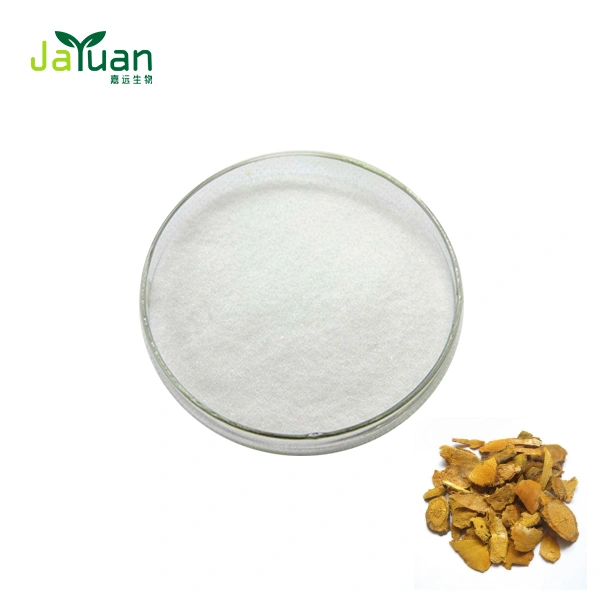

Resveratrol Powder for Skincare: Benefits and Formulation Tips
The most sought-after active ingredient in modern skincare preparation is resveratrol powder. This polyphenolic stilbene, derived from the root of Polygonum cuspidatum (Giant Knotweed), has been shown to offer measurable antioxidant activity, aids in supporting collagen formation, and may assist in promoting a more uniform skin tone. Understanding of the behaviour of resveratrol powder in different product formats such as serum, cream and mask is critical knowledge for the cosmetic ingredient formulators and procurement professionals to develop high-performance market-ready skincare lines.
Understanding Resveratrol Powder and Its Skincare Benefits
Resveratrol powder is a phytoalexin, a substance produced by plants as a defence mechanism against hazardous elements in their environment. The biologically active form is the trans-isomer (trans-3,5,4'-trihydroxystilbene). It has the protecting power formulators require. Combined with topical solutions it fights free radicals at the cellular level, assists the skin's healing processes and diminishes the look of oxidative stress-induced ageing.
Anti-Aging and Skin Repair Activity
In a 2013 study published in the Journal of Drugs in Dermatology, resveratrol powder was shown to boost collagen formation and lower the activity of matrix metalloproteinase. These are two mechanisms that are intimately linked to the ageing process of the skin. At the concentrations suggested for cosmetics (0.5%-1%) it aids skin suppleness and rejuvenation without increasing sensitivity. The results make it a very attractive ingredient to formulate into high-end anti-aging products.
Brightening, Hydration, and UV Protection
Resveratrol slows down the ageing process and also acts as a tyrosinase inhibitor, making the skin more even. It also works with lipid bilayers in the stratum corneum to reinforce the skin’s barrier against dampness. A 2016 study published in Experimental Dermatology showed polyphenolic compounds like resveratrol decreased the oxidised indicators induced by UV rays in keratinocytes. It can accomplish so many things that OEM manufacturers and cosmetic businesses keep it on their short list of active chemicals.
Effective Formulation Tips for Resveratrol Powder in Skincare Products
Resveratrol powder doesn’t dissolve well in water and breaks down quickly in light, air or high pH environments, making it difficult to blend with other ingredients. Taking these elements into account early on in the creation process will save the quality of the ingredients and the performance of the end product.
Recommended Concentration and pH Range
Resveratrol powder is often found in cosmetic serums and nite creams in amounts ranging from 0.1% to 1.0%. Keeping the pH of the mixture between 4.5 and 6.0 slows oxidation down a lot. Vitamin E (tocopherol) and ferulic acid are known to work together to keep things stable, which extends the shelf life of the active ingredient in a finished product.
Delivery Systems That Enhance Bioavailability
Standard water-based emulsions can't fully use resveratrol's ability to penetrate the skin because it is lipophilic. These are the delivery systems that professional formulators use most often right now:
- Liposomal encapsulation surrounds resveratrol in phospholipid bilayers that look like the membranes of skin cells. This greatly improves absorption through the skin and keeps the active from oxidizing too quickly before it hits the target skin layer.
- Nanoemulsion systems reduce the size of particles to less than 200 nm, making a stable, clear formulation matrix with a higher transdermal flux than regular emulsions. This is especially helpful for light serum formats.
- Cyclodextrin complexation adding cyclodextrin to an active ingredient makes it more water-soluble without changing its molecular structure. This means that it can be used with hydrophilic formulation bases like toners and gel moisturizers.
The format of your goods and the experience you want your customers to have will help you choose the best delivery option. The above systems each have their own stability and absorption profiles that your formulation team should compare to the product brief.
Comparing Resveratrol Powder with Other Skincare Ingredients and Forms
Powder form is better than liquid extracts or concentrates that have already been dissolved. It allows for more accurate doses, longer storage stability under the right conditions, and more systems that work with both dry and emulsion-based systems. When compared to capsules made for oral intake, cosmetic-grade resveratrol powder mixes easily into external vehicles without the need for extra steps of processing.
Resveratrol Powder vs. Grape Seed Extract and Quercetin
Proanthocyanidins in grape seed extract are very good at getting rid of free radicals, but the tannins in it can mess up the texture of some emulsions. Quercetin is an antioxidant that works in some of the same ways as quercetin, but it has a stronger bitter taste and a yellow color that can make some formulations look less appealing. Resveratrol powder has a clearer color profile and a well-known mode of action when it is supplied at 98% trans-isomer purity. Putting all three of these ingredients together in a multi-antioxidant serum makes it more safe than any single ingredient working by itself.
Procurement Guide: How to Source High-Quality Resveratrol Powder for Skincare Formulations
When choosing a supplier, the risk of batch-to-batch inconsistency is either locked in or taken away. When buying teams look at resveratrol powder suppliers, the following factors must be met in order for the supply chain to be reliable:
- Purity grading and documentation: Reliable sellers give COAs that have been checked by HPLC and show the amount of trans-isomer present. Material for cosmetics should always have a purity level above 95%, and material for medicines should have a purity level of ≥99%. Don't just ask for a generic specification sheet; always ask for testing data that is specific to the batch.
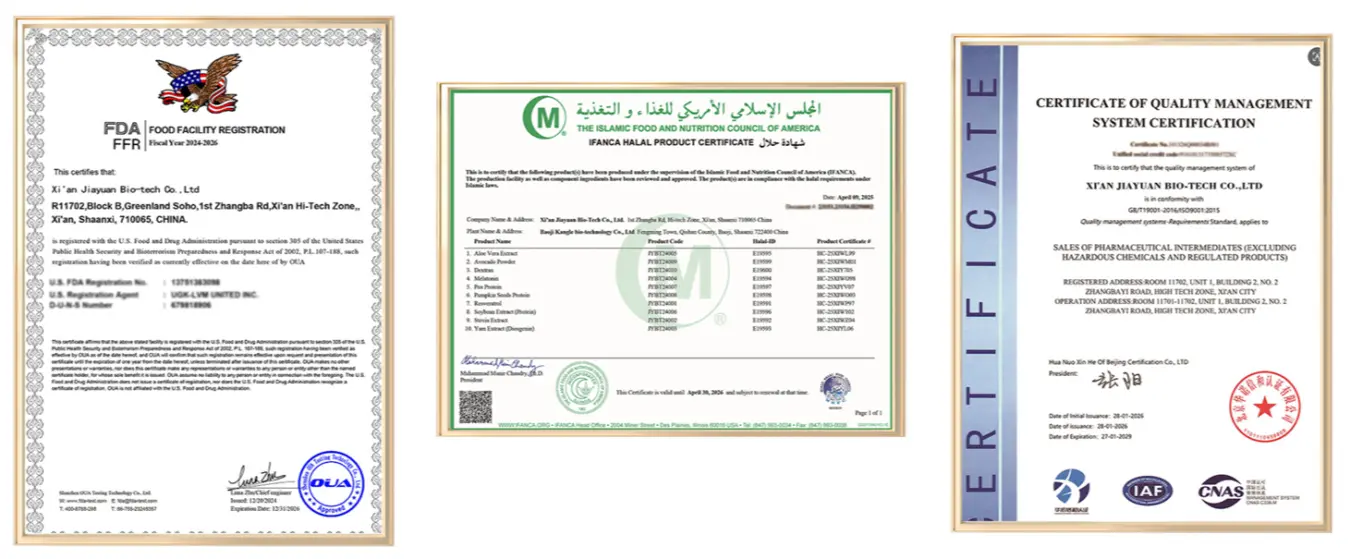
- Manufacturing certifications: To get into the European and US markets, you need to have GMP approval and ISO 13485 compliance. They show that a company's quality systems, from receiving raw materials to packaging the finished product, work within approved guidelines.
- Stability data and packaging standards: Moisture content ≤0.5% and nitrogen-filled, sealed packages are very important for keeping the antioxidant power over a long supply chain. Before you agree to bulk sales, ask for proof of the shelf life.
These criteria make it easy to compare suppliers across different price ranges. When you make long-term deals with makers whose supply chains are vertically linked, you can be sure of more stable costs and better quality inputs than when you buy on the spot market.
Safety, Side Effects, and Regulatory Considerations for Resveratrol in Skincare
Resveratrol powder is very safe when used in small amounts for beautifying purposes. At the concentrations used in marketed skin care products, no significant sensitization or irritation was found in published safety assessments, such as the Cosmetic Ingredient Review (CIR) evaluation. The chemical name for it is "Resveratrol," and both the FDA and the EU require clear labeling rules for cosmetics (EC) No 1223/2009.
Formulators who want to sell their products in other countries should check to see if there are any concentration limits in those countries and make sure that all COAs are included with the import paperwork. Transparent records of seller approval make things run more smoothly at customs and create the kind of supply chain paperwork that clients and third-party auditors now expect to see as normal.
Conclusion
Resveratrol powder is becoming more and more popular as a high-performance ingredient in anti-aging creams, cosmeceutical serums, and whitening formulas. Because it is a strong antioxidant, works with modern delivery systems, and has a well-known safety record, it is a reliable base for high-end skin care lines. The scientifically proven potential of an ingredient is what determines whether it makes it to the finished product. Sourcing decisions are based on verified purity grades, certified manufacturing standards, and stable supply partnerships.
FAQ
1.How should resveratrol powder be stored before formulation?
Keep it somewhere cool and dry, out of direct sunlight, and preferably below 25°C. During shipping and storage, oxidative breakdown can't happen because the package is tightly sealed and filled with nitrogen. Once opened, keep it out of the air as much as possible and quickly repackage. Trans-isomer integrity is kept safe by proper keeping, and your designed product will work as expected from the first batch to the last.
2.Can resveratrol powder be combined with Vitamin C in a single formula?
Yes, but controlling pH is very important. Both actives work best in an acidic environment (pH 3.5–5.5), and their antioxidant systems work together instead of against each other. If oxidative synergy is a problem, use a stabilized Vitamin C derivative like ascorbyl glucoside. Also, test your final mix for stability quickly at 40°C/75% RH before scaling it up.
3.What grade of resveratrol powder is appropriate for topical skincare versus oral supplements?
Cosmetic-grade resveratrol powder (>95% trans-resveratrol) can be used on the skin in serums and creams. To meet the requirements of the USP/EP pharmacopeia, oral dietary supplement formulations usually need ingredients that are at least 98% pure. Pharmaceutical-grade (≥99%) is only used in situations where tighter rules need to be followed. Always make sure that the grade of the item fits the type of product you want to make and the rules in the market where you want to sell it.
Partner with Jiayuan Bio-Tech for Certified Resveratrol Powder Supply
Jiayuan Bio-Tech is a reliable company that makes resveratrol powder. They have two GMP production lines, ISO certification, and can make 10 tons of powder every year, which means that their unit costs are 40% to 60% lower than those of small-batch rivals. Our SMB chromatographic processing keeps the purity above 98% from batch to batch, and nitrogen-sealed packing makes the shelf life longer than three years. Cosmetic-grade, food-grade, and pharmaceutical-grade requirements are all supported, and small batches can be customized. Get in touch with our team right away to ask for samples, COAs, or bulk pricing. You can email us at sales@jiayuanbio.com or sales1@jiayuanbio.com, and you can look through our full list of ingredients at jayuanbio.com.
References
1. Baxter, R. A. — Journal of Drugs in Dermatology, 2008
2. Soleas, G. J., Diamandis, E. P., & Goldberg, D. M. — Clinical Biochemistry, 1997
3. Ratz-Łyko, A., & Arct, J. — Journal of Cosmetic and Laser Therapy, 2019
4. Ndiaye, M., Philippe, C., Mukhtar, H., & Ahmad, N. — Experimental Dermatology, 2011
5. Craft, B. D., Kerrihard, A. L., Amarowicz, R., & Pegg, R. B. — Comprehensive Reviews in Food Science and Food Safety, 2010
6. Cosmetic Ingredient Review (CIR) Expert Panel — International Journal of Toxicology, 2020