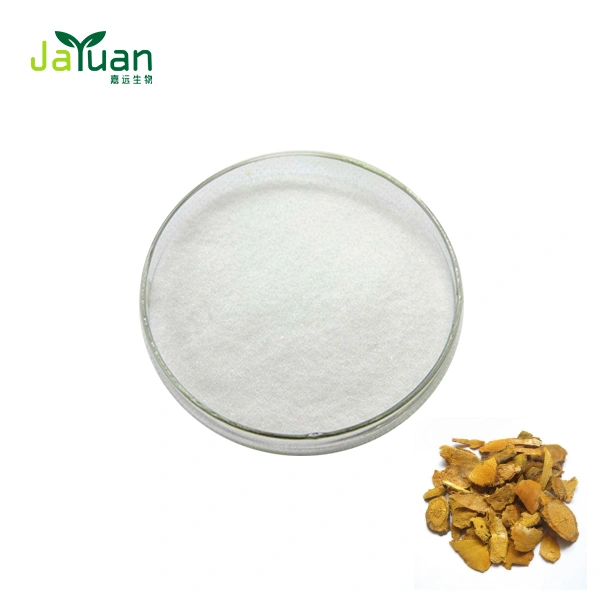

Resveratrol powder benefits for skin and anti-aging
Resveratrol powder is now one of the most popular active ingredients in the dietary supplement, cosmeceutical and functional food businesses. Resveratrol powder is a standardised trans-isomer polyphenol from Polygonum cuspidatum (Giant Knotweed) that provides demonstrable antioxidant activity that formulators may rely on for its anti-aging, skin-brightening and cellular vitality uses. Whether you are creating capsules, topical serums, functional beverages or cosmetic lines, this book leads you through the science, sourcing logic and formulation fundamentals that B2B buyers need to make confident procurement decisions.

Understanding Resveratrol Powder and Its Skin Benefits
Resveratrol powder is a powerful stilbene phytoalexin. It acts through its trans-isomer structure which is trans-3,5,4'-trihydroxystilbene in living things. * Helps prevent formation of reactive oxygen species at cellular level * Helps keep inflammation pathways in check * Helps body manufacture collagen All of these things impact the way skin matures directly.
Antioxidant Mechanism and Collagen Support
Oxidative stress is one of the key reasons of skin ageing. The resveratrol powder works to eliminate free radicals because it has a redox potential that is similar to many artificial antioxidants. The topical use of 1% to 2% trans-resveratrol reduces reactive indicators and stimulates fibroblast activity, according to a peer-reviewed study published in Dermatologic Therapy . This helps retain the contour of the dermis. That’s why resveratrol powder is an excellent thing to use in nighttime creams and serums that combat ageing.
Skin-Brightening and UV-Protective Properties
Tyrosinase is an enzyme important for the synthesis of melanin. Resveratrol powder inhibits tyrosinase. Thus, it may improve the skin without harsh bleaches. It also reduces the harm that UV light can inflict to DNA when combined with the correct carrier systems. This makes it beneficial in wide spectrum photoprotective cosmetics. The body’s antioxidant defences are enhanced both by ingesting functional drinks and pills, and by applying them to the skin.
Comparative Analysis — Choosing the Right Resveratrol Form for Your Product Line
Different forms of an ingredient don't always work well together. Because it can be mixed directly into topical bases, liquid matrices, or capsules at the amount recommended by the maker, resveratrol powder offers greater flexibility than pre-formed capsule ingredients.
When buyers and formulators make choices, these are the main things they should think about:
- Purity grade alignment: Pharmaceutical-grade resveratrol powder (≥99%) is good for high-end skin care products and mouth supplements. Cosmetic-grade resveratrol powder (≥95%) is good for skin care products that you rinse off and leave on. You can avoid the costs of over-specification while still following the rules by making sure the grade is right for the job.
- Trans-isomer integrity: In living things, the cis-isomer doesn't do anything. If you want to buy resveratrol powder from a reputable company, the certificates of analysis (COA) should be checked by HPLC and show the amount of trans-resveratrol, not total resveratrol.
- Solubility and carrier compatibility: Resveratrol powder doesn't mix well with water because it prefers to bind to fats. Most of the time, formulators who are making water-based serums need micronized or microencapsulated types. Normal powder is simple to mix with oil-based softgels or lip serums, such as grapeseed or squalane.
- Synergistic pairing potential: You can make anti-aging stacks that work in more than one way by mixing resveratrol powder with other antioxidants like vitamin C, coenzyme Q10, or niacinamide. Makers say that serums with hyaluronic acid and resveratrol powder are more steady and customers like them better when they are mixed together.
These differences make it easy for procurement teams to pick resveratrol powder that fits both the needs of the formulation brief and the marketing positioning of the finished product.
Procurement and Supply Chain Considerations for Resveratrol Powder
Getting a lot of resveratrol powder changes a lot of things about the product that affect how stable it is, how much it costs, and how legal it is. Formulators often say that the purity of one batch is different from another. Even more so with cosmetic lines, where the color, smell, and amount of active ingredient can change how the final product looks.
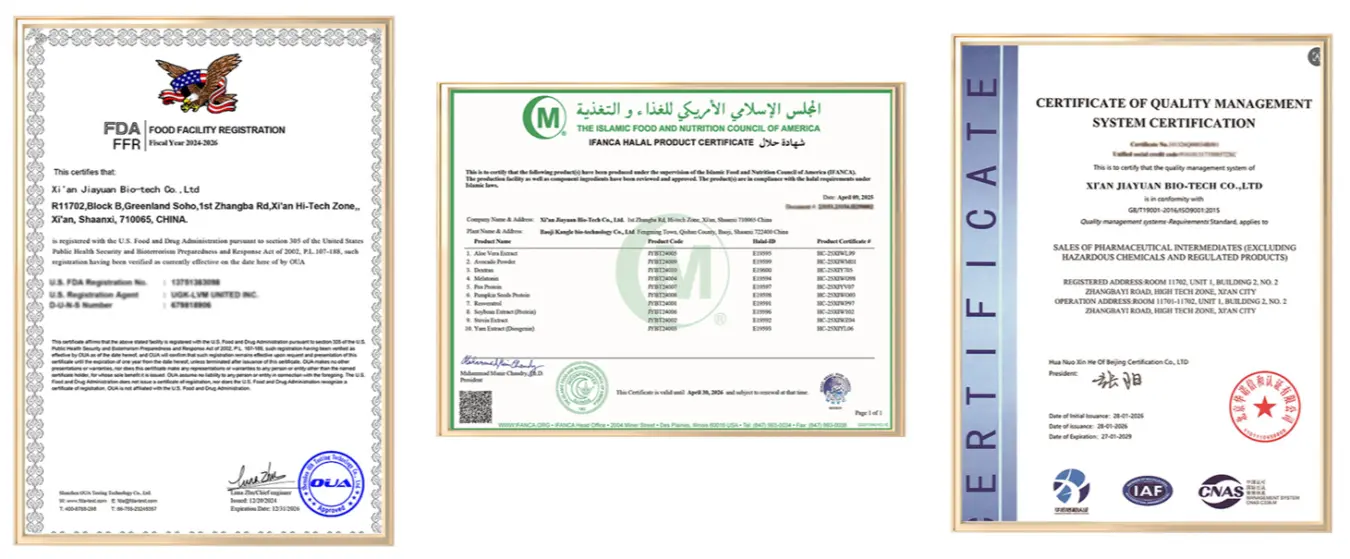
What to Require from Your Supplier
A trustworthy business that makes resveratrol powder should have production records that are GMP-certified, COA data that meets EP/USP standards, and HPLC proof from a third party for each lot. Getting ISO 13485 certification is an extra way to make sure the quality of products, which is helpful for supply chains in the skin care and nutrition industries. The way resveratrol powder is packed is also important because it is sensitive to air and UV light. The package can last longer than three years if you close it, fill it with nitrogen, and keep the moisture level at less than 0.5%. This keeps your investment in raw materials safe over long periods of time.
Evaluating Total Landed Cost
The price per kilogram can change. How smooth logistics are, how quickly customs clearance goes, how flexible the minimum order is, and how well solvent recovery works all have an effect on the total cost of procurement. Fixed-cost reduction means that unit costs are 40–60% lower for suppliers who make 10 tons of goods a year than for workshops that only make a few items at a time. This is an advantage of the way things are built that helps you reach your profit goals.
Incorporating Resveratrol Powder into Skin Care and Anti-Aging Products
To make a recipe that works with resveratrol powder, you need to pay close attention to how much of each item you use and how safe they are. Resveratrol powder is typically added to finished mixtures at a level of 0.1 to 2%. If there are more, oxidative discoloration can happen. We know this is a problem with the formula, but it can be fixed with vacuum-airless pump packing or nitrogen-blanked filling lines.
Oral Supplement Formats
Resveratrol powder is frequently mentioned as the primary ingredient in functional drinks, softgels, and pills designed to help people live longer and maintain a healthy metabolism. It's often mixed with NMN or NR to make stacks that turn on sirtuin. Most vitamins have between 100 mg and 500 mg of trans-resveratrol per dose when taken by mouth.
Cosmeceutical and Topical Applications
In the right form, resveratrol powder can be used in nite serums and focused treatment creams to fight free radicals and boost collagen. The browning reaction that can make a product look bad is stopped by microencapsulation technology, which makes transport much more effective. As niacinamide and retinol become more popular in high-end anti-aging lines, people who make leave-on products should make sure that these ingredients don't react badly with them.
Future Trends and Innovations in Resveratrol Powder Usage for Skin Care
Tomorrow, people will use resveratrol powder to take care of their skin in new and interesting ways. Ingredients are still being found in new ways because people want plant-based actives with clean labels. At the point where resveratrol powder is sold, the trend toward longevity supplements and the science-based cosmeceutical movement meet. These are two of the fastest-growing areas of health and beauty retail around the world.
With new extraction methods like simulated moving bed chromatography (SMB), it is now possible to make continuously something that is more than 98% pure. This is different from batch-mode purification, which used to make lots different. People don't make as many mistakes when production settings are handled by an automated DCS. This gives global names the stability they need. Zero-liquid discharge wastewater systems and recycled plant waste are two examples of environmentally friendly ways to make things that are in line with the ESG sourcing claims that many buyers in the US and Europe now use as part of their criteria for choosing sellers.
Conclusion
That being said, resveratrol powder is still a valuable and useful ingredient that has been shown to work in antioxidants, beauty items, and healthy foods. It is a star ingredient in high-end beauty and wellness brands because it brightens the skin, supports collagen, and is a powerful antioxidant. When choosing what to buy, it's important to think about pure trans-isomers, open COAs, grade-appropriate standards, and a provider system that can offer large-scale batch stability.
FAQ
1.What purity grades of resveratrol powder are available for B2B formulation?
There are three kinds of resveratrol powder on the market: cosmetic-grade (≥95%), food-grade (≥99%), and pharmaceutical-grade (≥99%). The right grade depends on how you put your work in. The ingredients used in cosmetics and topical products are usually cosmetic-grade. On the other hand, APIs for oral supplements should be pharmaceutical-grade and have their quality checked by HPLC against EP/USP standards.
2.How should resveratrol powder be stored to maintain potency?
Resveratrol powder needs to be kept in containers that are sealed and filled with nitrogen. These containers should be kept out of the sun and away from water. The shelf life is longer than three years if you package it right and keep the moisture level at ≤0.5%. It is best to open stock right away and store it somewhere cool and dry.
3.What documentation should I request from a resveratrol powder supplier?
Ask for a current COA that shows the amount of trans-resveratrol by HPLC, along with GMP certification, ISO paperwork, heavy metal and microbial testing results, and a study of the solvent that was used up. To get into the US market, you need to make sure that your production methods meet the rules set by the FDA in 21 CFR Part 111 for food ingredient sellers.
4.Is resveratrol powder stable in cosmetic formulations?
The trans-isomer stays stable at room temperature as long as oxygen is not present. However, it breaks down when oxygen and UV light hit it. To keep the active content high for as long as the product is on the shelf, formulators usually use microencapsulation, antioxidant co-formulation, or airless packing.
Partner with Jiayuan Bio-Tech — Your Trusted Resveratrol Powder Supplier
Jiayuan Bio-Tech is a reliable company that can sell you resveratrol powder. Jiayuan Bio-Tech operates GMP-certified, ISO-compliant production lines near the Qinling Mountains, giving us direct access to premium raw material sources and vertically integrated supply chain control. Our resveratrol powder achieves purity above 98% through SMB chromatographic purification, with every batch verified by dual HPLC and near-infrared quality systems. We support multi-grade specifications, flexible order quantities, and door-to-door logistics with customs clearance across the US and Europe. Contact our team today for bulk pricing, COA documentation, or a sample request. Reach us at sales@jiayuanbio.com or sales1@jiayuanbio.com, and visit jayuanbio.com for full product specifications.
References
1. Baxter, R. A. (2008). Anti-aging properties of resveratrol: Review and report of a potent new antioxidant skin care formulation. Journal of Cosmetic Dermatology, 7(1), 2–7.
2. Ndiaye, M., Philippe, C., Mukhtar, H., & Ahmad, N. (2011). The grape antioxidant resveratrol for skin disorders: Promise, prospects, and challenges. Archives of Biochemistry and Biophysics, 508(2), 164–170.
3. Ratz-Łyko, A., & Arct, J. (2019). Resveratrol as an active ingredient for cosmetic and dermatological applications. Journal of Cosmetic and Laser Therapy, 21(2), 84–90.
4. Bhat, K. P. L., & Pezzuto, J. M. (2002). Cancer chemopreventive activity of resveratrol. Annals of the New York Academy of Sciences, 957, 210–229.
5. Walle, T. (2011). Bioavailability of resveratrol. Annals of the New York Academy of Sciences, 1215(1), 9–15.
6. Cottart, C. H., Nivet-Antoine, V., Laguillier-Morizot, C., & Beaudeux, J. L. (2010). Resveratrol bioavailability and toxicity in humans. Molecular Nutrition & Food Research, 54(1), 7–16.