When to Choose Pure Melatonin for a Calmer Bedtime Routine
Choosing the right ingredient for a sleep aid formulation starts with understanding what sets high-grade options apart. Pure melatonin — specifically pharmaceutical-grade material with verified purity at 99%+ — is the preferred choice when your product line demands batch-to-batch consistency, full pharmacopeial compliance, and a clean safety profile. Whether you are developing USP-grade tablets, functional sleep gummies, or sublingual strips, pure melatonin delivers the physicochemical stability and documentation integrity that quality and registration teams require before committing to any new supplier.

Understanding Pure Melatonin and Its Benefits
What Defines "Pure" in a Procurement Context
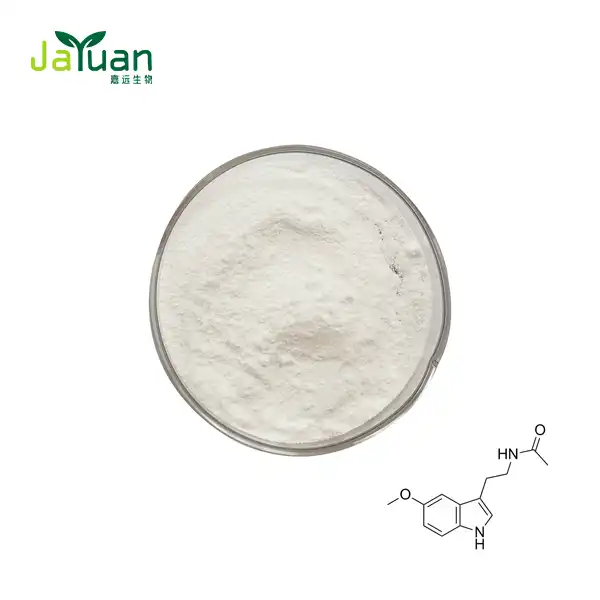
A white to slightly off-white crystalline powder with a freezing point between 117°C and 120°C is referred to as pure melatonin in a business-to-business setting. This temperature range is very tightly managed and directly reflects the quality of the ingredient. The compound doesn't dissolve completely in water, but it dissolves very easily in ethanol and propylene glycol. This makes it useful for solid, liquid, and topical delivery systems. Importantly, pharmacopeial standards like USP 43 and EP 10.0 set tight limits on substances that are related, especially Peak E contaminants that have been linked to past worries about eosinophilia-myalgia syndrome. When a supplier's COA shows that they meet these standards, it gives quality teams the confidence in the documentation they need.
An ingredient that is very pure melatonin helps the body's natural circadian clock work better. Because it is made from chemicals, it is vegan-friendly and doesn't have the lot variation that comes with products made from phytomelatonin. These qualities directly mean less regulatory risk and more predictable formulation outcomes for procurement professionals who are looking for ingredients for pharmaceutical-grade finished products or high-end supplement lines. When the purity stays above 99%, there are fewer changes in the dissolving profiles. This means that label claims can be trusted more, and the product goes more easily through both internal quality control and third-party proof.
Evaluating Pure Melatonin in the Context of Sleep Aid Solutions
Comparing Ingredient Grades Across Sleep Aid Categories
Not all of the ingredients in sleep aids have the same safety profiles or documentation. There isn't a lot of standards when it comes to herbal alternatives like valerian root or passionflower extract, which makes it hard to file registration dossiers in controlled markets. Standard manufactured melatonin with lower purity levels might still have solvents or amounts of heavy metals that aren't allowed that set off compliance flags when the import is being reviewed. Most of these factors are taken out of the equation by pure melatonin, which has been tested and verified to be 99.7% pure by HPLC and third-party labs like SGS or Eurofins.
This ingredient also works well when the dose is changed. Typical usage limits for all product forms are in line with the following standards:
- IR tablets and capsules: Pure melatonin's crystalline structure mixes predictably with common excipient systems, allowing direct compression without capping problems as long as the bulk density is kept at the right level.
- Extended-release and HPMC-matrix formulations: Precise mixing with hydroxypropyl methylcellulose matrices lets formulators copy a gradual secretion curve that happens throughout the nite. To get repeatable release profiles, they need a very pure starting material.
- Sublingual strips and ODTs: Micronized grades with d90 below 20 microns help the mucosa absorb the drug quickly, skipping the liver's first-pass metabolism. This transport benefit depends on how consistent the particle size is from the raw material source.
- Functional gummies and sleep shots: Liposomal encapsulation and cyclodextrin inclusion complexes deal with the fact that pure melatonin doesn't mix well with water. This makes it possible to make clear, stable liquid formulations as long as the starting powder doesn't have more than 0.5% moisture.
These format-specific factors show that the purity and physicochemical stability of the pure melatonin ingredient have a direct effect on how well the end product works across the portfolio.
Procurement Insights: Buying and Sourcing Pure Melatonin
Selection Criteria That Protect Your Registration and Supply Chain
It takes more than a low unit price to find a reliable pure melatonin supplier. There are four things that candidates must meet in order to be considered by the quality and registration teams: they must have current GMP certification, be in line with ISO standards, have full COA openness across all pharmacopeial parameters, and be able to get third-party proof through approved labs.
The way prices work in this group of ingredients rewards people who commit to buying a lot. A company that makes 10 tons of goods a year can offer unit prices that are 40% to 60% lower than those of small workshops. This is because of economies of scale, not because they are lowering the quality of their products. Solvent recovery systems that can collect at least 90% of the ethanol and methanol further lower the cost base without affecting the pure results. When teams are looking at prices, they should ask for proof of solvent residue limits along with the normal COA to make sure that these cost savings translate into material that is safe.
Choosing the form of a product also affects how operations are planned. Powder forms give you the most options for handling later on, while pre-weighed granular forms can make mixing easier in-house. The shelf life of sealed, nitrogen-flushed packaging that keeps moisture below 0.5% is extended beyond three years. This is an important factor for buyers who are managing multiple SKUs or long production schedules.

How Can Supplement Brands Reduce the Risks of Sourcing High-Purity Melatonin Raw Materials?
Once supplement brands switched from using lower-grade melatonin raw materials to pharmacopeial-compliant, 99%+ pure material, they consistently saw improvements in three areas: fewer QC rejections, fewer formulation changes during scale-up, and better retailer acceptance in regulated markets like the US and EU. A full COA includes information about the assay, related substances, heavy metals, loss on drying, residue on ignition, and melting point. This makes it easier to check the qualifications of suppliers and speeds up the time it takes to register new products.
Some common problems with this type of procurement are the risk of supply interruption, making sure that heavy metal limits are followed, and the effects on registration of moving raw material providers in the middle of a project. A fully integrated seller with deals to grow raw materials in-house and an SMB chromatographic purification process that runs constantly at above 98% purity is a more safe way to get supplies than traders on the spot market. These are the main things that procurement teams can do to lower the risk of sourcing:
- Choose at least two accepted providers and keep records for both of them so that you can change your registration without having to send in a full variation.
- Before signing a large-scale deal, ask SGS or Eurofins to retest data from at least the last two production runs.
- Check to see if the supplier's DCS-controlled manufacturing process makes batch records that are good enough to send in for a GMP audit.
- Before you agree to the transportation terms, make sure that the packing, labeling, and shelf-life claims are in line with the import and storage rules in your market.
By following these steps, buying pure melatonin stops being a reactive task and starts being a proactive quality testing strategy.
Conclusion
Pure melatonin that has been tested and proven to be pharmaceutical-grade pure is not just a common ingredient; it is an important safety asset for any brand that sells sleep aids in regulated markets. It is the best choice for quality-driven buying decisions because it has been proven to be more than 99% pure, comes with a full pharmacopeial COA, can be tested by a third party, and can be made in a variety of ways for solid, liquid, and skin applications. When the integrity of the raw materials is established early on, it's easier to predict how the formulation will work, how confident the registration will be, and how the market will accept it.
FAQ
1.Is pure melatonin safe across all adult consumer markets?
Regulatory agencies in the US, EU, and key Asian markets accept melatonin products that meet USP 43 and EP 10.0 standards and have limits on heavy metals and related chemicals that have been checked. When judging safety, the focus is on pure facts, not comments about origin.
2.How does pharmaceutical-grade melatonin differ from standard synthetic grades?
Assay results of 99% or higher (99.7% is possible in real life) are signs of pharmaceutical-grade material, as are tightly controlled impurity profiles and full pharmacopeial documentation. Standard synthetic grades might not have full COA coverage and verification from a third party.
3.What documentation should I request from a melatonin supplier?
Assay (HPLC), related substances, heavy metals, melting point, loss on drying, residue on ignition, and specific rotation are all part of the full COA. Retest reports from a third party, like SGS or Eurofins, make supplier qualification files stronger.
4.Will switching suppliers affect my existing product registrations?
In controlled markets, it might cause a variation notice to be sent. This process is made a lot easier by choosing a supplier with stable batch records and GMP documentation that is ready for an audit.
5.What is a realistic minimum order quantity for bulk pure melatonin powder?
Not all suppliers do this. Manufacturers whose production capacity is flexible can handle both large commercial orders and smaller batches used for testing.
Partner With Jiayuan Bio-Tech for Certified Pure Melatonin Supply
Jiayuan Bio-Tech provides pure melatonin powder that is suitable for medicinal use. The powder is 99.7% pure and comes with full USP 43-compliant COA paperwork as well as third-party retest support through SGS and Eurofins. Our GMP- and ISO-certified center, SMB chromatographic purification process, and nitrogen-sealed packages make sure that quality teams always have the supplies they need. As a reliable company that makes pure melatonin, we can help you buy in bulk, customize small batches, or ask for samples. You can visit jayuanbio.com or email us at sales@jiayuanbio.com or sales1@jiayuanbio.com to get your COA and start the approval process right away.
References
1. United States Pharmacopeia. USP 43–NF 38: Melatonin Monograph. United States Pharmacopeial Convention, 2020.
2. Hardeland, R. "Melatonin: A Pleiotropic, Orchestrating Regulator Molecule." Progress in Neurobiology, 2012.
3. Brzezinski, A. et al. "Effects of Exogenous Melatonin on Sleep: A Meta-Analysis." Sleep Medicine Reviews, 2005.
4. European Pharmacopoeia Commission. European Pharmacopoeia 10.0: Melatonin Monograph. Council of Europe, 2020.
5. Auld, F. et al. "Evidence for the Efficacy of Melatonin in the Treatment of Primary Adult Sleep Disorders." Sleep Medicine Reviews, 2017.
6. Grand View Research. Melatonin Market Size, Share & Trends Analysis Report. Grand View Research, 2023.