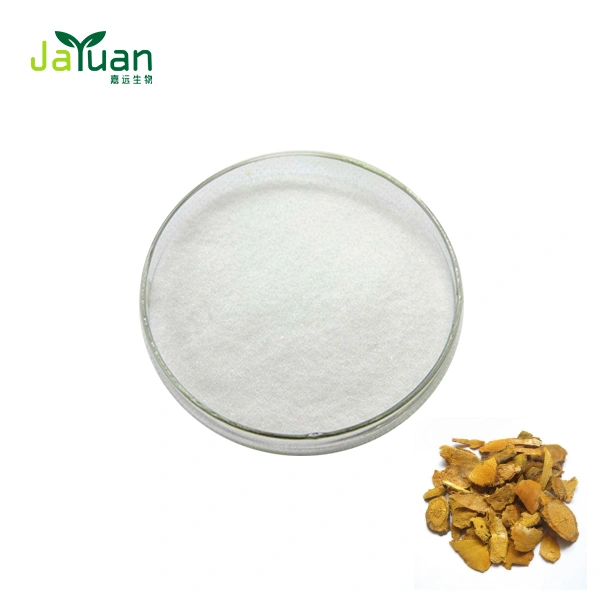

How Resveratrol Powder Works: A Simple Mechanism Guide
Resveratrol powder is a concentrated and standardised polyphenolic stilbene, mostly derived from the root of Polygonum cuspidatum (Japanese knotweed). It acts on sirtuin pathways, to neutralise free radicals and modulate inflammatory signalling at the cellular level. It is one of the most sought after raw ingredients in dietary supplement and cosmeceutical formulation today. For B2B procurement specialists seeking ingredients for capsules, functional beverages or skincare serums, the basis for every successful purchasing decision is to know exactly what resveratrol powder accomplishes inside a composition.
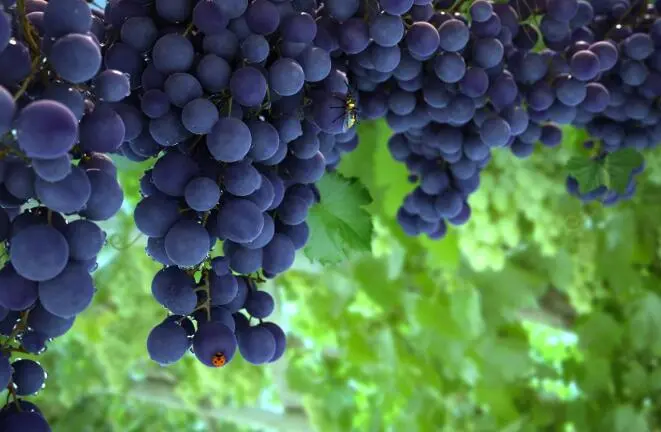
Understanding Resveratrol Powder: Composition and Mechanism
Mechanism The trans isomer is what formulators are wanting, trans-3,5,4’-trihydroxystilbene. It has a molecular mass 228.24 g/mol and melting point 253-255 ° C. Plants produce this stilbene phytoalexin as a defence against invasion by bacteria or fungus and that is why knotweed root contains such high levels of it.
How the Trans-Isomer Drives Bioactivity
The molecule is in a trans-configuration which makes it easy to bind to SIRT1 (Sirtuin 1) which is a NAD⁺ dependent deacetylase that has been linked to regulating metabolism and cell survival. SIRT1 up-regulation improves mitochondrial biogenesis and oxidative stress response mechanisms. That’s why resveratrol powder is so good in stacks of anti-aging pills with NMN or NR.
Why Powder Format Matters for Formulators
Powdered resveratrol is much easier to work with than liquid extracts or material that has already been put into capsules. Manufacturers keep full control over the accuracy of the dose, the choice of carrier, and the best particle size. Because the ingredient is lipophilic and doesn't dissolve well in water, formulators who work with aqueous bases, like functional drinks or water-based serums, usually use microencapsulation or co-solubilization with cyclodextrins to get around the problems with bioavailability. Some studies show that unaltered resveratrol is less than 1% bioavailable when taken by mouth. This shows how important smart delivery engineering is at the formulation stage.
Key Benefits of Resveratrol Powder for Health and Industry
There are three major commercial categories of known usage for this polyphenolic raw material, each with data reviewed by specialists in the area.
Together these use cases provide a strong case for using resveratrol powder as a valuable, multi-use component in any brand’s targeting of the premium wellness market.
- Cardiovascular and metabolic support Resveratrol activates AMPK signalling, which supports healthy fat metabolism and insulin sensitivity. Human clinical trials have employed oral doses from 150 mg to 1,000 mg per day, reporting benefits in endothelial function and fasting glucose indicators, which supplement makers cite to support their structure-function claims.
- Anti-Aging and Cosmeceutical Applications: The powder put on the skin assists in normalising skin tone by increasing collagen formation and inhibiting tyrosinase. The concern is instability from oxidation. That means the active ingredient breaks down and affects the colour of finished items when exposed to UV light or oxygen. This risk can be minimised through vacuum-airless pump packaging or co-formulation with antioxidants such as vitamin C or ferulic acid.
- Functional Food and Beverage Additions Makers are adding the substance to energy bars, nootropic drinks and candy. Microencapsulation conceals the natural bitter flavour and provides protection from high temperatures, retaining potency throughout shelf life.
Comparing Resveratrol Powder with Other Formats and Extracts
Powdered bulk extract does better than liquid concentrates and pre-made tablets in a number of ways that are important to commercial buyers. There is more water action in liquid forms, which speeds up degradation and shortens shelf life. When finished goods are pre-encapsulated, the formulator loses control over how the dose is changed and how well it mixes with other ingredients.
Natural Extraction vs. Fermentation-Derived Material
When naturally extracted resveratrol powder is sourced from knotweed root using methods like dynamic countercurrent extraction, the phytochemical profile stays the same. This includes trace flavonoid co-factors that may help the resveratrol work better with other chemicals. Material that comes from fermentation can be used over and over again, but it may still contain bacteria marks that need to be removed. For cosmetic uses, organically sourced powder with trans-isomer purity that has been checked by HPLC is still the standard.
Synergistic Blending Strategies
The powder works well with quercetin, grape seed proanthocyanidins, and pterostilbene, which is a naturally modified stilbene that can pass through cell membranes more easily. When NMN or NR are added to a lifespan stack, resveratrol's SIRT1-activating qualities work with NAD⁺ precursors to make the pathway more active. To get the best cost-per-formulation, procurement teams that are looking at ingredient portfolios should take co-sourcing logistics into account.
Procurement Guide: How to Source Quality Resveratrol Powder
To get this raw stuff on a large scale, you need more than just low prices. Functional sellers are different from product traders because they are reliable in terms of wait times, batch consistency, and following the rules.
Certifications and Quality Verification
Any reputable company that makes resveratrol powder should include a full Certificate of Analysis (COA) with every batch. This should include HPLC pure data, heavy metal panels, microbe limits, and moisture content. Suppliers of ingredients that want to sell in the U.S. and EU must have GMP approval and ISO compliance. Pharmacopeia alignment — EP/USP standards — adds an extra level of compliance that is necessary for nutrition brands to navigate FDA and EFSA guidelines.
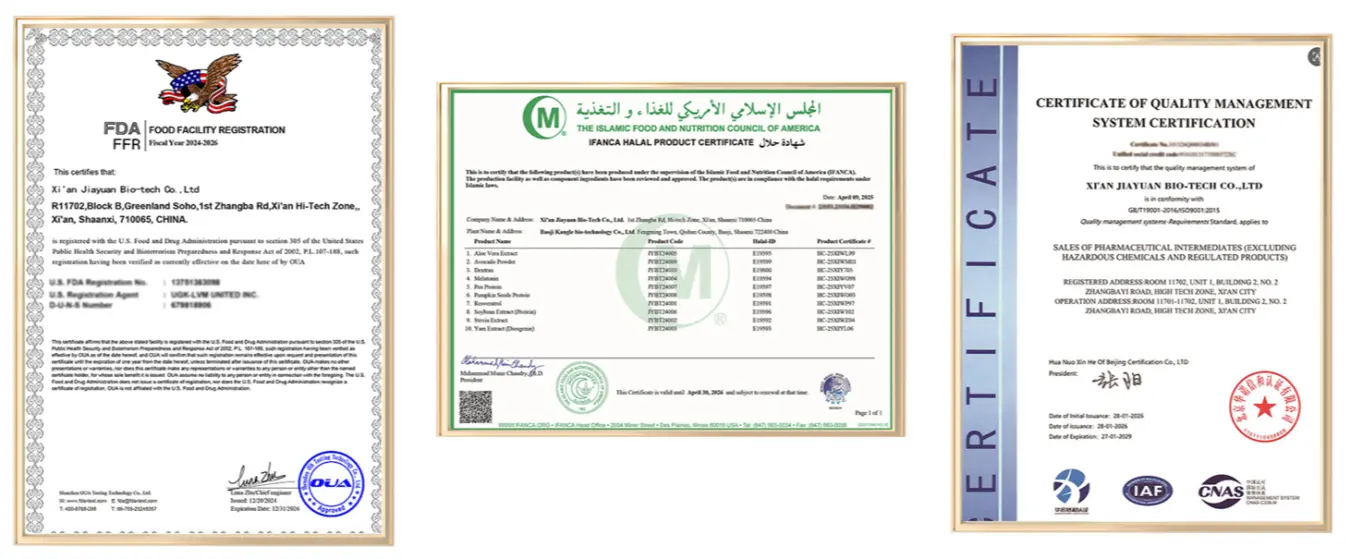
What Jiayuan Bio-Tech Delivers
At Xi'an Jiayuan Bio-Tech, we offer resveratrol powder in three different grades — food-grade, cosmetic-grade (≥95%), and pharmaceutical-grade (≥99%) — to match the exact demand of each formulation project. Our production benefits come from the technology and facilities we have in place:
- Our SMB chromatographic purification system works all the time, maintaining purity above 98% with very little change from batch to batch.
- A DCS automated control system regulates pH, temperature, and fluid ratios in real time, so mistakes made by people don't cause changes.
- Our solvent recovery system gets back more than 90% of the ethanol, which lowers our cost base and lets us pass savings to bulk buyers.
- Nitrogen-filled sealed packaging keeps wetness at ≤0.5%, extending shelf life beyond three years under standard storage conditions.
- Our 10-ton annual production capacity gives big economies of scale — our unit costs are 40% to 60% less than those of small-workshop rivals.
Safe Usage and Dosage Recommendations for Resveratrol Powder
When formulators use this polyphenol ingredient, they should base their dose choices on clinical reference ranges. In supplement settings, doses of 100 mg to 1,000 mg per day have been seen to work well in human studies. In finished cosmetic formulations, concentrations of 0.1% to 1% are common, depending on the claim being made and the product's stability data.
Stability Considerations During Processing
Resveratrol powder is thermally stable when there is no oxygen present, but it breaks down quickly in UV light and alkaline settings. When processed at temperatures above 150°C in air-filled spaces, the trans-isomer will change into the less active cis-form. When soft gel makers put them in oil carriers like olive or grapeseed oil, they use lymphatic absorption pathways to make the gels more bioavailable when taken by mouth. Keeping it at 2–8°C in opaque, nitrogen-purged containers keeps it potent for the whole shelf life.
Conclusion
Resveratrol powder works through well-known molecular mechanisms, including activating sirtuins, neutralizing free radicals, and changing the way inflammation is handled. These molecular mechanisms support its use in supplements, cosmetics, and functional foods. For B2B buyers, the quality of the ingredients is linked to how well the product works. Choosing a supplier with certified purity, stable batch output, and scalable logistics is a purchase decision that has a direct effect on how well the finished product works. Jiayuan Bio-Tech is a reliable source for industrial formulators around the world because it has a vertically integrated supply chain, a dual quality control system, and a wide range of grade specifications.
FAQ
1.What purity grades of resveratrol extract are available for industrial buyers?
By HPLC, standard commercial grades are ≥50%, ≥98%, and ≥99% pure. Material for cosmetics usually starts at ≥95%, but for pharmaceutical uses, it needs to be ≥99% with full EP/USP pharmacopeia documentation. Always ask for a COA that specifically confirms the trans-isomer content.
2.How should resveratrol powder be stored to maintain stability?
Keep away from UV light, moisture, and alkaline conditions in containers that have been sealed and purged with nitrogen. 2–8°C is the best setting for keeping. Products that are properly packed and have a moisture level of less than 0.5% can stay effective for more than three years.
3.Can resveratrol powder be combined with NMN or quercetin in a formulation?
Yes. Through SIRT1-NAD⁺ activation pathways that work with NMN and NR, it works together to make them stronger. Quercetin and pterostilbene are also strong antioxidants, which is why they are often found together in supplements that are meant to help people live longer.
4.What certifications should a reliable resveratrol powder supplier hold?
For areas that are close to pharmaceuticals, look for GMP approval, ISO compliance, and ideally ISO 13485. Having third-party tests by SGS, Halal approval, and non-GMO paperwork adds to the confidence of getting into the U.S. and EU markets.
Partner with Jiayuan Bio-Tech — Your Trusted Resveratrol Powder Manufacturer
Jiayuan Bio-Tech sells high-quality resveratrol powder in grades for food, cosmetics, and medicine. They offer reasonable bulk prices, GMP-certified production, and direct shipping through FedEx, DHL, and UPS. Our team clears customs for you so that your supply line doesn't stop. Email our team at sales@jiayuanbio.com or sales1@jiayuanbio.com, or visit jayuanbio.com right now to get a quote or COA.
References
1. Baur, J. A., & Sinclair, D. A. (2006). Therapeutic potential of resveratrol: the in vivo evidence. Nature Reviews Drug Discovery.
2. Bhullar, K. S., & Hubbard, B. P. (2015). Lifespan and healthspan extension by resveratrol. Biochimica et Biophysica Acta (BBA) — Molecular Basis of Disease.
3. Cottart, C. H., Nivet-Antoine, V., Laguillier-Morizot, C., & Beaudeux, J. L. (2010). Resveratrol bioavailability and toxicity in humans. Molecular Nutrition & Food Research.
4. Poulsen, M. M., Vestergaard, P. F., Clasen, B. F., Radko, Y., Christensen, L. P., Stødkilde-Jørgensen, H., & Jessen, N. (2013). High-dose resveratrol supplementation in obese men. Diabetes.
5. Walle, T. (2011). Bioavailability of resveratrol. Annals of the New York Academy of Sciences.
6. Timmers, S., Konings, E., Bilet, L., Houtkooper, R. H., van de Weijer, T., Goossens, G. H., & Schrauwen, P. (2011). Calorie restriction-like effects of 30 days of resveratrol supplementation on energy metabolism and metabolic profile in obese humans. Cell Metabolism.