
Can Pure Melatonin Improve Sleep Quality? Key Benefits Explained
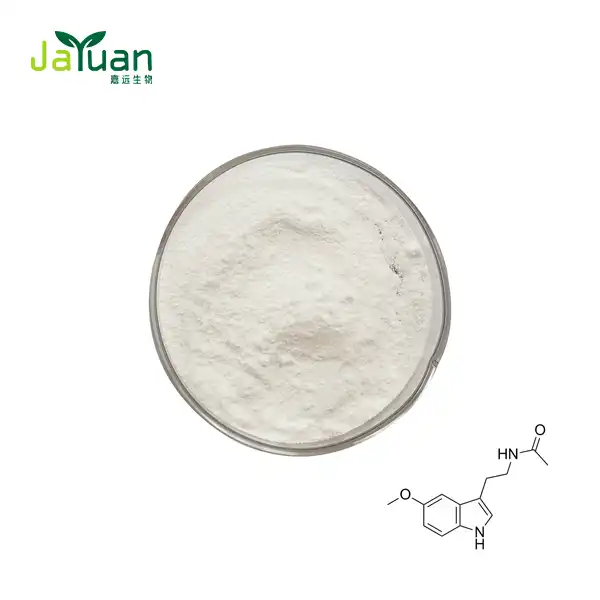
Pure melatonin is a high-purity, synthetically derived hormone ingredient that plays a central role in regulating the human sleep-wake cycle. As a bulk ingredient, it has become a preferred choice among pharmaceutical manufacturers, premium supplement brands, and research institutions seeking reliable, compliant raw materials. With verified purity levels reaching 99.7% and adherence to USP43 pharmacopeial standards, pure melatonin offers procurement and quality teams a scientifically validated, regulatory-ready option for sleep-support formulations demanding the highest input specifications.
Understanding Pure Melatonin and Its Mechanism
What Sets Pharmaceutical-Grade Melatonin Apart
Pure melatonin is different from lower-grade forms because its chemical profile is strictly controlled in its pharmaceutical-grade crystalline powder form. Its freezing point is always between 117°C and 120°C, which is a key sign of purity that is written down in both the USP43 and EP pharmacopeias. Related chemical limits are very strict. These include contaminants known to cause eosinophilia-myalgia syndrome (EMS), like Peak E (1,1'-Ethylidenebis(tryptophan)). For quality-conscious procurement teams, this means that compliant buying has to be a top concern.
Melatonin works by connecting to MT1 and MT2 receptors in the suprachiasmatic nucleus. This makes circadian rhythm signaling work together. Peer-reviewed endocrinology research has a lot of information on this process. For people who buy ingredients for use in making immediate-release pills, sublingual strips, or liposomal liquid systems, this method explains why the purity of the ingredients used in the production process is directly linked to the performance of the finished product.
There is clinical proof that it works. A 2013 meta-analysis released in PLOS ONE showed that melatonin supplements greatly shortened the time it took for adults to fall asleep and increased the length of their sleep. These results support the idea that pharmaceutical companies and high-end nutraceutical brands should continue to source high-purity melatonin ingredients over other options.
Key Benefits of Pure Melatonin for Sleep Quality
Sleep Onset, Deep Sleep, and Circadian Realignment
Pure melatonin makes three clinically important sleep parameters better: the time it takes to fall asleep, the total amount of time spent sleeping, and the quality of the sleep architecture. For people who make formulas, these benefits directly translate into true product claims that help them place their products in the market.
Here are the main functional benefits that matter when buying ingredients:
- Shortened sleep onset latency: Taking melatonin supplements in doses ranging from 0.5 mg to 5 mg has been shown to make it easier to fall asleep. This is especially helpful for formulas that help with jet lag that are aimed at regular foreign travelers, a group that is growing in business wellness product lines.
- Better slow-wave and REM sleep: High-purity melatonin helps with deeper sleep architecture, which research on cognitive performance links to memory consolidation and immune system modulation. Formulators who are making extended-release matrices with HPMC mixes use the crystalline structure of pure melatonin to copy the body's natural production curve at nite.
- Help with anxiety-related sleep problems: Pure melatonin's relationship with GABAergic pathways leads to a calming effect that improves sleep quality in people who have sleeplessness because of stress. This makes it a scientifically sound ingredient for high-end lines of relaxation supplements.
All of these benefits show that pure melatonin is a valuable ingredient that can be used in many types of products, from solid dosage forms to functional sleep shots that use liposomal capsule technology.
Pure melatonin has better batch-to-batch stability and a cleaner regulatory profile than options like valerian root extract or CBD isolate. These are important factors for quality/registration department leaders who are in charge of multi-market product registrations.
Dosage, Safety, and Side Effects: What Procurement Managers Should Know
Compliant Dosage Ranges and Quality Control Benchmarks
The usual amount of vitamin for adults in a dose is between 0.5 mg and 5 mg. For procurement teams making label-compliant formulations for the U.S. market, sticking within this range is in line with FDA guidelines for dietary supplements and makes it easier to register the products.
The safety rating of pure melatonin is well-known. Most of the side effects that have been written about in clinical journals are mild. The most common one is feeling sleepy in the morning at higher amounts. This good tolerance profile lowers brands' risk of liability and makes it easier to follow the rules in all export markets, such as the EU, where the EFSA has looked at melatonin claims under Regulation (EC) No. 1924/2006.
For procurement managers, checking the COA is one of the most important steps in their due diligence process. Assay purity (≥99%), heavy metal limits (lead, arsenic, mercury, and cadmium—all below USP thresholds), loss on drying (≤1.0%), residue on ignition (≤0.1%), specific rotation, and related substances profiling via HPLC should all be included in a pure melatonin supplier's COA. Third-party verification through SGS or Eurofins lowers the risk of supplier qualification even more and makes it easier to keep up with the registration file.
Purchasing Pure Melatonin: Comparison of Products and Suppliers
Evaluating Supplier Credentials for B2B Procurement
Pure melatonin is sold in a number of different ingredient forms, including micronized crystalline powder, normal crystalline powder, and pre-blended matrices. Each of these forms is best for a different dose form. Micronized grades (D90 < 20 microns) work best for sublingual and ODT uses that need to absorb quickly through the pharynx. Standard crystalline grades are used to make direct compression tablets and capsules, where consistent bulk density is important.
The following criteria should be used by the procurement and quality teams to choose a pure melatonin manufacturer:
- Compliance with pharmaceutical standards: made sure to match USP43, EP 10.0, and BP papers.
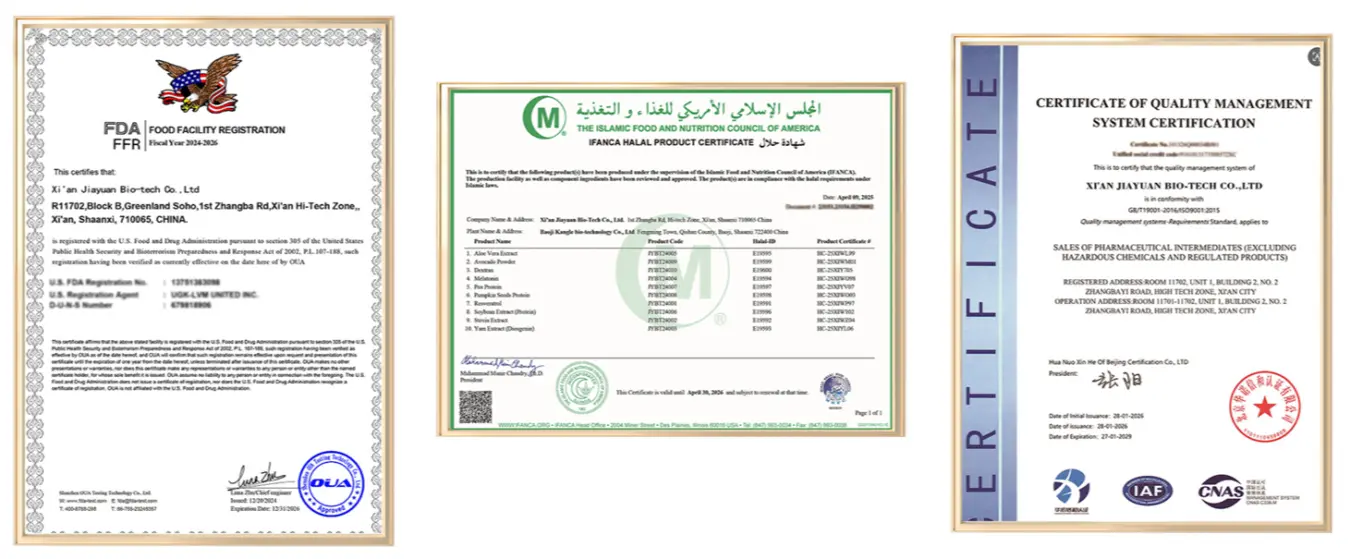
- Status of GMP certification: Two GMP production lines and ISO 13485 certification show that quality control is done in a planned way.
- Analytical method: Two checks, one using near-infrared spectroscopy to watch the process in real time and one using offline HPLC and GC-MS to make sure the specifications are met at every stage of production.
- Packaging and stability: Moisture content ≤0.5%, nitrogen-filled sealed packaging, and a shelf life of more than three years in controlled storage.
- Third-party audit support: The fact that SGS and Eurofins are re-testing acceptance shows that the supplier trusts their own data.
These standards create a strong framework for qualifying suppliers that protects the quality of the products and their compliance with regulations in all markets. In many places, switching providers can affect your registration, so thorough advance qualification is required rather than choice.
Maximizing Value: How Pure Melatonin Fits into Your Product Line
Strategic Integration Across Supplement and Wellness Categories
In addition to sleep aids, pure melatonin is becoming more popular in skin care products. Because it can get rid of free radicals, it is used as an antioxidant in high-end nite creams and serums. It is mixed at specific pH levels (4.0–5.0) to stop oxidative breakdown in water-based bases. This cross-category use increases the return on investment (ROI) of pure melatonin stock for supplement and personal care companies that make more than one product.
Another way to grow is through corporate wellness programs. Travel-related sleep problems have a direct effect on how productive people are at work, and supplements that contain only melatonin are sold as solutions that have been proven to work. For business-to-business clients looking for enterprise health programs, this is a real value-add with strong demand fundamentals further down the line.
The market for sleep aids was worth about USD 11.1 billion in 2023, and it's expected to keep growing at a rate of 7.5% per year until 2030 (Grand View Research). By developing products along this path, with a high-purity melatonin ingredient that meets pharmacopeial standards, brands can get a bigger part of the market in both retail and institutional outlets.
Conclusion
Pure melatonin is still one of the most highly proven ingredients that can help people sleep that can be used in pharmaceutical and nutritional products. Its well-known mechanism, good safety profile, and ability to work with a variety of dosage forms make it a smart, high-confidence choice for organizations that care about quality. A strong strategy for supplying ingredients starts with finding a seller that follows pharmacopeial guidelines, does thorough dual QC, and makes all of their paperwork clear. When these standards are met, pure melatonin gives consistent formulation performance and long-term regulatory standing in markets around the world.
FAQ
1.What purity level should pharmaceutical-grade pure melatonin meet?
As stated in USP43, EP 10.0, and BP papers, pharmaceutical-grade pure melatonin must have a test purity of at least 99%. This should be confirmed by HPLC tests and full related chemicals profiling by the supplier to make sure that heavy metals and process-related impurities are within the limits set by the pharmacopeia.
2.What documentation should a qualified pure melatonin supplier provide?
A fully detailed seller should give you a full COA that includes tests for heavy metals, loss on drying, residue on ignition, specific rotation, and other related substances. For regulatory submission files, you need GMP certificates, ISO certifications, and re-testing reports from third-party labs like SGS or Eurofins.
3.How does pure melatonin ingredient purity affect finished product performance?
Higher purity in the inputs directly lowers variation in finished dosage forms from batch to batch. Impurities can make it hard for tablet structures to bind or for liquid systems to settle. Pharmaceutical-grade pure melatonin that has been tested and found to be at least 99% pure makes sure that formulations work as expected and that label claims are always true across production runs.
4.Can pure melatonin powder be used in non-oral applications?
Yes. Because of its protective qualities, pure melatonin powder is added to skin care products like night creams and serums. To keep ingredients stable in water-based makeup bases, formulation needs to carefully control the pH between 4.0 and 5.0 and shield them from light and oxidation.
Partner With Jiayuan Bio-Tech — Your Trusted Pure Melatonin Supplier
Jiayuan Bio-Tech makes pure melatonin that is used in medicine. Their products are 99.7% pure, follow USP43 guidelines, and come with full COA paperwork. We have two GMP production lines, SMB chromatographic purification technology, and third-party SGS/Eurofins verification support. These give our quality and registration teams everything they need to source with confidence. To get a sample and COA package right away, email our team at sales@jiayuanbio.com or sales1@jiayuanbio.com or go to jayuanbio.com.
References
1. Ferracioli-Oda, E., Qawasmi, A., & Bloch, M. H. — PLOS ONE, 2013
2. Brzezinski, A. — New England Journal of Medicine, 1997
3. Auld, F., et al. — Sleep Medicine Reviews, 2017
4. Zhdanova, I. V., et al. — Clinical Pharmacology & Therapeutics, 1995
5. United States Pharmacopeia — USP43–NF38: Melatonin Monograph, 2020
6. Grand View Research — Sleep Supplements Market Size & Forecast Report, 2023