
Astaxanthin Powder Natural Sources: Where It Comes From
Astaxanthin Powder is mostly made from the microalgae Haematococcus pluvialis, which produces substantial levels of this potent keto-carotenoid. This antioxidant is also found in krill, salmon, and Phaffia rhodozyma. Business-to-business shoppers seeking bioactive, clean, and compliant purchasing should know about these natural sources. The source affects the oxidative stability, bioavailability, and efficacy of beauty, health, and pharmaceutical products.
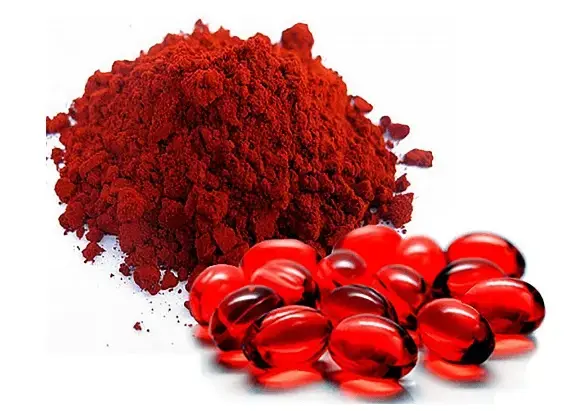
Purity: 1%-10%
Appearance: Dark red powder
CAS NO.: 472-61-7
Molecular Weight: 596.85
Molecular Formula: C40H52O4
MOQ: 500G-1KG
Inventory: in stock
Our Advantages: Scalable production capacity, strict quality control, cost efficiency from integrated factories, over 20 years of experience, advanced technology, and 24/7 after-sales support.
Certificaions: FSSC2000/ISO2000/HALAL/KOSHER/HACCP
Delivery terms: FedEx, DHL, EMS, UPS, TNT, all kinds of the airline, international shipping companies.
Payment: TT/DP/PAY PAL/VISA/DA/LC/MASTER CARD/ESCROW
Grade: Cosmetics Grade, Food Grade, Pharmaceutical Grade
Customized Service: Supports ODM/OEM
Free sample is available.
We do not sell retail quantities to individuals.
Understanding Astaxanthin Powder and Its Natural Origins
The Chemical Structure and Bioactive Profile
Astaxanthin is a natural chemical that is in the carotenoid family. It is a xanthophyll with the formula C40H52O4. This pigment dissolves in lipids and has a unique red color. It is said to be 6,000 times more powerful than vitamin C and 100 times stronger than vitamin E at removing free radicals. The molecule's special structure, which includes hydroxyl and keto groups on its ionone rings, lets it cross cell walls completely, protecting them from all kinds of reactive damage.
When we talk about Astaxanthin Powder in business-to-business settings, we're talking about the solid, microencapsulated form that keeps this reactive molecule stable. Manufacturers use advanced techniques like spray drying or beadlet formation to turn the natural oleoresin into a powder that is easier to handle, more stable, and compatible with a wider range of recipes. For pharmaceutical companies and supplement makers who need exact inclusion into tablets, capsules, and premixes, this change solves some of their biggest problems.
Natural Versus Synthetic: Why Origin Matters
The difference between natural and fake astaxanthin has a big effect on how much to buy. Astaxanthin that comes from microalgae is mostly found in the 3S,3'S stereoisomeric form, which is better for the body than manufactured forms. When made synthetically, the end result is usually a racemic mixture with several isomers. Studies have shown that this mixture is less effective at absorption and antioxidant activity in living systems.
Regulatory structures are favoring renewable sources more and more. Labeling rules set by the European Food Safety Authority and the FDA are very different. Both customers and formulators strongly prefer products with clean labels. We see a rise in the number of cosmetic brands and nutraceutical providers looking for proof of natural sources to meet market standards and luxury marketing strategies.
Primary Natural Sources of Astaxanthin Powder
Haematococcus Pluvialis: The Gold Standard
The most important source for business is Haematococcus pluvialis, which can produce astaxanthin at levels as high as 3-5% of its dry bulk when it is stressed. This one-celled green algae changes in amazing ways when it is introduced to things that stress it out, like too much light, not enough nutrients, or changes in temperature. As the cells change from a busy green vegetative state to an inactive red cystic state full of astaxanthin, a defense against oxidative stress.
There are two main ways to grow things: in open raceway ponds or in tight tube photobioreactors. Photobioreactor systems are being used by more and more modern B2B providers. These systems offer better contamination control, consistent yield, and batch-to-batch reproducibility, all of which are important for pharmaceutical businesses that need GMP-compliant ingredients. The controlled environment lets the best growth conditions, harvest times, and amounts of astaxanthin be used, which directly affects the quality of the finished powder.
Marine Sources: Krill, Salmon, and Shellfish Byproducts
Marine creatures get astaxanthin from the food they eat, which makes secondary natural sources. The astaxanthin in krill (Euphausia superba) is linked to proteins and fats, while the color of salmon meat comes from carotenoids in the food. Shrimp and crab shell trash from cooking seafood is another chance to get something useful out of it.
Businesses struggle to purchase marine-derived astaxanthin. The quantities are still significantly lower than algal sources. They range from 0.001% to 0.02% in salmon tissue and up to 0.012% in krill. The supply chain is complicated by extraction costs, resource availability seasons, and concerns about the long-term sustainability of wild-gathered marine resources. Astaxanthin Powder from microalgae is better for industrial application than food and drink industries who desire a stable and scalable supply.
Phaffia Rhodozyma: The Fermentation Alternative
Astaxanthin is made by the red yeast Phaffia rhodozyma through fermentation, which is an alternative biotechnology platform. Fermentation-based production has benefits in controlled industrial settings, less land needs, and could save money when done on a large scale. Astaxanthin makes up about 0.4% of the dry biomass on average, and scientists are still working on genetic improvement to make the plants more productive.
Nutraceutical and food supplement companies that are looking for new ways to get their ingredients might look at astaxanthin that comes from yeast, especially as fermenting technology improves. The production method works well with the infrastructure that is already in place for making medicines, which makes it easier to connect to current supply chains. The state of regulatory approval changes from place to place, so it's important to check carefully for applications that are specific to a market.
Extraction and Production Methods Impacting Natural Quality
Supercritical CO2 Extraction: The Premium Standard
The best way to make quality Astaxanthin Powder is now through supercritical fluid extraction with carbon dioxide. This method works at certain temperatures and pressures where CO2 can behave as both a liquid and a gas. This lets the carotenoids be extracted effectively without leaving behind any chemical solvents. The process keeps astaxanthin's chemical structure, which keeps its antioxidant power and gets rid of worries about solvents made from petroleum.
Astaxanthin Powder from Xi'an Jiayuan Bio-Tech undergoes rigorous testing to ensure quality. Our filter paper waste is very clean, with much less contaminants than rival products. This enhancement immediately improves antioxidant activity and free radical scavenging, which are crucial performance indicators for pharma businesses providing therapeutic items.
Traditional Solvent Extraction and Quality Considerations
Carotenoids are taken out of algae matter using organic solvents like acetone, ethanol, or hexane in conventional extraction. At an industrial size, this method is cost-effective, but there are quality concerns about liquids that may be left over, the possibility of thermal degradation during processing, and the damage that solvent waste management could do to the environment.
B2B Astaxanthin Powder purchasers should request comprehensive Certificates of Analysis with solvent residue testing for quality assurance. We keep external heavy metals, microorganisms, solvent waste, and nucleic acids below compliance limits. Testing is done using recognised techniques. Due to our commitment to product safety, we have conducted various studies that prove Astaxanthin Powder is harmless.
GMP Certification and Quality Control Infrastructure
The manufacturing standards have a big effect on the quality of Astaxanthin Powder. Certified Good Manufacturing Practices (GMP) ensures thorough quality control that includes checking the quality of raw materials, keeping an eye on the production process, testing the finished product, and keeping records of where the product came from. Our factories have two production lines that are GMP-certified. They also have ISO, SGS, and HALAL certifications, which show that they follow all the rules.
Analytical testing includes measuring the amount of astaxanthin in HPLC, checking the quality by spectrophotometry, looking for microbes, analyzing heavy metals with ICP-MS, and figuring out how stable the product is over time. Cosmetic and skin care brands really like this strict quality system because the performance of formulations depends on how pure and consistent the ingredients are. For research schools doing controlled studies, documented batch-to-batch reproducibility is a must. Our quality tools regularly provide this possibility.
Practical Considerations for B2B Buyers: Sourcing and Procurement Insights
Verifying Natural Origin Claims and Documentation
Verifying promises of natural sources is an important part of doing your research before buying something. Ask the seller for thorough paperwork, such as descriptions of how the plants were grown, flowcharts for the extraction process, and certificates of third-party testing. Certificates of Analysis should list the amount of astaxanthin (usually between 2 and 5 percent for powders), the stereoisomer makeup, and the results of any contamination screenings.
Organic approval adds to the proof that the food comes from natural sources. Certifications from groups like the USDA Organic, the EU Organic, or similar groups show that natural farming methods are being used, with no manmade chemicals or genetic change. Companies that make food and drinks with astaxanthin in them benefit a lot from using organic ingredients that back up their marketing claims and meet customer standards.
Pricing Dynamics and MOQ Considerations
The price of Natural Astaxanthin Powder shows how hard it is to grow, separate, and process. Prices on the market usually vary from $800 to $3,000 per kilogram, based on the grade of purity, the amount ordered, and the status of the certification. Although synthetic astaxanthin is much cheaper, it can't meet the quality standards of real astaxanthin for high-end uses.
Astaxanthin Powder initial orders normally range from 1 to 25 kilos, depending on the source. We realise nutraceutical and dietary supplement marketers need time to develop samples before making large claims. Because we acquire goods in smaller quantities, we can formulate and test stability before expanding production.
Storage, Stability, and Sampling Protocols
Astaxanthin Powder stays high-quality all the way through the supply chain as long as it is stored properly. Light, oxygen, heat, and wetness must be kept away from the element. It is suggested to store them in sealed cases in cool, dark places, preferably below 25°C with managed humidity. With nitrogen cleaning or vacuum packing, the shelf life can be extended. In ideal conditions, the shelf life is usually between 24 and 36 months.
Before placing large-scale orders, you should ask for examples to fully evaluate them. As part of evaluating a sample, its color uniformity and particle features should be looked at visually. It should also be dissolved in target formulas and its claimed strength should be checked using HPLC. Finally, it should be stored in a way that allows for rapid stability studies. These steps of approval lower the risk of buying and make sure that the product meets the needs of a specific application.
Astaxanthin Powder Applications Driven by Natural Sources
Nutraceutical and Dietary Supplement Formulations
Natural-source Astaxanthin Powder is now an important part of high-end vitamins that help with oxidative stress, eye health, joint health, heart health, and skin defense from the inside out. Because pure astaxanthin is more bioavailable, it is better absorbed and distributed throughout the body, which directly affects dosage effectiveness and product performance promises.
Daily supplement doses usually fall between 4 and 12 milligrams, which means that powders need to be carefully mixed into softgels, pills, or capsules. The microencapsulated powder form makes it easier to give the right amount and mix it evenly with other nutritional ingredients. Suppliers of nutraceuticals and dietary supplements like the stable benefits because encapsulated astaxanthin doesn't break down when tablets are compressed and keeps its strength throughout the product's shelf life.
Cosmetic and Skincare Product Integration
Natural astaxanthin is being used more and more in beauty and personal care products because it is a great antioxidant and can help with oxidative stress, which is a major cause of noticeable aging. A lot of skin care and cosmetic companies use astaxanthin in serums, lotions, eye creams, and sunblock because it can reduce reactive oxygen species and help skin cells stay healthy.
When cosmetics are finished, formulation amounts are usually between 0.01% and 0.1%. With the right emulsification technology, the powder form allows for even distribution in both the oil and water phases. Astaxanthin Powder from natural sources is better for marketing because it fits with clean health trends and people like chemicals that come from nature that they can recognize.
Pharmaceutical Research and Functional Food Development
Biological processes behind the biological actions of high-purity Astaxanthin Powder are studied in research institutions and laboratories. Its role in inflammatory processes, mitochondrial function, neuroprotection, and metabolic control is being studied. Pharmaceutical-grade natural astaxanthin has a standard makeup and has been proven to be pure. This makes sure that the conditions of experiments can be repeated, which is important for getting accurate study data.
Food and drink companies are looking into functional food uses and adding astaxanthin to nutrition bars, drinks, and performance nutrition recipes to make them better. The challenge is to find the right balance between astaxanthin's strong red pigmentation and the look of the product that is wanted, all while providing important bioactive doses. Microencapsulated powder forms that are easy to disperse make it easier to mix with water, which opens up more application options.
Conclusion
Where to get Natural Astaxanthin Powder is a smart choice that affects the quality of the product, its place in the market, and how well it works in formulations for pharmaceutical, cosmetic, nutraceutical, and study uses. The main source, Haematococcus pluvialis microalgae, is better than manufactured replacements or secondary marine sources in terms of concentration, bioavailability, and durability. The way the extract is done has a big effect on how pure it is. For example, supercritical CO2 methods and strict quality processes make sure that antioxidants work at their best. When business-to-business buyers understand these basic sourcing concepts, they can choose a seller based on clear paperwork, approval status, and analytical confirmation. As the market for naturally-derived, clean-label foods keeps growing, working with sellers who focus on quality becomes more important for staying ahead of the competition and meeting changing government standards.
FAQ
1. What makes Haematococcus pluvialis the preferred source for natural Astaxanthin Powder?
Astaxanthin levels are much higher in Haematococcus pluvialis than in other natural sources; they usually reach 3-5% of dry biomass. The growing method allows for controlled, contamination-free output with consistent batches, which is very important for pharmaceutical and nutraceutical uses. The microalgae that makes the 3S,3'S stereoisomeric form is more bioavailable than manufactured versions, which means that finished goods that use it will work better. Scalable photobioreactor technology allows for year-round production that isn't limited by the seasons that affect marine sources.
2. How can B2B buyers verify that Astaxanthin Powder truly comes from natural sources?
For verification, the seller must provide a lot of paperwork, such as Certificates of Analysis with full information on stereoisomer composition, organic certifications from reputable bodies, and clear accounts of how the product was processed. Modern methods of identification, such as DNA barcoding, can positively identify algae as a source of material. Ask for testing results from a third party that include the amount of astaxanthin, purity factors, and a check for contaminants. Reliable sellers provide full traceability paperwork from planting to making the powder, which lets auditors check claims of natural origin.
3. What quality parameters should procurement teams prioritize when sourcing Astaxanthin Powder?
Astaxanthin concentration (usually between 2% and 5% for commercial powders), stereoisomer purity proving natural origin, oxidative stability under accelerated aging conditions, particle size distribution affecting formulation behavior, and full contaminant screening including heavy metals, microbial load, solvent residues, and pesticides are some of the most important quality parameters. With GMP approval and approved testing methods, you can be sure that the quality will stay the same. Bioavailability data and dissolution traits are especially useful for nutraceutical uses because how well a product is absorbed affects how well it works.
Partner With Jiayuan Bio-Tech for Premium Astaxanthin Powder
Finding a trustworthy Astaxanthin Powder supplier requires a thorough analysis of quality systems, sourcing openness, and the ability to work together. Natural-source Astaxanthin Powder from Jiayuan Bio-Tech meets the strict needs of pharmaceutical, beauty, nutraceutical, and study uses thanks to its advanced production infrastructure and full quality assurance.
Key B2B procurement objectives are met by our competitive benefits. We are in charge of where the raw materials come from, so the quality stays the same from growing them to preparing them. Our two production lines that are GMP-certified use high-tech testing tools to make sure they meet all the important quality standards. The filter paper residue testing we do shows that our products are more pure than those of our competitors. They are also better at extracting substances and getting rid of free radicals, which have a direct effect on how well your product works.
In addition to high-quality products, we also offer a full range of services to support your supply chain needs. Through our relationships with transportation companies, we can deliver directly to your location and help with customs clearance for foreign markets. Factory-direct supply cuts out the middleman and their fees, and our warehouse stocking service lowers the cost of buying things and makes managing inventory easier for orders with multiple ingredients.
Get in touch with our team at sales@jayuanbio.com or sales1@jayuanbio.com to talk about where to get Astaxanthin Powder. We give you thorough product specifications, sample availability, and expert advice to help you choose the best ingredients for your projects.
References
1. Ambati, R.R., Phang, S.M., Ravi, S., & Aswathanarayana, R.G. (2014). Astaxanthin: Sources, extraction, stability, biological activities and its commercial applications. Marine Drugs, 12(1), 128-152.
2. Guerin, M., Huntley, M.E., & Olaizola, M. (2003). Haematococcus astaxanthin: Applications for human health and nutrition. Trends in Biotechnology, 21(5), 210-216.
3. Higuera-Ciapara, I., Felix-Valenzuela, L., & Goycoolea, F.M. (2006). Astaxanthin: A review of its chemistry and applications. Critical Reviews in Food Science and Nutrition, 46(2), 185-196.
4. Shah, M.R., Liang, Y., Cheng, J.J., & Daroch, M. (2016). Astaxanthin-producing green microalga Haematococcus pluvialis: From single cell to high value commercial products. Frontiers in Plant Science, 7, 531.
5. Capelli, B., Bagchi, D., & Cysewski, G.R. (2013). Synthetic astaxanthin is significantly inferior to algal-based astaxanthin as an antioxidant and may not be suitable as a human nutraceutical supplement. Nutrafoods, 12(4), 145-152.
6. Lorenz, R.T. & Cysewski, G.R. (2000). Commercial potential for Haematococcus microalgae as a natural source of astaxanthin. Trends in Biotechnology, 18(4), 160-167.