
Astaxanthin Powder Buyer’s Guide: Choose the Best One
The trick to choosing the proper Astaxanthin Powder is not simply comparing pricing but knowing what quality marks to look for, where it comes from, and how it should be formulated. Years of selling this substance to pharmaceutical businesses, supplement brands and cosmetics makers throughout the globe has taught us what differentiates premium-grade material from inferior batches. This book translates that hands-on expertise into practical criteria you can use to evaluate suppliers, check quality and integrate astaxanthin into your manufacturing process.
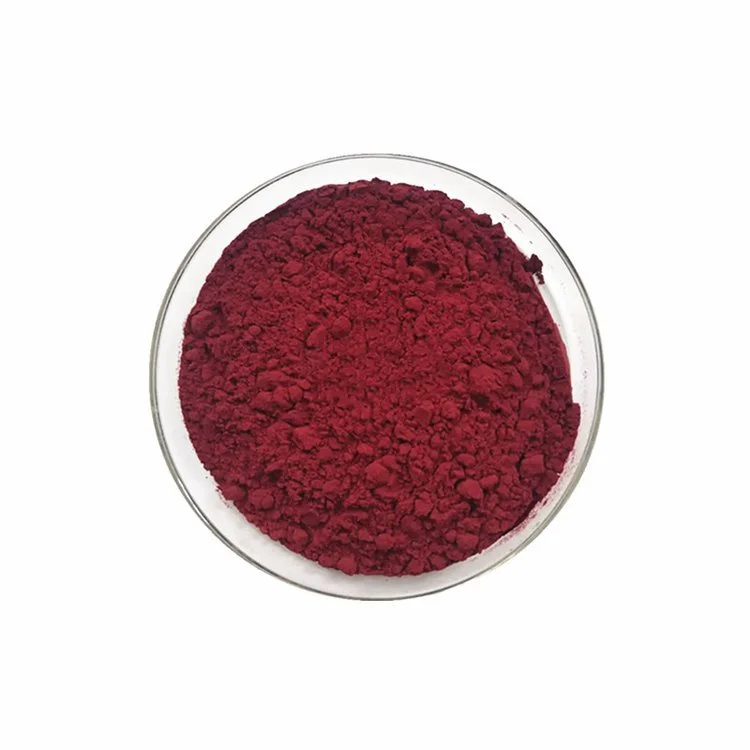
Purity: 1%-10%
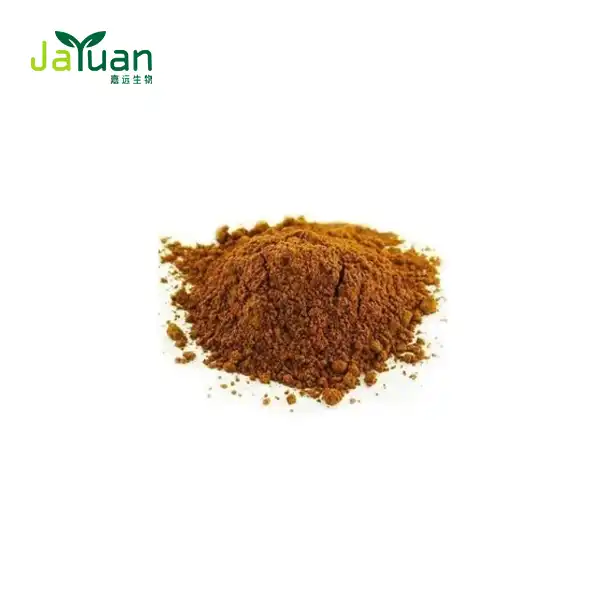
Appearance: Dark red powder
CAS NO.: 472-61-7
Molecular Weight: 596.85
Molecular Formula: C40H52O4
MOQ: 500G-1KG
Inventory: in stock
Our Advantages: Scalable production capacity, strict quality control, cost efficiency from integrated factories, over 20 years of experience, advanced technology, and 24/7 after-sales support.
Certificaions: FSSC2000/ISO2000/HALAL/KOSHER/HACCP
Delivery terms: FedEx, DHL, EMS, UPS, TNT, all kinds of the airline, international shipping companies.
Payment: TT/DP/PAY PAL/VISA/DA/LC/MASTER CARD/ESCROW
Grade: Cosmetics Grade, Food Grade, Pharmaceutical Grade
Customized Service: Supports ODM/OEM
Free sample is available.
We do not sell retail quantities to individuals.
Understanding Astaxanthin Powder: Properties, Benefits, and Applications
What Makes Astaxanthin Powder Unique?
Astaxanthin Powder is a keto-carotenoid pigment in a stabilised form, which is predominantly derived from the microalgae Haematococcus pluvialis. Microencapsulation technique is used by quality manufacturers to encapsulate the active chemical in starch or gelatin matrices, preserving it from the quick destruction that raw oleoresin endures when exposed to light, heat, or air. This method tackles three difficulties for formulators using raw astaxanthin: low water solubility, chemical instability and clumping during dry-blend processes.
Astaxanthin has hydroxyl and keto groups with conjugated double bonds in the chemical structure which allows the molecule to transcend the whole cell membrane bilayer instead of resting at one surface . This differs from beta-carotene which does not have the same membrane crossing ability and therefore provides a lesser intracellular defence.
Core Applications Across Industries
Pharmaceutical businesses make astaxanthin products to help promote cell health and fight oxidative stress. Clinical research supports 4-12 mg daily consumption levels, although formulators should determine the actual inclusion rate based on the test result of each unique batch rather than depending upon nominal percentages.
The chemical is used in cosmetics, particularly anti-aging serums and lotions, where it has been well established to increase skin suppleness and prevent environmentally induced damage. Emulsion technology turns the naturally lipophilic molecule into a water-mixable state , enabling cold-water-dispersible (CWD) powder grades for food and beverage businesses . The ring residue and phase separation associated with normal grades are left behind .
Pet food and aquaculture producers use astaxanthin as a pigment and antioxidant in fish feed and companion animal supplements. Research institutions require standardized batches for studies on metabolic pathways and cellular defense mechanisms. Each application demands different physical specifications: bulk density typically ranges from 0.4 to 0.7 g/mL, while assay concentrations vary from 1-5% for microencapsulated beadlets up to 10-20% for pure algal biomass concentrates.
How to Choose the Best Astaxanthin Powder: Critical Decision Factors
Evaluating Product Forms and Specifications
The shape of the product is dictated by your application. Oil-based solutions are most suitable for soft-gel encapsulation and powder grades for tablet compression and dry-blend formulations. We check the assay accuracy in our lab using HPLC (High-Performance Liquid Chromatography), not UV-Vis spectrophotometry. UV-Vis may provide deceptively high readings, since it picks up all of the carotenoids in the extract, not just astaxanthin itself, inflating the apparent potency.
Generally, microencapsulated powder with double-shell protection remains effective for 24-36 months with appropriate storage. However, unprotected crystalline forms disintegrate in weeks. The carrier matrix is also important. Starch based carriers compress well for tableting while gelatin or gum arabic matrices provide higher moisture resistance for distribution in humid climates.
Critical Quality Metrics and Certifications
When assessing suppliers, purchasing teams should insist on the following checks:
- l 9. HPLC assay validation: This approach separates and quantifies the active ingredient; free astaxanthin and esterified forms are differentiated. This is the only sure method to validate what the label says.
- l Stereoisomer profiling. Natural astaxanthin from Haematococcus pluvialis is mostly (3S,3’S), while synthesised material is a 1:2:1 racemic mixture. This profile is typical of natural origin.
- l Testing for pheophorbide: This breakdown product of chlorophyll may induce photosensitivity responses in topical treatments. Low quantities of pheophorbide suggest complete extraction and purification.
- l Microbial limits: Total Plate Counts should be less than 1,000 CFU/g. Clean-room manufacturing requirements are important since certain markets don't allow irradiation as a sterilisation technique.
- l Heavy metal screening (ICP-MS): Inductively Coupled Plasma Mass Spectrometry should verify that lead, arsenic, cadmium, and mercury fall within EU Pharmacopoeia and California Prop 65 limits.
- l Baseline assurance comes from third-party certifications: ISO 22000, GMP registration, and Non-GMO Project verification. At Jiayuan Bio-Tech, we maintain GMP-compliant production lines and full certification documentation to help clients navigate multiple regulatory frameworks simultaneously.
Supplier Selection and Procurement Strategies for Astaxanthin Powder
Identifying Trustworthy Manufacturing Partners
Reputable vendors of Astaxanthin Powder have clear quality records that can be traced back to the raw biomass source. We verify culture inputs at the algal farm level prior to extraction, to guarantee that the starting material is within our criteria.
Procurement should obtain batch-specific Certificates of Analysis (COA) including HPLC assay, microbiological counts, heavy metal screens, and residual solvent data. Suppliers who cannot or will not provide full testing documents are an unacceptable quality risk.
Documentation is not the only thing that important, so is the capacity to audit. A reliable manufacturer will open its doors to inspections by other parties and will have a system of quality control that can be traced back to particular quantities produced. We have ISO, SGS and HALAL certification to prove that we use quality controls throughout the manufacturing cycle, not just on final items. These standards provide an operational discipline: keeping the facilities clean, assuring uniformity from batch to batch, and allowing speedy root-cause investigation when problems occur.
Pricing Frameworks and Negotiation Strategies
Pricing depends on test %, encapsulation technique, order volume and certification criteria. Buyers should not be looking at price per kilogram but work out the cost per gram of active chemical. For instance, 5% test powder at $180/kg is cheaper per gram active astaxanthin than 2% material at $95/kg, considering the useful active content. The higher assay product is more valuable.
Our factory direct strategy removes distributor markups and our warehouse stocking services save operating costs on repeat purchases and customs clearance. Minimum order quantities are often 25 kg to 500 kg depending on grade and specification.
Annual supply agreements with quarterly deliveries secure better pricing while keeping cash flow manageable. Sample orders of 1-5 kg allow formulation teams to validate performance before committing to volume purchases.
Practical Usage Guidance for Astaxanthin Powder in B2B Context
Formulation and Handling Best Practices
When incorporating Astaxanthin Powder into final goods, it is important to understand how it behaves during processing. Standard powder grades are nevertheless lipophilic, such that they need oil-based carriers or emulsifiers in water-based systems. CWD grades facilitate beverage production by distributing the active chemical into tiny droplets resistant to phase separation. For tablet formulations, we suggested to combine with flow agents such as silica to preserve dosage homogeneity and reduce clumping during compression.
The stability relies on three factors: the light exposure, the temperature and the oxygen interaction. Store bulk powder in cold, dry settings, preferably below 25 degrees Celsius with relative humidity under 60%. Bulk handling should take place in controlled conditions with little exposure to air. Containers must be resealed soon after opening with inert gas blanketing (nitrogen flushing) to replace the oxygen. These techniques maintain potency throughout the production cycle, ensuring the final product dispenses at its labelled strength.
Application Case Studies
A European dietary supplement business contacted us with the task of developing a sports-performance product line. They wanted a 6 mg per serving recipe with Astaxanthin Powder tested at 5% and organic certified. We provided stability data demonstrating less than 5% potency loss at 36 months at the recommended storage. The product was introduced effectively and had above average repeat buy rates for its category.
A North American cosmetics business wanted an ingredient for an anti-aging serum that would make claims for cellular protection. We supplied 2% assay sample powder with complete documentation of the pheophorbide test and skin-safety information. Their formulation team used our material at 0.5% concentration and achieved the required antioxidant activity but avoided the colour instability problems they faced with a prior supplier’s substance.
The key to these collaborations is simple: we operate as an extension of our clients’ quality teams, matching our production goals with their success indicators.
Regulatory Compliance Across Key Markets
In the United States, dietary supplement manufacturers must comply with FDA current Good Manufacturing Practices (cGMP). Finished product labels must accurately declare ingredient sources and active compound content. Our documentation, including allergen statements, extraction method descriptions, and safety test results, supports your regulatory filings directly.
The European Union's Novel Foods Regulation and food supplement directives require comprehensive safety data and strict adherence to maximum permitted levels. We maintain updated regulatory dossiers aligned with these requirements, streamlining your product registration process. Asian markets each carry distinct requirements: Japan's Foods with Health Claims system, China's Health Food registration, and South Korea's functional food standards all demand specific documentation that we can help you prepare.
Conclusion
So when it comes to choosing the finest Astaxanthin Powder, there are three basics to consider: natural vs synthetic sources, quality via extensive analytical testing, and a company with both the ability to produce and a concern for regulatory compliance. We know from our expertise in the pharmaceutical, cosmetics, food and research industry that quality starts at the raw material procurement and has to be maintained at every step of production and delivery. The ideal supplier is a strategic partner, providing formulation development, help with the regulatory maze and consistent quality on-time.
FAQ
1. What advantages does natural powder offer over synthetic alternatives?
Natural astaxanthin from Haematococcus pluvialis contains exclusively the (3S,3'S) stereoisomer, which shows significantly higher biological activity than the racemic mixture found in synthetic material. Synthetic astaxanthin was originally developed for salmonid pigmentation in aquaculture and lacks the bioavailability and potency required for pharmaceutical and nutritional applications. Consumer preference for naturally sourced ingredients continues to grow, particularly in premium supplement and cosmetics categories where label transparency drives purchasing decisions.
2. How can buyers be sure that the powder is real and pure?
HPLC analysis remains the definitive verification method. It reveals not only total carotenoid content but also the precise astaxanthin concentration and stereoisomer ratios, data that UV-Vis cannot provide. Filter paper residue testing offers a practical purity check: our material dissolves more cleanly than competitor products, indicating superior extraction and lower impurity content. For full assurance, request a complete COA covering heavy metals, microbial counts, residual solvents, and stereoisomer identification. This documentation confirms the material meets pharmaceutical-grade standards.
3. Are there potential safety concerns in formulation?
Extensive toxicology studies confirm that astaxanthin is safe at doses used in therapeutic applications. Our product undergoes regular testing across multiple safety parameters, supporting both oral and topical use. To avoid over-concentration, calculate inclusion rates using the actual batch assay percentage rather than nominal values. Buyers should also be aware of regulatory daily intake limits, which range from 4-12 mg depending on the market.
Partner with Jiayuan Bio-Tech for Premium Astaxanthin Powder Supply
Jiayuan Bio-Tech supplies pharmaceutical-grade Astaxanthin Powder manufactured under GMP standards, with full certification and batch traceability. Every batch undergoes comprehensive testing. Heavy metals, microbial counts, solvent residues, and active compound assay all fall within international regulatory limits. Filter paper residue testing consistently confirms higher purity and lower impurity levels than typical market alternatives, translating to better formulation stability and stronger free-radical scavenging performance in your finished products.
We maintain warehouse stock to fulfill orders from sample quantities to full-scale production runs, with global shipping and customs handling built into our service. To request product samples, discuss custom formulations, or obtain a detailed quote for your specifications, contact our team at sales@jayuanbio.com or sales1@jayuanbio.com.
References
1. Ambati, R.R., Phang, S.M., Ravi, S., & Aswathanarayana, R.G. (2014). Astaxanthin: Sources, extraction, stability, biological activities, and its commercial applications. Marine Drugs, 12(1), 128-152.
2. Guerin, M., Huntley, M.E., & Olaizola, M. (2003). Haematococcus astaxanthin: Applications for human health and nutrition. Trends in Biotechnology, 21(5), 210-216.
3. Capelli, B., Bagchi, D., & Cysewski, G.R. (2013). Synthetic astaxanthin is significantly inferior to algal-based astaxanthin as an antioxidant and may not be suitable for human supplementation. Nutrafoods, 12(4), 145-152.
4. Higuera-Ciapara, I., Felix-Valenzuela, L., & Goycoolea, F.M. (2006). Astaxanthin: A review of its chemistry and applications. Critical Reviews in Food Science and Nutrition, 46(2), 185-196.
5. Yuan, J.P., Peng, J., Yin, K., & Wang, J.H. (2011). Potential health-promoting effects of astaxanthin: A high-value carotenoid mostly from microalgae. Molecular Nutrition & Food Research, 55(1), 150-165.
6. Brendler, T., Williamson, E.M., & Heinrich, M. (2021). Pharmaceutical quality and regulatory considerations for botanical dietary supplements in the United States. Planta Medica, 87(1-02), 33-47.