Astaxanthin Powder Bulk Manufacturers: What to Check
When purchasing Astaxanthin Powder Bulk, buying professionals need to check the qualifications of several manufacturers to get the best quality products and the best business terms. Some important things that need to be checked are ISO and GMP certifications, extraction technology standards, product purity tests, heavy metal testing methods, microorganism controls, minimum order amounts, and help with customs paperwork. Natural astaxanthin from Haematococcus pluvialis microalgae is a better antioxidant than synthetic alternatives. This is why choosing the right manufacturer is so important for drug companies, cosmetic brands, nutraceutical suppliers, and research institutions that need to find reliable ingredient sources that meet strict regulatory compliance standards.
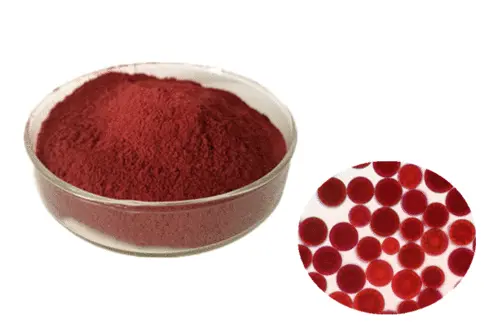
Purity: 1%-10%
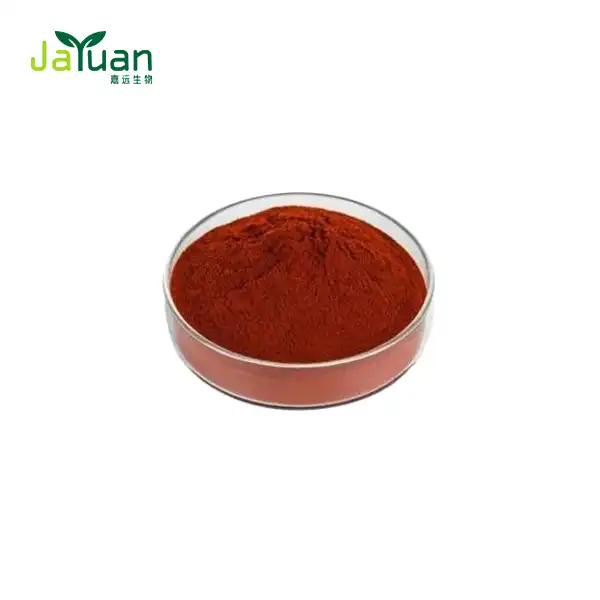
Appearance: Dark red powder
CAS NO.: 472-61-7
Molecular Weight: 596.85
Molecular Formula: C40H52O4
MOQ: 500G-1KG
Inventory: in stock
Our Advantages: Scalable production capacity, strict quality control, cost efficiency from integrated factories, over 20 years of experience, advanced technology, and 24/7 after-sales support.
Certificaions: FSSC2000/ISO2000/HALAL/KOSHER/HACCP
Delivery terms: FedEx, DHL, EMS, UPS, TNT, all kinds of the airline, international shipping companies.
Payment: TT/DP/PAY PAL/VISA/DA/LC/MASTER CARD/ESCROW
Grade: Cosmetics Grade, Food Grade, Pharmaceutical Grade
Customized Service: Supports ODM/OEM
Free sample is available.
We do not sell retail quantities to individuals.
Understanding Astaxanthin Powder Bulk: Key Features and Benefits
Astaxanthin is known as the "King of Carotenoids" in the natural ingredients business. Knowing what makes it unique helps buyers make smart choices about where to get it. This keto-carotenoid compound is a powerful antioxidant that is about 6,000 times stronger than Vitamin C and 100 times stronger than Vitamin E. This makes it a special ingredient in many industrial sectors.
Natural vs. Synthetic Astaxanthin: Critical Differences for Quality-Conscious Buyers
Astaxanthin that comes from Haematococcus pluvialis microalgae has molecular benefits that have a direct effect on how well it works and how much it can be sold for. The natural form has esterified structures that make it more bioavailable and stable than manufactured versions made from petroleum. Because of changes in customer tastes and better results in clinical trials, pharmaceutical and nutraceutical businesses are using more natural sources in their products. Even though synthetic astaxanthin is cheaper, it doesn't have the full stereoisomer profile that natural extracts do. This means that final goods might not have as much antioxidant power.
Our partners in production use supercritical CO2 extraction to keep the natural astaxanthin's delicate molecular structure. Heavy metals, microorganisms, and solvent leftovers must stay within strict compliance limits with this solvent-free method. This eases the main safety concerns of B2B buyers in controlled markets.
Applications Across Industries: From Skincare to Dietary Supplements
Astaxanthin Powder Bulk is useful in a wide range of production processes because it can be used in many different ways. This ingredient is used in cosmetics to fight photoaging because it helps skin stay elastic and lowers melanin production by getting rid of free radicals. For the "beauty from within" market, beauty brands put it in anti-aging serums, lotions, and oral beauty products.
Nutraceuticals can be used to make eye health products, joint support vitamins, and heart health products. Manufacturers can make softgels, hard capsules, tablets, and powder mixes in the powder format, which gives them more control over the recipe. Cold water dispersible (CWD) grades let drink makers add astaxanthin to healthy drinks without worrying about oil rings forming or settling problems.
Product Forms and Dosage Considerations for Bulk Procurement
Astaxanthin Powder Bulk usually comes in three main forms that are each designed to meet the needs of different production processes. The oleoresin powder has 10% astaxanthin mixed in with carrier oils, which makes it good for softgel encapsulating. The quantity of CWD powder runs from 1% to 5%, and it is made for use in water thanks to starch or gum arabic microencapsulation. Beadlet technology makes it easier to handle tablets without getting dusty and makes them more stable when they are being compressed.
Dosage requirements depend on the purpose. Clinical study backs up daily doses between 4 and 12 mg for antioxidant-focused nutritional supplements. Cosmetic formulas usually have amounts of 0.05% to 0.5% in skin products. When making bulk purchases, buyers should compare the concentration choices that are offered to the end product they need to get the best cost-per-dose.
Essential Criteria to Evaluate Astaxanthin Powder Bulk Manufacturers
Certifications and Quality Management Systems
Getting ISO 22000 food safety management certification shows that a company is dedicated to keeping the whole production chain free of contamination. GMP compliance makes sure that quality is the same from batch to batch by requiring written standard operating procedures, equipment testing methods, and training requirements for staff. Both certifications are still good at our production sites, which are checked by a third party every year to make sure they are still following the rules.
At every step of the processing, HACCP tools look for possible contamination risks. Manufacturers should show proof that they watch key control points for heavy metal contamination, microbial growth, and stopping cross-contamination. We use strict tests on arriving raw materials, quality checks during production, and proof of final products to make sure that heavy metals, microorganisms, and exogenous nucleic acid residues stay within the limits set by regulators.
Extraction Technology and Purity Standards
The purest approach to create natural astaxanthin is supercritical CO2 extraction, which leaves no chemical solvents. At appropriate temperatures and pressures, this technique selectively removes desired molecules while leaving unwanted components. Manufacturers may leave solvents from ethanol or hexane removal, making medical and food usage tougher.
Astaxanthin Powder Bulk HPLC analysis establishes purity, concentration, and stereoisomer composition. Free astaxanthin, total carotenoids, and pollutants should be on CoAs. Our filter paper residue testing shows that our product is purer than rivals, with few particles that might suggest contamination or extraction issues.
Supplier Reputation and Customer Feedback Verification
When assessing a company's track record, consider case studies, customer feedback, and long-term supply agreements with well-known brands. Established manufactures frequently deal with several industries, demonstrating their ability to formulate and maintain product quality across a broad variety of purposes. Pharmaceutical firms have the tightest supplier standards, making their references crucial.
Audit data from prior customers reveal how the items are created, how effectively the quality system works, and how well the organization solves issues. Consumers should request written confirmation of how complaints are handled and quality issues are resolved. Many private lab and university research partner studies have verified our safety testing.
Comparing Astaxanthin Powder Bulk Suppliers: What Procurement Managers Should Know
Pricing Models and Cost Structure Transparency
Astaxanthin Powder Bulk prices vary on extraction source, purity, concentration form, and order size. Natural astaxanthin costs more than synthetic. Market pricing differences are frequently 30–50% depending on approval. Prices depend on concentration. For example, 10% oleoresin powders cost more per kilogram than 2% CWD formulations, but larger concentrations may have cheaper cost-per-dose.
Start saving at 50 kilos, and costs decrease dramatically for 100, 500, and tonne agreements. Cost forecasts and supply planning are simpler when manufacturers give distinct pricing tiers. We provide low factory-direct pricing without intermediaries. This means B2B partners pay less for our goods.
Minimum Order Quantities and Lead Time Expectations
MOQs in the industry for Astaxanthin Powder Bulk usually run from 25 kg to 100 kg, but they can be lower or higher based on the product and how it is packaged. For custom formulas or unique grades, the MOQ may be higher to cover the costs of setting up the production line. We keep a stock full of common specs, which lets us take smaller initial orders that lower financial risk while we evaluate suppliers.
Production wait times depend on how complicated the product is and how well it's selling right now. Stock items usually ship within 5 to 7 business days, but it could take up to 4 to 6 weeks for special concentrations or private name packages to arrive after the order has been confirmed. Demand spikes during the fourth quarter of the year can make wait times longer, so producers with tight production schedules need to plan ahead.
Flexibility in Samples, Private Labeling, and Payment Terms
Having samples available speeds up the qualification process by letting you try formulations and stability before making big promises. Progressive sellers offer 100-500 gram samples for a small fee or for free to qualified prospects, which shows that they are confident in the quality of their products. As standard, we send samples with full analytical data to back up your evaluation methods.
Brands that want full solutions will benefit from being able to do private labeling. Some of the services we offer are custom concentration creation, unique blending, branded package design, and help with regulation paperwork. Manufacturers with their own research and development departments can help you improve formulations, make goods more bioavailable, and make changes that are specific to your applications that make your finished products stand out.
Navigating Regulatory and Import Compliance for Bulk Astaxanthin Powder
Import Documentation and Labeling Requirements by Region
Based on their intended application, FDA restrictions govern dietary supplement and food additive imports into the US. Business receipts include HS numbers (3203.00.80 for natural colourants), Certificates of Analysis proving identification and purity, and allergy declarations. The FDA's Prior notification regulation requires electronic notification before package delivery. Product descriptions and manufacturing facility registration numbers must be included in this notification.
Novel Food Regulations apply to EU imports, REACH registration is required for specific chemicals, and each nation has its own documentation requirements. Health certifications from the countries where the commodities originated from, phytosanitary certificates for plant-based materials, and organic certification if needed must be included. EU food colouring labels must incorporate E-number assertions.
Quality Assurance Protocols Upon Receipt
Protocols for incoming inspection of Astaxanthin Powder Bulk should make sure that the materials received match the buy documents and specs. Visual inspection checks the integrity of the package, the state of the seals, and the correctness of the labels against the order papers. Physical testing checks for regularity in color, particle size distribution, and moisture content as basic quality markers.
Before materials are sent to production, they are checked in a lab by a third party to make sure they have the right amount of astaxanthin, microbe numbers, heavy metal levels, and possible contaminants. Keep samples from each lot that you receive so that you can track them and look into any quality problems that happen later. Our goods always pass these checks because we do strict quality control before they are shipped.
Risk Management and Authenticity Verification
Dual-sourcing is crucial because natural catastrophes, political upheaval, and pandemic shutdowns may disrupt the supply chain. Backup sources that fulfil high quality criteria prevent production stoppage. Geographic diversity reduces risk while maintaining product standards.
Selling synthesised astaxanthin or cheaper carotenoids as high-quality natural sources raises authenticity concerns. HPLC carotenoid profiles may discover unique component patterns in Haematococcus pluvialis extracts, and isotope ratio mass spectrometry (IRMS) can distinguish natural from artificial sources.
How to Choose the Right Astaxanthin Powder Bulk Manufacturer for Your Business
Matching Supplier Capabilities to Your Volume and Timeline Needs
Production capacity reviews show whether a manufacturer can develop with your firm. Suppliers with one manufacturing line may struggle to accommodate urgent requests or increased quantities during busy periods. Multi-line facilities with concentration-specific technologies provide additional alternatives and reduced wait times. Two GMP manufacturing lines exist. This redundancy keeps output steady throughout repairs and expansion.
Shipping costs and wait periods depend on product proximity, but quality and reliability matter more. Domestic vendors may have higher pricing than direct manufacturer relationships, but they deliver quicker. The financial advantages of purchasing directly from the factory are maintained while our warehouse stocking service reduces recurring customer wait times.
Evaluating R&D Competence and Technical Support Services
Innovation ability is what sets partners who drive industry progress apart from makers who only make basic ingredients. Active research and development programs look into new ways to remove substances, tools that make them more bioavailable, and formulas that are made just for one use. These things give companies a competitive edge. Real technical knowledge can be seen in published study, patent files, and attendance at scientific conferences.
How fast and deeply a problem can be solved depends on how well analytical testing works. For Astaxanthin Powder Bulk, in-house labs with HPLC, GC-MS, ICP-MS, and microbiology equipment make it possible to quickly look into quality questions without having to rely on outside labs. We keep a wide range of testing tools and trained lab staff who can work as an extension of your quality team.
Building Sustainable and Ethical Sourcing Partnerships
As consumers become more aware of the environment, brands are choosing suppliers that are better for the environment. Growing microalgae for natural astaxanthin has environmental benefits because it needs less space, water, and other farming inputs than growing crops on land. Companies that use closed photobioreactor systems and green energy show that they care more about the environment.
Fair work standards, community involvement, and honest business behavior are all parts of ethical sourcing. Third-party social responsibility exams (SA8000, SMETA) make sure that international labor standards are being met. Partnerships that last a long time and are based on mutual respect and open communication create security that helps both sides grow.
Conclusion
To identify reputable Astaxanthin Powder Bulk producers, consider quality certifications, extraction technique, pricing clarity, government backing, and relationship alignment. Natural astaxanthin from Haematococcus pluvialis is a superior antioxidant and market fit than synthetic choices. Prioritise vendors with ISO and GMP certifications, sophisticated CO2 extraction, rigorous testing, and flexible payment terms. Independent testing should ensure heavy metal, microbial, and solvent residual levels satisfy criteria. Strategic supplier partnerships built on technical expertise, open communication, and reliable operations will support your long-term company objectives. These partnerships will maintain research, cosmetics, nutraceuticals, and pharmaceutical product quality.
FAQ
1. What are the usual wait times for ordering a lot of astaxanthin?
Items in stock from sellers who keep an eye on inventory usually ship within 5 to 7 business days. It takes 4 to 6 weeks to set up production, make the mix, test for quality, and package it. International shipping takes an extra 7–14 days, based on where it's going and how quickly it can be cleared through customs. Planning 8–10 weeks ahead for buying rounds keeps production from stopping.
2. How can I be sure that a product is real and pure?
Ask for Certificates of Analysis that include HPLC test reports that show the content and stereoisomer profiles of astaxanthin. Verification by a third-party lab backs up what the maker says. Isotope ratio mass spectrometry can tell the difference between natural and man-made sources. Filter paper residue tests show the amount of impurities present; less residue means a purer extraction and higher antioxidant capacity.
3. What kinds of safety tests prove that a product is good?
Heavy metals like lead, arsenic, cadmium, and mercury are tested for, along with microbial pollution like yeast, mold, viruses, and the total plate count of microbes. Pesticide and solvent residues are also checked. Products should be able to meet the limits set by USP, EP, or the customer. Independent labs have repeatedly confirmed that the mixtures are safe and can be used on the skin or in food products. They can also be used in cosmetics and medicines.
Partner With Jiayuan Bio-Tech for Premium Astaxanthin Powder Bulk Supply
Jiayuan Bio-Tech is ready to be your reliable Astaxanthin Powder Bulk provider, offering factory-direct prices, quality assurance, and full expert support. Two GMP production lines at our ISO, SGS, and HALAL-certified plants use supercritical CO2 extraction technology to make sure they meet international standards for heavy metals, microbes, and solvent residues. We keep supplies in our warehouse so that you can buy as little or as much as you need based on the size of your business. Our tests on filter paper residue shows that it is very pure, and the better extraction methods make it even more powerful as an antioxidant. With global shipping relationships with FedEx, DHL, and UPS, as well as help with customs clearance for the US and European markets, you can be sure that your package will arrive at your facility without any problems. You can email our dedicated team at sales@jayuanbio.com or sales1@jayuanbio.com to ask for samples, talk about special formulations, or get specific quotes that show how committed we are to your sourcing success.
References
1. Ambati, R.R., Phang, S.M., Ravi, S., & Aswathanarayana, R.G. (2014). Astaxanthin: Sources, extraction, stability, biological activities and its commercial applications. Marine Drugs, 12(1), 128-152.
2. Capelli, B., Bagchi, D., & Cysewski, G.R. (2013). Synthetic astaxanthin is significantly inferior to algal-based astaxanthin as an antioxidant and may not be suitable as a human nutraceutical supplement. Nutrafoods, 12(4), 145-152.
3. Guerin, M., Huntley, M.E., & Olaizola, M. (2003). Haematococcus astaxanthin: Applications for human health and nutrition. Trends in Biotechnology, 21(5), 210-216.
4. Higuera-Ciapara, I., Felix-Valenzuela, L., & Goycoolea, F.M. (2006). Astaxanthin: A review of its chemistry and applications. Critical Reviews in Food Science and Nutrition, 46(2), 185-196.
5. Shah, M.M.R., Liang, Y., Cheng, J.J., & Daroch, M. (2016). Astaxanthin-producing green microalga Haematococcus pluvialis: From single cell to high value commercial products. Frontiers in Plant Science, 7, 531.
6. Yuan, J.P., Peng, J., Yin, K., & Wang, J.H. (2011). Potential health-promoting effects of astaxanthin: A high-value carotenoid primarily from microalgae. Molecular Nutrition & Food Research, 55(1), 150-165.