
The Best Resveratrol: Scientific Facts and Selection Recommendations
For procurement teams in pursuit of the correct resveratrol powder ingredient, the multitude of supplier options and uneven product data can make choosing genuinely tough. This guide cuts through the noise. As the standardised, trans-isomer dominant form of the polyphenolic stilbene phytoalexin, resveratrol powder is coming to the fore as a high priority raw material in dietary supplement manufacture, cosmeceutical formulation, and functional beverage research. The quality, batch consistency and supplier reputation of your resveratrol powder are essential factors to consider when sourcing it for encapsulated capsules, soft gum matrices or topical serum bases. These factors will have a direct impact on the performance and regulatory status of your finished product.
Understanding Resveratrol Powder: Scientific Foundations and Health Benefits
What Exactly Is Resveratrol Powder?
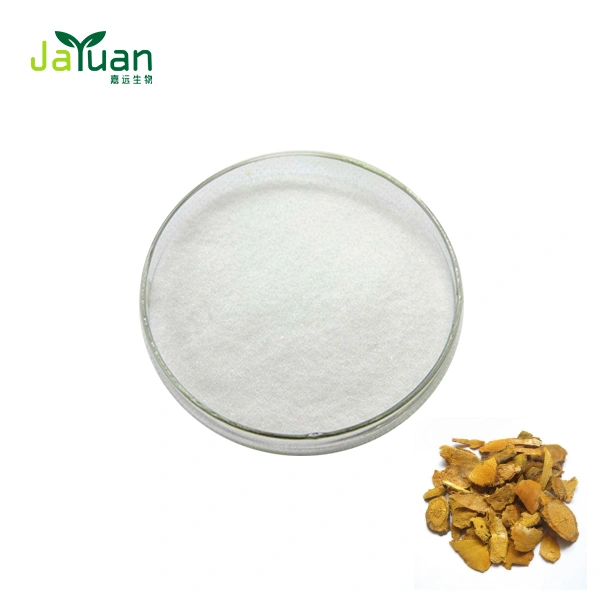
Resveratrol powder is a dry, concentrated form of trans-3,5,4'-trihydroxystilbene, the medicinally active form of stilbene. Most commercial grades are derived from the root of Polygonum cuspidatum or Japanese knotweed. It contains far more resveratrol than grape skin or berries. It has a molecular weight of 228.24 g/mol and melts between 253°C and 255°C. They want the trans-isomer, not the cis-isomer, because it is the one with the antioxidant power and sirtuin-activating activity they need.
Documented Health Mechanisms and Dosage Guidance
In peer-reviewed research, resveratrol antioxidant action has been consistently associated with activation of SIRT1 (an NAD + -dependent deacetylase engaged in pathways that promote cell longevity). There's also clinical support for boosting markers of cardiovascular health and collagen formation in the skin. In the industrial preparation the normal amount of inclusion is 50-500 mg per unit for nutritional use and 0.1-1% w/w for cosmetic use. Resveratrol powder is lipophilic and does not mix well with water, therefore it usually needs to be microencapsulated or carried by lipids to work well in water-based recipes.
Comparing Resveratrol Powder Forms and Alternatives
In the B2B world formulators typically compare Resveratrol powder with other antioxidants such as grape seed extract, pterostilbene and quercetin. They each have different costs and absorption profiles.
Here’s a handy assessment of the best options for corporate sourcing:
- Resveratrol powder (trans, ≥98% purity): The #1 ingredient for supplement stacks fighting ageing and protecting the heart. It offers great standardisation, pharmacopoeia grade HPLC purity, and flexibility in capsules, soft gels, functional beverages and topical serums. Needs carrier systems in water-based solutions . Does not dissolve well in water.
- Pterostilbene: A dimethylated resveratrol which is more accessible when taken orally (~80% vs. 20–30% for resveratrol). Too pricey raw elements mean it’s not good for huge volume commodity recipes, but it’s picking up speed in elite longevity blends.
- Grape seed extract (OPC) - cheap, easy to get, it dissolves in water, so it is easier to process. But it lacks the precision of sirtuin activation that makes resveratrol a leader in the anti-aging industry.
These differences are important when making a formula with a clear claim of effectiveness or a goal selling price. Resveratrol powder is still the best choice for brands that want to market themselves as long-lasting based on science. In places where customer trust is important for business, resveratrol powder from Polygonum cuspidatum is a natural source that also has cleaner label images than synthetic methods.
How to Choose and Procure the Best Resveratrol Powder: A Buyer's Guide
Purity Grades and Specification Tiers
Different types of resveratrol powder are used for different things. To get what they need, procurement teams have to match purity to use:
- Pharmaceutical-grade (≥99%): Required for EP/USP-compliant nutraceutical products aimed at regulated markets.
- Food-grade or supplement-grade (≥98%): The standard in the business for use in capsules, softgels, and functional foods.
- Cosmetic-grade (≥95%): This type of material is good for serums, creams, ampoules, and other topical formulations where slightly wider specification tolerances are okay.
If you know about this grade ladder, you won't have to pay too much for pharmaceutical-grade resveratrol powder in makeup SKUs or not enough for supplement lines where label claims need to be USP-compliant.
Verifying Supplier Credibility
Before buying any resveratrol powder from a manufacturer, ensure they are meeting the following requirements:
- Certificate of Analysis (COA): Should contain HPLC-verified trans-resveratrol content, heavy metal limits, moisture content (preferably ≤0.5%), and microbiological load data.
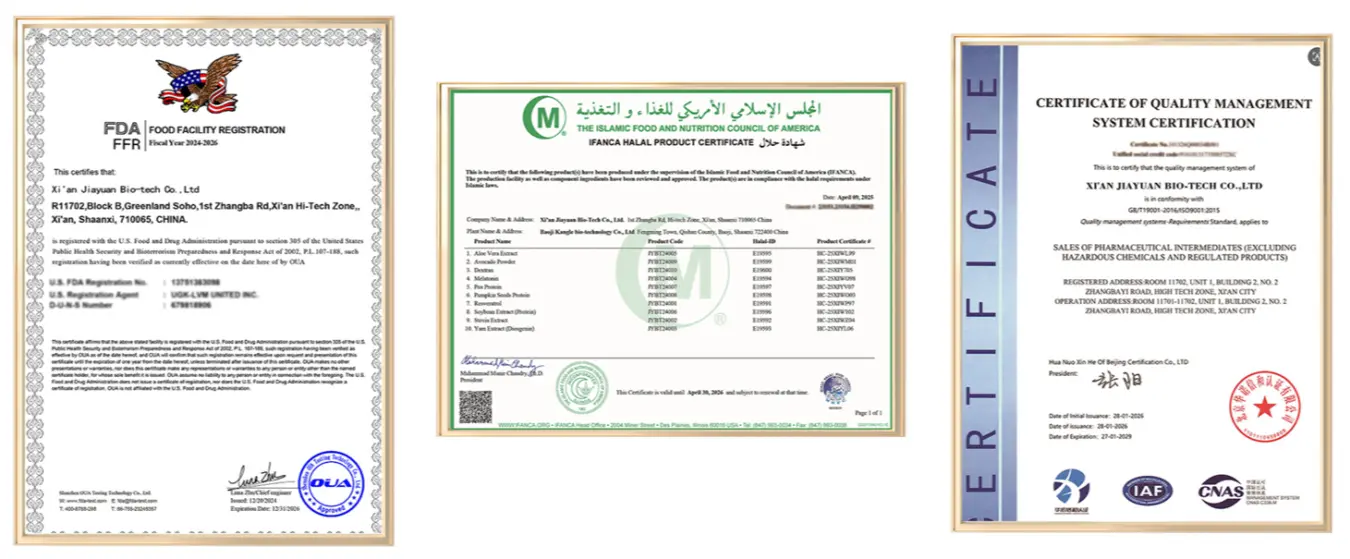
- GMP certification: Required for any substance that enters into a regulated supply chain for a supplement or cosmetic.
- ISO certification : ISO 13485 or ISO 9001 signifies there is a documented quality control system in place, not merely a test result for a particular batch.
- Batch-to-batch consistency data: Obtain more than one COA from different production batches. If the quality varies by more than ±1% be concerned.
Suppliers that work on a relevant scale, like those with production lines that can handle 10 tons or more per year and their own simulated moving bed (SMB) chromatographic processing, can regularly keep the purity above 98% and offer cheap bulk pricing. Most small-batch workshops can't match this level of steadiness.
Best Practices for Using Resveratrol Powder in B2B Applications
Formulation Integration and Stability Control
Resveratrol powder oxidises when exposed to UV light and oxygen in the air, resulting in a colour change and loss of potency. This implies vacuum-airless pump packaging or nitrogen flush enclosure is not an option for cosmetics, it is a necessity. Microencapsulation considerably enhances the shelf life of active compounds in healthy drinks and masks the inherent bitter taste of the contents after pasteurisation. The combination of resveratrol powder with fatty excipients (eg, olive oil or grapeseed oil in softgel fills) dramatically improves lymphatic absorption.
Storage and Handling Recommendations
The quality of ingredients from the warehouse to the floor of the production line is directly affected by proper storage. Store resveratrol powder in nitrogen-filled, sealed containers, protected from direct light and humidity. The temperature should be ≤25 °C and the humidity ≤60%. The shelf life is normally over three years without minimal loss of quality if the moisture level is maintained below 0.5% at the packaging stage.
A formulation team wanted resveratrol powder for an anti-aging capsule line and requested nitrogen-flush, double-sealed packaging from its supplier. In one investigation, trans-resveratrol levels remained over 97.8% for 18 months. This shows that packaging and storage conditions can have a big impact on the real-world effectiveness of a product.
Conclusion
It takes more than just looking at price sheets to find the right resveratrol powder ingredient. If your finished product lives up to the standards your brand says it will, grade specification, COA verification, batch consistency, and the production capabilities of your supplier all play a role. There are a lot of small companies in the market for resveratrol powder that don't do enough to make sure it is clean, and the formulator is the one who takes all the risk. Your purchasing plan will be stronger if you work with a licensed, large manufacturer that follows documented GMP and ISO standards, has dual-QC systems that have been tested, and has a raw material chain that is vertically integrated.
FAQ
1.What is the recommended inclusion rate for resveratrol powder in supplement formulations?
The amount of resveratrol powder used in most commercial dietary supplements is between 50 mg and 500 mg per serving. Most published clinical protocols say that each dose of anti-aging capsule stacks with NMN or NR should be between 150 mg and 250 mg.
2.How do I verify the purity of resveratrol powder before purchasing?
Ask for a COA that includes HPLC measurements of only the trans-resveratrol isomer and not the total amount of polyphenols. Any COA from a source who follows the rules should come with the results of GC-MS tests for heavy metals and residual solvents.
3.Are there import restrictions on resveratrol powder in the United States?
Resveratrol powder is not a banned drug in the US, so it does not need a special license to be brought into the country. Under DSHEA, it is controlled as a food ingredient. But shipments should come with all the necessary paperwork, like a COA, an MSDS, and an ingredient specification sheet, so that customs clearance goes smoothly and quickly.
4.What packaging specification best preserves resveratrol powder during long-distance shipping?
To keep things safest, put nitrogen-filled, sealed paper bags inside fiber drums. Make sure that your provider keeps the moisture level at ≤0.5% before closing.
Partner with Jiayuan Bio-Tech for Verified Resveratrol Powder Supply
As a reliable source of resveratrol powder, Jiayuan Bio-Tech has GMP-certified production lines, stable purity levels above 98% from SMB chromatographic purification, and a range of grade options, from cosmetic-grade (≥95%) to pharmaceutical-grade (≥99%). We can handle large sales, OEM customization, and trial requests with full COA paperwork. You can email our team at sales@jiayuanbio.com or sales1@jiayuanbio.com, or you can go to jayuanbio.com to ask for details.
References
1. Baur, J. A., & Sinclair, D. A. (2006). Therapeutic potential of resveratrol: The in vivo evidence. Nature Reviews Drug Discovery.
2. Smoliga, J. M., Baur, J. A., & Hausenblas, H. A. (2011). Resveratrol and health — A comprehensive review of human clinical trials. Molecular Nutrition & Food Research.
3. Walle, T. (2011). Bioavailability of resveratrol. Annals of the New York Academy of Sciences.
4. Cottart, C. H., Nivet-Antoine, V., & Beaudeux, J. L. (2014). Review of recent data on the metabolism, biological effects, and toxicity of resveratrol in humans. Molecular Nutrition & Food Research.
5. United States Pharmacopeia (USP). (2023). Dietary Supplement Compendium: Resveratrol Monograph. USP Convention.
6. European Pharmacopoeia (EP). (2022). Monographs on Herbal Drug Extracts: Polygoni Cuspidati Rhizoma et Radix. European Directorate for the Quality of Medicines.