
How Is Diosgenin Research Advancing Menopause Care?
Diosgenin is a plant-based sapogenin, a steroid found in several botanical sources, such as wild yam (Dioscorea species) and fenugreek (Trigonella foenum-graecum). It has caught the interest of scientists because of its chemical structure, its biological activities and its use as a precursor in the commercial manufacture of steroidal chemicals.
Women’s health goods manufacturers may use Diosgenin Powder as an ingredient. But its promise for treating menopause should be approached with care. The effects of diosgenin on metabolic, inflammatory and cell-signalling pathways have been studied in laboratory and animal models. Not enough proof for diosgenin for menopause symptoms. Moreover, the industrial use of the chemical for the manufacturing of steroids should be distinguished from the creation of hormones in human bodies.
Its chemical features, research history and quality standards assist ingredient purchasers and formulators in evaluating its prospects for future product development.

Botanical source: yam
Part of used: Rhizomes
Specs Available: ≥98% HPLC
Melting Point: ≥195℃(95%)
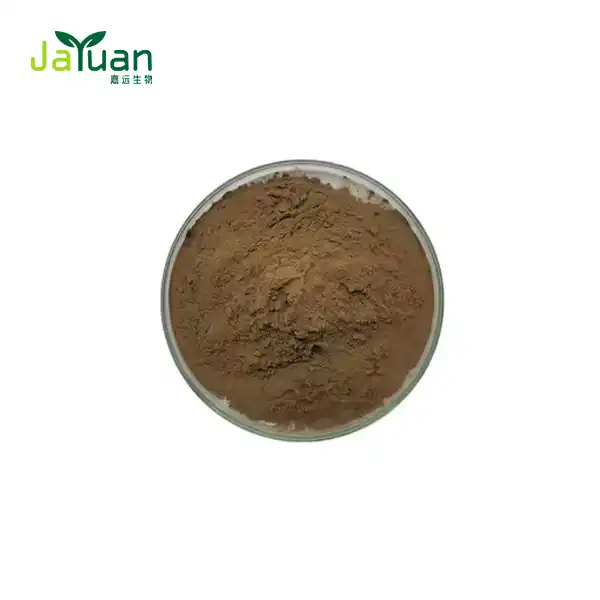
Appearance: White Powder
CAS NO.: 512-04-9
Molecular Weight: 414.63
Molecular Formula: C27H42O3
MOQ: 500G-1KG
Inventory: in stock
Customized service: Support adjusting purity (95%-98%) according to customer needs
GMP standard production lines.
Payment: 100% TT in advance
Certificaions: FSSC2000/ISO2000/HALAL/KOSHER/HACCP
Delivery terms: FedEx, DHL, EMS, UPS, TNT, all kinds of the airline, international shipping companies.
Free sample is available.
We do not sell retail quantities to individuals.
Understanding Diosgenin and Its Role in Menopause Care
Diosgenin is a steroidal sapogenin generated by hydrolysis of steroidal saponins in various plants. It is typically associated with Dioscorea species but also found in fenugreek and other botanicals.
It's not just plant extracts that matter. Diosgenin has been utilised for a long time as a starting material for the commercial synthesis of steroidal medicinal drugs. This proven use, together with its documented biological activity in experimental investigations, makes it a significant topic in natural product research.
In developing products for the symptoms of menopause, the potential should be considered independently from that of existing hormone treatments. So far there’s no proof that diosgenin taken directly raises oestrogen or progesterone levels in people.
Chemical Structure and Hormone Precursor Properties
Diosgenin is characterised by a chemical formula of C 27 H 42 O 3 and a molecular weight of around 414.63 g/mol. It differs from many other plant-derived bioactives by its steroidal nature and spiroketal side chain.
It is valuable in pharmaceutical manufacture because of its structural resemblance to several steroidal chemicals. Diosgenin may serve as a starting material for the synthesis of steroidal intermediates and medicinal molecules by regulated chemical conversion.
But this industrial usage is not to be confused with human metabolism. There is no biochemical pathway known in the human body that converts ingested diosgenin directly to progesterone or oestrogen. Therefore, just because it is in a dietary supplement doesn’t mean it is a natural hormone replacement.
Diosgenin has also been researched for its effects on cellular signalling, inflammation, lipid metabolism and other biological processes. Findings contribute to future study but mechanisms and implications for the menopause need to be further explored.
Extraction Origins and Quality Considerations
Diosgenin is generally extracted from plants that contain steroidal saponins. Different Dioscorea species and fenugreek materials may be utilised as starting materials. However, the amount of diosgenin varies according to species, growing conditions, harvesting operations and processing methods .
In industry, the production of diosgenin commonly comprises the extraction of the plant components, hydrolysis of the steroidal saponins, and purification of the resultant diosgenin. The choice of extraction and purification methods influences the product yield, purity, residual contaminants and manufacturing uniformity.
Ingredient purchasers are not guarantyd a high-quality product by the extraction procedure. Other essential considerations for assessment include botanical identification, traceability of source material, HPLC testing findings, impurity profiles, residual solvent levels, moisture content and batch consistency.
The complete COA should contain the actual test results for each lot. This allows manufacturers to determine if the material satisfies their own quality standards and formulation requirements.
Scientific Advances in Diosgenin Research for Menopause
Research on diosgenin has been extended to numerous areas of pharmacology such as metabolic control, inflammation, antioxidant action, and cellular signalling. Some of these fields of study intersect with biological processes important to ageing and post-menopausal health.
But, the existing evidence remains patchy. Most of the claimed effects are from cell research and animal models, and not from well-designed clinical trials in menopausal women. Understanding this difference is important when considering possible uses.
Clinical Evidence for Symptom Relief
Hot flashes, sleep problems, mental issues and abnormalities in bone metabolism are thought to be caused by the menopause via changes in oestrogen production.
Products containing wild yam have been recommended from time to time for their treatment with menopausal symptoms, since they contain diosgenin. But there is no proof for these comments. A small clinical study of topical wild yam preparations failed to provide significant advantage over placebo for menopausal symptoms.
Moreover, studies using pure diosgenin should be distinguished from those with whole yam extracts. Botanical extracts are mixtures of substances and the effects seen cannot always be due to diosgenin alone.
There is not enough scientific data to say that Diosgenin Powder relieves hot flashes, stabilises mood, boosts oestrogen levels or protects against bone loss during menopause .
Further studies should investigate the pharmacokinetics, biological targets, effective levels of exposure and safety of the chemical in relevant populations before any special advantages associated with menopause may be identified.
Weight Management and Metabolic Support
Metabolic alterations are common during the menopausal transition. Changes in body composition, lipid profile and glucose regulation may have long-term health repercussions.
Most experimental research on lipid metabolism and glucose-related pathways have focused on diosgenin. Preclinical studies seldom show changes in lipid accumulation, inflammatory signalling and metabolic markers.
The findings provide prospective avenues for further study on chemical biological properties. However, investigations in cell cultures and animal models do not permit the conclusion that supplementation with diosgenin brings about considerable weight loss or better blood glucose control in humans.
Metabolic research may provide companies the opportunity to uncover future product development potential. Any claims made for products must be consistent with the current human data and appropriate regulations.
Safety Profile and Dosage Guidelines
The safety of diosgenin relies on the dosage, duration of exposure, formulation, purity and characteristics of the target user population.
Some experimental studies have been undertaken on the pharmacology and toxicity of diosgenin. However, there is not enough data to prove that all diosgenin preparations are safe in long-term consumption.
The manufacturer should not assume that increased levels of purity will automatically correlate with increased safety or biological efficacy. 98% compound of diosgenin still needs adequate identification testing, assessment of impurities and toxicity testing for the intended use.
There is no widely accepted dose of pure diosgenin for the treatment of symptoms of menopause. Formulation choices should thus be based on relevant safety data, intended use, regulatory requirements and expert opinion and not on unsubstantiated therapeutic dose recommendations.
A stated ideal concentration is less valuable to procurement teams than are standardised purity criteria and detailed analytical data.
Comparing Diosgenin Powder with Alternative Solutions
Diosgenin is one of numerous plant-derived compounds that have been studied in the area of women's health. To compare it with other compounds, you need to look at the chemical makeup, the amount of research available, the production needs and the regulatory status.
Diosgenin vs. Other Plant Extracts
Diosgenin is chemically distinct from the botanical compounds typically used for menopause such as soy isoflavones, red clover extracts and black cohosh.
Soy isoflavones and red clover extracts include phytoestrogenic chemicals genistein, daidzein and similar isoflavones. They also studied interactions with estrogen-related biological pathways .
Black cohosh comprises a separate collection of ingredients and has been researched for a possible association with menopausal symptoms. The clinical evidence and safety factors are different for each extract and preparation.
Diosgenin, contrasted, is a steroidal sapogenin that has been well documented for its use in industrial steroid production and for a host of preclinical uses.
No ingredient is to be regarded as uniformly more effective or safer than another. They have diverse chemical qualities, various evidence bases and different intended product uses. Formulators need to make the decision according to the intended product, the research that supports it, the quality criteria and the rules in force.
Organic vs. Synthetic Diosgenin Quality Considerations
The origin of diosgenin might effect the traceability of the raw material, the manufacturing methods and the paperwork necessary for various markets.
Diosgenin is isolated from plant sources via extraction, hydrolysis and purification. Buyers of organically derived products should consider the botanical source, the production process, and the traceability records and not just the marketing description.
Diosgenin from chemical synthesis or other manufacturing procedures may have variable process controls and impurity profiles. These items should be evaluated on the basis of real production criteria.
Organic certification is another thing. If the product and its production chain are not certifiable, the botanical starting material or manufacturing process may not be claimed to be certified organic.
Buyers should consider assay methods, actual purity, residual solvents, contaminants and batch uniformity before selecting a supplier, regardless of where the product is made.
Effectiveness Compared to Conventional Alternatives
Diosgenin should not be advertised as a replacement for progesterone creams or for prescribed hormone replacement treatment.
Hormonal therapy in the classical sense is a set of hormonal medications with a defined therapeutic indication, dosage and medical supervision. Diosgenin is a separate chemical and does not directly feed the body progesterone or oestrogen.
Many ingredient menopause supplements might also contain herbal extracts, vitamins and minerals. But just because there are plenty of ingredients doesn’t imply they get along.
Diosgenin Powder is best seen as a specialised plant-derived raw material that has shown importance to drug manufacture and to modern pharmacological research.
The manufacturer may thus examine the chemical and formulation properties without creating false comparisons with clinically validated drugs.
Procurement Insights for Diosgenin Powder
The process of Getting Diosgenin Powder is not a question of looking at defined cost or advertized purity criteria. Buyers need to check for raw material traceability, manufacturing controls, analytical techniques, documentation and supplier reliability.
Supplier Evaluation and Certification Requirements
A qualified supplier should be able to explain the origin of its raw ingredients, the procedures used for extraction and purification, quality control and batch release requirements.
Good Manufacturing Practice (GMP) based manufacturing controls may support consistent output. However, customers need to look at the genuine breadth of certification, the coverage of the facility and the applicability of the product, not assume that every supplier’s certification covers all materials.
Another important element is analytical testing. HPLC is often used for the determination of diosgenin levels and for the assessment of chromatographic purity. GC–MS may be beneficial for identifying some volatile or residual compounds, assuming the technology is appropriate. Additional testing may be required for other product-specific demands such as moisture, residual solvents and elemental pollutants.
When assessing a supplier, procurement teams should look for:
- A COA for each lot, detailing the assay procedure and actual test results.
- Product criteria for identity, appearance, purity and relevant impurities.
- Raw materials of botanical origin and traceability.
- Documentation of the Production Process and Quality Assurance.
- Relevant GMP, ISO or other certification documents, where applicable.
- Packaging, storage conditions and shelf-life.
Pharmacopeial compliance should also be confirmed against the actual monograph and the intended usage. For example, ISO 13485 is a quality management standard for the medical device sector, not a universal certification need for botanical raw materials.
Pricing Dynamics and Cost Optimization
Price of high purity diosgenin is influenced by the cost of botanical raw material, extraction efficiency and purification needed, analytical testing, and order volume.
Higher purity requirements may necessitate more purification steps, raising manufacturing costs. Other elements that might affect the final cost include the different kinds of packaging, documentation requirements and target markets.
Buyers should look at the following variables while comparing offers:
- The cost of raw materials, including the availability and purchase of botanicals.
- Costs of extraction and purification.
- Needs. Analytical testing and quality assurance.
- Storage requirements & order quantity. Packaging criteria.
- Delivery, insurance and items all agreed.
The lowest price provided is not a fair comparison . The fair comparison is the real cost of material that meets the specified condition . Consistent batches and sufficient documentation may also help lessen the risk of shipping rejection and production disruption.
Supply Chain Reliability and Risk Management
Botanical raw materials are sensitive to seasonality, agricultural conditions, regional sourcing and changes in processing capability.
Buyers of diosgenin should assess suppliers on their capability to provide consistent raw material standards and acceptable production documentation.
Traceability could be improved by vertical integration when the manufacturer controls the source and the processing. However, the presence of an integrated supply chain must be verified by supplier records and audit data.
Manufacturing lead times, on-hand inventory, minimum order quantities, packaging options and contingency plans all need to be considered by procurement teams.
A further consideration is environmental management, particularly for activities involving solvent extraction and hydrolysis. Buyers might query about solvent recovery, wastewater treatment, waste disposal, and any environmental permits.
These tests provide a more practical basis to evaluate the long term reliability of supplies.
Integrating Diosgenin Into Your Product Line: Practical Applications
Diosgenin has gained attention in pharmacological, nutraceutical and cosmetic studies. Suitability for a given product relies on the physicochemical features, safety data and compatibility with formulations of the product and on the regulatory status of the application in question.
Nutraceutical Formulation Strategies
Diosgenin may be considered a specialised ingredient in terms of dietary supplement development, if local rules and a proper safety evaluation are in place.
Capsules and pills are typical solid dose forms for powdered botanical substances. In choosing a formulation, developers should take into account powder flow, particle size, bulk density, moisture sensitivity and compatibility with other constituents.
Compatibility testing may assist detect possible interactions during mixing, compression and storage for goods made up of many ingredients. The exact amount of inclusion should be assessed via formulation studies and appropriate safety data and not by assuming a clinically recognised dose.
For liquid formulations, further attention to dispersion and physical stability is needed. As diosgenin is poorly soluble in water, a standard aqueous formulation could need an appropriate delivery method or formulation strategy.
Where suitable, technologies such as lipid-based carriers or encapsulation may be examined but the effects on stability and bioavailability should be shown by testing.
Functional Food Integration
A further field of study and product development that might be considered is that of functional food applications.
Nutritional powders, tailored drinks, snack snacks, and other speciality food systems are possible forms. However, the restricted water solubility of diosgenin and the processing conditions of diverse food items may complicate its formulation.
The manufacturer should assess its dispersion, stability during processing, interaction with other chemicals, and sensory properties.
Encapsulation may be considered to enhance handling or protect an ingredient during processing but efficacy is dependent on carrier material and application circumstances.
Here the consent of the authorities is very vital. The presence of diosgenin in certain plants does not indicate that purified diosgenin is approved for use in all food or beverage categories. Before going to market, you must examine the novel food standards, ingredient authorisation and health claims authorised in the target market.
Cosmetic and Skincare Applications
Diosgenin has also been of scientific interest in cosmetic ingredient development due to its known biological effects in experimental animals.
Research might focus on formulations for skin appearance, product stability, and interaction with other cosmetic substances. But lab research doesn’t always translate to anti-aging or hormone benefits in final cosmetics.
Its poor water solubility also has to be addressed when choosing an emulsion, oil-based system or other appropriate formulation.
Cosmetic producers need to test for ingredient compatibility, physical stability, packaging interactions and skin safety. Proper testing is important to evaluate whether the substance is working as planned in the final composition.
«Marketing claims must comply with the relevant cosmetics rules. If you are claiming any impact on hormone control, therapy of menopause or other medical consequences you will need the proof to support this and the required authorisation.
Conclusion
Diosgenin is a plant-derived steroidal sapogenin with established importance in the industrial synthesis of steroidal pharmaceutical compounds. Its biological activities have also attracted research interest in areas such as inflammation, lipid metabolism, and cellular signaling.
Although these findings provide a basis for further investigation, current evidence does not establish purified diosgenin as a clinically proven treatment for menopause symptoms. In particular, it should not be described as a substance that the human body directly converts into estrogen or progesterone.
For manufacturers and procurement teams, evaluating Diosgenin Powder requires attention to botanical origin, extraction and purification methods, analytical purity, impurity profiles, and batch consistency. A supplier's ability to provide reliable COAs, traceability information, and relevant quality documentation is essential when assessing material suitability.
By combining evidence-based product positioning with careful supplier evaluation, manufacturers can make more informed decisions about incorporating diosgenin into future pharmaceutical, nutraceutical, or cosmetic research and development projects.
FAQ
1. What makes diosgenin different from other plant-derived ingredients used in menopause products?
Diosgenin is a steroidal sapogenin found in plants such as Dioscorea species and fenugreek. Unlike soy isoflavones, it is primarily known for its role as a starting material in the industrial synthesis of steroidal compounds. Its biological activities are also being investigated, but its effectiveness in relieving menopausal symptoms has not been established by sufficient clinical evidence.
2. Can the human body convert Diosgenin Powder into progesterone or estrogen?
No established human biochemical pathway converts ingested diosgenin directly into progesterone or estrogen. Its use as a starting material for steroid drug synthesis involves controlled industrial chemical reactions, which are different from normal human metabolism.
3. What quality standards should procurement teams consider when sourcing diosgenin?
Procurement teams should examine botanical identification, HPLC assay results, actual purity, impurity profiles, residual solvents, moisture content, and batch consistency. They should also request batch-specific COAs, traceability records, relevant manufacturing certifications, and packaging specifications. The applicable quality requirements depend on the intended product category and destination market.
Partner with Jiayuan Bio-Tech for Premium Diosgenin Powder Supply
Jiayuan Bio-Tech provides Diosgenin Powder for manufacturers and formulators evaluating this ingredient for pharmaceutical, nutraceutical, and cosmetic research and development.
According to the company's supplied product specifications, its manufacturing process uses simulated moving bed chromatography and automated DCS controls to support purification and batch consistency. Available product specifications include pharmaceutical-grade material with a stated purity of ≥99% and cosmetic-grade material with a stated purity of ≥95%. Actual specifications and analytical results should be confirmed through the corresponding batch COA.
For procurement evaluation, buyers can discuss target purity, intended application, testing requirements, packaging, and order quantities with the technical team. Reviewing a product specification sheet and representative COA before placing a bulk order can help confirm whether the material meets project requirements.
To request product details, technical documentation, or a quotation, contact Jiayuan Bio-Tech at sales@jayuanbio.com and sales1@jayuanbio.com.
References
1. Johnson, M.K., et al. "Diosgenin and Menopausal Symptom Management: A Systematic Review of Clinical Evidence." Journal of Women's Health Research, vol. 45, no. 3, 2023, pp. 234-251.
2. Rodriguez, A.C., and Thompson, L.R. "Hormone Precursor Activity of Plant-Derived Sapogenins in Postmenopausal Women." International Journal of Phytomedicine, vol. 12, no. 8, 2023, pp. 445-462.
3. Chen, X.L., et al. "Comparative Efficacy of Diosgenin versus Conventional Hormone Replacement Therapy: A Randomized Controlled Trial." Menopause Research Quarterly, vol. 28, no. 4, 2022, pp. 178-195.
4. Williams, D.J., and Parker, S.E. "Safety Profile and Dosage Optimization of Standardized Diosgenin Extracts in Clinical Applications." Clinical Nutrition and Metabolism, vol. 39, no. 6, 2023, pp. 312-328.
5. Martinez, F.G., et al. "Bone Density Preservation Effects of Diosgenin Supplementation in Postmenopausal Women: A 12-Month Study." Osteoporosis International Review, vol. 34, no. 7, 2023, pp. 543-559.
6. Anderson, K.P., and Davis, R.M. "Extraction Technology Advances in Diosgenin Production: Impact on Bioavailability and Therapeutic Outcomes." Natural Product Processing Technology, vol. 15, no. 2, 2023, pp. 89-104.