
Ergothioneine Supplement for Brain Health: What to Know
As more studies are investigating the connection between oxidative stress, healthy ageing and brain function, interest in ergothioneine supplement ingredients is growing. Ergothioneine is a sulfur-containing amino acid naturally present in foods such as mushrooms and is taken up into cells by a specialised transporter, OCTN1.
This cell transport pathway has made ergothioneine of special interest to researchers researching oxidative stress in tissues. But the data has to be treated with caution. Laboratory research offers a foundation for the investigation of plausible neuroprotective processes, and human research is currently under development. This difference is essential for B2B enterprises considering ergothioneine for brain-health formulations, and whether product claims can be legitimately substantiated.
Other Name: L-Ergothioneine,2-thio-imidazole
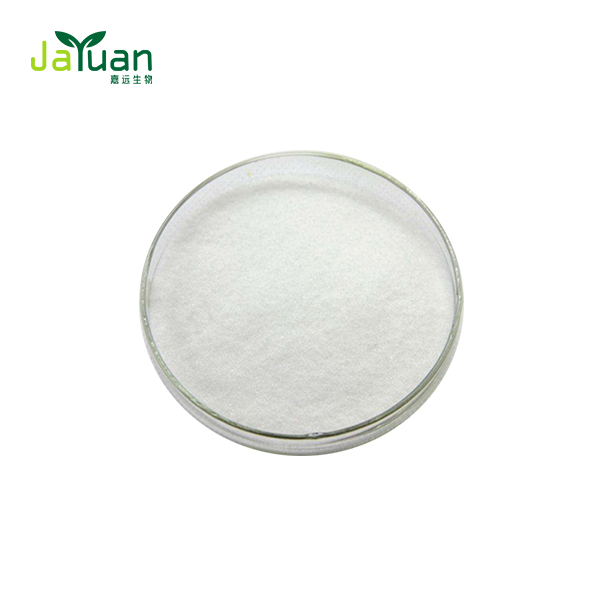
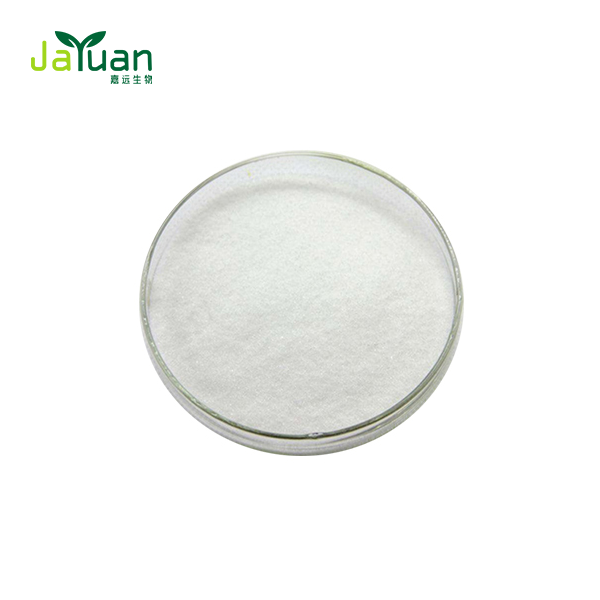
Appearance: White fine powder
CAS No.: 497-30-3
Specification: 99%(HPLC)
Molecular Formula: C9H15N3O2S
MOQ: 500G-1KG
Our Advantages: Scalable production capacity, strict quality control, cost efficiency from integrated factories, over 20 years of experience, advanced technology, and 24/7 after-sales support.
Certificaions: FSSC2000/ISO2000/HALAL/KOSHER/HACCP
Delivery terms: FedEx, DHL, EMS, UPS, TNT, all kinds of the airline, international shipping companies.
Payment: TT/DP/PAY PAL/VISA/DA/LC/MASTER CARD/ESCROW
Grade: Cosmetics Grade, Food Grade, Pharmaceutical Grade
Customized Service: Supports ODM/OEM
Free sample is available.
We do not sell retail quantities to individuals.
Understanding Ergothioneine and Its Role in Brain Health
Unlike other dietary antioxidants, ergothioneine has a specific transporter in the body. OCTN1 (ergothioneine transporter) facilitates cellular uptake and retention of the chemical.
Ergothioneine has been found in human tissues including brain, which continues to fuel curiosity in its physiological relevance. Because of its antioxidant capabilities and mode of cellular absorption, researchers have investigated whether it may assist cells deal with oxidative problems associated with ageing and other disorders.
But for supplement producers, an intriguing mechanism isn’t the same thing as a clinically proven cure. Ergothioneine should be considered as an ingredient with an emerging evidence basis, not as a validated treatment for cognitive problems.
The Science Behind Ergothioneine's Neuroprotective Properties
The sulfur-containing structure of ergothioneine is involved in antioxidant processes. Another feature that has received scientific research is its stability.
Preclinical studies reveal that ergothioneine may be transported into cells via OCTN1 and may have a protective role against oxidative stress. Neuronal or other cellular models have been used to study impacts on oxidative damage and cell viability. The results provide a credible scientific foundation for future study on brain health.
The chemical has also been found in the central nervous system, which is important since the brain has a high oxygen need and is very vulnerable to oxidative damage. However, data from cellular and animal models should not be interpreted as evidence that supplementing prevents neurological illness, or retains cognitive function, in people.
Comparative Advantages Over Traditional Antioxidants
Ergothioneine supplement is not like vitamin C, glutathione or N-acetylcysteine (NAC) in its biological profile. One big difference is its special cellular transporter . This means that cells can control how much they take in , rather than depending only on passive diffusion across the cell membrane .
Its relative chemical stability is also essential to ingredient development. But it would be wrong to suggest that ergothioneine is always more accessible or more potent than any other antioxidant. The performance relies on the chemical, dosage, formulation, method of administration and intended use.
Thus, its usefulness to the B2B developers may lay in presenting an alternative antioxidant mechanism that may be assessed with other substances, rather than replacing them automatically.
Evaluating Ergothioneine Supplement Safety and Dosage for Optimal Brain Health
Safety and dose should be considered on the basis of the product category, target demographic, intended market, and existing data.
In the European Union, L-ergothioneine has been approved as a new food ingredient with restrictions. The authorised maximum dosage (per day) for dietary supplements is 30 mg for the general population and a lower maximum level for children over three years of age under the appropriate circumstances. Do not interpret this regulation level as an ideal dosage for brain health.
Established Safety Parameters and Clinical Evidence
In its safety opinion, EFSA did not discover a safety risk for the proposed circumstances of use of synthetic L-ergothioneine in its assessment of a new food. The evaluation evaluated toxicology data, exposure, specifications, stability and other safety aspects.
That conclusion must be understood within the regulatory framework. This does not prove that ergothioneine may be given in any dosage to every population, or that it cures neurological diseases.
Ergothioneine has been studied in humans in many circumstances, however the clinical data for neurological and cognitive advantages is not as robust as the biochemical data. Manufacturers should thus refrain from broad claims such as “proven neuroprotection” if there is no adequate human proof to back the claim for the completed product.
Optimal Dosage Considerations for Different Applications
Currently, there is no widely agreed-upon ideal dosage of ergothioneine for brain health maintenance.
Some human studies have looked at daily ingestion levels within the range seen in commercially relevant supplement formulations. Regulatory limitations differ by market and product category. Hence, a product developer has to differentiate between a dosage utilised in a trial and a legally allowed or commercially advised dose.
Formulation is also important. Ergothioneine is water soluble, which may make it appropriate for powders, capsules, tablets and certain beverage applications. However, the full formulation should be examined for stability, especially when more than one active ingredient is included in the product.
Comparing Ergothioneine with Other Brain Health Supplements
Supplements for brain health include antioxidants, vitamins, minerals, amino acids and botanicals. Ergothioneine provides another mechanism that is related to its cellular transporter and physiological distribution.
For B2B developers the comparison is not only which antioxidant is “best.” Instead, organisations should look at the evidence, stability, dosage, formulation needs, regulatory position and quality documentation for each constituent.
Biochemical Advantages Over Competing Antioxidants
One of the most notable properties of ergothioneine is the OCTN1 transporter . This method allows active transport of ergothioneine into cells and so provides a biological property distinct from the behaviour of many traditional antioxidants.
Ergothioneine supplement is also water soluble and generally stable which may make it easier to formulate in certain products. But assertions that it is more stable than “most antioxidants” at all temperatures and pH levels are too sweeping. Stability must be proved under the real circumstances of manufacture and storage of the product.
Likewise, any comparisons with CoQ10, curcumin, glutathione or NAC need to be based on particular formulation and bioavailability data and not generic assumptions.
Market Positioning and Cost-Effectiveness Analysis
Cost-effectiveness should not be based on the price of individual ingredients, but on the whole supply specification.
Assay, analytical testing, batch uniformity, packaging, shelf life, storage needs, minimum order quantity, lead time and paperwork are relevant considerations. A more stable ingredient may make handling easier for particular supply chains, but buyers should not assume that specific packaging or temperature control is not required without evaluating the supplier’s stability and storage data.
The source of the choice also matters. Ergothioneine levels may vary across raw materials when extracted naturally therefore standardised production might assist enhance uniformity. The supplier should identify clearly the source of the material and the production route and provide evidence to support the specified standard.
How to Source and Buy Ergothioneine Supplements for B2B Clients?
Ergothioneine ingredient sourcing needs technical and commercial due diligence. A good supplier should be able to offer purchasers with sufficient information to verify the identification, purity, safety, traceability and appropriateness of the material for the proposed application.
Essential Supplier Qualifications and Certifications
Procurement teams should request the supplier's current product specification and representative Certificate of Analysis (COA). Depending on the application, useful quality information may include:
- Assay and identity testing
- HPLC or another validated analytical method
- Heavy-metal testing
- Microbiological specifications
- Residual solvent information where applicable
- Loss on drying or moisture information
- Impurity profile
- Batch number and traceability
- Packaging and storage requirements
- Shelf-life or stability information
GMP or ISO certifications can also be relevant, but buyers should verify the actual certificate, scope, issuing organization, and validity period instead of relying on a logo or general statement.
Advanced analytical equipment can be useful, but the important question is whether the testing method is appropriate and whether the supplier can provide reliable batch records.
Strategic Procurement Considerations
Procurement selections have to be reflective of the product category and destination market planned. Documentation for an ingredient that is going to be used in an oral supplement may not be the same for a cosmetic formulation.
Also, buyers should verify minimum order quantity, sample availability, lead time, packing format, storage conditions and technical assistance, prior to forming a long-term supply arrangement.
For an ergothioneine supplement, consistent assay and batch-to-batch quality are particularly critical, as variations in raw material requirements might impact the formulation and labelling of the completed product.
Buyers should look at the whole specification and check representative test results rather than picking a provider only on a headline purity statistic. This gives a more stable base for long term buying and supplier certification.
Future Outlook and Trends in Ergothioneine Supplements for Brain Health
Research on ergothioneine supplement is expanding beyond simple antioxidant activity. Interest in healthy ageing, oxidative stress and cognition may stimulate future exploration of the chemical.
The commercial possibilities has to be balanced against the existing limitations of the evidence at the same time. New research could help to identify applications with real advantages and claims that need more clinical backing.
Emerging Research and Applications
Scientists are looking at whether ergothioneine could affect pathways linked with oxidative stress, inflammation, cell protection and ageing.
Some observational studies have also examined connections between ergothioneine levels and health outcomes . Such data are helpful for formulating research topics, but do not establish that supplementation reduces cognitive decline or neurological illness.
Future randomised controlled trials will be crucial to determine if the biochemical features seen in laboratory studies result in noticeable advantages in people.
Market Growth Projections and Strategic Opportunities
The sector will remain economically intriguing, since demand for substances linked to good ageing and cognitive wellbeing is anticipated to continue. But unsupported market size estimates or guarantyd growth rates should not be utilised unless they are from a clearly identifiable market research.
The more practical possibility for B2B enterprises is to build solutions around well-defined customer demands with genuine promises. Suppliers with the ability to provide consistent raw materials, technical information, samples and prompt communication are valued to ease product development.
International growth also needs regulatory assessment on a market-by-market basis. L-ergothioneine is permitted in one jurisdiction, but that does not indicate that the same criteria apply in another.
Conclusion
Research into brain health has identified ergothioneine supplement as an antioxidant that is transported into cells via OCTN1 and is found in human tissues. Preclinical studies give intriguing evidence for a possible function in cell protection, but human studies are required to determine the degree of cognitive and neurological benefit.
The most robust technique for B2B enterprises is to assess ergothioneine based on quality of evidence, formulation needs, regulatory circumstances and raw-material specifications. A thoroughly documented supplier can allow purchasers to confirm assay, identification, contaminants, stability and batch consistency before commercial manufacturing.
Rather than marketing ergothioneine as an established therapy for cognitive loss, producers might prudently position it as a research-supported antioxidant ingredient with potential benefits in healthy-aging and brain-health formulations.
FAQ
1. What are the primary brain health benefits of ergothioneine supplements?
Research indicates that ergothioneine possesses antioxidant and cell-protective characteristics, and its unique transporter OCTN1 enables cells to uptake and store it. Such features have led some to wonder whether it may have a role in brain health. However, there is not enough data at present to recommend ergothioneine as a therapy for cognitive decline or neurological disorders.
2. How does ergothioneine interact with other dietary supplement ingredients?
Ergothioneine may be combined with other dietary supplements but compatibility should be assessed in the completed composition. Developers should take into account pH, processing conditions, stability, dose and interactions between active compounds. “Antioxidant synergy claims should be based on appropriate formulation or clinical evidence, not assumed.
3. What quality verification steps should buyers implement when sourcing ergothioneine?
The purchaser should study the supplier’s specification and COA, perform an assay and identification check using an acceptable analytical technique, and analyse the necessary contaminant and microbiological data. Additional items to check before approving a supplier include batch traceability, packaging, storage conditions, shelf life, production details, and any relevant quality system certifications.
Partner with Jiayuan Bio-Tech for Premium Ergothioneine Supplement Manufacturing
For B2B companies evaluating ergothioneine supplement as a raw material, Jiayuan Bio-Tech can provide product and technical information for supplier assessment. Buyers can request the applicable specification, analytical documentation, sample information, packaging details, and other materials needed to evaluate the ingredient for their intended application.
The appropriate documentation may vary according to whether the material is being considered for an oral supplement, functional food, cosmetic product, or another application. Buyers should also confirm the regulatory requirements of their target market before commercialization.
For bulk sourcing, samples, specifications, and technical discussions, contact sales@jayuanbio.com and sales1@jayuanbio.com.
References
1. Cheah, I. K., & Halliwell, B. (2021). Ergothioneine, recent developments. Redox Biology, 42, 101868.
2. Smith, E. J., Fredrickson, A., & Shea, T. B. (2018). Ergothioneine protects against oxidative stress-induced neuronal death. Neuroscience Letters, 681, 104-108.
3. Paul, B. D., & Snyder, S. H. (2019). The unusual amino acid L-ergothioneine is a physiologic cytoprotectant. Cell Death & Differentiation, 26(7), 1185-1194.
4. Hatano, T., Saiki, S., Okuzumi, A., Mohri, S., & Hattori, N. (2016). Identification of novel biomarkers for Parkinson's disease by metabolomic technologies. Journal of Neurology, Neurosurgery & Psychiatry, 87(3), 295-301.
5. Kerley, R. N., McCarthy, C., Kell, D. B., & Kenny, L. C. (2018). The potential therapeutic effects of ergothioneine in pre-eclampsia. Free Radical Biology and Medicine, 117, 145-157.
6. Williamson, J. R., Guo, L., Tran, K., & Chen, Y. (2020). Clinical applications of ergothioneine in cognitive health: A systematic review. Nutrients, 12(8), 2234.