
Ergothioneine Supplement for Active Lifestyles and Recovery Support
If you’re designing a premium longevity or active-lifestyle supplement line, ergothioneine supplement ingredients are worth serious consideration. Ergothioneine, a rare thiol amino acid naturally occurring in mushrooms, fermented foods and spirulina, has sparked the interest of both brand founders and chief scientists. Unlike other antioxidants, it has a human-specific transporter protein (OCTN1) that takes it right to the tissues that are under oxidative stress. For B2B ingredient purchasers, this translates into a high-margin, science-backed raw material with real differentiating power.
Understanding Ergothioneine and Its Role in Active Lifestyles
What Makes Ergothioneine Biochemically Unique?
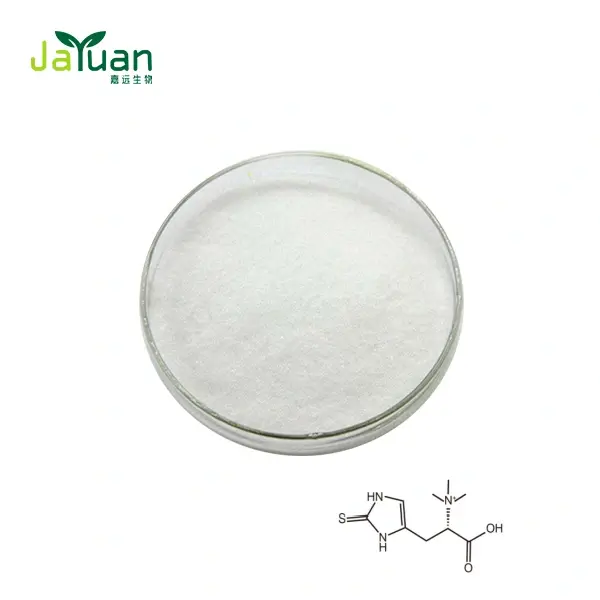
Ergothioneine is a thiol amino acid which is a derivative of histidine. Its molecular formula is C9H15N3O2S. This tautomeric affinity for the thione form in water makes it especially resistant to spontaneous auto-oxidation which is a problem that many other antioxidants like glutathione in complex formulations have that makes them less stable. The body cannot manufacture it, thus the only way to build up tissue levels is through diet or supplementation.
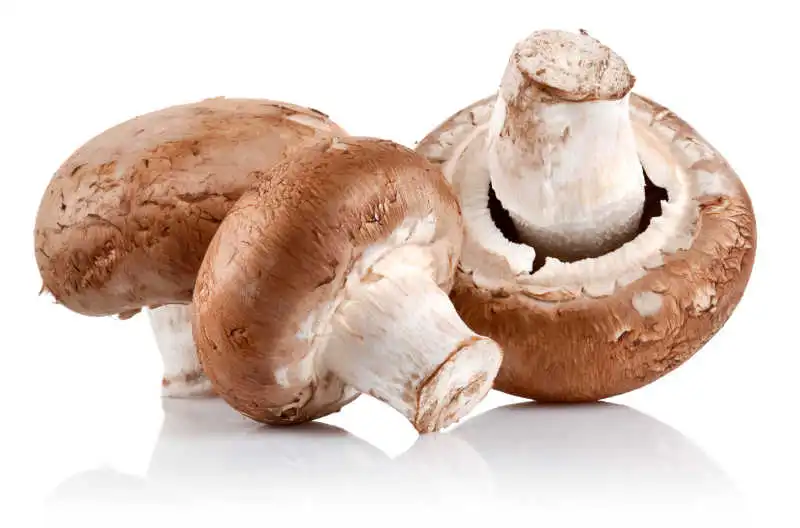
Mushrooms are the richest source of ergothioneine in foods, however the levels present can vary widely depending on the type of mushroom, the medium in which they are grown, and even the conditions of the soil. Also the role of spirulina (Arthrospira platensis) and fermented food. But food sources seldom deliver stable, clinically relevant levels. So the high purity L-ergothioneine powder has become a popular ingredient in the supplements for busy lifestyle and longer life.
Ergothioneine is an antioxidant that protects the mitochondria, controls the neurological system and balances cells. This confluence of biological activity makes creative content marketing narrative a premium offering to advertisers seeking to reach athletes, biohackers or those interested in longevity.
Key Benefits of Ergothioneine Supplements for Recovery and Performance
Muscle Recovery and Oxidative Stress Management
Vigorous exercise produces substantial amounts of reactive oxygen species (ROS) that can damage the muscle fibres and impede recovery. The element of the ergothioneine supplement is largely accumulated in erythrocytes and mitochondria, the parts of the body most vulnerable to injury when you exercise. It acts at the origin of ROS, it enhances cell regeneration and it reduces the metabolic markers related to the fatigue generated by the physical activity.
Cognitive Vitality and Neuroprotection
New research that has been studied by experts in the field shows that ergothioneine can pass through the blood-brain barrier using OCTN1 transporters. This makes it an attractive ingredient for products that promote brain health. Brands that want to attract people who want to live longer can reasonably talk about neurological potential along with physical recovery benefits. This is a two-sided story that works very well in communities that subscribe to supplements.
Longevity, Skin Integrity, and Systemic Resilience
Perhaps the anti-aging perspective is where ergothioneine supplement raw material commands the highest selling price. At the cellular level, antioxidant activity protects skin fibroblasts, reduces UV stress and modifies the levels of inflammatory cytokines. This indicates the chemical works in both nutraceutical pills and topical lifespan serums. This allows brand owners genuine latitude on how they formulate their items for different channels.
Choosing the Right Ergothioneine Supplement for Your Business Needs
Ingredient Form and Formulation Compatibility
For most B2B applications, the preferred raw material is an off-white to white crystalline powder of L-ergothioneine. It is water soluble (> 100 mg/mL at room temperature) and stable in a broad pH range of 3.0 to 9.0. Therefore, it can be employed in water-encapsulated capsules, functional beverages, oral forms and skin serums without the necessity of expensive stabilising chemicals.
Ergothioneine is compatible with other antioxidants such as coenzyme Q10 or vitamin C. It does not compete with them; it supports them. It doesn't replace other ingredients, but rather occupies a distinct molecular niche. This is a crucial element to keep in mind while teaching structure-function language to regulatory and marketing teams.
Supplier Credentialing Criteria
Some sources of ergothioneine are better than others in terms of quality. The most important things to brand founders and chief scientists when making a decision are HPLC purity testing, chiral confirmation of the unique L-isomer (optical rotation +122° to +128°), batch consistency data, and proof of GMP compliance. Material for pharmaceutical use should be at least 99% pure, while material for cosmetic use usually needs to be at least 95% pure. Checking these factors protects the credibility of the brand down the line and meets legal requirements in both the US FDA supplement framework and the EU Novel Food considerations.
Procurement Guide: How to Buy Ergothioneine Supplements in Bulk
Finding ergothioneine raw material on a large scale means dealing with real supply problems. Global availability is still low, and brands that get priority supplier relationships early on have a big advantage over their competitors. Here are the most important things that make bulk buying work:
- Purity and analytical documentation: Check the demand CoA data for HPLC purity of at least 99%, specific optical rotation confirming L-isomer exclusivity, moisture content of less than 0.5%, and heavy metal compliance in line with USP/EP pharmacopoeia standards. These measures directly protect the regulatory status of your end product.
- Production scale and continuity: A seller with a 10-ton-a-year production line that runs SMB chromatographic purification all the time can keep volume promises that small-batch makers can't. Unit costs on these lines are 40% to 60% lower than those of competitors who work on a workshop scale. This lets higher-priced finished goods have better profit margins.
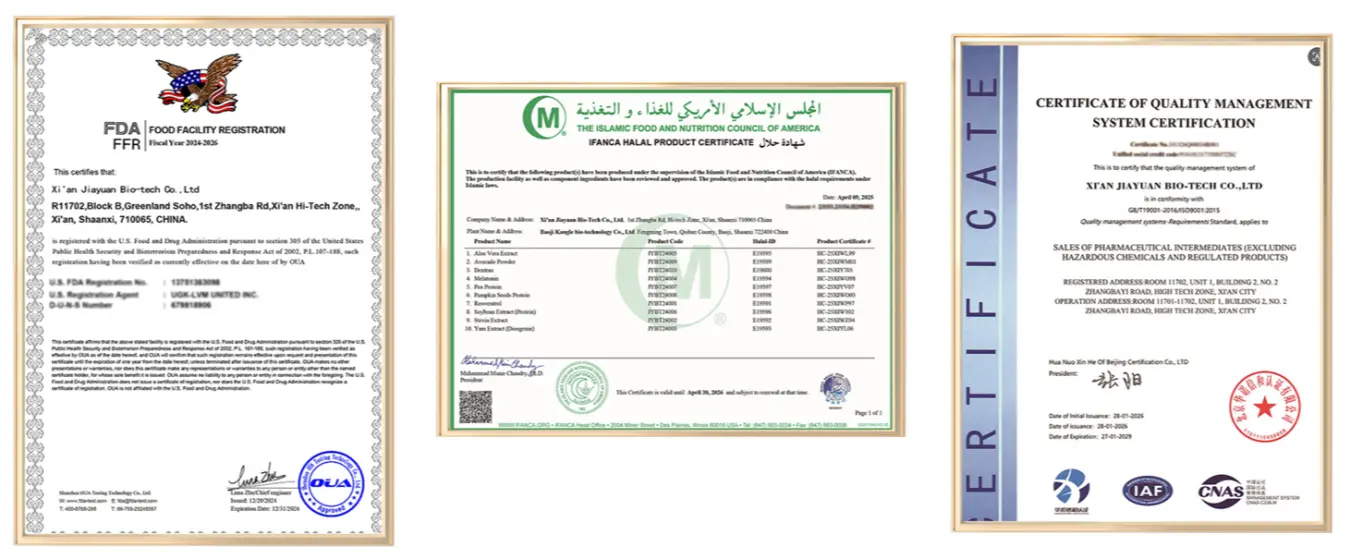
- Certifications and compliance: To get into the US and European markets, production must be GMP-certified, and quality management systems must be ISO 13485. Certifications like halal, kosher, and vegan are important for subscription-brand owners who sell to people who care about ethics.
- Packaging and shelf-life guarantees: Packaging that is sealed, nitrogen-filled, and has a moisture content of less than 0.5% extends the shelf life for more than three years. This is very important for brands that have to manage their inventory over long subscription cycles or international distribution channels.
- Logistics and customs support: A provider with established relationships with FedEx, DHL, UPS, and TNT, along with the ability to clear customs in both the US and EU, makes things a lot easier for buying teams that don't have a lot of experience importing.
Together, these procurement pillars lower supply risk and protect the brand premium that makes ergothioneine supplement products a good business idea.
Ensuring Safety and Quality: Addressing Common Concerns
There is a lot of evidence in the scientific literature that ergothioneine is safe in supplement forms. At the right doses, it is safe to use, doesn't cause any major side effects, and blocks Fenton-type processes that make hydroxyl radicals by chelating divalent metal ions like copper. Its fermentation-based production process eliminates worries about animal origin and supports a "clean label" stance.
For people who buy ingredients, third-party testing at approved labs, such as GC-MS residual solvent analysis and HPLC purity confirmation, is the best way to make sure that both internal quality choices and external promises are true. Instead of just taking samples every so often, near-infrared spectroscopy inline monitoring during production and offline batch testing make sure that every lot delivered meets the published specifications.
Conclusion
The market for busy lifestyles and long life doesn’t really have many ergothioneine supplement ingredients: they’re scientifically proven, expensive, and not yet extensively enough used for businesses that adopt them early to develop enduring customer connections. The raw ingredient is stable, can be delivered by certain transporters and is protective in many tissues, giving formulation teams a lot of leeway to create really unique SKUs. What converts curiosity in an item into long-term business advantage is combining these helpful characteristics with a vendor with excellent credentials, one that offers pharmaceutical grade purity, traceable batch data and scalable production.
FAQ
1.What purity level should I require for an ergothioneine supplement ingredient?
Pharmaceutical-grade L-ergothioneine powder should have a purity level of at least 99.0%, as confirmed by HPLC, and only contain the L-isomer (optical spin +122° to +128°). For cosmetic-grade uses, a level of at least 95% is normal. Always ask for a full Certificate of Analysis that includes heavy metals, moisture, and any chemicals that are still present.
2.Is ergothioneine sourced from mushrooms or fermentation?
Precision microbial fermentation is the best way to make high-purity B2B ingredients, but both routes are possible. Fermentation ensures stereochemical purity, consistent batch quality, and no worries about animal origin—qualities that material extracted from mushrooms can't reliably provide on a large scale.
3.How stable is L-ergothioneine in finished supplement formulations?
L-ergothioneine is very stable from pH 3.0 to 9.0 and can withstand temperatures up to about 257°C to 275°C, which is the temperature range at which it breaks down. Its thione tautomer avoids auto-oxidation much better than glutathione or vitamin C in water-based products, so it is not necessary to add extra stabilizers.
4.What certifications should a reliable ergothioneine supplier hold?
At the very least, GMP certification, ISO quality control certification, and proof that the company follows the rules set by the USP and EP Pharmacopeia. Halal, kosher, and non-GMO approvals are extras that are important for the US market.
Partner With Jiayuan Bio-Tech for Premium Ergothioneine Ingredient Supply
The company Jiayuan Bio-Tech makes ergothioneine supplements and has a 10-ton production line, SMB chromatographic purification that ensures ≥99% purity, and two quality control systems that use NIR for inline monitoring and HPLC/GC-MS for offline verification. Our GMP and ISO-certified facility near the Qinling Mountains makes sure that we can track our raw materials and keep the supply going. You can use small-batch sampling to help you build your recipe. Visit jayuanbio.com or email sales@jiayuanbio.com or sales1@jiayuanbio.com to ask for a COA and start talking about where to get your ergothioneine supplement today.
References
1. Halliwell, B., Cheah, I. K., & Tang, R. M. Y. (2018). Ergothioneine – a diet-derived antioxidant with therapeutic potential. FEBS Letters, 592(20), 3357–3366.
2. Cheah, I. K., & Halliwell, B. (2012). Ergothioneine; antioxidant potential, physiological function and role in disease. Biochimica et Biophysica Acta – Molecular Basis of Disease, 1822(5), 784–793.
3. Berdanier, C. D., & Dwyer, J. T. (Eds.). (2015). Handbook of Nutrition and Food (3rd ed.). CRC Press.
4. Dubost, N. J., Ou, B., & Beelman, R. B. (2007). Quantification of polyphenols and ergothioneine in cultivated mushrooms and correlation to total antioxidant capacity. Food Chemistry, 105(2), 727–735.
5. Kalaras, M. D., Richie, J. P., Calcagnotto, A., & Beelman, R. B. (2017). Mushrooms: A rich source of the antioxidants ergothioneine and glutathione. Food Chemistry, 233, 429–433.
6. Smith, E., Papadopoulos, L., & Tang, R. M. Y. (2021). Ergothioneine bioavailability and dietary intake: Implications for supplementation strategies in active populations. Journal of Nutritional Biochemistry, 94, 108623.