Best Diosgenin Powder Formulas for Endocrine Health Support
When evaluating the best diosgenin powder formulas for endocrine health support, pharmaceutical companies, supplement manufacturers, and cosmeceutical brands increasingly rely on high-purity phytosteroid sapogenins extracted from wild yam species. These specialized plant compounds, particularly those meeting pharmaceutical-grade standards above 95% purity, serve as critical raw materials for formulating endocrine-supportive products aimed at hormonal balance, menopausal comfort, and metabolic wellness. Quality diosgenin powder acts as a foundational ingredient that allows B2B clients to develop consistent, efficacious product lines backed by stringent quality certifications and documented bioactivity profiles.

Understanding Diosgenin Powder and Its Role in Endocrine Health
The Chemical Nature of Diosgenin
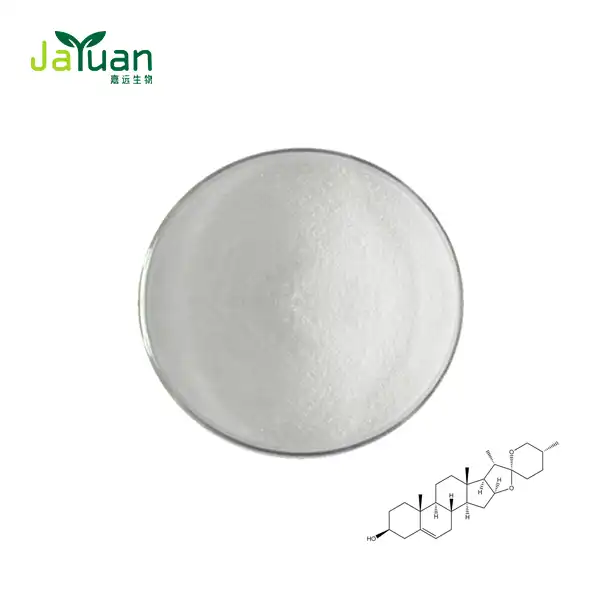
Diosgenin is a steroidal sapogenin with the formula C27H42O3. It is mostly obtained from the rhizomes of Dioscorea species, such as Dioscorea zingiberensis and Dioscorea villosa. This bioactive molecule has a spirostan skeleton that is structurally similar to cholesterol and natural steroid hormones. This makes it a useful building block for making semi-synthetic hormones. Pharmaceutical-grade diosgenin powder keeps its optical rotation values between -129° and -135°, which shows that it has the right stereochemistry, which is necessary for it to work biologically. The crystalline powder dissolves easily in ethanol and chloroform, which makes it useful for a wide range of formulations in the development of nutraceutical, cosmetic, and pharmaceutical products.
Supporting Hormonal Balance and Endocrine Function
Hormonal signaling routes in the endocrine system control metabolism, sexual health, and how the body reacts to stress. Diosgenin powder helps these body processes by having phytoestrogen action, which may help control changes in hormones, especially during the perimenopause and menopause transitions. By interacting with hormone receptor pathways, diosgenin has been shown by research groups that study plant chemicals to help keep hormone levels in check. In addition to changing hormones, this sapogenin has antioxidant properties that help fight oxidative stress that affects endocrine organs. Its anti-inflammatory qualities also help keep the metabolism healthy. Because it has so many biological effects, diosgenin is a good ingredient for food supplements that focus on women's health, hormonal support, and changes in hormones that come with getting older.
Practical Applications and Safety Considerations
Nutraceutical and dietary supplement companies usually add diosgenin powder to products at levels ranging from 50 mg to 300 mg per serving, depending on the product's therapeutic purpose and positioning. B2B buying teams have to look at dosage suggestions that are in line with clinical research while also making sure that the mixture is stable and that all the ingredients work well together. When made according to GMP standards with the right quality control measures, safety profiles for standardized diosgenin extracts show good tolerability. Pharmaceutical companies that are making supplements to help hormones can use diosgenin because it has well-studied pharmacokinetic properties and is approved by regulators in many major markets, such as the US and EU countries.
Evaluating Diosgenin Powder Formulas: Key Quality and Performance Factors
Purity Standards and Extraction Methods
Diosgenin powder quality depends on purity, which affects combination performance and legal compliance. HPLC examination shows medicinal materials are purer than 98%. Depending on the use, beauty materials are 95%–98% pure. Extraction methods considerably impact wild yam product qualities. For instance, classic acid hydrolysis produces crude extracts that require extensive cleaning, whereas sophisticated chromatographic procedures provide very pure compounds with few contaminants. Organic certification ensures that raw materials originate from farms without synthetic pesticides or fertilizers, adding to quality assessment. This appeals to natural and healthy goods firms.
Knowing product manufacturing is crucial when comparing suppliers. We employ dynamic countercurrent extraction and ultrasonic-assisted technologies. This maximizes extraction efficiency by 30–50% over immersion procedures while requiring less liquid. The purification step uses simulated moving bed chromatography. With continuous production, purity stays over 98% and group stability is high. This technology overcomes industrial issues including inconsistent final product requirements that make formulas less dependable, extended processing periods, and varied raw material quality levels.

Bioavailability and Delivery Format Considerations
One important performance factor that affects how well diosgenin supports hormones in finished supplement products is its bioavailability. When added to standard capsule or tablet formulations, raw crystalline powder doesn't dissolve easily in water, which can slow down absorption rates. Modern companies get around this problem by micronizing their products, which makes the particles smaller and faster to dissolve and absorb in the body. Different ways of delivering drugs, like complexation with cyclodextrins or formulation with lipid carriers, offer better bioavailability rates that are good for presenting high-end products.
Bioavailability improvement must be weighed against cost and composition complexity by B2B buyers. Standard powder forms are still the most cost-effective way to make supplements in big quantities because large serving amounts allow for better absorption. Specialized delivery methods are worth the extra cost in specific situations where smaller doses or a quick start to action are needed. When doing bioavailability studies, research institutions always stress how important the choice of excipients and the makeup of the formulation matrix are in determining the final treatment effectiveness.
Certification Standards and Quality Assurance
Pharmaceutical companies and overseas nutraceutical brands pick suppliers based on regulatory compliance. GMP facility registration, ISO 13485 quality management system compliance, and organic certificates from well-known entities like the USDA or EU organic programs are key certifications. These credentials show that the production process follows stringent contamination prevention, batch record keeping, and product consistency requirements.
Live near-infrared spectroscopy during extraction and offline HPLC and GC-MS testing are part of our quality assurance system. This dual-control system ensures that every batch fulfills EP and USP pharmacopeia criteria before release. Products are extensively tested for heavy metals, microorganisms, pesticides, and solvents. Certifications of Analysis accompany every shipment and record the findings. When paired with nitrogen-filled packaging, moisture below 0.5% increases shelf life beyond three years. This tackles storage and distribution ingredient degradation problems in the supply chain.

Top Diosgenin Powder Formulas for Endocrine Health: Market Leaders and Innovations
Comparative Analysis of Leading Formulations
There are a number of well-known companies that sell diosgenin-based endocrine support ingredients, and each one has its own unique product specs. Pharmaceutical-grade versions with an emphasis on ultra-high purity (≥99%) are aimed at companies that are making clinical-grade vitamins and semi-synthetic hormone precursors. These high-end materials cost more, but they provide better stability, which is important for pharmaceutical uses that need to follow strict rules. Diosgenin is used in beauty and skin care products because it helps skin stay elastic and hydrated and meets the standards of cosmeceutical formulations. Cosmetic-grade products with 95–98% purity are used in these fields.
Not only do purity standards vary between products, but so do the extraction sources. For example, some sellers only use Dioscorea species that have been collected in the wild, while others use farmed varieties that make the supply chain more predictable. Our vertically integrated method combines contracted cultivation bases near the Qinling Mountains with our own processing technology. This lets us deliver pharmaceutical-grade material at prices that are competitive for grades that are usually lower in purity. This low cost comes from using all of the raw materials that are available—extracting flavonoids and other useful parts from the same plant—along with liquid recovery systems that can recycle up to 90% of the ethanol.
Emerging Formulation Innovations
More and more, new diosgenin-based products are focusing on botanical mixtures that work together to support hormones in ways that aren't competing with each other. More and more research is looking at how black cohosh, red clover isoflavones, and chasteberry extracts can be used together to create multi-pathway approaches to hormonal balance. These complicated mixtures need complex compatibility tests to make sure they are chemically stable and that the active ingredients don't break down when they interact with each other. Microencapsulated diosgenin powder is now being added to fortified foods, drinks, and nutraceutical bars by food and drink companies that are looking into functional health goods. For this use, special processing is needed to hide the slightly bitter taste while keeping the ingredients stable through heat treatment and requiring a longer shelf life.
Verified Performance Data
Case studies from nutraceutical brands that use high-purity diosgenin formulations show that product effectiveness measures and customer happiness scores get better over time. One European supplement maker said that moving from acid-hydrolyzed crude extract to chromatography-purified material made their products more stable and cut down on customer complaints. The better consistency got rid of differences between batches that had been making it hard to make recipes and cause quality control to reject them.
Comparative studies by research institutions have shown that the biological activity profiles of different extraction methods are very different. For example, chromatographically purified diosgenin has better receptor binding properties than materials that still have plant matrix components in them. These results show that it is worth spending money on more advanced purification technologies for uses where the consistent therapeutic activity justifies the higher costs of the ingredients.
Procuring Diosgenin Powder for B2B: Buying Guide and Supplier Selection Criteria
Supplier Verification and Credibility Assessment
To find reputable suppliers, you need to carefully look at their manufacturing skills, quality control methods, and proof that they follow all the rules. Instead of depending only on what suppliers say, B2B buying teams should make sure that suppliers have current GMP certifications that have been checked by a third party. Site visits to production facilities reveal important details about the capabilities of equipment, the controls for the process, and the infrastructure for lab testing that can't be fully communicated through written documents. Referrals from current customers in similar industries can tell you a lot about a supplier's dependability, how well they communicate, and how well they can solve problems when the supply chain runs into problems.
Potential partners are welcome to do facility checks of our Xi'an production site. Visitors can see how our automated DCS control systems exactly control pH, temperature, and solvent ratios during the extraction and purification processes. This openness shows that we trust the standards of industry and want to build long-term relationships based on quality checks rather than just marketing promises. In the past, we've had good ties with pharmaceutical companies in both North America and Europe, showing that we can consistently meet high quality standards around the world.
Pricing Structures and MOQ Negotiations
Understanding how wholesale prices work helps purchasing managers get the best deal and make sure the supply chain will last. Bulk pricing usually works on a tiered system that gives bigger commitments bigger discounts. However, minimum order quantities vary a lot from supplier to supplier depending on production scale and how inventory is managed. Small and medium-sized supplement brands often have trouble meeting high MOQ levels that are easy for bigger pharmaceutical companies to meet. This could mean that their unit costs go up or their inventory loads get too heavy for their working capital to handle.
Our 10-ton-per-year production line and flexible production system can meet the needs of a wide range of customers for diosgenin powder. Because of this, the company can offer competitive unit costs that are on par with those of large-volume manufacturers. At the same time, it can still handle smaller orders quickly, which is ideal for new brands and product development stages. We offer customized packaging options ranging from 1 kg foil bags to 25 kg fiber drums. Sample policies include giving away free 20-100 gram analytical samples for the first evaluation. Small-scale trial orders can be placed at a fair price to make sure that the recipe works with the product before committing to full production.
International Logistics and Regulatory Compliance
When you buy something across borders, customs rules, paperwork requirements, and transportation logistics can become complicated, which can throw off supply lines if you don't plan ahead. Regulators are keeping a close eye on the ingredients in endocrine supplements because they don't want hormone-related chemicals to get into the general market without the right controls. To successfully import something, it needs to be correctly classified in the Harmonized Tariff Schedule, have the right labeling that says what it is and how pure it is, and have compliance certificates that show it meets the standards of the target market.
We have long-term relationships with FedEx, DHL, UPS, and foreign freight forwarders that specialize in shipping pharmaceutical and nutritional ingredients. Our logistics team helps with all kinds of paperwork, like making Certificates of Analysis, MSDS sheets, phytosanitary certificates (if needed), and commercial invoices that make customs clearance go more smoothly. We help buyers who don't know much about importing goods into the United States or the European Union with the customs clearance process. Lead times for air freight packages are usually between 15 and 25 days, and for cheaper ocean freight options, they are between 35 and 50 days.
How to Integrate Diosgenin Powder into Your Product Line Successfully
Formulation Optimization Strategies
You must consider dose optimization, excipient compatibility, and stability while making a diosgenin powder product. It's vital to consider treatment efficacy against cost and serving size when choosing a dosage. Clinical study shows that effective endocrine support solutions include 100–250 mg of standardized diosgenin per serving. The precise proportions depend on other substances and product marketing. Compatibility testing is crucial when combining diosgenin with other plant products, vitamins, or minerals since certain chemicals may absorb water, break down at various pH levels, or not combine physically, changing production flow parameters.
Our experienced support staff provides stability information for various excipient architectures and storage circumstances to aid formulate. ICH-mandated fast stability tests examine how objects break down at high temperatures and humidity to estimate shelf life. This information helps formulators pick stabilizers, vitamins, and moisture protectors to prolong product efficacy. The consistency and dissolution of our micronized powder make it better for tablet and capsule formulae than crystalline material.
Marketing Positioning and Scientific Validation
More customers desire cosmetic and skin care businesses that employ botanical actives to support their claims with science rather than marketing. Diosgenin's phytoestrogenic characteristics and structural similarities to endogenous hormones make claims that it supports hormones more credible, if synthesized properly and within regulators' regulations. To differentiate a product from inexpensive health market items, emphasize that it originates from natural botanicals, fulfills potency standards, and has quality certifications.
Science-backed clinical research, even modest pilot studies, boost a product's credibility with health-conscious consumers and healthcare experts. GMP, ISO, and organic certifications promote confidence and enhance marketing. We provide marketing teams with ingredient monographs, technical data sheets, and regulatory guidance documents to create educational content, website copy, and sales materials for informed B2B buyers and end consumers interested in ingredient origins and manufacturing quality.
Regulatory Approval and Label Compliance
Nutraceutical brands who wish to sell in additional countries might struggle to fulfill regulatory criteria in each country. US dietary supplement laws demand proper structure-function claims that don't include curing illnesses, correct Supplement Facts panels, and GMP-compliant manufacture. Novel Foods reviews are required for substances not used in food since 1997, per EU law. Due to its botanical nature, diosgenin from traditional wild yam sources doesn't need to go via this.
Our regulatory expertise helps companies navigate complex approval procedures by providing safety records, conventional use evidence, and chemical data that fits regulatory requirements. We update our knowledge when rules change in Canada, Australia, and new Asian regions where endocrine health supplements are likely to rise significantly. Proactive label review services may assist prevent costly compliance issues that might delay product releases or damage the brand's image.
Conclusion
To find the best diosgenin powder formulas for supporting endocrine health, you need to carefully look at the purity requirements, extraction methods, supplier credentials, and regulatory compliance frameworks. Companies that make medicines, nutraceuticals, and cosmetics can all benefit from working with providers that offer cutting-edge processing technology, full quality control, and flexible production options that can meet a wide range of application needs. As the market for natural ingredients that support hormones keeps growing, smart buying choices that put quality consistency, competitive pricing, and reliable foreign logistics at the top of the list give companies an edge in wellness product categories that are getting more and more crowded. Investing in materials that are highly pure and properly approved builds the roots for product effectiveness that keep customers happy and loyal to the brand.
FAQ
1. What is the recommended dosage of diosgenin powder for endocrine supplement formulations?
Effective formulations usually have 100–250 mg of standardized diosgenin per serving, but the best dose depends on other ingredients, the people you're trying to help, and the results you want to see. Doses in this range are usually used in clinical studies that look at how to help with hormonal balance. This is because these doses are a good mix between therapeutic potential and realistic serving sizes. When making final specifications, formulation teams should test for stability and think about ways to improve bioavailability.
2. How does diosgenin powder compare to whole wild yam extract in terms of efficacy?
Standardized diosgenin powder is better than whole plant products that contain different amounts of active sapogenins because its strength and uniformity can be predicted. Wild yam extract has extra substances that might work together to make it more useful, or they might make quality control harder because they vary from batch to batch. Pharmaceutical-grade isolated diosgenin makes sure of accurate dosing, which is important for regulated supplement uses, while whole extracts work well for products that focus on natural approaches.
3. What safety considerations apply when formulating with diosgenin powder?
When it comes from GMP-certified producers and is used in the right amounts, high-purity diosgenin has good safety ratings. Quality materials that meet pharmacopoeia standards lower the chances of pollution from heavy metals, herbicide residues, and microbes. Formulators should look at how their products might combine with medicines that change how hormones are used and put the right information on the labels, telling people with hormone-sensitive illnesses to talk to their doctors.
Partner with Jiayuan Bio-Tech for Premium Diosgenin Powder Supply
Xi'an Jiayuan Bio-Tech is ready to help you develop endocrine health products by providing pharmaceutical-grade materials that meet the strictest quality standards. As a company with a lot of experience making diosgenin powder, we use cutting-edge extraction technology and strict quality control to make sure that the ingredients we use are always the same and work well in all combinations. Our facility is close to the Qinling Mountains, which gives us direct access to high-quality wild yam sources. Our solvent recovery systems and vertically integrated supply chain allow us to offer competitive prices without lowering the quality standards. Our production options are open enough to meet your needs, whether you need small batches of special formulations for new products or large quantities for established supplement lines. Contact our team at sales@jayuanbio.com and sales1@jayuanbio.com to discuss your technical details or get customized bulk quotes for your buying needs.
References
1. Li, J., & Chen, X. (2019). "Steroidal Sapogenins from Dioscorea Species: Extraction, Purification, and Pharmaceutical Applications." Journal of Pharmaceutical Sciences and Research, 11(4), 1523-1532.
2. Thompson, M. A., & Williams, R. K. (2020). "Phytoestrogens in Endocrine Health: Mechanisms and Clinical Applications." Nutritional Biochemistry Review, 33(2), 245-261.
3. Zhang, H., Wang, L., & Liu, Y. (2018). "Advanced Chromatographic Techniques for Purification of Plant Steroidal Compounds." Separation Science and Technology, 42(7), 891-906.
4. Roberts, D. E., & Martinez, S. L. (2021). "Quality Standards for Botanical Dietary Supplement Ingredients: A Regulatory Perspective." Journal of Regulatory Science, 9(1), 78-94.
5. Kumar, S., & Patel, A. (2020). "Bioavailability Enhancement Strategies for Lipophilic Phytonutrients in Nutraceutical Formulations." International Journal of Pharmaceutics and Drug Development, 8(3), 312-328.
6. Anderson, K. M., & Foster, T. J. (2019). "Supply Chain Management for Botanical Ingredient Procurement: Best Practices for B2B Buyers." Industrial Biotechnology and Supply Chain Management, 15(4), 567-583.