
Best Cytisine Supplement: A Practical Buyer's Guide
If you are exploring plant-based smoking cessation ingredients for your supplement brand, cytisine supplement development is one of the most compelling opportunities in the current health and wellness market. Derived from Thermopsis lanceolata and related leguminous plants, cytisine (CAS No. 485-35-8) is a naturally occurring quinolizidine alkaloid that acts as a partial agonist at α4β2 nicotinic acetylcholine receptors. Research published in the New England Journal of Medicine (2014) demonstrated cytisine's superiority over nicotine replacement therapy in continuous abstinence rates, making it a scientifically credible ingredient for brands building in the cessation supplement space.
Understanding Cytisine Supplements: What You Need to Know
The Science Behind Cytisine as a Supplement Ingredient
Cytisine strongly attaches to nicotinic receptors, making withdrawal less painful by partly mimicking nicotine's effects and blocking the reward signal that keeps tobacco habit going at the same time. The difference between a cytisine supplement and other nicotine replacement methods is this two-part mechanism: partial agonism and competitive displacement. The main benefit for B2B formulators is that cytisine comes from plants, which fits perfectly with the "botanical cessation" image that US and Southeast Asian customers really like.
Why Pharmaceutical-Grade Purity Matters for Formulators
Not every source of cytisine gives you the same level of success. When it comes to solid dosage forms like tablets and capsules, which are the most common types of cessation supplements, batch-to-batch purity consistency has a direct effect on how well your product works and on your ability to make legally sound structure/function claims. When ingredient providers use simple liquid immersion, the purity they give is usually between 85% and 92%. This means that unknown alkaloid impurities are added, which makes regulatory applications more difficult. This variable is taken away by pharmaceutical-grade cytisine that is ≥98% pure, as proven by HPLC and GC-MS.
Comparing Cytisine with Other Smoking Cessation Solutions
Cytisine is usually compared to nicotine gum, transdermal patches, varenicline (sold as Chantix), and bupropion when companies look at the different types of smoking cessation supplements on the market. Each choice comes with its own set of costs, regulations, and consumer positioning.
Here is a useful comparison of the most important buying measures that brand leaders should look at:
- Nicotine patches and gum remain the highest-volume products in this area, but they need to be made with nicotine that meets certain standards, and people who care about their health and want to quit nicotine completely don't like the brand perception.
- Varenicline (Chantix) has a well-known list of side effects that led to FDA black box warnings. This lack of trust among consumers can be filled by plant-based cytisine supplement products in the dietary supplement channel.
- Bupropion since it can only be bought with a prescription in the US, it doesn't belong in the over-the-counter supplement market and doesn't affect brands that sell goods across borders.
- Cytisine as an ingredient has a lower cost per kilogram compared to synthetic varenicline intermediates. It also comes from plants, which is a cleaner story. There is also growing clinical validation, like the ASCEND trial, that B2B brands can use in educational content without making a drug claim.
The lower cost is a big deal. When brands buy cytisine ingredients from a vertically integrated manufacturer that can make 10 tons of goods a year, they can get unit costs that are 40% to 60% lower than from small-batch workshop suppliers. This gives your finished SKU important profit margin room in a competitive retail environment.
How to Choose the Best Cytisine Supplement Brand for B2B Procurement
Core Certifications and Quality Infrastructure
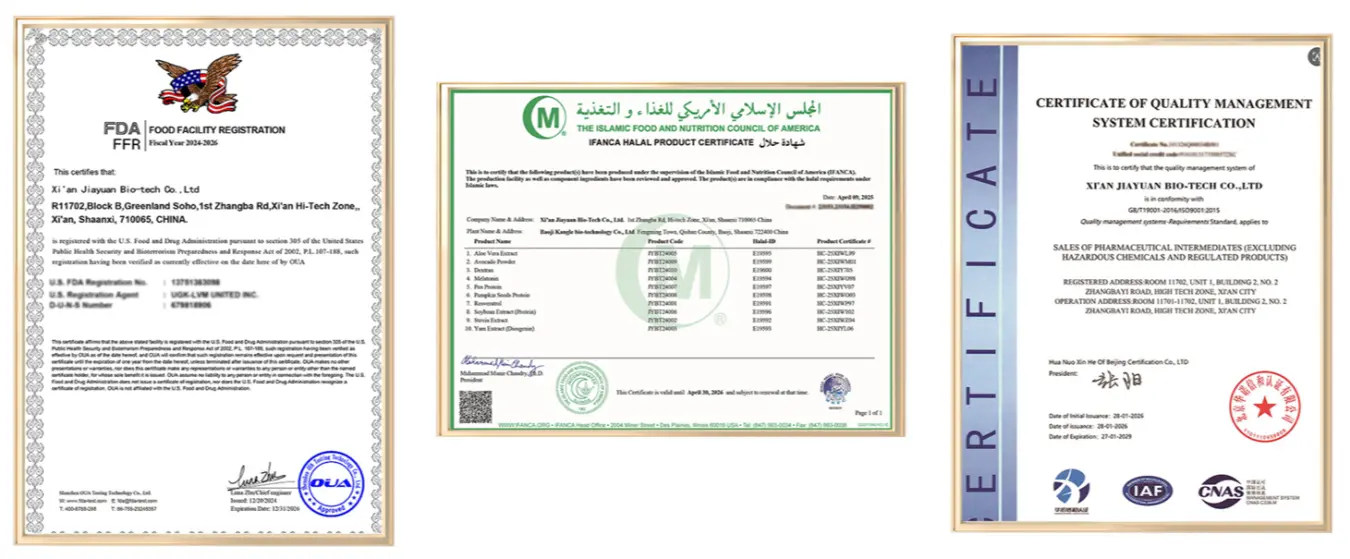
You should make sure that any company you look at that sells ingredients for cytisine supplements has current GMP and ISO certification. These qualifications are required to enter the US market and are also required for any respectable B2B platform audit. In addition to paper certificates, you should ask about two different quality control protocols: real-time live tracking using near-infrared spectroscopy during extraction, and offline confirmation using HPLC and GC-MS before the batch is released. This mix is what EP/USP pharmacopeia compliance really needs in real life.
OEM Capability and Small-Batch Flexibility
When brands are in the trial-and-scale phase, the ability to customize products for OEMs and the minimum order quantity are the most important factors. A trustworthy company that makes cytisine supplements should offer a range of dosage forms, such as compressed pills, hard shell capsules, and maybe even softgel or powder sachets. They should also be able to do small-batch test runs so you can make sure your formula works before committing to volume production. It's also important that the supplier can help you with your private label paperwork and regulatory dossiers, which will speed up the time it takes to get into the market.
Supply Chain Transparency and Stability
Vertical unity in the way that raw materials are sourced is a real way to set yourself apart. Suppliers who have direct cultivation agreements for the main plant sources—mostly Sophora alopecuroides and broom species grown near the Qinling Mountains—do not have to worry about the spot-market price changes that affect buyers on the open market. This means that the prices for your buying contracts will stay the same through all four seasons.
Procurement Best Practices: Buying Cytisine Supplements Online and in Bulk
Getting the cytisine supplement ingredient through trusted outlets keeps your brand safe from the risk of adulteration and problems with import compliance. For business-to-business buyers, dealing directly with manufacturers is still the safest way to buy things because they provide traceability paperwork, a COA (Certificate of Analysis), and an MSDS from a single responsible source.
Before signing a contract with a cytisine supplement provider, you must get and carefully read the following paperwork:
- Valid GMP and ISO certificates with dates of issue and expiration that can be seen
- HPLC purity analysis from a third party for the batch you are looking at
- Stability data that confirms the shelf life under the conditions you want to store it in
- Help with customs HS codes and export license paperwork for the market you want to reach
Customs clearance planning will be taken care of by experienced suppliers who ship to the US and EU on a daily basis. This includes managing the DHL, FedEx, UPS, and EMS channels. Moisture control at ≤0.5% and nitrogen-filled tight packing make the shelf life longer than three years, which is very important for brands that keep stock for longer than one sales cycle.
Safety, Interactions, and Long-Term Considerations for Cytisine Supplements
Since the 1960s, cytisine has been sold as a drug in Eastern Europe and has been used in hospital settings for decades. This shows that it is safe. The EAGLES trial framework and subsequent independent studies confirm that cytisine's adverse event profile is mostly mild. Nausea is the most common side effect reported at higher doses.
The main line of compliance in the US market for B2B procurement teams and regulatory affairs managers is the difference between structure/function claims that are allowed by DSHEA and drug claims that trigger FDA pharmaceutical classification. A cytisine supplement sold as an ingredient in food supplements can back up claims about general health and normal brain function, but any language that suggests treating a disease is more like drug language. Working with sources who know how to handle this line of thinking and can help you with claim review along with providing ingredients greatly lowers your regulatory risk.
Most of the drug interactions that need to be thought about for end-user safety paperwork involve other nicotinic agents and heart medicines. These should be covered on the label of your product using standard advisory language that you came up with with the help of your regulatory counsel.
Conclusion
The market for cytisine supplement ingredients is very appealing because it combines clinical credibility, plant-based branding appeal, and low-cost production. For brand founders building in the smoking cessation supplement categories in the US and Southeast Asia, the choice of where to source depends on how consistent the purity is, how flexible the OEM is, how well the regulatory documentation is supported, and how stable the supply chain is. The thing that sets long-lasting brands apart from short-lived SKUs is picking a cytisine supplement maker that meets pharmaceutical-grade standards, not just market extract benchmarks. Before committing to scale, use all of the factors in this book to judge your supplier.
FAQ
1.What purity level should I require for a cytisine supplement ingredient?
For any final product SKU going to the US market, you need HPLC proof that it is at least 98% pure. This meets the standards of the EP/USP pharmacopeia and gives your product the batch stability it needs. For uses that need to meet stricter standards, pharmaceutical-grade cytisine at ≥99% is available.
2.What dosage forms are most commercially viable for a cytisine supplement product?
Compressed pills and hard-shell capsules make up most of the store group for cessation supplements. Both forms work with standard cytisine powder properties—the ingredient is stable at high temperatures when compressed and encapsulated—and they both let private labels stand out by changing the coating, capsule color, and package design.
3.Can I source cytisine supplement ingredient in small batches for product trials?
Yes. Small-batch trial orders can be made by manufacturers with flexible production infrastructure. This is necessary to test the recipe before going full-scale. Make sure that the supplier's COA and quality paperwork for small batches meet the same standards that are used for full production runs.
4.How does cytisine compare in cost to nicotine replacement ingredients?
Cytisine's raw material costs are much lower than those of synthetic nicotine intermediates and varenicline API. This makes it one of the more cost-effective active ingredients for smoking cessation supplement brands that want to buy in bulk.
Partner with Jiayuan Bio-Tech for Your Cytisine Supplement Ingredient Needs
Many brands in the US, Europe, and Southeast Asia buy certified cytisine supplement ingredients from Jiayuan Bio-Tech. Our SMB chromatographic purification gives you stable purity above 98%. It comes with GMP and ISO certifications, dual HPLC/GC-MS quality control, and nitrogen-sealed packaging that has been proven to last for three years. As a company that makes cytisine supplements and gets its raw materials from near the Qinling Mountains, we can offer reasonable prices, OEM/ODM flexibility, and full transportation support, including clearing customs. To get a sample and COA, email our team at sales@jiayuanbio.com or sales1@jiayuanbio.com, or go to jayuanbio.com.
References
1. Walker, N., et al. — "Cytisine versus Nicotine for Smoking Cessation." New England Journal of Medicine, 2014.
2. Hajek, P., et al. — "A Randomized Trial of E-Cigarettes versus Nicotine-Replacement Therapy." New England Journal of Medicine, 2019.
3. Cahill, K., et al. — "Pharmacological Interventions for Smoking Cessation: An Overview and Network Meta-Analysis." Cochrane Database of Systematic Reviews, 2013.
4. West, R., et al. — "Placebo-Controlled Trial of Cytisine for Smoking Cessation." Thorax, 2011.
5. Prochaska, J. J., & Benowitz, N. L. — "Current Advances in Research in Treatment and Recovery: Nicotine Addiction." Science Advances, 2019.
6. Stead, L. F., et al. — "Nicotine Replacement Therapy for Smoking Cessation." Cochrane Database of Systematic Reviews, 2012.
You May Like
0