
Astaxanthin Powder Benefits for Eye, Brain, and Heart Health
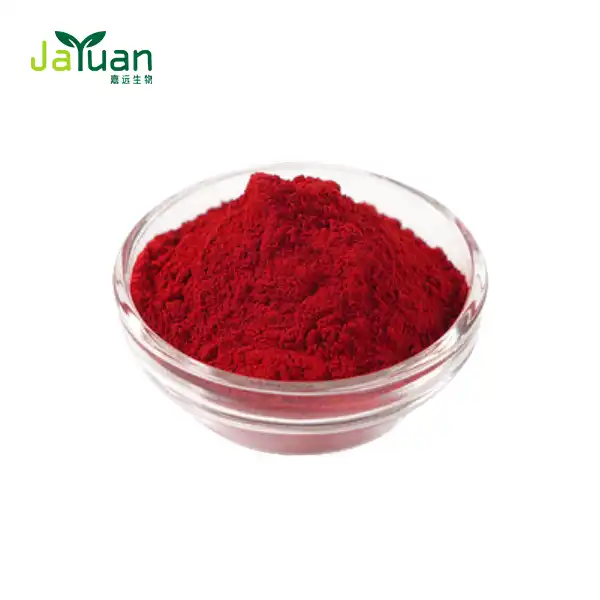
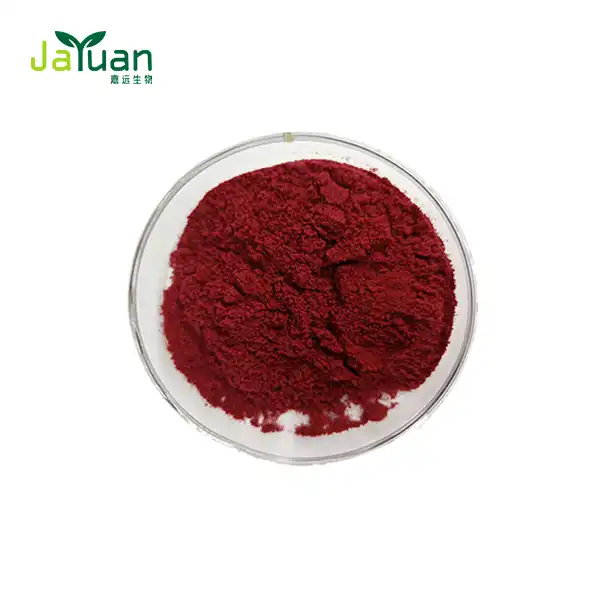
Astaxanthin powder is one of the most studied keto-carotenoids in the nutraceutical industry today. Derived primarily from Haematococcus pluvialis microalgae, this ingredient delivers remarkable antioxidant capacity — neutralizing reactive oxygen species up to 6,000 times more effectively than Vitamin C. For brand product managers and formulation chemists sourcing ingredients for eye health supplements, oral beauty products, or functional soft gels, understanding what this ingredient offers — and how to source it responsibly — is a genuine competitive advantage. This guide walks through everything that matters for informed B2B procurement decisions.
What Is Astaxanthin Powder and How Is It Made?
Natural Origin: Haematococcus pluvialis Microalgae
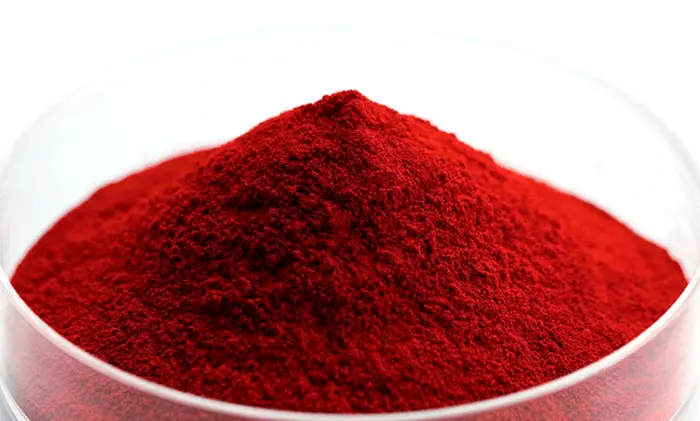
Astaxanthin powder comes from the microalgae Haematococcus pluvialis, which stores the color when it is stressed out in its surroundings. Supercritical CO₂ technology is used in the extraction process. This keeps the bioactive conjugated double bond structure intact without contaminating it with solvents. The oleoresin that is made is then microencapsulated using matrices such as modified starch, gum arabic, or cyclodextrin. This turns the lipophilic compound into a powder that can mix with water and flow freely. This step directly fixes two problems that formulation has been having for a long time: oxidation instability and poor water solubility.
Natural vs. Synthetic: Why the Source Matters
You can find cheaper forms of astaxanthin powder made from chemicals and yeast (Phaffia rhodozyma). Natural astaxanthin powder from microalgae, on the other hand, has the (3S,3'S) stereoisomeric configuration, which study shows is better for bioavailability than manmade racemic mixes. Labeling with "natural-source" words works well with customers who want to buy products with clean labels and no GMOs. This is a key selling point for brands in the US premium supplement market. The source statement on each Certificate of Analysis (COA) should be checked by people who work in procurement.
Key Health Benefits of Astaxanthin Powder for Eye, Brain, and Heart
There is a lot of clinical data to back this ingredient, which makes it one of the most compelling active ingredients for multi-benefit supplement formulations.
Eye Health: Protecting Visual Function
Astaxanthin powder builds up in the retina and macula, among other eye cells. Clinical studies show that it may help reduce eye fatigue, speed up the recovery process for accommodation, and protect the macular against photooxidative stress. A double-blind study in the journal Molecular Nutrition & Food Research found that people who did long-term vision work and took 6 mg of astaxanthin powder every day felt less tired in their eyes. This supported claim makes astaxanthin powder-based ingredients stand out as a high-quality, proof-based ingredient for eye health brands.
Brain Health: Cognitive Support and Neuroprotection
Astaxanthin powder is one of the few carotenoids that can cross the blood-brain barrier. This makes it very useful in products that support brain health. According to research, it may help lower neuroinflammation and improve memory by protecting brain tissue from toxic damage. A study in the British Journal of Nutrition found that middle-aged people who took astaxanthin powder supplements for 12 weeks did better on cognitive tests. This makes astaxanthin powder a good choice for brain health soft drinks and nootropic mixes.
Cardiovascular Support: Vascular Integrity and Oxidative Balance
It is known that oxidative stress can make vascular function worse. Astaxanthin powder is useful in products that aim to improve heart health because it can stop lipid breakdown. It may help keep LDL oxidation resistance and vascular function healthy, according to clinical evidence. These proven benefits let B2B buyers make honest, legal marketing claims about heart health SKUs without exaggerating how well they work.
In addition to these three main benefits, this ingredient also improves skin shine by blocking UV-induced oxidative damage. This makes it a great ingredient for companies that make both eye health and mouth beauty products.
How to Use Astaxanthin Powder Safely and Effectively
Most finished supplement products have doses that work that are between 4 mg and 12 mg per daily serving. Most clinical studies that looked at eye health used 6 mg/day. For brain or heart health purposes, 8–12 mg is a more typical range in published studies.
For formulation teams, these are the main types of applications that are useful:
- Hard capsules and soft gels: Microencapsulated astaxanthin powder works great in hard-shell capsules because it doesn't leak like oleoresins do. The beadlet structure can be compressed without breaking, so it stays functional throughout its shelf life.
- Functional gummies: Cold-water-soluble (CWS) grades spread evenly in gummy matrices, providing stable dosing and consistent color, which is important for making sure that branded soft gels and gummies look the same from batch to batch.
- Topical and oral beauty serums: For facial and mouth beauty serums, low-concentration powder grades (1%–2%) are mixed into serum bases to provide antioxidant protection against collagen breakdown caused by UV light.
Pick the right grade (concentration and dispersibility) during the formulation stage saves a lot of money later on when it comes time to redo the formulation. As for safety, astaxanthin powder has a well-established safety profile based on a number of chemical research. At the suggested intake levels, no major side effects have been seen.
Choosing the Best Astaxanthin Powder for Your Business Needs
Many buying teams don't pay enough attention to the process of choosing suppliers. When your finished product fails visual quality control (QC) because of a batch color difference or heavy metal contamination, a low unit price doesn't mean much.
When looking for a bulk astaxanthin powder provider, the most important things to look at are the concentration grade, the clarity of the COA, and the approved production standards. Here's what you should put first:
- Concentration gradient availability: Reliable sellers give a full range of standardized astaxanthin powder contents, from 1% to 10%. This lets formulators make changes across price ranges without having to switch suppliers.
- COA compliance: Each batch COA should list the amounts of heavy metals (such as lead, arsenic, mercury, and cadmium), microbes, solvent residues, and foreign nucleic acid residues that are within the widely recognized compliance limits.
- Certifications: You must have ISO and GMP certificates. Certifications like HALAL and organic add value to certain market channels.
- Color batch consistency: For gummy and functional drinks, the look of the finished product is directly affected by how uniform the pigments are across production lots. Before you place a bulk order, ask for spectrophotometric data.
Choosing natural-source sources that have been checked out and have clear paperwork cuts down on supply chain risk a lot and sets up your brand for long-term regulatory trust.
Procurement Guidance: Where and How to Buy Astaxanthin Powder in Bulk
When industrial buyers source on a large scale, they usually put three things at the top of their list: stable prices, a steady supply chain, and good paperwork. MOQ structures are very different. Small-scale extract producers may need at least 25 kg, but factory-direct astaxanthin powder makers with warehouses that can fill smaller orders before going big can handle smaller trial orders.
When looking at a new provider, you should always ask for a real sample along with the COA. A simple filter paper residue test can tell you a lot about the quality of the extraction. If the extraction is clean, it leaves behind very little residue, which means it has higher antioxidant levels and better free radical scavenger abilities. This is an easy quality check that any preparation lab can do on its own.
The way things are stored is also important. Light, heat, and oxygen can all hurt astaxanthin powder. Reliable suppliers ship in nitrogen-flushed, light-resistant boxes and give written information on how long something will last under accelerated stability conditions.
Conclusion
Astaxanthin powder is a widely appealing ingredient for eye health, brain health, and heart health supplements that has been supported by science. It comes from natural microalgae, can be used in a lot of different ways, and is safe. These factors make it one of the most sought-after active ingredients in the US nutritional market. Choosing a seller shouldn't just be based on price; it should also be based on COA openness, concentration availability, certified manufacturing, and supplier dependability.
FAQ
1.What is the recommended dosage range for astaxanthin powder in supplement formulations?
Most of the studies that showed benefits for eye and brain health used 4–12 mg of active astaxanthin powder per daily serving. Formulation teams should choose the right dosage grade (1% to 10%) based on the amount they want to give and the weight of the capsules or gum they are filling.
2.How does natural astaxanthin compare to beta-carotene or spirulina as an antioxidant?
The singlet oxygen quenching activity of natural astaxanthin powder is about 54 times stronger than that of beta-carotene and 6,000 times stronger than that of Vitamin C. It doesn't change into Vitamin A like beta-carotene does, and there is no risk of harm when taken in large amounts.
3.Are there any known interactions with other supplement ingredients?
Astaxanthin powder is generally well tolerated and works with a lot of different supplement forms. Since it dissolves in fat, it works better when mixed with other ingredients that contain lipids. In peer-reviewed journals, no adverse effects that are clinically important have been linked to common co-ingredients.
4.What certifications should I require from an astaxanthin powder supplier?
Need GMP and ISO approval at the very least. For the US market to follow the rules, COA paperwork must include information about heavy metals, bacterial limits, solvent residues, and foreign nucleic acid residues.
Partner with Jiayuan Bio-Tech for Reliable Astaxanthin Powder Supply
Jiayuan Bio-Tech is a reliable company that makes astaxanthin powder. It has two GMP-certified production lines and is also certified by ISO, SGS, and HALAL. Our products meet strict COA standards for heavy metals, microbes, and solvent residues. This has been proven by multiple safety tests. Concentration grades range from 1% to 10%, and we offer factory-direct prices, warehouse stocking, and help with all aspects of customs clearing for buyers in the US. Visit jayuanbio.com or email sales@jiayuanbio.com or sales1@jiayuanbio.com to get a price on a sample or a lot of products.
References
1. Naguib, Y. M. A. (2000). Antioxidant activities of astaxanthin and related carotenoids. Journal of Agricultural and Food Chemistry.
2. Nakamura, A., et al. (2004). Changes in visual function following peroral astaxanthin. Japanese Journal of Clinical Ophthalmology.
3. Katagiri, M., et al. (2012). Effects of astaxanthin-rich Haematococcus pluvialis extract on cognitive function. British Journal of Nutrition.
4. Iwamoto, T., et al. (2000). Inhibition of low-density lipoprotein oxidation by astaxanthin. Journal of Atherosclerosis and Thrombosis.
5. Guerin, M., Huntley, M. E., & Olaizola, M. (2003). Haematococcus astaxanthin: applications for human health and nutrition. Trends in Biotechnology.
6. Fassett, R. G., & Coombes, J. S. (2011). Astaxanthin: a potential therapeutic agent in cardiovascular disease. Marine Drugs.