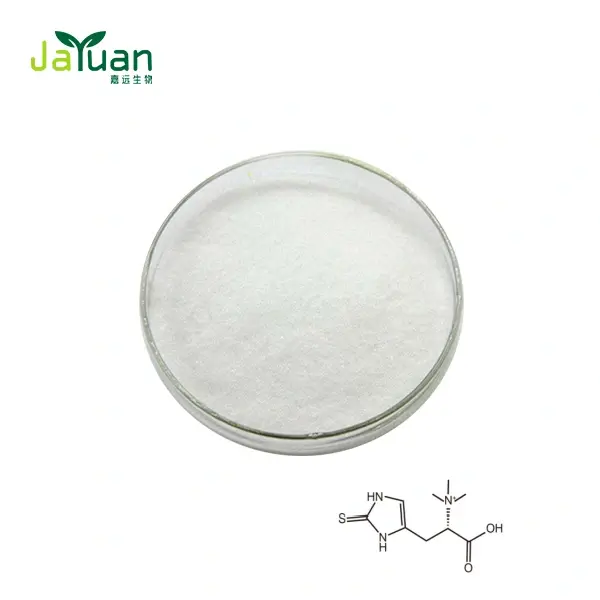

Why Ergothioneine Powder Is Gaining Attention in Healthy Aging
Ergothioneine powder has quietly moved from niche biochemistry research into mainstream formulation conversations. As the healthy aging market accelerates across the United States, ingredient developers and procurement managers are paying closer attention to this naturally occurring amino acid derivative. With its unique mitochondrial transport mechanism, remarkable aqueous stability, and broad compatibility across serum and cream matrices, ergothioneine powder addresses real formulation challenges that competing antioxidants have long struggled to solve. This guide explains why the ingredient matters, how it compares, and what B2B buyers should evaluate before placing an order.
Understanding Ergothioneine Powder and Its Role in Healthy Aging
What Exactly Is This Ingredient?
Ergothioneine powder, with the molecular formula C9H15N3O2S and a molecular weight of 229.3 g/mol, is a sulfur-containing amino acid derivative that is found naturally in some fermented foods, edible mushrooms, and mycobacteria. At normal pH, it mostly exists in the thione tautomeric form rather than the thiol form. This makes it much better at stopping random auto-oxidation than other antioxidants. This structural stability isn't a coincidence; it's the molecular reason why formulators are choosing ergothioneine powder over less stable options more and more.
Antioxidant Mechanism and Aging Relevance
OCTN1 (SLC22A4) is a genetically encoded transporter protein that helps the ingredient build up in tissues with high levels of oxidative stress, like skin, liver, erythrocytes, and eye tissue. The molecule is sent straight to the mitochondria by this active transport system. Metabolic respiration creates the most reactive oxygen species there. Research that has been published in journals including Aging Cell and Free Radical Biology & Medicine shows that the integrity of mitochondrial DNA is a relevant sign of biological aging. Ergothioneine powder helps cells live longer in a way that passive antioxidants can't: it neutralizes ROS at the mitochondrial level.
In addition to protecting cells, the ingredient is linked to strengthening the skin barrier, supporting cognitive health, and changing the immune system. These are three benefits that today's healthy aging consumer really values. When formulating an antiaging product or a health supplement, these benefits that cross cut down on the number of ingredients needed while increasing the claims on the label.
Ergothioneine Powder vs. Other Antioxidants: Comparison and Market Position
Head-to-Head with Glutathione and NAC
Many people still use glutathione and N-acetylcysteine (NAC), but both have major problems when it comes to preparation work. When the pH of a liquid solution is above neutral, glutathione quickly oxidizes, changing the color of finished goods and making them less effective. NAC has a strong sulfurous smell that keeps it from being used in many high-end topicals. Ergothioneine powder, on the other hand, stays stable from pH 3.0 to 9.0 and doesn't change color or smell in a bad way when processed normally. Its redox potential doesn't drop as quickly because the thione form doesn't give up electrons easily and to any other form.
It's important for procurement professionals to understand these differences because they have to explain cost differences to brand stakeholders. Ergothioneine powder has a more consistent performance profile when bioavailability, stability, and taste suitability are all taken into account.
Synergistic Pairing Opportunities
Formulation data shows that ergothioneine powder works best when mixed with beneficial mushroom products and Vitamin C. Vitamin C restores damaged ascorbate outside of cells, and ergothioneine powder deals with oxidative stress inside cells and in mitochondria. Brands that are making multi-mechanism antiaging systems like how this coverage works with other coverage across cellular sections. For B2B ingredient sellers who work with small and medium-sized beauty brands, putting ergothioneine powder in a carefully chosen antioxidant bundle can make it easier for customers to decide what to buy and raise the average shopping value per transaction.
Procurement Guide: Sourcing High-Quality Ergothioneine Powder for B2B Buyers
There's more to choosing the right ergothioneine powder provider than just comparing prices. When purchasing from China, procurement managers should give more weight to makers that have provable GMP certification, documented HPLC purity data, and a quick response time to sample requests. Here are the main factors that expert formulation directors use to judge:
- Purity certification: material for cosmetics should have a minimum HPLC score of 95%, while materials for pharmaceuticals usually need a score of 99%. Peak purity isn't the only thing that matters; batch-to-batch consistency is too. A supplier's Certificate of Analysis should list more than one production lot.
- Packaging flexibility: Formulators who want to test a new active ingredient need to be able to get 1 kg amounts before they commit to large sales. A supplier that can handle small-batch entry orders shows that they are confident in the product's performance and lowers the risk of procurement during the development phase.
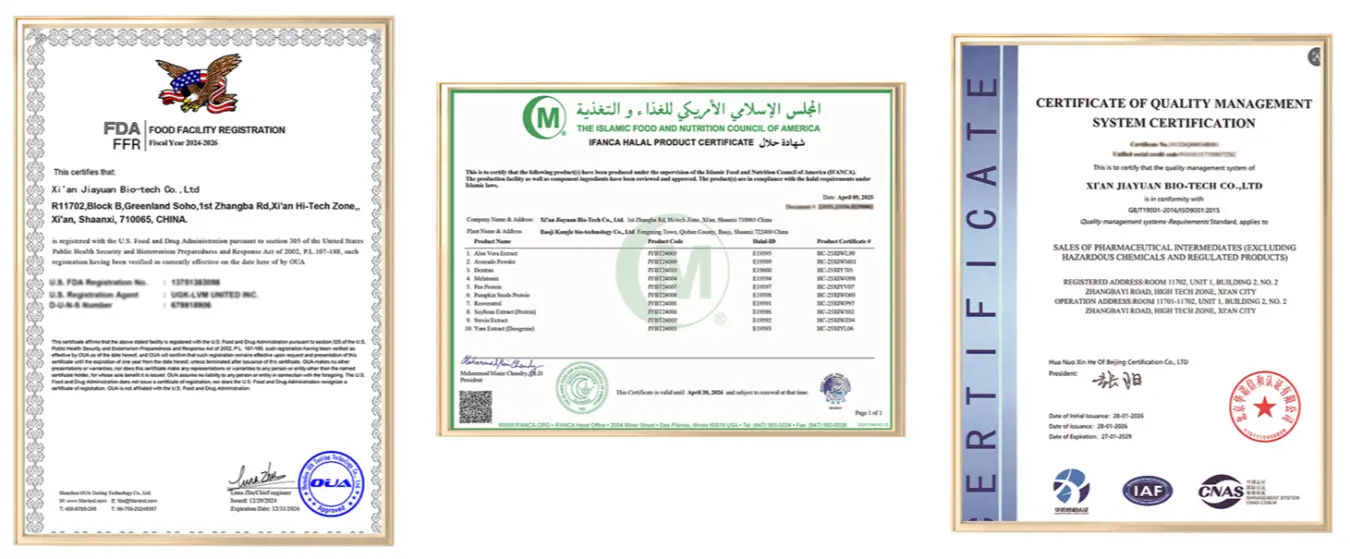
- Regulatory documentation: Buyers who want to sell to the EU market must make sure that EC 1223/2009 (the Cosmetics Regulation) is being followed. GMP and ISO standards are the minimum requirements. Documentation that has been checked by HALA and SGS adds another level of due diligence trust.
- Logistics infrastructure: A seller with established relationships with FedEx, DHL, and UPS, as well as experience helping buyers clear customs in the US and EU, gets rid of the problems that slow down product development timeframes.
These factors directly affect the stability of the supply chain and help buying teams deal based on facts rather than assumptions.
Evaluating Ergothioneine Powder Quality and Effectiveness
COA Parameters That Matter Most
When looking at an ergothioneine powder certificate of analysis, there are four things that should be looked at right away: the HPLC purity (target ≥95% for cosmetic grade and ≥99% for pharma grade), the moisture content (≤0.5% for shelf stability), the optical rotation (L-isomer specific, +122° to +128°), and the heavy metal limits that meet EP/USP standards. A supplier that offers both online near-infrared monitoring data and offline GC-MS confirmation shows that they are truly committed to dual quality control over single-point testing.
Stability and Shelf Life
When kept under the right conditions, ergothioneine powder sealed under a nitrogen atmosphere keeps its test results for more than three years. This is useful for trade firms and ODM workshops that keep stock for a number of different client projects. The ingredient is thermally stable, meaning it doesn't break down until temperatures between 257°C and 275°C. This means it can withstand normal emulsification processing temperatures without breaking down, which saves labs time and money on recipe changes.
Future Outlook and Trends in Ergothioneine Powder for Healthy Aging
Nutraceutical vitamins, high-end skin care products, and healthy cosmetics are all increasing their demand for ergothioneine powder around the world. Grand View Research did a market study in 2023 and predicted that the market for antioxidant chemicals would grow at a CAGR of more than 6% until 2030. Actives that target mitochondria will get most of the attention. The FDA's 2017 GRAS decision for ergothioneine (GRN 000710) gave businesses more faith in the US market, and other regulated markets are also moving toward similar acceptance.
New ways of delivering ergothioneine powder, like liposomal encapsulation and microemulsion systems, are making it easier for the skin to absorb the powder when it is used topically. This creates new special positioning possibilities. Ergothioneine powder is a high-credibility ingredient that fits with the story that science supports longevity and wellness that consumers hear. Brands and distributors who are willing to spend in good paperwork and clear sources can use it.
Conclusion
Among antiaging ingredients, ergothioneine powder holds a unique place. The real problems that formulation directors and procurement managers face every day are solved by its molecular stability, mitochondria-targeted delivery, and ability to work with complex formulations. As the field of healthy aging grows, ingredients with strong biochemistry, governmental support, and stable supply lines will continue to be in high demand. Companies that build good ties with suppliers now will be in a better situation when competition in the market heats up.
FAQ
1.What purity grade of ergothioneine powder is appropriate for cosmetic formulations?
For serum and cream uses, ergothioneine powder made for cosmetics must have a purity level of at least 95%, as confirmed by HPLC. Material that is pharmaceutical-grade (≥99%) is used in vitamin pills and other high-end uses. Along with the purity number, you should always ask for a COA that shows the optical rotation and moisture content.
2.Is ergothioneine powder stable in aqueous emulsion systems?
Yes. The thione tautomeric structure of ergothioneine powder makes it very resistant to auto-oxidation in water-based solutions with pH levels between 3.0 and 9.0. Because it is stable, it is much easier to mix with other ingredients than Vitamin C or glutathione in similar mixtures.
3.What minimum order quantity is reasonable for a formulation trial?
A trustworthy company that sells ergothioneine powder should be able to handle orders as small as 1 kg. This lets the formulation teams do tests on how well the product works and how stable it is without having to buy a lot of it too soon.
4.How does OCTN1 transport affect topical bioavailability?
Human keratinocytes and dermal fibroblasts produce the OCTN1 transporter. This lets ergothioneine powder that is put on the skin get into deeper layers and build up in cells with lots of mitochondria. It is different from passive diffusion antioxidants because it takes in substances actively.
Partner With Jiayuan Bio-Tech for Your Ergothioneine Powder Supply
Jiayuan Bio-Tech is a reliable company that makes and sells ergothioneine powder. It is based near the Qinling Mountains in Xi'an, China, and has direct access to growing bases for high-quality raw materials. Our SMB chromatographic purification consistently achieves purity levels above 98%. It is backed by GMP and ISO certifications that meet the needs of US and EU markets. We can take small orders starting at 1 kg and offer nitrogen-sealed packaging that has been proven to last longer than three years. You can email us at sales@jiayuanbio.com or sales1@jiayuanbio.com, or you can go to jayuanbio.com right now to ask for a sample or COA.
References
1. Cheah, I. K., & Halliwell, B. (2012). Ergothioneine: Antioxidant potential, physiological function, and role in disease. Biochimica et Biophysica Acta — Molecular Basis of Disease.
2. Halliwell, B., Cheah, I. K., & Tang, R. M. Y. (2018). Ergothioneine — A diet-derived antioxidant with therapeutic potential. FEBS Letters.
3. Paul, B. D., & Snyder, S. H. (2010). The unusual amino acid L-ergothioneine is a physiologic cytoprotectant. Cell Death & Differentiation.
4. Cheah, I. K., Feng, L., Tang, R. M. Y., Library, K. H. C., & Halliwell, B. (2016). Ergothioneine levels in an elderly population decrease with age and are associated with cognitive function. Biochemical and Biophysical Research Communications.
5. Taubert, D., Lehr, M., & Müller, D. N. (2006). Ergothioneine transport and concentration in human erythrocytes via the OCTN1 transporter. Free Radical Biology & Medicine.
6. U.S. Food and Drug Administration. (2017). GRAS Notice (GRN No. 710): L-Ergothioneine as a dietary ingredient. FDA GRAS Database.