
Pure Melatonin and Circadian Rhythm: The Science of Better Sleep
If you work in supplement formulation, pharmaceutical ingredient sourcing, or quality assurance, you already know that ingredient purity is not a marketing claim — it is a production requirement. Pure melatonin, the high-grade crystalline form of N-acetyl-5-methoxytryptamine, sits at the center of a growing global demand for sleep support ingredients that meet pharmacopeial standards. This article walks through the science behind melatonin and circadian biology, practical formulation guidance, and what separates a compliant pure melatonin supplier from one that creates registration headaches downstream.
Understanding Pure Melatonin and Its Role in Circadian Rhythm
What Is Pure Melatonin, Chemically Speaking?
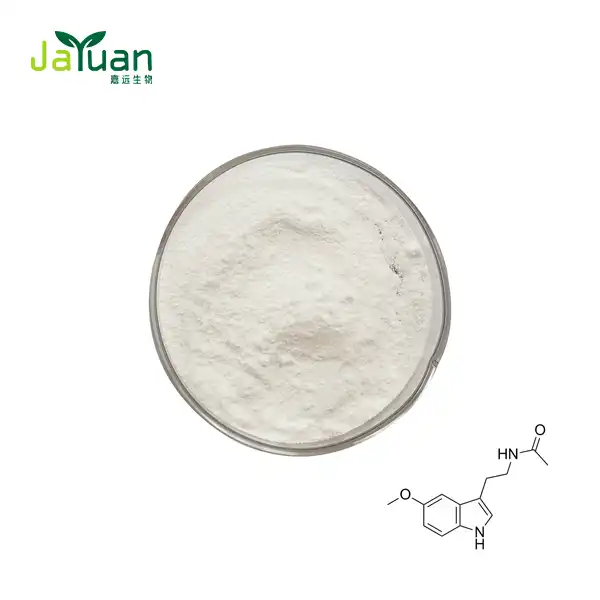
Pure melatonin is a crystalline powder that is white to off-white and has a melting point between 117°C and 120°C. This tight range shows that the batch is genuine. It dissolves only slightly in water, but very well in ethanol and propylene glycol. This directly affects the types of delivery systems that can be used. Its chemical formula is C₁₃H₁₆N₂O₂, and a standard that is followed needs certain limits on substances like Peak E (1,1'-Ethylidenebis[tryptophan]), which is a contaminant that has been linked to eosinophilia-myalgia syndrome in the past. There must be no more than 1% loss when dried and no more than 0.1% waste when lit.
How Melatonin Regulates the Biological Clock
When it gets dark, the pineal gland releases melatonin, which tells other parts of the body that it's time to start getting ready for sleep. In the brain, the suprachiasmatic nucleus (SCN) is in charge of this process. Pure melatonin works with MT1 and MT2 receptors in the SCN to change the circadian phase and lower the body's core temperature. According to a study published in the Journal of Pineal Research, exogenous melatonin can either speed up or slow down the sleep phase without causing the cognitive impairment that many sedatives do the next day.
Applications in Modern Supplement and Functional Food Formats
Because the ingredient is flexible, it can be used in many different B2B formats. The most volume is used in oral solid dosage forms like IR tablets, XR capsules, and gummies. Micronized grades (d90 < 20 µm) are good for sublingual strips and orally disintegrating tablets (ODTs) because they skip the first pass of hepatic metabolism, which makes the drug much more bioavailable. Because pure melatonin is hydrophobic, functional drinks need to use liposome encapsulation or cyclodextrin complexation to make it work. High-end night creams also use the chemical at the right pH level (4.0–5.0) to get the most out of its protective effects on the skin's surface.
Scientific Insights and Usage Guidelines for Pure Melatonin
Receptor Interactions and Systemic Effects
To MT1 and MT2 G-protein-coupled receptors, pure melatonin binds very strongly. MT1 activation stops SCN neurons from firing, which helps you fall asleep, and MT2 receptor activity helps your body's clock move from one phase to the next. The effects of endocrine hormones go beyond the brain. For example, melatonin works with the hypothalamic-pituitary axis and removes reactive oxygen species (ROS) from cells without binding to a receptor. It works in two different ways, through receptor-mediated chronobiology and direct radical scavenging, which makes it a functionally different ingredient from most manufactured sleep aids.
Dosage Ranges Relevant to Formulation
It has been shown over and over that lower doses work better for correcting the circadian rhythm than higher doses. When writing product requirements, the quality and formulation teams use this useful framework:
- Circadian rhythm adjustment (jet lag, shift work): 0.5 mg to 3 mg, taken 30 to 60 minutes before you want to go to sleep.
- Sleep onset support: 0.5 mg to 5 mg; doses above 5 mg don't seem to have benefits that are proportionally bigger, according to meta-analyses in the sleep medicine literature.
- Anxiety-adjacent relaxation formulations: Lower doses (0.25 mg to 1 mg) are being used more and more in combination forms.
Bioavailability of melatonin taken by mouth varies from 10% to 56% based on the delivery system. This is why the clinical profile of the final product is directly affected by the choice between immediate-release powder blends and controlled-release matrix systems.
Safety Profile and Contraindications for Formulators
Pure melatonin has a good safety record that has been checked by experts in the field. Standard amounts used for a short time have few negative effects. Formulators should be aware that melatonin may increase the effects of blood-thinning drugs and should include a warning in goods for people who are already taking these drugs. Also, it is sensitive to light and easily oxidizes, so vacuum-sealed, light-resistant, nitrogen-flushed containers are a practical requirement, not just a nice-to-have.
Pure Melatonin Product Comparison and Procurement Considerations
Purity Grade Differences and Their Downstream Impact
At the formulation stage, not all melatonin ingredients work the same. Standard-grade materials often have higher related substance profiles, which can make it harder to set specifications for final products and may cause regulatory questions during the market clearance process. Pure melatonin that is pharmaceutical-grade and meets USP 43 and EP 10.0 standards is a better place to start. A Certificate of Analysis (COA) should have test values that have been confirmed by HPLC, heavy metal panels (total ≤10 ppm), specific rotation, and a range of proven melting points.
Powder vs. Capsule Form for Bulk Procurement
For people who buy ingredients for businesses, the powder form gives them a lot more options for how they can be used. It works with lines that compress tablets, granulate matrices, and package drugs. Its mass density stays the same, so it can be compressed directly without capping flaws. Capsules or pre-blended forms may cut down on steps that need to be done in-house, but they limit the number of doses that can be used and usually cost more per unit. The most common way to get large pure melatonin powder is for companies that make a lot of medicines and supplements.
Supplier Certification Checklist
When you choose a provider without proper paperwork, the risk grows during batch release, regulatory audits, and re-registration. GMP compliance, ISO certification, third-party testing support from labs like SGS or Eurofins, and a documented stability program are the bare minimum of certifications that you should ask any pure melatonin manufacturer to meet. If a provider can give you in-process near-infrared spectroscopy (NIR) data along with offline HPLC and GC-MS data, you can be sure that quality control is built into the process, not just done at the end.
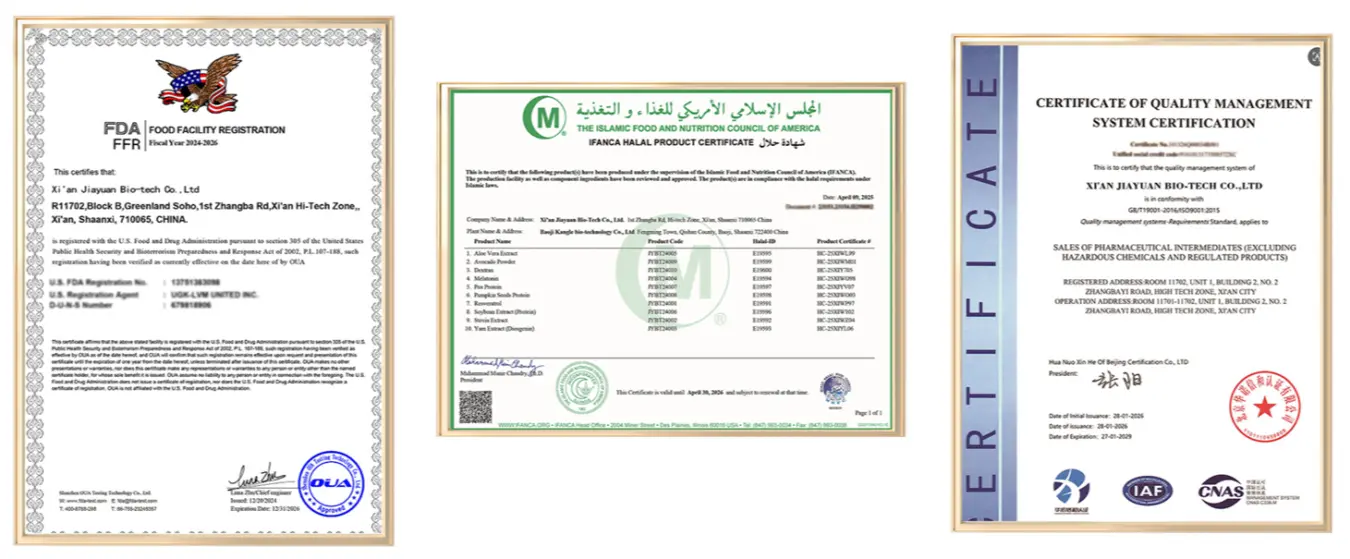
Strategic Procurement and Supply Chain Benefits of Pure Melatonin
Evaluating Supplier Credibility Beyond the COA
It's not a method; a COA is just a picture. When looking for a pure melatonin provider, the procurement and quality teams should check how the raw materials are tracked, how consistent the batches are with each other, and if the production site has passed third-party GMP tests. Vertically integrated supply chains, in which the supplier also finds the raw materials, have more stable prices and a lower risk of contamination than those that only use spot market middlemen.
Storage, Logistics, and Shelf Life Requirements
Pure melatonin powder needs to be kept somewhere cool, dry, dark, and out of the UV light. Usually, this means below 25°C. When moisture levels are kept at ≤0.5%, nitrogen-flushed, sealed packaging can keep food fresh for over three years. This is important for international shipments: a seller with established relationships with FedEx, DHL, UPS, and international freight forwarders, as well as experience clearing goods through customs in both the US and Europe, makes things a lot easier for the buyer's buying team.

Customization and OEM Capacity for Branded Formulas
Buyers who buy a lot of pure melatonin for their own brands are asking for custom specs more and more. These include specific particle size ranges for sublingual formats and pharmaceutical-grade (≥99%) vs. functional ingredient-grade (≥95%) standards. A provider that can make about 10 metric tons of product a year and uses simulated moving bed chromatography (SMB) for continuous processing can meet both volume needs and strict purity standards while still keeping unit costs low.
Conclusion
Pure melatonin is in a very specific place in sleep health creation, and the difference between normal and pharmaceutical-grade material has a direct effect on how well the product works, how safe it is for consumers, and how well it meets regulatory standards. The science behind the link between melatonin and circadian rhythm control is very strong, but the results depend on the quality of the ingredient used in the final product. When buying pure melatonin for use in pharmaceutical, supplement, or functional products, it is important for procurement teams to have clear communication with suppliers, proof of purity above 99%, and full compliance with the COA.
FAQ
1. How do I verify that a pure melatonin ingredient meets USP 43 standards?
Ask for a COA that clearly lists USP 43 test methods, such as HPLC assay values, related chemicals (with Peak E named), heavy metals, loss on drying, and melting point. Check with the seller to see if these data have been checked by a third party, like SGS or Eurofins.
2. Does switching pure melatonin suppliers affect product registration?
Yes, it can. In markets that are regulated, if the supplier of the active ingredient changes, the right people may need to be told about the variation or change. Before switching pure melatonin suppliers, procurement teams should talk to their regulatory affairs colleagues about it and make sure that the new seller can help with the whole technical paperwork.
3. What purity level is appropriate for pharmaceutical-grade formulations?
Assay purity of 99% or more is the minimum for medicinal investment-grade uses. For cosmetic or functional ingredient uses, ≥95% is usually fine, but many brands now need pharmaceutical-grade standards, even for high-end supplement lines.
Partner with Jiayuan Bio-Tech — Your Trusted Pure Melatonin Supplier
Jiayuan Bio-Tech sells pure melatonin that is used in medicine. Their products are 99.7% pure and come with full USP 43 COA paperwork and testing help from SGS and Eurofins. Our GMP and ISO-certified production lines, SMB chromatography for purification, and DCS-controlled manufacturing make sure that each batch is the same, which is something that quality teams can count on. We ship all over the world with FedEx, DHL, and UPS, and we can help with customs clearance in the EU and the US. Visit jayuanbio.com or email sales@jiayuanbio.com or sales1@jiayuanbio.com to get a sample or bulk pricing from a pure melatonin manufacturer you can prove and trust.
References
1. Arendt, J. (2006). Melatonin and human rhythms. Chronobiology International.
2. Brzezinski, A. (1997). Melatonin in humans. New England Journal of Medicine.
3. Ferracioli-Oda, E., Qawasmi, A., & Bloch, M. H. (2013). Meta-analysis: melatonin for the treatment of primary sleep disorders. PLOS ONE.
4. Hardeland, R., Madrid, J. A., Tan, D. X., & Reiter, R. J. (2012). Melatonin, the circadian multioscillator system and health. Journal of Pineal Research.
5. Lewy, A. J., Emens, J., Jackman, A., & Yuhas, K. (2006). Circadian uses of melatonin in humans. Chronobiology International.
6. United States Pharmacopeia. (2023). Melatonin monograph. USP 43–NF 38.