
Melatonin Powder for Sleep: How It Works and When to Use It
If you produce sleep-support supplements — whether gummies, tablets, capsules, or functional beverages — you already know that the quality of your active ingredient determines everything downstream. Melatonin powder is one of the most widely used sleep-aid ingredients in the U.S. market today. According to a 2023 report by Grand View Research, the global melatonin market was valued at over USD 830 million and continues to grow steadily. This article explains how melatonin powder works, when it makes sense to use it, and what contract manufacturers and supply chain managers should consider when sourcing it at scale.
What Is Melatonin Powder? A Comprehensive Overview
Biological Origins and Circadian Function
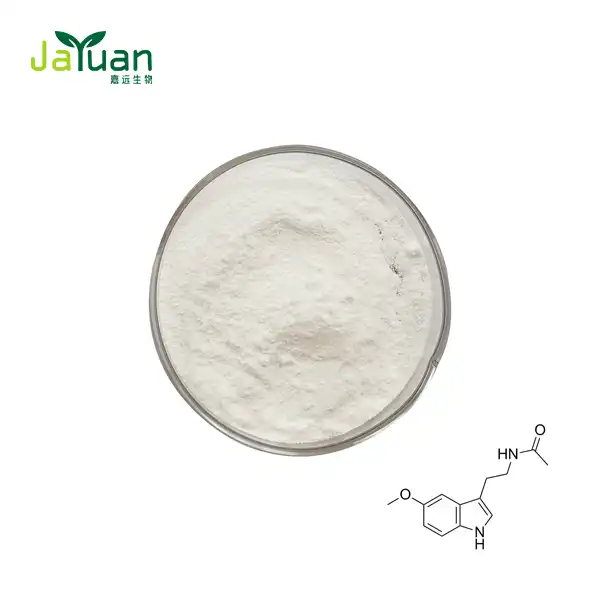
A neurohormone called melatonin (N-acetyl-5-methoxytryptamine, CAS No. 73-31-4) is made by the pineal gland when it gets dark. It tells the body to get ready for sleep by lowering the body's core temperature and slowing down metabolism. You can get melatonin powder in bulk from a chemical synthesis process that doesn't involve any animal products. It is always pure enough for precise doses in low-milligram formulations.
Natural vs. Synthetic: What Manufacturers Should Know
Early melatonin extracts came from the pineal glands of cattle, which could have been contaminated with viruses. Synthetic melatonin powder, which is made chemically from indole derivatives, is now the standard in the industry. This method achieves pharmaceutical-grade purity (≥99%), gets rid of risks related to BSE, and meets vegan requirements that are becoming more important in the U.S. consumer market. Synthetic melatonin powder also gives B2B makers more consistent batches, which is important for making sure that label claims are true.
Powder vs. Other Delivery Formats
When you compare melatonin powder to finished forms like tablets, gummies, capsules, and liquids, you can see why manufacturers prefer the powder form. It gives you the most options for formulating because one large lot can feed many different SKUs of finished goods. Powder also makes precise dosing possible between 0.5 mg and 10 mg, which is important when trying to reach different types of customers. For liquids, you need to do more stable tests; for sweets, you need binding agents; and for tablets, you need direct compression grades. The powder size is where cost-effectiveness and freedom meet.
Benefits and Potential Risks of Melatonin Powder for Sleep
Clinically Recognized Benefits
A study in the journal Sleep Medicine Reviews confirms that exogenous melatonin shortens the time it takes to fall asleep and helps the body's circadian rhythm work better in people who have jet lag and work the nite shift. For manufacturers, this means that melatonin powder can directly support three different product claims: melatonin powder can help with sleep onset, sleep duration, and circadian reset, depending on the dosage and release profile. There are a lot of different ways this active ingredient can be used in sleep supplements.
Safety Considerations Across Demographics
Melatonin powder at doses of 0.5 mg to 5 mg is typically well tolerated. Mild sleepiness, headaches, and dizziness are common side effects that depend on the dose. Manufacturers of goods for kids or older people should look at the latest FDA guidelines on dietary supplements. For business-to-business buyers, it's clear what this means: they have to find an ingredient that tests negative for linked impurities like Peak X and Peak E pollutants, according to FDA rules that were put in place after 1989. They can't choose not to.
Dosage Guidelines for Product Development
Studies show that lower doses (0.5 mg to 1 mg) work well for adjusting the circadian rhythm. Higher doses (3 mg to 5 mg) are more commonly used to help people fall asleep. If a company is building a line of products, this range means they will need an ingredient with strict strength requirements. A bulk melatonin powder with a test error of ≤±2% lets you make accurate label claims for all of your SKUs without having to risk reformulating.
How to Use Melatonin Powder Effectively
Preparation and Mixing Guidance
Melatonin powder doesn't mix well with water because it is hydrophobic. Standard mixing methods are used when making tablets and capsules. If you want to make a liquid or drink, soaking the item in food-grade propylene glycol or ethanol first makes it more uniform. Nano-emulsification is a new way to make ready-to-drink products clearer to the eye. The mesh size is also important. For direct compression, 80-mesh powder works well, while micronized grades work well for sublingual and fast-dissolve formats.
Timing and Dosage Strategies
Timing is a very important factor in creation. For people with jet lag or who work shifts, the best time is 30 to 60 minutes before they want to go to sleep. Most clinical data supports an amount of 0.5 mg to 3 mg taken 30 minutes before bed to help people fall asleep. This window gives clear, practical directions to people who are writing product instructions. On top of that, it helps your regulatory team write label wording that follows FTC and FDA rules for structure/function claims.
Real-World B2B Applications
Contract manufacturers producing sleep gummies, softgels or functional teas for their own brand have discovered that a steady supply of high-purity melatonin powder considerably reduces the need for formula changeovers. Many bulk customers tell us that changing over to a GMP-certified supplier with real-time batch testing has eliminated the potency discrepancies that were causing the mislabeling. Such a level of supply constancy preserves the manufacturing schedule and the brand's image.
Procuring Melatonin Powder: What B2B Buyers Need to Know
Supplier Evaluation Criteria
Production and supply chain managers usually look at three things that a melatonin powder provider must have: USP/EP compliance, GMP certification, and batch paperwork. Assay, heavy metals, microbial limits, and impurity profiles should all be on the full Certificate of Analysis (CoA) that comes with every lot. A provider that can't give you per-batch COA data isn't a good long-term partner for controlled markets.
Here are the main things buyers should look for in a qualified supplier:
- Purity certification: Confirm pharmaceutical-grade purity (≥99%) tested via HPLC, with explicit notation of absence of Peak X and Peak E contaminants.
- Batch consistency documentation: Request CoA data across a minimum of three consecutive production lots to verify assay stability within ±2%.
- Regulatory certifications: GMP certification and ISO compliance for melatonin powder are baseline requirements for U.S. and EU market access.
- Pack size availability: Confirm both 1 kg and 25 kg options are stocked, reducing your minimum order risk and supporting scale-up without re-qualification.
The two most common costs that come with switching suppliers are failed incoming QC and regulatory resubmission. These criteria will protect you from both of them.
Pricing and Bulk Purchase Advantages
The price of melatonin powder in bulk depends on the purity grade, the amount ordered, and the freedom of the wait time. When a company makes 10 tons of goods a year, they can pass the savings on to buyers, which means that each item costs a lot less than when made in small batches. By signing quarterly or yearly contracts with a well-known company that makes melatonin powder, you can protect yourself from sudden increases in the prices of raw materials, which have been known to affect the inputs used in indole-based synthesis in the past.
Logistics and Lead Time Management
Lead time management is very important for U.S. buyers who are looking for goods in other countries. Delays in getting active ingredients have a direct effect on production schedules and the stock of produced goods. A trustworthy melatonin powder provider should offer proven wait times, the ability to provide samples before shipping, and the necessary logistics to quickly clear U.S. customs. This includes accurate HS code paperwork and labeling that follows the rules.

Making the Best Choice: Melatonin Powder vs. Alternatives for Your Business
Formulation Flexibility Advantage
When compared to pills or capsules that are already made, melatonin powder gives OEM makers full control over dosage, choice of excipients, and release profile. This is important when your contract manufacturing clients ask for unique blends or dose strengths that aren't available anywhere else. As of now, no other format gives this much production flexibility, which is why powder is still the starting material of choice for most contract manufacturers of sleep supplements.
Market Positioning and Label Compliance
As the market for sleep supplements in the U.S. grows, retailers and online stores want labels to be more clear. When melatonin powder comes from a GMP-certified center that follows USP43 testing guidelines, it can be accurately labeled as to its strength. This prevents third-party testing exposure and delisting from retailers. Brands that can prove their label claims with verifiable batch data always do better than brands that can't.
Emerging Trends in Sleep Ingredient Procurement
Some sleep aids that mix melatonin powder with L-theanine, GABA, or ashwagandha extract are becoming more popular. This lets producers get more than one ingredient from a single approved seller, which makes the qualification process easier and speeds up the buying process. Supply chain managers who want to manage fewer partner relationships are increasingly looking for suppliers with fully integrated supply chains and the ability to handle more than one ingredient.
Conclusion
Melatonin powder is a well-researched, extremely adaptable ingredient for sleep that is still in high demand in the U.S. supplement market. Contract makers and supply chain managers choose where to get their supplies based on purity consistency, regulatory paperwork, supply dependability, and cost structure. Getting these things right at the ingredient level protects your brand's market position, your production schedule, and the claims on the label. The right melatonin powder supplier is more than just a seller; they are also a partner in making sure that production stays steady.
FAQ
1. Is your melatonin powder synthetic or animal-derived?
It is 100% synthetic. The industry moved away from bovine pineal gland extraction due to viral contamination risks. Our synthetic melatonin powder delivers consistent purity and meets vegan compliance standards.
2. What purity grade do you offer?
We offer pharmaceutical-grade melatonin powder at ≥99% purity, tested via HPLC and confirmed against USP/EP monograph specifications with per-batch CoA documentation.
What pack sizes are available?
3. We stock both 1 kg and 25 kg formats. Nitrogen-filled, light-proof packaging maintains moisture at ≤0.5% and extends shelf life beyond three years under recommended storage conditions.
Partner With Jiayuan Bio-Tech for Reliable Melatonin Powder Supply
The melatonin powder company Jiayuan Bio-Tech is GMP-certified and is based near the Qinling Mountains in China. They have direct access to raw materials and can produce 10 tons of powder each year, which allows them to offer reasonable bulk prices. The purity of our SMB chromatographic process is at least 99%, and each batch comes with a full COA. We have both 1 kg and 25 kg sizes in stock. The packaging is nitrogen-sealed, and the goods will last longer than three years. To get a sample or bulk price right away, email our team at sales@jiayuanbio.com or sales1@jiayuanbio.com or go to jayuanbio.com.
References
1. Brzezinski, A. (1997). Melatonin in humans. New England Journal of Medicine, 336(3), 186–195.
2. Ferracioli-Oda, E., Qawasmi, A., & Bloch, M. H. (2013). Meta-analysis: Melatonin for the treatment of primary sleep disorders. PLOS ONE, 8(5).
3. Costello, R. B., et al. (2014). The effectiveness of melatonin for promoting healthy sleep. Nutrition Journal, 13(1).
4. Grand View Research. (2023). Melatonin Market Size, Share & Trends Analysis Report. Grand View Research.
5. United States Pharmacopeia. (2023). USP–NF Monograph: Melatonin. USP Convention.
6. Herxheimer, A., & Petrie, K. J. (2002). Melatonin for the prevention and treatment of jet lag. Cochrane Database of Systematic Reviews, (2).