
Melatonin Powder and the Science of the Sleep-Wake Cycle
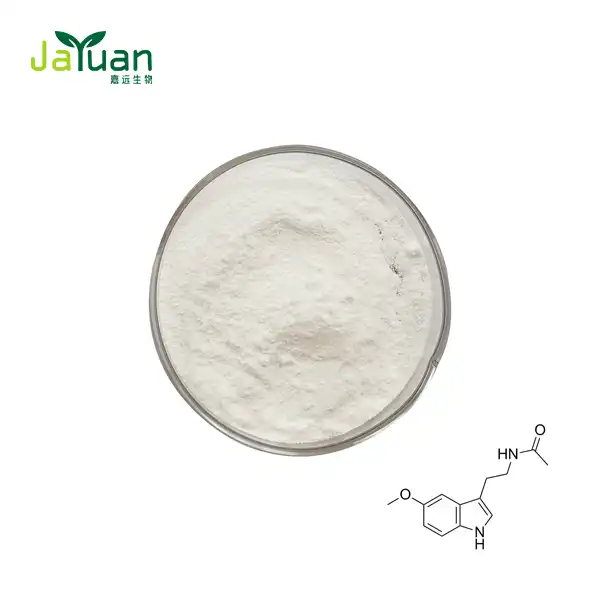
Melatonin powder CAS No. 73-31-4 is crystalline raw material of N-acetyl-5-methoxytryptamine, a key regulator of human sleep-wake cycle. It is a neurohormone produced by the pineal gland in the body when it gets dark and signals the body to go to sleep. High purity melatonin powder is a major active ingredient for gummies, pills, capsules and functional beverages in the nutraceuticals and supplements production market. Understanding the biology, formulation dynamics and procurement needs enables supply chain managers to source more intelligently and keep production output consistent.
Understanding Melatonin Powder and Its Role in the Sleep-Wake Cycle
Circadian rhythm is responsible for sleep-wake cycles and is mostly dependent on the endogenous generation of melatonin by the body. As light levels decrease the suprachiasmatic area of the hypothalamus tells the pineal gland to produce melatonin. This drops the core body temperature and helps with sleep onset. Exogenous Melatonin powder is a supplement that gives this physiological signal to allow persons with interrupted circadian cycles (shift work, frequent travel, or delayed sleep phase disorder) to restore their rhythms.
Molecular Profile and Sourcing Methods
Melatonin powder chemical formula is C13H16N2O2 and molecular weight is 232.28 g/mol. It is commercially manufactured via synthetic chemical synthesis from primarily 5-methoxyindole precursors, and hence avoids the hazards of BSE contamination from extraction from cow's pineal glands. Synthetic Melatonin powder is made to a pharmaceutical grade purity of 99% or above. This level of purity is essential to be able to properly construct dietary supplements in modest dosages (1mg-10mg). The crystal structure allows for equal particle distribution, a need for contract manufacturers with high volume tablet and gummy operations.
Beyond Sleep: Broader Functional Applications
Clinical research is increasingly indicating that melatonin is a powerful antioxidant and immune system modulator. Its ability to cross the blood-brain barrier makes it a very desirable ingredient for functional wellness formulations. For B2B purchasers wishing to develop product lines beyond basic sleep aids such as jet lag support mixtures or overnight recovery supplements, Melatonin powder with certified quality and standardised bioavailability profiles is a must-have.
Dosage, Safety, and Usage Guidelines for Melatonin Powder
Supplemental melatonin powder is generally measured in portions of 0.5mg to 10mg. Research published in Sleep Medicine Reviews (2017) shows that lower doses (0.5mg-1mg) can be as effective as higher doses in shifting the circadian rhythm and there are less reports of next-day grogginess. The CMO is reminded that the raw material batch to batch assay consistency has a direct impact on the correctness of the label claim and regulatory compliance.
Regulatory and Safety Considerations for Bulk Buyers
Melatonin is a dietary supplement ingredient in the United States under DSHEA and is subject to cGMP (21 CFR Part 111) regulations. Bulk consumers should insist on a Certificate of Analysis (CoA) for every batch, which should demonstrate compliance with the requirements of the USP/EP monograph, including heavy metals testing and HPLC purity data. To be helpful for the shelf life, the ingredient should have a moisture level of ≤0.5% to avoid costly reformulations or regulatory setbacks for manufacturers.
Comparing Melatonin Powder with Other Melatonin Forms and Natural Alternatives
Procurement teams often face the choice of procuring raw Melatonin powder or pre-processed options. Each format has unique formulation implications affecting the compatibility of the production process and the efficacy of the end product.
Below is a realistic comparison of the most frequent formats:
- Melatonin powder vs encapsulated/tableted forms Raw Melatonin powder provides the greatest formulation versatility. It works with gummy matrices, tablet presses and liquid softgel fills without additional process expense and offers the most economical bulk format for contract producers with various SKUs.
- Melatonin powder versus liquid concentrates Liquids are easier to mix with beverages but are susceptible to photolysis deterioration. Melatonin powder is light sensitive therefore storage in nitrogen-flushed, UV-blocking container retains its efficacy substantially longer – over 36 months under optimal conditions.
- Melatonin powder vs. natural alternatives (Valerian root, L-theanine, CBD) Natural botanicals are favoured in clean label product lines, yet these have intrinsic diversity in active ingredient levels. Synthetic Melatonin powder provides dependable pharmacopoeia assay of every lot, enabling accurate dosage labelling and without the risks of plant origin.
You need to pick the right format early on, because the wrong choice can result in expensive reformulation cycles later in the development process.
Procurement Strategies for Melatonin Powder in the Global B2B Market
Strategic sourcing for Melatonin powder is not simply about getting the cheapest unit price. It is about evaluating suppliers on various dimensions to safeguard your production schedule and product purity.
Key Supplier Evaluation Criteria
The following parameters are worth a serious look when qualifying a new Melatonin powder supplier:
- Purity certification: Must include HPLC test data with 99% purity, must clearly indicate no Peak X and Peak E contaminants, request CoA to comply with USP43/EP10.
- Batch consistency data: Look for multi-batch test data, as differences in active substance directly impact dose labelling and FDA cGMP compliance.
- Pack Sizes Available: Check that your supplier can provide in both 1kg and 25kg configurations to allow for small-scale R&D trials and major production runs without interruption of supply.
- Visibility of lead time: Late supplies hinder manufacturing. Suppliers with vertically integrated supply chains and on-site inventory buffers are at a big advantage.
- Packaging integrity: Light-proof, nitrogen-flushed packaging avoids photolytic deterioration and entrance of moisture during transit.
Scientific Insights on Melatonin Powder Efficiency
A meta-analysis published in PLOS ONE (2013) of 19 randomised controlled studies showed that melatonin supplementation significantly decreased sleep onset delay and increased total sleep time. The powder format’s quick dissolution profile in sublingual and orally disintegrating tablet applications leads to faster plasma peak concentrations than hard-shell capsules, which is a distinct benefit for rapid-onset sleep medicines.
Research in The Cochrane Database of Systematic Reviews indicates the usefulness of melatonin powder in lowering symptom severity when taken at the destination bedtime for jet lag applications. These data points support the commercial case for investment in high-purity Melatonin powder as a key ingredient across several sleep support SKUs.
Conclusion
Melatonin powder continues to be one of the most scientifically proven and commercially adaptable substances in the sleep support supplement market. Whether you are sourcing for a contract tablet maker or a branded functional beverage line, for B2B procurement experts, it is critical to understand the biology, dose requirements, and quality norms for the ingredient. It is essential to control crucial supply chain risks by sourcing from suppliers who can provide certified USP/EP purity, batch-to-batch uniformity, variable pack sizing and reliable lead times.
FAQ
1.What purity grade should bulk melatonin powder meet for supplement manufacturing?
For dietary supplement and pharmaceutical applications in the U.S. market, Melatonin powder should conform to USP43 monograph standards, with HPLC-confirmed purity of ≥99%. Each batch must include a full CoA detailing assay results, heavy metals, microbial limits, and moisture content (≤0.5%).
2.How does particle size affect gummy and tablet formulation?
Particle size directly influences mixing homogeneity and dissolution rate. An 80-mesh standard grade suits tablet compression and gummy matrix blending. For sublingual or fast-dissolve formats, a micronized grade improves dissolution kinetics and supports label claim accuracy at low dose levels (1mg–3mg).
3.What packaging is required to preserve melatonin powder shelf life?
Melatonin powder is sensitive to both UV light and moisture. Sealed, nitrogen-flushed, aluminized packaging maintained at controlled ambient temperatures extends shelf life to over 36 months. Buyers should confirm these specifications to avoid potency loss during storage or ocean freight transit.
4.Can melatonin powder be used in aqueous beverage applications?
Melatonin powder has low aqueous solubility. Manufacturers typically pre-dissolve it in food-grade cosolvents (such as propylene glycol) or apply nano-emulsification techniques to achieve stability and optical clarity in liquid beverage matrices.
Partner With Jiayuan Bio-Tech for Premium Melatonin Powder Supply
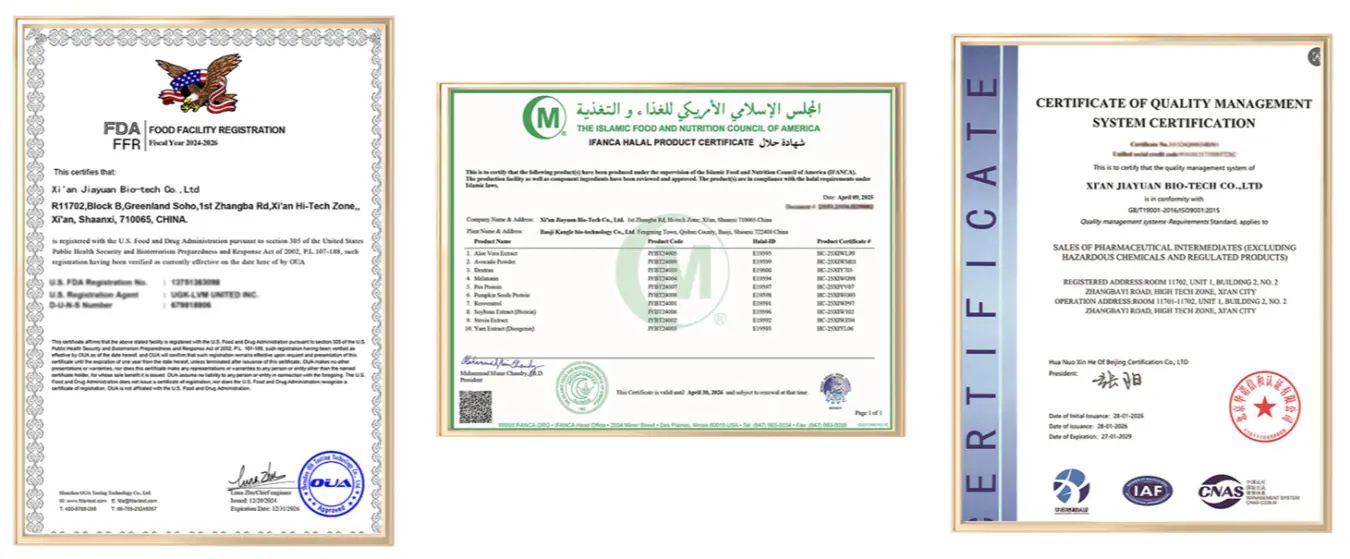
Jiayuan Bio-Tech stands as a trusted Melatonin powder manufacturer with GMP-certified production lines, SMB chromatographic purification achieving stable purity above 98%, and DCS-automated batch control that minimizes assay variability. We stock both 1kg and 25kg configurations for immediate dispatch and offer competitive bulk pricing backed by a vertically integrated supply chain near China's Qinling Mountains. Contact our team today to request a sample, CoA, or pricing quote: sales@jiayuanbio.com | sales1@jiayuanbio.com | jayuanbio.com
References
1. Brzezinski, A. (1997). Melatonin in humans. New England Journal of Medicine, 336(3), 186–195.
2. Ferracioli-Oda, E., Qawasmi, A., & Bloch, M. H. (2013). Meta-analysis: Melatonin for the treatment of primary sleep disorders. PLOS ONE, 8(5), e63773.
3. Herxheimer, A., & Petrie, K. J. (2002). Melatonin for the prevention and treatment of jet lag. Cochrane Database of Systematic Reviews, Issue 2, CD001520.
4. Auld, F., Maschauer, E. L., Morrison, I., Skene, D. J., & Riha, R. L. (2017). Evidence for the efficacy of melatonin in the treatment of primary adult sleep disorders. Sleep Medicine Reviews, 34, 10–22.
5. Zisapel, N. (2018). New perspectives on the role of melatonin in human sleep, circadian rhythms and their regulation. British Journal of Pharmacology, 175(16), 3190–3199.
6. United States Pharmacopeia. (2023). Melatonin monograph. USP–NF, USP43–NF38. United States Pharmacopeial Convention.