
How to Choose the Best Astaxanthin Powder for Your Needs
Choosing the right astaxanthin powder for your formulation starts with understanding what separates a genuinely high-quality ingredient from a substandard one. As a natural keto-carotenoid derived from Haematococcus pluvialis microalgae, astaxanthin powder delivers powerful antioxidant activity that supports eye health, skin appearance, and cellular protection. For brand managers and formulators sourcing ingredients for softgels, gummies, or serums, the decision hinges on source authenticity, potency grade, batch color consistency, and verified safety data. This guide walks you through every factor that matters.
Understanding Astaxanthin Powder and Its Key Benefits
What Is Astaxanthin Powder?
Astaxanthin powder is a solid version of the lipid soluble pigment astaxanthin (C 4 H 5 O 4 ). It is extracted mainly from microalgae Haematococcus pluvialis by utilizing supercritical CO2 technique. Compared to raw oleoresins, the powder form is more solid, simpler to handle, and can be dosed properly. The conjugated double bond structure is protected from oxygen by microencapsulation with carriers such modified starch or gum arabic which results in a significant improvement in the shelf life.
Key Health Benefits for Supplement and Cosmetic Applications
Natural astaxanthin is roughly 6,000 times more effective than vitamin C in killing free radicals, according to a Marine Drugs research. This ability to function as an antioxidant immediately aids the eye health supplement makers to protect the macula. In beauty-of-the-mouth products it helps to form skin that is more elastic and more able to keep moisture in. These attributes make astaxanthin powder one of the most useful carotenoids for business within the functional cosmetics and nutraceutical industries.
Powder vs. Oil vs. Softgel Formats
Every distribution approach meets different formulation demands. Astaxanthin powder disperses nicely in hard capsules, chewy matrices, pill blends, and dry premixes. Oil forms work well for softgels but are tougher to dose. Brand managers producing water-soluble goods like functional drinks or hydrogel patches should use cold-water-dispersible (CWD) astaxanthin powder. Knowing your dose form before sourcing saves time when reformulating.
Core Criteria to Evaluate When Choosing Astaxanthin Powder
Source and Extraction Method
The place where astaxanthin powder comes from directly affects how it is regulated, how appealing it is to consumers, and how it is positioned on clean labels. Natural astaxanthin taken from Haematococcus pluvialis is the best source for beauty and eye health brands that want to sell in the U.S. In the United States, synthetic astaxanthin made from petrochemical synthesis is not allowed to be used as a dietary supplement for people. Phaffia rhodozyma fermentation-derived astaxanthin is in the middle. It doesn't have the isomer profile or market story of algae-sourced material, but it does have a middle ground.
Potency Grades and Bioavailability
Astaxanthin powder is sold in stores in grades with astaxanthin contents range from 1% to 10%. A 2%–5% grade is useful and affordable for a normal eye health softgel that gives 4–12 mg per dose. A 10% specification is needed for concentrated gummy formulas or high-potency serums. Bioavailability depends on the quality of the microencapsulation. Tighter encapsulation lowers oxidation during digestion, which makes uptake better at the cellular level.
Regulatory Compliance and Safety Standards
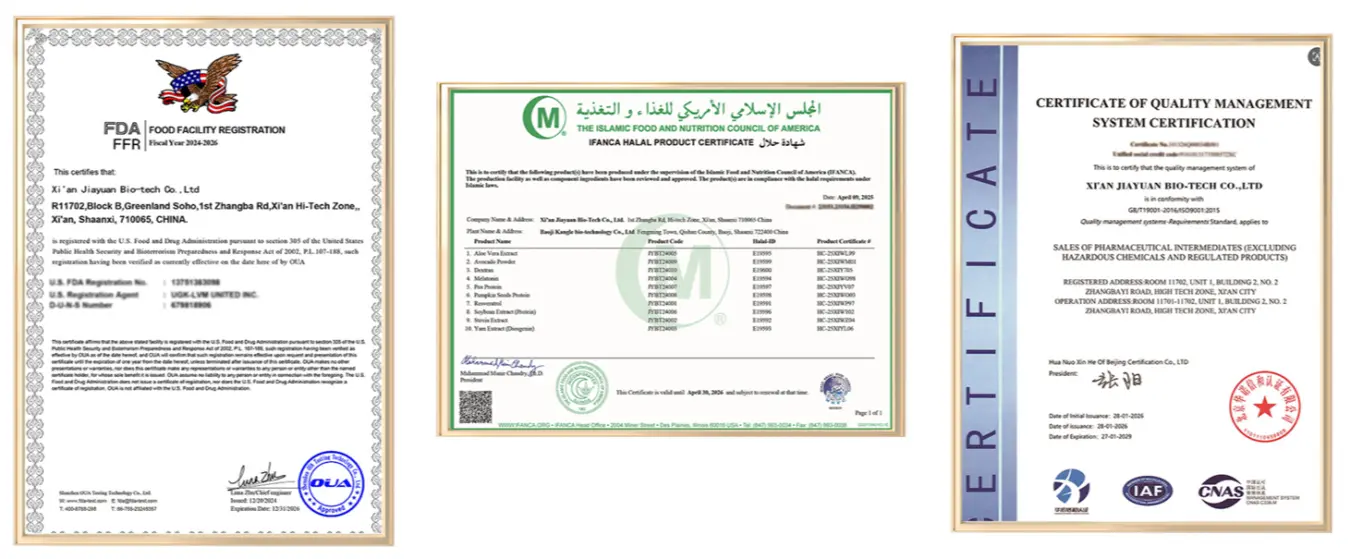
Any astaxanthin powder element that comes into the U.S. must follow the rules set by 21 CFR Part 111 for dietary supplements by the FDA. Suppliers should give a full Certificate of Analysis (COA) that says the levels of heavy metals, microbes, fluid residues, and foreign nucleic acid residues are all within the allowed limits. GMP certification and ISO accreditation are basic needs that can't be skipped. Specifications that have been accepted by the EFSA are just as important for brands that sell in Europe.
Comparison of Leading Astaxanthin Powder Products and Brands
What to Look for in a Supplier's Quality Documentation
The COA is the first thing you should look at when compared astaxanthin powder sellers. Make sure that each batch has data on microbial limits, heavy metal testing (for example, lead, arsenic, cadmium, and mercury), and residual solvent data. The filter paper residue test is a good way to tell if the extraction is pure; a clean result means that there are few impurities that can't be dissolved. Suppliers who give this information openly, batch by batch, show that they have an open quality management mindset.
Astaxanthin Powder vs. Other Antioxidant Ingredients
Astaxanthin powder is simpler to administer properly than krill oil, remains shelf-stable for longer, and may be utilized in more solid dosage forms. There are more clinical evidence on astaxanthin powder for both ocular and photoaging effects than for curcumin. “Astaxanthin powder is better ingredient story for companies that make two-channel product lines that target both eye health and skin antioxidants.
Pricing and Supply Chain Considerations
High quality astaxanthin powder (10% standard) is more expensive than lesser grade material and this is typical. The cost difference between astaxanthin from algae and astaxanthin created in a lab is substantial, but the market value is justified. Americans believe that astaxanthin derived from algae is of superior quality. Find out about the minimum order quantities and wait times and if they have records of batch uniformity. Find out if they have warehouse stocks to make logistics simpler.
Matching Astaxanthin Powder Solutions to Your Business Needs
Application Segmentation Across Industries
There are different needs in each sector. Brands of eye health supplements usually need astaxanthin powder that is 2% to 5% and has been tested for its carotene content. Functional skincare brands that make oral beauty products like grades between 5 and 10 percent that have skin-endpoint studies that can be proven. Supplements for pets need to have smaller amounts and clear lists of what they contain. For gummy and edible brands, batch color uniformity is important because noticeable color differences between production runs can hurt the look of the finished product and consumers' trust in it.
Vendor Evaluation Beyond Price
Price is a role in making decisions, but it shouldn't be the main one. Check out possible astaxanthin powder suppliers based on four factors: their certification portfolio (GMP, ISO, Halal, or Kosher as needed), the ability to provide traceability documentation from algae cultivation to extraction, their technical responsiveness to formulation questions, and their willingness to co-develop or provide application-specific grades.
Piloting Before Scaling
Before you buy in bulk, ask for small samples and make sure they are stable and compatible with the format you want to use for delivery. Suppliers who offer OEM processing services and help with custom formulations add measurable value on top of providing raw materials. Check how well the color works in your sticky matrix, make sure it can be dispersed in your water phase if needed, and make sure it doesn't affect the way the material feels. During the test phase, a reliable provider will provide technical paperwork and quick help. This process will protect your product development timeline.
How to Purchase Astaxanthin Powder: Practical Steps and Tips
Direct Manufacturer vs. Distributor
When you buy astaxanthin powder directly from the company that makes it, you usually get better prices, faster technical support, and a clearer picture of the supply chain. Distributors take a cut, and sometimes you can't get to batch-level data directly. For brands that buy in bulk, a direct relationship with the manufacturer is worth the time and money spent on research at the start.
Navigating Import Regulations and Lead Times
People in the U.S. who want to import astaxanthin powder should make sure that the company they buy it from is registered with the FDA and can give them all the paperwork they need, like a COA, an MSDS, and a country of origin declaration. Astaxanthin powder usually takes two to four weeks to make, but this depends on the grade and the size of the order. Suppliers who have a lot of goods in stock can cut delivery times by a lot.
Quality Verification Upon Receipt
Always check the delivered item against the COA when it arrives. Check the heavy metal results, make sure the color matches the agreed-upon standard, and make sure the astaxanthin content test works. If the composition is important, you might want to have it tested again by a third party at a recognized U.S. laboratory. Regular audits of your suppliers, at least once a year, help make sure that the quality of your products is the same all along your supply chain.
Conclusion
When choosing a good astaxanthin powder ingredient, you need to pay attention to the source's validity, the grade of potency, the safety paperwork, and the supplier's dependability. In the U.S. market, natural ingredients derived from algae are still the best for eye health and skin antioxidant supplement lines. Your business can avoid expensive re-creations and build customer trust from the start by focusing on verified COA data, batch color stability, and direct relationships with manufacturers.
FAQ
1. Is astaxanthin powder suitable for vegan supplement lines?
Yes. Astaxanthin powder derived from Haematococcus pluvialis microalgae is 100% plant-based and appropriate for vegan and vegetarian supplement positioning. Confirm that the carrier matrix used in microencapsulation is also vegan-compatible.
2. What dosage range is typical in supplement formulations?
Most eye health and skin supplement formulations deliver between 4 mg and 12 mg of astaxanthin per daily serving. Ingredient grade selection should align with your target dose and capsule or gummy fill weight.
3. How do I verify the purity of an astaxanthin powder ingredient before purchase?
Request a full COA covering heavy metals, microbial limits, solvent residues, and exogenous nucleic acid residues. Ask for filter paper residue test data as a supplementary purity indicator. Third-party certification from SGS or similar bodies adds an additional layer of confidence.
Partner With Jiayuan Bio-Tech for Your Astaxanthin Powder Supply
Based in Jiayuan, China, Jiayuan Bio-Tech is a reliable company that makes astaxanthin powder and sells natural carotenoids to beauty and health food brands all over the United States. Our product passes all tests for heavy metals, microbes, solvent residue, and foreign nucleic acids. The results of our filter paper residue tests show that our extraction is more pure than other goods on the market. From the sample stage to the bulk order stage, we help you with your formulation and clear customs directly at your facility. You can email us at sales@jayuanbio.com or sales1@jayuanbio.com, or you can go to jayuanbio.com to get a sample and price quote right away.
References
1. Ambati, R. R., et al. — Marine Drugs, 2014.
2. Brendler, T., et al. — Phytotherapy Research, 2021.
3. Fassett, R. G., & Coombes, J. S. — Nutrients, 2012.
4. Kishimoto, Y., et al. — Journal of Clinical Biochemistry and Nutrition, 2016.
5. Lorenz, R. T., & Cysewski, G. R. — Trends in Biotechnology, 2000.
6. Nishida, Y., et al. — Carotenoid Science, 2007.