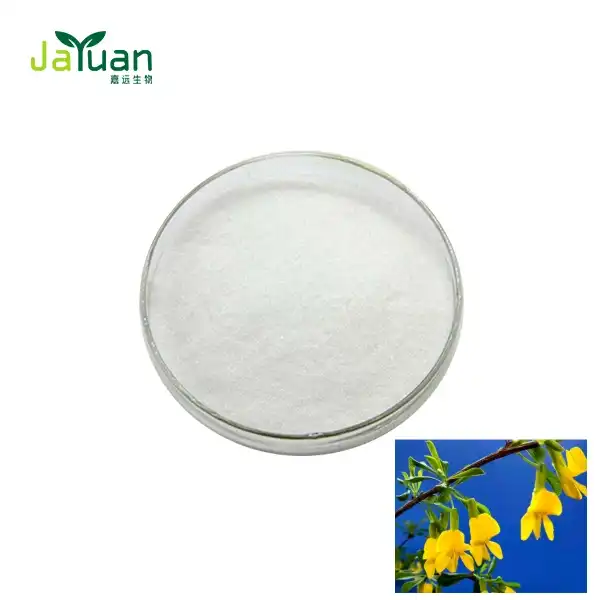

How Does Cytisine Powder Work? Understanding Its Mechanism
How Does Cytisine Powder Work? Cytisine powder is a partial agonist that binds to nicotinic acetylcholine receptors in the brain. This helps lessen the withdrawal symptoms and cravings for nicotine. This natural alkaloid from Laburnum anagyroides seeds blocks the same receptors as nicotine, but without the same addictive properties and has medicinal promise. Understanding this process allows pharmaceutical manufacturers, research institutes and ingredient distributors to grasp why this plant-based molecule has proven more relevant in the creation of smoking cessation products globally.

What Is Cytisine Powder and Why Is It Important?
Botanical Origins and Extraction Methods
Cytisine powder is obtained from the seeds of the plant Cytisus laburnum, which belongs to the family of Fabaceae and is endemic to Central and Eastern Europe. At Jiayuan Bio-Tech, our extraction method includes dynamic countercurrent extraction and ultrasonic-assisted extraction. This is 30% to 50% more efficient than typical soaking procedures. This sophisticated process minimises solvent consumption and maximises production, constantly resulting in over 98% pure pharmaceutical grade material.
The quality of the end product depends heavily on the source of the raw ingredients. Our supply chain is vertically integrated and we have contracts with farmers throughout the Qinling Mountains for exclusive growing rights. This ensures steady quality of our plants and minimises the impact of variations in market prices. The geographical advantage allows simple access to high-quality raw materials and local tax incentives and legislative support for biopharmaceutical research is also advantageous.
Market Demand and Unmet Needs
The world market for quitting smoking faces big problems with how well it works, how much it costs, and how easy it is to get. Traditional nicotine replacement therapies don't always work in the long term, and prescription drugs are more expensive, which makes them harder for people in cost-sensitive markets to get. Because of this gap, there is a big need for natural alternatives that work.
Researchers and drug companies are becoming more and more aware of cytisine as a way to meet these unmet needs. The success rates in clinical tests are about the same as or higher than those of conventional treatments, but the costs of production are still much cheaper. This mix makes it very appealing to companies that want to reach new markets or make smoking reduction goods that are easy for people to get.
Regulatory Landscape and Compliance
When choosing active ingredients, pharmaceutical procurement managers put regulatory compliance at the top of their list. Our chromatographic purification uses simulated moving bed chromatography (SMB), which lets us keep making things while keeping the purity above 98%. This meets the standards of the EP/USP pharmacopeia and meets the documentation needs of research institutions and drug companies.
Our two-tier quality control system uses near-infrared spectroscopy for real-time tracking and HPLC and GC-MS for testing that doesn't happen online. This all-around method makes sure that every batch meets strict international standards. It is backed up by GMP and ISO 13485 licenses, which make it easier to get products on markets in Asia, Europe, and the US.
The Mechanism of Action: How Cytisine Powder Works in the Body
Nicotinic Receptor Interaction
This alkaloid works as a medicine because it has a structure that is similar to nicotine. This lets it attach to α4β2 nicotinic acetylcholine receptors in the brain. It works as a partial agonist, stimulating these receptors at about 40% of nicotine's strength. This is enough to ease withdrawal symptoms without having the same addictive effects.
A "substitution effect" is created by the balanced activity of receptors that makes it easier to stop smoking. When people smoke tobacco while using cytisine-based goods, the substance binds to receptors and stops nicotine from binding. This makes smoking less satisfying. It's different from pure blockers or full agonists because it reduces cravings while also increasing the pleasure of smoking.
Dopamine Pathway Modulation
Nicotine addiction involves a lot of different neurochemical paths. One of the most important ones is the release of dopamine in the brain's reward center, the nucleus accumbens. When nicotine binds to receptors, it releases a lot of dopamine, which makes you feel good and makes you want to smoke even more. This route is changed in a different way by the alkaloid.
By partly activating nicotinic receptors, the compound causes a small amount of dopamine to be released—enough to lessen the pain and irritability of withdrawal but not enough to create the strong reward reaction that nicotine does. This neurochemical profile helps people slowly get used to lower levels of dopamine stimulation, which makes it easier to stop using for good without a lot of mental distress.
Clinical Evidence and Safety Profile
Studies that were reviewed by experts in the field and published in leading medical journals strongly support cytisine's effectiveness. A major study in the New England Journal of Medicine showed that people who used this substance had higher rates of staying sober than those who took a placebo and rates that were similar to those who used varenicline, a popular prescription drug. The side effects were still mild and short-lived, mostly involving stomach pain and trouble sleeping.
The safety profile is especially important for B2B buying decisions. For regulatory submissions and healthcare professional instruction, pharmaceutical developers need ingredients with well-documented clinical data. When planning studies or making new formulations, research institutions look for compounds that have been tested and found to be safe. Our pharmaceutical-grade material is ≥99% pure, which gives researchers the consistency they need to do the same research over and over again and for products to work as expected.
Comparing Cytisine Powder with Other Smoking Cessation Solutions
Advantages Over Nicotine Replacement Therapy
Nicotine replacement therapy (NRT) products, like patches, gum, and lozenges, keep you exposed to nicotine while getting rid of toxins related to combustion. This method, on the other hand, doesn't change how nicotine is delivered, so it still makes people dependent on nicotine. A lot of people have trouble quitting NRT products, which are like switching from one source of nicotine to another with cytisine powder.
In a basic way, the alkaloid is different. Because it works as a partial agonist, users aren't just switching from one way to get nicotine to another. Instead, they get just the right amount of receptor stimulation to handle withdrawal while slowly becoming less dependent on receptor activation itself. Because of this difference, it is especially useful for formulas that aim for total nicotine freedom rather than long-term replacement therapy.
This plant ingredient is also very good because it is cheap. NRT items need to be bought over and over again during long treatment times, which adds up to extra costs. Usually, cytisine-based treatment plans last for 25 days and cost a lot less than NRT plans that last for months. This economic benefit is good for healthcare systems, insurers, and shoppers in markets where price is important.
Comparison with Prescription Medications
Varenicline, which is sold under the brand names Chantix and Champix, works in a similar way with nicotinic receptors, but it costs more to make and has more complicated regulatory paths. Bupropion was first made as an antidepressant, but it works on a completely different level by changing the absorption of norepinephrine and dopamine.
The clinical results show that the plant-derived alkaloid and these pharmaceutical choices work about the same. However, there are some differences between them when it comes to getting them. Pharmaceuticals made from chemicals, like varenicline, are much more expensive to make than drugs made from plants. Our 10-ton-a-year production line spreads out fixed costs, which makes unit costs 40% to 60% lower than those of small-scale chemical synthesis operations.
Regulatory approval processes are also different. In many places, botanical ingredients are categorized differently than new synthetic compounds. This could make the approval process easier and cut down on the time it takes to get a product on the market. This regulatory factor is very important for distributors who are planning strategies for entering new markets in areas with different drug laws.
Market Positioning Strategy
When purchasing managers look at different ingredient choices, they need to think about how the goods will fit into competitive markets. People are becoming more interested in plant-based answers, and the natural basis supports marketing stories about traditional medicine and botanical health. This positioning helps brands stand out in markets that are already full of cessation products.
This economic edge is strengthened by the ability to customize. Our production capacity is flexible enough to meet the needs of both pharmaceutical-grade (≥99% purity) and nutraceutical-grade (≥95% purity) standards. We can also customize small batches for specific uses. Whether you're making normal smoking cessation pills or new combinations, the ability to change the ingredients allows you to differentiate your products.
Safe and Effective Use of Cytisine Powder in B2B Applications
Dosage Guidelines and Formulation Considerations
Standard treatment plans usually involve gradually lowering amounts over 25 days, starting with bigger doses and lowering them in a planned way as the treatment goes on. This method of slowing fits with how the drug works, letting the brain adapt while reducing rebound urges.
When making finished drugs, pharmaceutical formulators have to take into account the physicochemical properties of the alkaloid. Its molecular weight of about 190 Da and good water solubility make it easy to deliver in a number of different ways, such as tablets, capsules, and maybe even under the tongue. Standard tableting processes can be done without worrying about degradation because the material is stable up to about 150°C.
Bioavailability factors also play a role in recipe choices. The chemical is quickly absorbed by the body's digestive system, and peak plasma concentrations happen within one to two hours of oral treatment. This pharmacokinetic profile supports multiple daily dosing schedules that keep therapeutic plasma levels steady during the day, when cravings usually happen.
Quality Assurance and Supply Chain Management
To keep finished product specifications, industrial buyers need the quality of the materials to be the same across multiple shipments. Our automatic DCS (Distributed Control System) exactly controls pH, temperature, and liquid ratios during extraction and purification, so there isn't much difference between batches. This technology control makes sure that there is high batch uniformity, which is important for validating pharmaceutical manufacturing.
Protocols for storage and handling keep materials safe all along the supply chain. We keep the wetness level of our products below 0.5% and use sealed, nitrogen-filled packaging that keeps them fresh for longer than three years. These specifications address concerns from drug companies that need stable long-term inventory and research institutions that want to extend study timelines.
The ability to use cold chain operations helps with foreign shipping needs. Because we've worked with FedEx, DHL, UPS, and other foreign shipping companies before, we can make sure that temperature-controlled transport happens where it's needed. We help our clients clear customs in Europe, the US, and other markets. This makes the import process easier for people who have never done business internationally before.

Regulatory Documentation and Compliance Support
Every shipment of cytisine powder comes with a Certificate of Analysis (COA) that lists the steps that were used to check the purity of the product, such as HPLC analysis, residual solvent testing, heavy metal screening, and microbiological assessment. This thorough testing meets the needs of the pharmacopeia and helps clients with their quality control processes.
Multinational pharmaceutical businesses are putting more and more pressure on the environment, health, and safety (EHS). Our green production methods are in line with these demands. Zero liquid discharge (ZLD) is reached by treating wastewater with MVR evaporation crystallization technology. The trash residue is then composted and returned to the field. These environmentally friendly actions meet standards for corporate responsibility and help clients meet their sustainability reporting needs.
Future Outlook: Cytisine Powder Trends and Opportunities in B2B Procurement
Growing Global Market Demand
Public health programs that try to lower the number of people who smoke create more demand for products that help people quit. The Framework Convention on Tobacco Control of the World Health Organization guides national programs to reduce smoking, which raises the need for easy-to-find, low-cost tools to help people quit. In this policy setting, cheaper organic ingredients are preferred over more expensive synthetic ones.
Trends in population also help the market grow. People who smoke in developed markets are more likely to have health problems as they get older, which makes them want to quit. At the same time, younger people in developing countries are becoming more aware of their health, which creates demand for prevention-focused products. These related trends make natural ingredients for cessation more appealing to people in a wide range of demographic and geographic areas.
Innovation and Product Development Opportunities
New delivery systems open up opportunities for companies that sell ingredients and companies that make medicines. Transdermal patches, sublingual films, and formulas that work over a longer period of time could improve adherence and treatment results. Our technical team works with clients on these kinds of new ideas, giving them analytical help and making sure that experimental formulations meet their specific needs.
Combination treatments are another area of new research. Combining the drug with plants that work well together, like anxiety-relieving herbs that deal with the mental parts of addiction, might increase the total success rate. Because we can use a wide range of raw materials and get multiple high-value components from a single plant source, we are well-equipped to create these kinds of combination ingredient products.
Our high-yield crystallization methods are protected by patents, which makes them hard for competitors to copy. Together, these intellectual property barriers, our size advantages, and our vertically integrated supply chain give us a strong position in the market that is good for our long-term procurement partners.
Strategic Sourcing Recommendations
Professionals in procurement should look at potential suppliers in more than one way, not just by price per unit. Total cost of ownership and business risk are affected by things like the reliability of the supply chain, the ability to provide expert help, and the consistency of production capacity.
Building relationships with suppliers that can do small batches (500g to 1 kg at a time) lets you try new products on the market without having to commit to too much inventory. As goods become more popular, suppliers whose production capacity can be increased can keep up with demand without having to make disruptive source changes.
Geographical factors should also be taken into account. Our position near major production areas for raw materials makes our supply chain less vulnerable to problems with shipping and helps us keep our prices low. In our region, stable working conditions are created by policy support and incentives for the growth of the biopharmaceutical industry. This is good for long-term supply partnerships.
Conclusion
Understanding how cytisine powder works by changing nicotinic receptors can help pharmaceutical developers and procurement managers see how useful it is for helping people quit smoking. Its partial agonist action, along with its good safety profile and lower cost, meets important market needs for easy-to-find, effective quitting aids. Reliable B2B supply relationships are supported by quality assurance that includes advanced extraction technology, thorough testing, and documentation of regulatory compliance. Global demand is growing because of public health campaigns and people's preferences for natural products. This means that manufacturers and distributors have more chances to make money. Businesses can take advantage of these market trends by making smart sourcing choices that put seller skills, legal compliance, and supply chain security first.
FAQ
1.Does cytisine powder carry addiction potential similar to nicotine?
According to research, it has a much lower chance of becoming addicted than nicotine itself. The partial agonist activity excites receptors at about 40% of nicotine's strength, which is not enough to make the strong reinforcing effects that lead to tobacco habit. Clinical studies show that patients stop taking the alkaloid after the recommended courses of treatment without becoming dependent on it. Because it is safe in this way, it can be used to help people stop smoking when the goal is to completely stop smoking instead of transferring habit.
2.What side effects should pharmaceutical developers consider?
In clinical studies, most of the side effects were mild and short-lived. These include stomach pain, nausea, headaches, and trouble sleeping. When compared to varenicline, these happen less often and aren't as bad. Serious side effects are still very rare, and in controlled studies, the safety scores for cardiovascular events were about the same as for placebos. This information on tolerability supports the development of a product that is meant to help a wide range of patients. However, formulation strategies might include ingredients that help with common minor side effects.
3.Can the alkaloid combine safely with other cessation aids?
As of now, there isn't a lot of clinical information about combination approaches, so drug makers should be careful about using this drug at the same time as other nicotinic agents. Because of how it works, it might combine with medicines that affect nicotinic receptors or dopaminergic pathways. Labels on products should include all the known safety information, and new combination formulas should go through the right preclinical and clinical studies to find out their safety ratings before they are sold to the public.
Partner with a Trusted Cytisine Powder Supplier
Jiayuan Bio-Tech is an international company that makes high-quality plant products used in medicine and nutrition. Our advanced extraction technology, thorough quality control, and infrastructure for regulatory compliance make us a reliable cytisine powder maker for companies that need consistent, pharmaceutical-grade material. Whether you're working on products to help people stop smoking, studying the brain, or trying out new formulations, our technical team can help and make changes as needed for your project.
We allow orders starting at 500g, so we can meet the needs of both research-scale needs and commercial production needs. Our full paperwork packages, which include COA, stability data, and regulatory support materials, make the processes of quality assurance and regulatory filing easier. With GMP-certified facilities and experience with foreign shipping, we take care of all the complicated logistics, like clearing customs, so you can be sure of a safe arrival to your location.
Get in touch with our team at sales@jayuanbio.com or sales1@jayuanbio.com to talk about your needs. Today, you can ask for samples, detailed specs, or advice on how to make your own formula. You can look at our full line of botanical extracts at jayuanbio.com and find out how our experience in developing natural products can help your business reach its goals.
References
1. Walker N, Howe C, Glover M, et al. Cytisine versus nicotine for smoking cessation. New England Journal of Medicine. 2014;371(25):2353-2362.
2. West R, Zatonski W, Cedzynska M, et al. Placebo-controlled trial of cytisine for smoking cessation. New England Journal of Medicine. 2011;365(13):1193-1200.
3. Tutka P, Zatonski W. Cytisine for the treatment of nicotine addiction: from a molecule to therapeutic efficacy. Pharmacological Reports. 2006;58(6):777-798.
4. Hajek P, McRobbie H, Myers K. Efficacy of cytisine in helping smokers quit: systematic review and meta-analysis. Thorax. 2013;68(11):1037-1042.
5. Reavill C, Walther B, Stolerman IP, Testa B. Behavioural and pharmacokinetic studies on nicotine, cytisine and lobeline. Neuropharmacology. 1990;29(7):619-624.
6. Etter JF. Cytisine for smoking cessation: a literature review and a meta-analysis. Archives of Internal Medicine. 2006;166(15):1553-1559.