Cytisine Supplement vs Nicotine Replacement: Key Differences
When exploring smoking cessation solutions, understanding the distinction between a cytisine supplement and nicotine replacement therapy (NRT) is essential for brand founders and procurement professionals. Cytisine, a plant-derived alkaloid extracted from Laburnum species, operates as a partial agonist at nicotinic acetylcholine receptors, helping reduce cravings without introducing additional nicotine. NRT, conversely, delivers controlled nicotine through patches, gums, or lozenges to ease withdrawal. Both approaches show clinical promise, yet their mechanisms, regulatory landscapes, and procurement considerations differ significantly—factors that directly impact your product development strategy and market positioning.

Understanding Cytisine Supplement and Nicotine Replacement Therapy (NRT)
The Mechanism Behind Cytisine
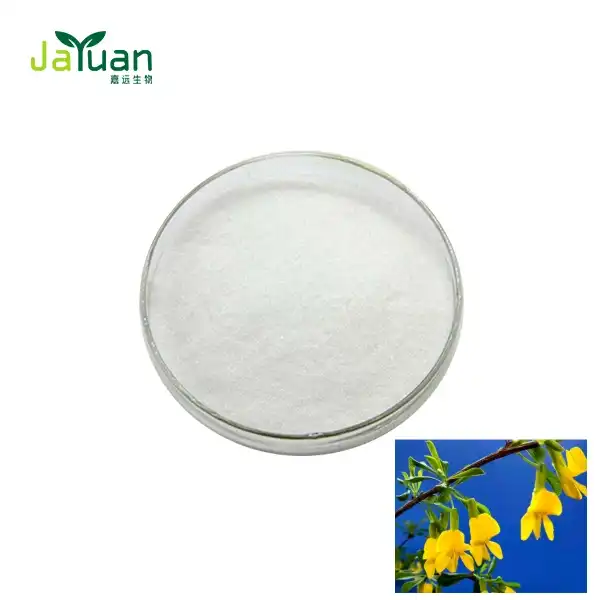
Cytisine works by attaching to the same brain receptors that nicotine does, but it does so in a very different way: it acts as a partial agonist instead of a full stimulator. This means that cytisine gives these receptors enough activation to ease the pain of withdrawal while also stopping nicotine from binding to them. The two actions together have been shown in clinical trials to make the process of quitting smoking easier. The alkaloid naturally comes from plants like Golden Rain (Cytisus laburnum), which fits well with the growing trend among consumers for health products made from plants. When buying cytisine pills, they are usually made in the form of tablets or capsules, and their purity levels range from 95% to over 99%, based on the needs of the application and the rules that apply.
How Nicotine Replacement Therapy Works
NRT products give you controlled amounts of nicotine to help with withdrawal symptoms without the harmful chemicals that come from smoking. Transdermal patches for steady release, chewing gum for flexible doses, lozenges for discreet use, inhalers that look like you're breathing through your mouth, and nose sprays for quick relief are all options. Since the 1980s, these goods have been studied in great detail and can be easily found in pharmacies. The pharmaceutical infrastructure that supports NRT is fully developed, with well-established networks for delivery and clear regulatory routes in most countries. Because NRT is easy to get, it is a familiar choice for customers and a simple option for brands that already work in pharmaceutical supply lines.
Dosage Forms and Application Scope
Both approaches to cessation can be put together in different ways. Cytisine powder that is more than 98% pure is used as the active ingredient in oral cessation therapies and can be made into tablets or capsules. New research also looks at cytisine in transdermal delivery systems, using its molecular weight of 190.24 g/mol to control how much it gets into the skin. On the other hand, NRT products have changed over time to include combination treatments, like patches and fast-acting gums, that can help with both normal urges and strong ones. By knowing about these different formulation options, procurement professionals can make sure that product specifications are in line with what customers want and how they will use the product.
Key Differences Between Cytisine Supplement and Nicotine Replacement
Pharmacological Profiles
The main change is how the receptors work. Because it is a partial agonist, cytisine lowers cravings while stopping nicotine from having its full effects if a person relapses. Nicotine replacement has full agonist action, so it directly replaces smoking as a way to get nicotine while keeping your body's habit on the drug. According to a study in the New England Journal of Medicine, cytisine worked just as well as varenicline and even better than a placebo in randomized controlled trials. In NRT tests, the success rate is usually about twice as high as with a control, but it depends on the type of product used and how well it is adhered to. These differences in pharmacology affect both how well drugs work in the clinic and how brands position their goods in markets that are already very competitive.
Side Effect Considerations
Different approaches have different safety profiles. Cytisine often leads to mild stomach problems, trouble sleeping, and headaches that are usually easy to deal with and don't last long. When used according to the instructions, serious side effects are very rare. NRT can cause irritation in the area, like skin reactions from patches or mouth soreness from gums. If the recommended dose is exceeded, it can also cause systemic effects like palpitations or dizziness. Both of these methods don't have the same cancer-causing risks as smoking, but knowing these patterns of side effects can help you make better product labels, customer education tools, and risk management plans for your brand.
Regulatory and Market Access
Regulatory division makes big changes in how things work. In many places, NRT products are listed as over-the-counter medicines or pharmaceuticals, which means they need a lot of clinical evidence and strict production rules. Cytisine's status varies a lot. Some places, like Poland, consider it a drug that needs a prescription, while other places, like parts of the US, allow it to be classified as a dietary supplement under certain conditions. Still other places limit or ban sales completely. This lack of stability in regulations is both a problem and a chance for new brands that are ready to deal with compliance issues. To successfully enter a market, you need to talk to a lawyer and come up with regulatory strategies that are flexible and fit the needs of each target area.
Procurement Considerations for Cytisine and NRT Products
Supply Chain Characteristics
When purchasing cytisine supplements, purchasing managers usually work with specialized plant extract makers who know how to remove alkaloids. To get pharmaceutical-grade purity, production needs advanced extraction technology and quality control systems. Advanced methods, such as dynamic countercurrent extraction and ultrasonic-assisted methods, are used by companies like Jiayuan Bio-Tech to get 30% to 50% better results than traditional immersion techniques. For constant output, our chromatographic purification uses simulated moving bed chromatography (SMB) to keep the quality above 98%. This level of technological complexity means a steady supply of goods and high quality products, which are important for brands that want to stay in the market for a long time.
On the other hand, NRT procurement is usually done by well-known drug distributors with FDA-approved manufacturing facilities. Although strict quality standards are in place, the mature structure of the market often means that tailoring is limited and minimum order amounts are higher. When compared to plant-based quitting ingredients, which can be used in a variety of ways, NRT's standard nature may make it harder for brands that want to stand out.
Cost Structure Analysis
Cytisine pills are a good option for people who want to save money when they buy things. Multiple high-value parts, such as flavonoids, are extracted from the same plant source by our comprehensive raw material utilization. This effectively spreads costs across product lines. Our liquid recovery system recovers more than 90% of ethanol and methanol, which cuts down on the cost of goods by a large amount. Because we can make 10 tons of goods a year, the economies of scale lower our fixed costs, making our unit prices 40% to 60% lower than those of small businesses. Because of these benefits, bulk orders can be priced competitively while still meeting the highest quality standards.
The price of NRT is based on how much it costs to make new medicines, pay for regulations, and charge more for well-known brands. Even though there are savings for buying in bulk, the total cost is usually higher than botanical options. For new brands or those trying to reach price-conscious customers, cytisine-based formulas offer strong financial benefits that don't hurt effectiveness.
Quality Assurance and Compliance
Quality verification methods tell the difference between dependable providers and mediocre ones. We use two types of quality control: live testing (near-infrared spectroscopy for tracking concentrations in real time) and offline analysis (HPLC and GC-MS) to make sure we meet EP and USP pharmacopeia standards. The GMP and ISO 13485 certifications we have allow us to sell our products in markets in China, the US, and Europe. Controlling moisture levels below 0.5% and using nitrogen-filled packaging can make a product last longer than three years, which lowers the risk for sellers of running out of stock.
Check the analytical certificates, ask for stability data, and make sure the regulatory paperwork for your target markets is correct when looking at cytisine supplement suppliers. Established makers offer a wide range of technical support, such as formulation advice and legal instructions. These are especially helpful for brands that are new to the smoking cessation market and don't have much experience with pharmaceuticals.

Market Trends and Buyer Insights
Growing Demand for Plant-Based Solutions
Natural health methods are becoming more popular among consumers and regulators. The idea of "plant-based cessation" strikes a chord with people who care about their health and are looking for alternatives to manmade drugs. Market research shows that interest in botanical cessation aids is growing, especially among younger smokers and people who care about their health. This change gives new brands a chance to stand out by using natural ingredients, making products with clean labels, and telling stories about sustainability that fit with what modern consumers care about.
Cross-border e-commerce sites say that more people are searching for plant goods to help them stop smoking. The Southeast Asian and North American markets are seeing the most growth. Brands that are good at riding these trends combine interesting stories about the ingredients they use with clinical evidence that they work. This is possible with cytisine supplements that are properly sourced and documented.
Regulatory Evolution and Compliance Challenges
The rules that govern quitting goods are always changing. While there are clear paths for NRT, the definition of cytisine is still open to debate and depends on the state. Smart buying strategies plan for changes in regulations by working with providers who offer full compliance support. As part of our services, we offer regulatory consulting, which helps our clients deal with questions about classification, labeling rules, and restrictions that are specific to their market. This proactive method cuts down on launch delays and regulatory risks that could put investments in entering a new market at risk.
There are also big differences in the rules for advertising and marketing. Digital platforms have strict rules about advertising products that help people stop smoking. Claims must be carefully backed up, and some keywords or targeting methods are often not allowed. Brands need to come up with marketing plans that effectively communicate the benefits while also following the platform's rules. This requires both creative messaging and knowledge of the rules.
OEM and ODM Opportunities
More and more people want complete cessation product creation. More and more, brand founders are looking for OEM and ODM partners who can handle formulation, production, packaging, and regulatory paperwork as a whole. Our production capacity is flexible enough to handle both pharmaceutical-grade (≥99% purity) and supplement-grade formulas (≥95% purity). We can customize small batches for market testing before ramping up to commercial numbers. This adaptability is especially helpful for new businesses figuring out if their product fits the needs of the market or for well-known brands expanding into new areas.
Patent protection on our cleaning processes, which includes our own refining methods, gives us another edge that our partners can use to get ahead in the market. When brands work with makers who own the intellectual property for production technology, they can better defend themselves in the market than when they just buy generic ingredients.
How to Choose Between Cytisine Supplement and Nicotine Replacement
Evaluating Therapeutic Suitability
Your company image and the type of customer you want to attract should guide the products you choose. Cytisine appeals to people who like natural ingredients, who are worried about becoming addicted to nicotine for a long time, and who think that "plant-based" products are more expensive. Clients who want to quit smoking more quickly may also be interested in cytisine protocols because they usually only last 25 days, compared to 8 to 12 weeks for NRT.
NRT is still a good choice for brands that want to reach conservative groups, medical channels, or markets that have strong tastes for pharmaceutical infrastructure. The long clinical history of NRT and the fact that many doctors are familiar with it can make it easier for professionals to recommend it and for insurance companies to pay for it in some markets.
Assessing Supply Chain Reliability
Supply security is very important in the health and fitness industries, where losing a product hurts company trust. Check out possible suppliers on a number of factors, such as how stable their sources of raw materials are, how much they can produce compared to your volume forecasts, how spread out their manufacturing sites are geographically, and how well they've kept contracts during supply chain disruptions in the past. Our supply chain is vertically linked, and it includes contracted cultivation sites near the Qinling Mountains. This keeps the prices of raw materials stable and reduces the impact of changes in supply chains. This kind of vertical integration gives buyers more security than commodity brokers or small-scale suppliers can offer.
Ask current customers of the supplier for references from customers who have bought similar products before. Reliable manufacturers are happy to put you in touch with happy customers who can share their operational experiences about how well orders are filled, when they are delivered, and how quickly technical support responds.
Balancing Innovation with Compliance
Differentiation and legal feasibility must be balanced in order for product creation to go well. New delivery methods, combination formulas, or technologies that improve bioavailability can give you a competitive edge, but only if they meet the rules set by regulators. Working with providers that offer R&D help instead of just selling ingredients is a good idea. As a way to help brands come up with new ideas while still following the rules, our scientific team helps with derivative creation and formulation optimization.
During buying, decisions should be based on reducing risk. Having a variety of seller relationships, keeping enough inventory on hand, and including clear quality standards in supply deals can help protect against problems that might stop products from being available.
Conclusion
To decide between cytisine supplements and nicotine replacement therapy, you need to carefully look at their pharmacological profiles, the rules that govern them, how the supply chain works, and how they plan to position themselves in the market. Cytisine has strong benefits, such as natural sources, low costs, and growing consumer appeal, while NRT has well-established regulatory pathways and a large market presence. When making good buying choices, you make sure that the features of the product match your brand's strategy, your target audience, and your business's abilities. As the market for quitting smoking moves more toward botanical solutions, brands can stay ahead of the competition by working with experienced providers who can provide full technical and legal support. We'll continue to support new brands by providing a stable supply, letting you make changes as needed, and giving you expert advice as you develop your products and bring them to market.
FAQ
1.What purity levels are available for cytisine ingredients?
Pharmaceutical-grade cytisine is usually more than 98% pure, which can be proven by HPLC measurement. It can be used for controlled medicinal purposes. Supplement-grade formulations are usually between 95 and 98% pure, which means they can be used in dietary supplement products in markets that recognize this classification. We make cytisine powder that is ≥99% pure for study purposes and high-end commercial formulations. For every production batch, we include full analytical documents, such as certificates of analysis.
2.How do minimum order quantities compare between cytisine and NRT sourcing?
Cytisine supplement suppliers usually accept smaller initial orders to help test the market. Minimum orders can be anywhere from 1 kg to 10 kg, based on the individual needs. Small-batch customization is possible at our plant, which lets brands test formulas before committing to large-scale production. When buying NRT, the minimum order size is usually bigger to account for the costs of pharmaceutical manufacture. Usually, orders need to be hundreds of kilograms or more. Because of this difference, cytisine is easy for new brands with little start-up money to get.
3.Which regulatory certifications should I verify when selecting suppliers?
Make sure that any potential suppliers have the right GMP certifications for your target markets, as well as ISO quality management certifications and proof that they have tested their products properly. If necessary, ask for proof that the product meets pharmacopeia standards like USP or EP. We have GMP and ISO 13485 licenses that allow us to sell our products in markets in Europe, the US, and China. We also have a lot of paperwork that can be sent to regulators to back our claims.
Partner with Jiayuan Bio-Tech for Premium Cytisine Supplement Supply
Finding the right ingredients isn't enough when you're trying to make a product to help people stop smoking. You need a strategic partner with technical know-how, legal knowledge, and manufacturing excellence. Jiayuan Bio-Tech is a reliable company that makes cytisine supplements. They use advanced extraction technology and flexible production methods to help brands from the beginning of the formulating process all the way up to commercial production. Our green production methods, fully integrated quality systems, and vertically integrated supply chain give your business the dependability it needs.
Whether you need pharmaceutical-grade cytisine powder for medical uses or custom supplement formulations for online sales, our team can help. We offer custom solutions at reasonable prices and offer quick technical support. We take care of complicated details, like helping foreign shipments clear customs, so your ingredients always get to where they need to go. Talk to our procurement experts about your specific needs, ask for product specifications, and find out how our capabilities as a cytisine supplement supplier can help you stand out in the market.
Visit jayuanbio.com or email us at sales@jayuanbio.com and sales1@jayuanbio.com right now to get full product catalogs and start working with a company that cares about quality, compliance, and the success of your brand.
References
1. Walker, N., Howe, C., Glover, M., McRobbie, H., Barnes, J., Nosa, V., Parag, V., Bassett, B., & Bullen, C. (2014). Cytisine versus nicotine for smoking cessation: a randomized controlled trial. New England Journal of Medicine, 371(25), 2353-2362.
2. West, R., Zatonski, W., Cedzynska, M., Lewandowska, D., Pazik, J., Aveyard, P., & Stapleton, J. (2011). Placebo-controlled trial of cytisine for smoking cessation. New England Journal of Medicine, 365(13), 1193-1200.
3. Hajek, P., McRobbie, H., & Myers, K. (2013). Efficacy of cytisine in helping smokers quit: systematic review and meta-analysis. Thorax, 68(11), 1037-1042.
4. Cahill, K., Stevens, S., Perera, R., & Lancaster, T. (2013). Pharmacological interventions for smoking cessation: an overview and network meta-analysis. Cochrane Database of Systematic Reviews, (5), CD009329.
5. Etter, J. F. (2006). Cytisine for smoking cessation: a literature review and a meta-analysis. Archives of Internal Medicine, 166(15), 1553-1559.
6. Tutka, P., & Zatonski, W. (2006). Cytisine for the treatment of nicotine addiction: from a molecule to therapeutic efficacy. Pharmacological Reports, 58(6), 777-798.