
Ergothioneine Powder for Skin Health: What Research Shows
Ergothioneine powder is receiving substantial attention from formulation chemists and raw material purchasers in the skin care sector. It's a naturally occurring amino acid derivative with a unique thiourea ring structure that provides a level of antioxidant stability that few actives can compete with. The capacity to protect skin cells from oxidative stress, help the barrier resilience, and minimize outward indications of aging is supported by research published over the last ten years. With the science of ergothioneine powder now understood, B2B buyers looking for cosmetic-grade actives may start to confidently make purchase selections.
Understanding Ergothioneine Powder and Its Role in Skin Health
What Is Ergothioneine and Where Does It Come From?
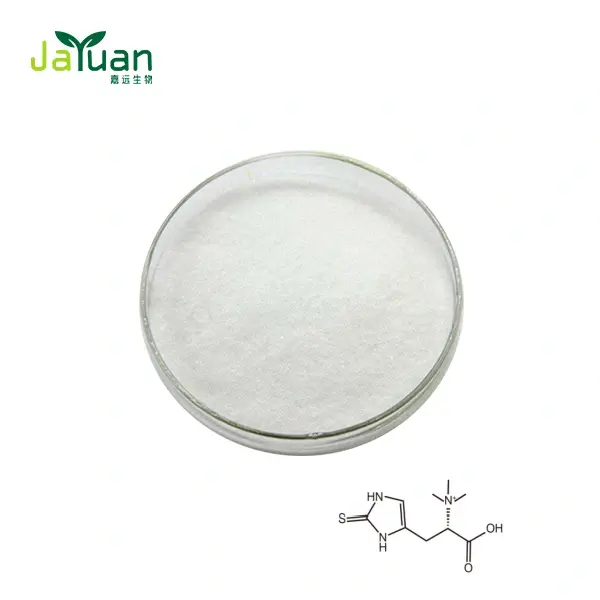
Ergothioneine is a sulfur-containing amino acid that is spontaneously produced by certain edible mushrooms, mycobacteria and fungi. The human body can not manufacture it yet human cells actively store it via the OCTN1 transporter protein. Precise microbial fermentation or enzymatic synthesis is employed in the production of Ergothioneine powder. It is a white to off-white crystalline solid with a molecular weight of 229.3 g/mol and a purity of at least 99.0%. This product fulfills pharmaceutical-grade criteria.
How Does It Protect Skin at the Cellular Level?
At the molecular scale, ergothioneine powder is mostly seen in the tissues under significant oxidative stress. Includes skin exposed to UV exposure, pollutants and metabolic stress. It directly scavenges reactive oxygen species (ROS) and prevents oxidative damage to mitochondrial DNA that other antioxidants fail to do. It accumulates in stressed cells and does not diffuse indiscriminately, so it protects skin cells where they need it most.
What Does Recent Research Confirm?
There is clinical proof that ergothioneine helps skin heal and slows down signs of photoaging. A study in the Journal of Cosmetic Dermatology (2020) found that putting L-ergothioneine on skin models in a topical way reduced oxidative damage caused by UV light. Higher levels of ergothioneine in tissues have also been linked to more elastic skin and lower levels of inflammatory cytokines. This makes it a good ingredient for anti-aging serums and barrier-support face creams.
Comparative Analysis: Ergothioneine Powder vs. Other Antioxidants
Stability Under Formulation Conditions
Ergothioneine powder keeps its shape well in a pH range of 3.0 to 9.0 and is very stable at high temperatures up to about 257–275°C, which is one of the most constant results in formulation science. Ascorbic acid (Vitamin C), on the other hand, breaks down quickly in water that is exposed to oxygen or heat, and glutathione breaks down quickly in the open air. Formulators who work with water-based serums or emulsions can clearly benefit from ergothioneine when it comes to processing.
Bioavailability vs. Standard Antioxidants
Ergothioneine powder enters cells actively through the OCTN1 transporter, which is genetically encoded. This is different from glutathione or NAC, which are given topically and depend on passive diffusion and often show limited cellular uptake. This way of working gets around the bioavailability problems that make many antioxidant actives less useful in real life. For formulation directors who are looking at the return on investment (ROI) of an ingredient, this focused delivery method directly means performance that can be measured at lower use concentrations.
Synergy With Other Actives
In formulations with multiple functions, ergothioneine powder complements niacinamide, hyaluronic acid, and peptide complexes. Its job is to bind metal ions, especially divalent copper ions. This stops Fenton-type processes that would otherwise make harmful hydroxyl radicals. Ergothioneine works with other antioxidants instead of against them because it has a chelation effect that boosts their effects. Traders who sell local brands can market it as a higher-end version of existing serum or cream SKUs.
Application and Dosage Guidelines for Skin Product Formulations
Recommended Use Levels in Topical Products
The optimal quantity of ergothioneine powder to apply on the skin is anywhere between 0.1% and 1.0% w/w, according to published recipe guidance. Within this range, the nutrient offers detectable antioxidant and photoprotective effect without a major influence on the price or appearance of the product. Cosmetic grade ergothioneine 95% or more pure is generally acceptable for serums, mild cleansers and eye creams. Claims of higher efficacy are best made with pharmaceutical grade ergothioneine with purity of at least 99%.
Formulation Compatibility Notes
Ergothioneine powder is easily incorporated into watery phases because of its high water solubility (about 0.9M at 25°C). It doesn't change when mixed with most preservatives, humectants, and film-forming agents. Because ergothioneine can change the balance of trace metals in some systems, formulators should make sure it works with compounds that contain iron. It is common practice to test for compatibility when making a prototype, and technical data sheets from suppliers back this up.
Regulatory Compliance for the US and EU Markets
Ergothioneine is included as a cosmetic ingredient that may be used under the EU Cosmetics Regulation (EC 1223/2009). It is utilized in items registered in the INCI as “Ergothioneine”. It has been reviewed by the Personal Care Products Council and they have declared that it’s okay to use it as a cosmetics ingredient in the United States. Anyone wanting to acquire ergothioneine powder to sell in the EU or the USA needs to check that the supplier meets GMP manufacturing rules and ask for a comprehensive safety document.
Procuring Ergothioneine Powder: Key Considerations for B2B Buyers
Evaluating Supplier Certifications and Purity Standards
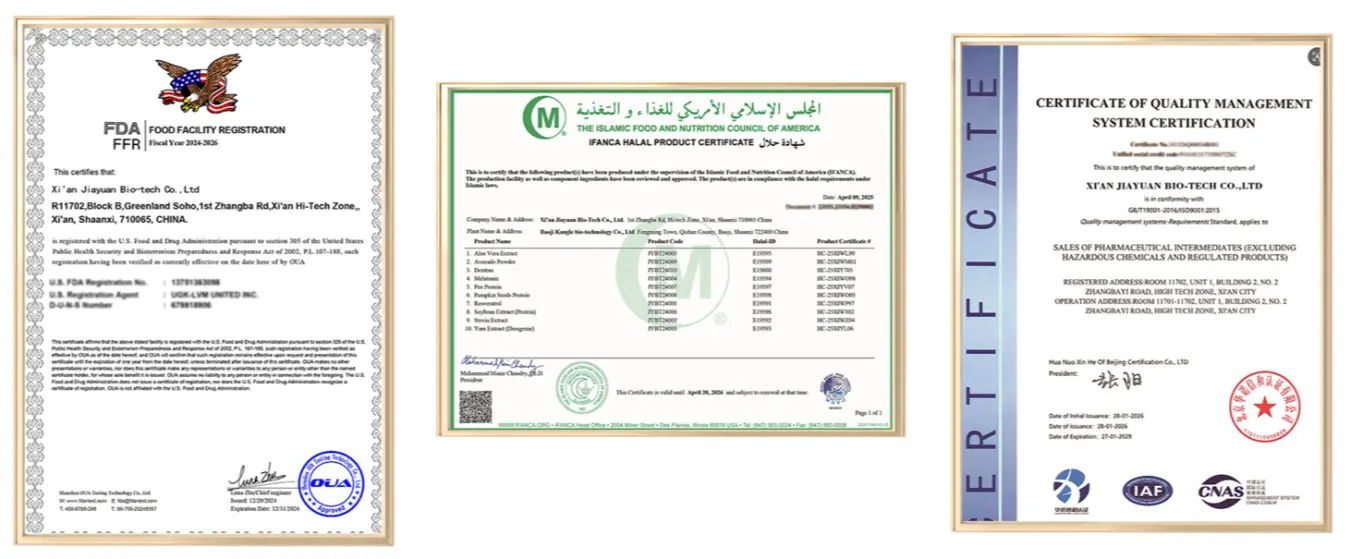
As a minimum, procurement managers should look for GMP and ISO certifications when looking for ergothioneine powder. Before you place your first order, you should always ask for standard papers like HPLC-confirmed purity data, optical rotation values (L-isomer selectivity between +122° and +128°), and batch consistency records. Suppliers who use both inline NIR tracking and offline GC-MS tests for quality control give a better level of guarantee for formulation-grade material.
Minimum Order Quantities and Pricing Flexibility
Before committing to volume, B2B buyers who are trying ergothioneine powder often want to see how well it works. A lot less risk is involved in the procurement process when suppliers offer 1 kg trial quantities with full documentation, such as CoA, MSDS, and stability data. Ergothioneine is a high-end active ingredient, and its price reflects how hard it is to make. Manufacturers with 10-ton-per-year production lines, on the other hand, can offer unit costs that are much lower than those of small-batch makers. This makes it easier for distributors planning multi-brand supply plans to place bulk orders.
OEM and Custom Specification Options
The same source may provide cosmetic-grade (≥95%) or pharmaceutical-grade (≥99%) ergothioneine powder, thus ODM manufacturers and trading firms find it simpler to deal with suppliers to suit the demands of various customers. The shelf life is more than three years when the provider provides sealed packaging filled with nitrogen, with the moisture level controlled at ≤0.5%.
Future Trends and Industry Outlook for Ergothioneine in Skin Care
Growing Demand in Clean-Label and Functional Skincare
According to market data from Mintel and Euromonitor, "science-backed antioxidants" and "longevity ingredients" are two of the top skincare claims that are growing the fastest around the world. Ergothioneine fits right in with both of these trends. Because it comes from fermentation, it fits with clean-label marketing, and the fact that its cellular mechanism has been studied gives it the scientific authority that modern formulation directors and brand marketers want.
Expanding Applications Beyond Topicals
ERGOSULONE powder is being studied by research teams as an oral substance for skin-from-within programs and as a professional treatment product used in dermatology offices. As more clinical data comes in, buyers who build relationships with suppliers now, before this ingredient becomes a commodity, will have an advantage when it comes to finding it. When trading companies add ergothioneine to regional brands early on, they can make their products stand out in ways that competitors can't easily copy.
Sustainability and Green Production Standards
Companies that have to report on ESG issues are asking their providers for more information on how well they do in terms of environmental performance. Manufacturers who use zero liquid discharge (ZLD) wastewater technology, process production waste, and get solvent recovery rates of at least 90% can back up their claims of responsible sourcing. Along with price and purity, these production standards are becoming a way for buyers to tell one supplier from another.
Conclusion
The proof for ergothioneine powder makes a strong case for its use in high-tech skin care products. It stays stable at different pH and temperature levels, gets to cells specifically through OCTN1, and works with common makeup systems, so it directly solves common formulation problems. For procurement professionals, the practical issues like purity documentation, GMP certification, flexible order quantities, and following the rules can all be taken care of with the right supplier. Brands and distributors that move quickly on this ingredient and have reliable supply partners will be ready for the next wave of skin care products that focus on antioxidants.
FAQ
1. What concentration of ergothioneine powder is standard in topical skincare?
Most published formulation data supports use levels between 0.1% and 1.0% w/w in topical products. Cosmetic-grade material at ≥95% purity is suitable for most serum and cream applications, while pharmaceutical-grade (≥99%) is used where stricter purity documentation is required.
2. How does ergothioneine compare to glutathione in formulations?
Ergothioneine powder is significantly more stable in aqueous solutions than glutathione, which oxidizes rapidly on exposure to air. Ergothioneine's tautomeric preference for the thione form at physiological pH keeps it active throughout a product's shelf life.
3. Is ergothioneine compliant with EU cosmetics regulations?
Yes. Ergothioneine is permitted under EU Cosmetics Regulation EC 1223/2009 and is declared in INCI-compliant formulations. Buyers should request a full safety dossier and GMP certification from suppliers to support regulatory submissions.
Source Ergothioneine Powder From Jiayuan Bio-Tech
Jiayuan Bio-Tech sells ergothioneine powder that is good for cosmetics and medicine. Their powder is more than 95% pure and comes with full batch documentation, as well as GMP and ISO certification. We are a reliable company that makes ergothioneine powder. We offer trial orders starting at 1 kg, flexible bulk pricing, nitrogen-sealed packaging with a three-year shelf life, and door-to-door logistics that includes customs clearance for the EU and US. Please get in touch with us at sales@jayuanbio.com or sales1@jayuanbio.com. You can get samples and prices by going to jayuanbio.com.
References
1. Servillo, L., et al. "Ergothioneine and Hercynine in the Skin." Antioxidants & Redox Signaling, 2015.
2. Halliwell, B., et al. "Ergothioneine — A Diet-Derived Antioxidant With Novel Biological Properties." Nutrition Reviews, 2020.
3. Cheah, I.K., & Halliwell, B. "Ergothioneine, Recent Developments." Redox Biology, 2021.
4. Hseu, Y.C., et al. "Protective Effects of L-Ergothioneine Against UV-Induced Photooxidative Stress in Skin Cells." Journal of Cosmetic Dermatology, 2020.
5. Personal Care Products Council. "Safety Assessment of Ergothioneine as Used in Cosmetics." International Journal of Toxicology, 2022.
6. European Commission. "Regulation (EC) No 1223/2009 on Cosmetic Products — Ingredient Safety Reviews." Official Journal of the European Union, 2009.