Bulk Pterostilbene Powder Wholesale Tips for Better Deals
There are three essential keys to getting the best price for bulk pterostilbene powder: recognise what sets this chemical different in the marketplace, find ways to vet vendors beyond their sales brochures, and structure arrangements that preserve quality and affordability. This dimethylated version of resveratrol has improved absorption, which is why pharmaceutical businesses, nutraceutical brands, cosmetic formulators and research laboratories all scramble for high quality material. Consistently, the greatest bargains are achieved by those procurement teams who dive into extraction technology, check certificates rather than accepting them at face value, and negotiate around total cost not per-kilo pricing. This essay looks at what really counts when sourcing pterostilbene at a wholesale basis.

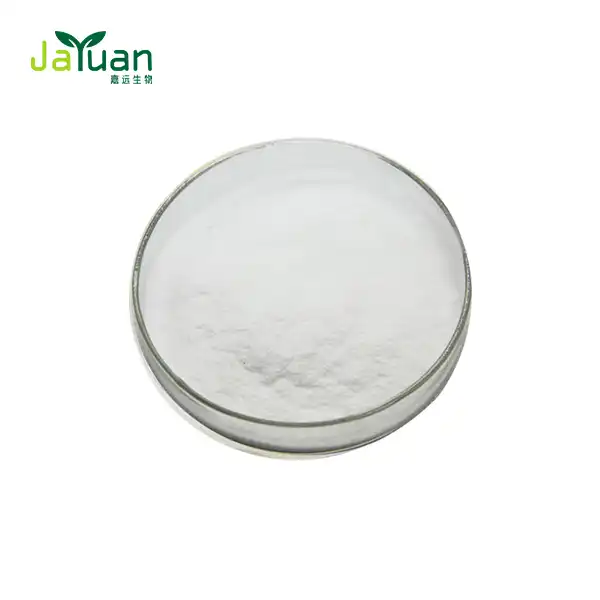
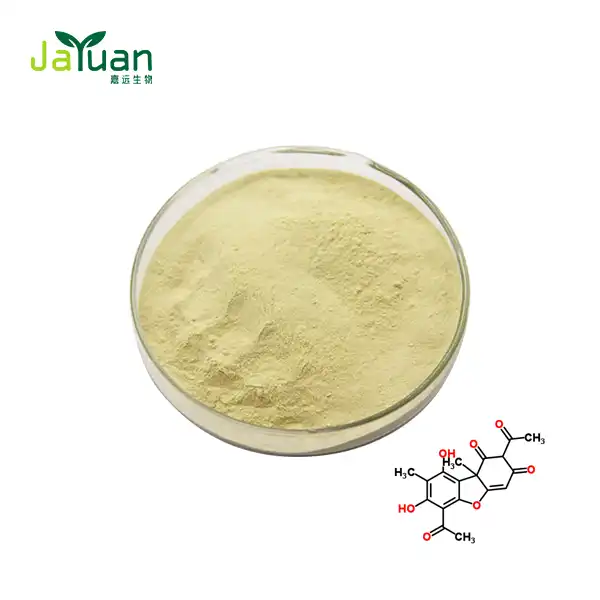
Product Name: Pterostilbene powder
Molecular formula: C₁₆H₁₆O₃
Molecular weight: 256.30 g/mol
CAS number: 537-42-8
Appearance: White to light yellow powder
Purity: usually 98%~99%
Detection method: HPLC detection
Melting point: approximately 89~92 ° C
Water solubility: extremely slightly soluble (requires co solvents such as DMSO or ethanol)
Fat solubility: Easily soluble in organic solvents such as ethanol, DMSO, and propylene glycol
Photosensitivity: Sensitive to light, it is recommended to store in the dark (brown glass bottle or aluminum foil packaging)
Temperature: It is recommended to store at 2-8 ° C (long-term storage) or room temperature for short-term storage
Oxidation: needs to be sealed to avoid oxidation
MOQ: 500G-1KG
Inventory: in stock
Customized service: Support adjusting purity according to customer needs.
GMP standard production lines.
Payment: TT/DP/PAY PAL/VISA/DA/LC/MASTER CARD/ESCROW
Certificaions: FSSC2000/ISO2000/HALAL/KOSHER/HACCP
Delivery terms: FedEx, DHL, EMS, UPS, TNT, all kinds of the airline, international shipping companies.
Free sample is available.
We do not sell retail quantities to individuals.
Understanding Bulk Pterostilbene Powder and Its Market Value
The Chemical Nature and Distinguishing Features
Pterostilbene varies from resveratrol by one important aspect: two of the hydroxyl groups are replaced with methoxy groups. This alteration increases the lipophilicity of the molecule and so allows it to cross cell membranes much more readily. The commercial product is a crystalline, white to off-white powder, tested by HPLC ≥99% purity. While pterostilbene extracted from blueberries produces only tiny quantities at significant expense, the synthetic, nature-identical approach avoids the risk of pesticide contamination and provides constant batch-to-batch quality that industrial customers can truly depend upon.
Bioavailability: Pterostilbene gets its premium above resveratrol. Oral bioavailability has been reported to be ~80% for pterostilbene in many pharmacokinetic investigations compared to ~20% for resveratrol. This allows formulators to reach therapeutic aims at much lower dosages. The elimination half-life tells a similar picture — around 105 minutes for pterostilbene, against 14 minutes for resveratrol — providing it a longer useful window in supplement formulation. Add it the ability to traverse the blood brain barrier, and you have a molecule with applications resveratrol just cannot reach.
Primary Applications Across Industries
The bulk pterostilbene powder is used by pharmaceutical researchers in the investigations of metabolic pathways notably in the work on SIRT1 activation and AMPK signalling. These pathways are crucial to the studies on ageing and to models of metabolic disorders. Many premium cognitive and anti-aging stacks combine pterostilbene with NAD+ precursors such as nicotinamide riboside . The synergism between the two compounds is more effective at boosting mitochondrial activity than either molecule alone.
In cosmetics, pterostilbene’s tyrosinase-inhibiting properties make it useful in skin-brightening and anti-aging formulations. Its lipophilic nature gives it better stability in creams and serums than water-soluble antioxidants, which tend to degrade faster in emulsion systems. Sports nutrition brands are exploring its role in recovery formulas, drawn by preliminary research on insulin sensitivity modulation. Research institutions studying oxidative stress, neuroprotection, and metabolic syndrome require the strictest purity documentation — often ≥99% with full impurity profiling.
Comparative Advantages Over Related Compounds
At the metabolic level the difference is stark when you put pterostilbene next to resveratrol. In first pass metabolism, resveratrol is swiftly conjugated with glucuronic acid and sulphate - basically the liver neutralises most of it before it can do any good. The methoxy groups of pterostilbene block these conjugation sites, preventing further loss of the active molecule. The processes are different from nicotinamide riboside in that NR provides NAD+ precursors directly while pterostilbene increases the activity of NAD+-dependent enzymes such as sirtuins.
From a procurement standpoint, pterostilbene is more cost-effective in most absorption-driven applications. Yes, it is more expensive than resveratrol as a raw ingredient per kg. But the significant story is in the effective dosage range: 50-150 mg for pterostilbene, vs 250-500 mg for resveratrol. In pharmaceutical and premium supplement applications where the API cost is the driver of formulation economics, that dosage advantage generally gives you superior value per completed unit.
Key Factors Affecting Bulk Pterostilbene Powder Procurement Decisions
Purity Levels and Sourcing Origin
Purity is not a single number - it is a profile. Pharmaceutical grades must be ≥99% by EP or USP, but cosmetic grades may be ≥95% provided the impurity profile is well established. What you want in a Certificate of Analysis is much more than a purity %. It should itemise things like trans-isomer content, residual solvent levels, heavy metals (lead, arsenic, cadmium, mercury) and microbiological limits. Heck coupling or Wittig condensation provide more reproducible stereochemistry than extraction from plants, where the isomer ratios might vary from batch to batch.
The technique of powder manufacture is as important as the final assay number. Suppliers using simulated moving bed chromatography for purification obtain a more constant, high-purity output than those using just batch crystallisation, which is more variable. It affects not just price structure and minimum purchase quantities but also purity. If your use of the product is for clinical trial material or pharmaceutical research, you want a source that has verified analytical procedures and stability data to back up their shelf-life claims.
Certification Requirements and Quality Assurance
For pharmaceutical and nutraceutical-grade bulk pterostilbene powder, GMP certification is the baseline. Facilities operating under current Good Manufacturing Practices demonstrate documented quality systems, validated cleaning protocols, and full batch traceability. ISO 13485 issues especially for providers to medical device makers who use pterostilbene in combination goods. Halal and Kosher certifications may open up market access for businesses that serve certain demographic groups.
The finest facilities today include two tracks for quality assurance: real-time monitoring of processes, and total offline analysis. Near-infrared spectroscopy provides the ability to monitor continuously throughout extraction and purification, while HPLC and GC-MS provide precise batch release testing. For long term powder stability a moisture level of below 0.5 % is required. Combined with nitrogen-flushed packaging and good moisture barriers, it extends shelf life beyond three years, a big plus for purchasers who need to hold strategic inventory.
Packaging Formats and Distribution Efficiency
Bulk powder remains the most economical form for manufacturers incorporating pterostilbene into tablets, capsules, or custom blends. Packaging runs from 1 kg aluminum foil bags for R&D labs and small-batch producers up to 25 kg fiber drums with inner liners for mid-volume production. The packaging choice directly affects moisture exposure, oxidative degradation risk, and material handling workflow on your production floor.
Shipping logistics deserve the same scrutiny as product specs. Suppliers offering consolidated freight for multi-product orders reduce both cost and customs complexity. While pterostilbene is stable across normal shipping temperatures when properly sealed, temperature-controlled transport is worth the premium for regions with extreme climate conditions. Lead time varies considerably: stock orders from established suppliers typically ship in 1–2 weeks, while custom synthesis runs can take 6–8 weeks from confirmation to delivery.
Practical Tips for Securing Better Wholesale Deals on Bulk Pterostilbene Powder
Supplier Vetting and Due Diligence Criteria
Good vetting starts before you request a single quote. Verify GMP certificates directly with the issuing body — do not rely on scans attached to an email. Check that business licenses and manufacturing permits are current and cover the facility where your material will actually be produced. Third-party audits from firms like SGS or Intertek carry more weight than self-declarations because they involve unannounced inspections and detailed process verification. References from pharmaceutical or nutraceutical clients who have bought at similar volumes give you real-world insight no certificate can provide.
Technical capability runs deeper than paperwork. Does the supplier have an in-house analytical lab running validated HPLC methods against USP or EP reference standards? DCS-controlled production lines reduce human error and tighten batch-to-batch consistency. Solvent recovery systems achieving 90%+ recapture rates signal both environmental responsibility and cost discipline — factors that translate to more stable long-term pricing.
Negotiation Strategies and Contract Optimization
Walk into negotiations with specific volume projections, not vague “we buy a lot” language. A credible annual purchase commitment gives the supplier revenue predictability, which is your strongest lever for tiered pricing on bulk pterostilbene powder. Pair that with quarterly delivery schedules aligned to your production cycles, and you have a framework that serves both sides — better pricing for you, steady demand for them.
Payment terms are negotiable and worth negotiating. After a track record of on-time payments, moving to net-30 or net-60 terms frees up working capital — a meaningful advantage for growing companies. The trade-off is usually a slight premium on the per-unit price. On the flip side, if the supplier is capital-constrained for raw material purchases or capacity expansion, offering upfront or accelerated payment can unlock discounts that outweigh the financing cost.
Private Label and Custom Formulation Opportunities
Private label programs let you control product specifications while offloading manufacturing complexity. Reputable bulk pterostilbene powder suppliers will customize purity grades, compound blends with synergistic ingredients, or delivery formats — microencapsulated powders for improved stability, for instance. These services add cost but create product differentiation in crowded markets where ingredient innovation drives purchasing decisions.
Custom formulation partnerships are especially valuable for companies without dedicated R&D. Experienced suppliers can troubleshoot solubility challenges, mask bitter notes for flavored applications, or optimize stability in specific matrices. The investment — typically formulation fees plus minimum production commitments — buys you intellectual property and potential market exclusivity. Make sure the contract spells out IP ownership, exclusivity scope, and minimum purchase requirements before development begins.
Comparison and Decision-Making Framework for Bulk Pterostilbene Powder Buyers
Establishing Priority Metrics for Your Business Model
Different buyers need different things, and pretending otherwise leads to bad decisions. Large supplement manufacturers prioritize supply capacity, price competitiveness, and logistics efficiency — they need suppliers who can deliver multiple tons per year with freight networks supporting just-in-time inventory. Price matters, but a price break is worthless if the supplier cannot keep up with your volume. Pharmaceutical companies flip the priority list: purity documentation, regulatory support, and supply chain traceability come first, because the cost of a compliance failure dwarfs any per-kilo savings.
Evaluating Total Cost of Ownership Beyond Unit Price
The per-kilogram price is where the conversation starts, not where it ends. Freight can swing landed cost dramatically — air freight runs 5–8 times ocean freight per unit, which makes sense for urgent restocking but destroys margin on planned purchases. Consolidated container shipments for regular orders deliver the best freight economics. Customs duties, import taxes, and broker fees typically add 8–15% to landed cost on international purchases, with the exact rate depending on tariff classification and destination country.
The hidden costs are the ones that catch new buyers off guard. When a Certificate of Analysis skips key parameters, you pay for the missing tests yourself — plus the inventory carrying cost while samples sit in the queue. Suppliers who provide comprehensive CoAs backed by accredited third-party verification for bulk pterostilbene powder effectively reduce your quality control overhead. Payment terms affect working capital cost too: longer payment windows reduce borrowing needs compared to deposits tied up for weeks before shipment arrives.
Strategic Supplier Selection Balancing Multiple Factors
The perfect supplier profile balances three dimensions: competency, dependability and value. Pharmaceutical grade providers must prove regulatory fluency, process validation and quality systems strong enough to withstand regulatory filings. But they are more expensive to develop and to keep up, and therefore they get higher pricing. GMP accreditation with standard analytical testing provides access to a larger pool of suppliers at more competitive cost for nutraceutical purposes.
Geographic diversity provides low-cost protection against supply chain interruption. If you have qualified suppliers in Asia and Western markets, you have choices when pandemic lockdowns, port bottlenecks or geopolitical crises strike one area. It does require some initial work—you need to validate samples and audit paperwork from different sources—but after that, you can figure out the yearly volume among vendors depending on cost and flexibility at any given moment.
Ensuring Long-Term Procurement Success and Risk Mitigation
Common Sourcing Pitfalls and Prevention Strategies
The most frequent and most avoidable failure in sourcing is a mismatch in specifications. In your purchase order you should specify minimum purity, analytical methodologies, impurities, particle size range and maximum moisture levels. Never assume that the supplier’s “standard” is what you require - their internal spec may not match yours in ways that only become obvious when the material fails to operate as intended.
Inadequate supplier screening is the expensive mistake that compounds over time. Accepting marketing claims without verification skips the most important step in the procurement process. The consequences range from inconsistent quality to regulatory violations and reputational damage. A thorough qualification program — document review, sample testing, and ideally an on-site audit — catches capability gaps before they become your problem. The time and money spent upfront on qualification is a fraction of what problem resolution costs later.
Quality Control Protocols and Third-Party Verification
The examination of incoming material should establish that what has been received is what has promised. At the very least, FTIR spectroscopy or melting point determination validates identity—is this actually pterostilbene and not a surrogate or tainted material? Assay claim is verified by HPLC purity testing against proven techniques. Moisture content analysis for storage of hygroscopic contaminants minimises degradation.
Third party verification is worth every dollar if you are utilising it for high stakes applications or verifying a new bulk pterostilbene powder source. Independent testing packages from recognised labs such Eurofins, SGS and university analytical facilities include heavy metal profiles, microbiological contamination, residual solvent screening and thorough purity analysis. Expect to pay $500–$1,500 for a complete panel. It’s like insurance: the cost of finding a quality issue before you create anything is little compared to the cost of a product recall or regulatory action.
Contractual Safeguards and Supply Security Measures
A well-structured supply agreement removes uncertainty and protects the interests of both parties. It should include quality specs — testing methodologies, acceptance criteria, and a clear mechanism for handling disputes when spec compliance is in question. Pricing arrangements should include base rates, volume discount structures, and adjustment mechanisms for changes in raw material costs, balancing predictability with market realities.
Supply Continuity What Happens When It Goes Wrong? Force majeure provisions provide forth the situations in which duties are suspended and the obligations of the parties during certain times. Minimum stocking standards are in place to guarantee that the provider has inventory in buffer for urgent demands. “Capacity reservation terms make sure that production is allocated even when market conditions tighten and suppliers prioritise orders for high-volume contracts.
Conclusion
Sourcing bulk pterostilbene powder effectively requires technical understanding, disciplined supplier evaluation, and clear-eyed risk management. The compound’s bioavailability advantage and cross-industry applicability — pharmaceuticals, nutraceuticals, cosmetics, research — create sustained demand that rewards buyers who approach procurement strategically. Look past the per-kilo price at certifications, manufacturing capability, and quality infrastructure. Use volume commitments and long-term partnerships as negotiation currency. Protect your supply with detailed specifications, independent verification, and solid contracts. Procurement teams that understand the market dynamics and maintain strategic relationships with qualified suppliers consistently deliver value that supports their company’s product development goals.
FAQ
1. What are the usual minimum order amounts for buying in bulk?
Minimum order quantities vary by supplier and purity grade. Pharmaceutical-grade material typically starts at 25 kg, while cosmetic-grade may go as low as 10 kg. Research-grade quantities (1–5 kg) are available but carry a higher per-unit cost due to handling overhead. Buyers with established annual volume agreements can often negotiate lower minimums on individual purchase orders, giving you inventory flexibility without sacrificing quantity discounts. Shop your requirements across multiple suppliers to find the best fit for your budget and working capital constraints.
2. How can buyers effectively check that a product is pure and real?
Start with a comprehensive Certificate of Analysis that includes HPLC purity results, spectroscopic identity confirmation, residual solvent analysis, heavy metal testing, and microbial limits. Verify the testing lab’s accreditation status and confirm method validation. For critical applications, commission independent third-party testing on initial orders. Simple physical checks like melting point determination provide quick identity confirmation. Track quality data across multiple batches to establish your supplier’s consistency baseline — statistical trends will flag performance drift before it becomes a problem.
3. What kinds of licenses should purchasing teams ask sellers to have?
GMP certification is the essential credential for pharmaceutical and nutraceutical supply, demonstrating quality management systems and production discipline. ISO 9001 covers general quality management capability, while ISO 13485 is specific to medical device component supply. Halal and Kosher certifications expand market access for brands serving specific consumer segments. Look also for analytical laboratory competency documentation, method validation records, and environmental compliance certifications that indicate responsible manufacturing. A comprehensive certification portfolio demonstrates regulatory awareness and operational maturity — both of which reduce your compliance burden downstream.
Partner With Jiayuan Bio-Tech for Premium Pterostilbene Supply
Xi'an Jiayuan Bio-Tech brings together advanced manufacturing infrastructure and comprehensive service for procurement teams that need a dependable bulk pterostilbene powder source. Our facility, strategically located near the Qinling Mountains, operates dynamic countercurrent extraction systems and simulated moving bed chromatography to consistently deliver pharmaceutical-grade purity exceeding 98%. DCS-controlled production minimizes human error, while solvent recovery systems achieving over 90% recapture translate directly into competitive customer pricing.
Quality at Jiayuan Bio-Tech runs on dual-track assurance: real-time near-infrared monitoring during production, plus full HPLC and GC-MS testing for batch release. Every shipment meets EP and USP pharmacopoeia standards. Our ISO and HALAL certifications streamline market access for your finished products globally. We support pharmaceutical-grade (≥99%), cosmetic-grade (≥95%), and custom specifications with flexible minimum order quantities suited to businesses at any scale.
We have worked extensively with research institutions, pharmaceutical companies, nutraceutical brands, and cosmetic formulators, so we understand the different priorities each sector brings to procurement. Our technical team provides formulation support, stability optimization guidance, and regulatory documentation assistance. Direct factory supply means no intermediary markup. Long-standing partnerships with international carriers (FedEx, DHL, UPS) and in-house customs expertise ensure smooth delivery to your facility. For ongoing supply partnerships or project-specific sourcing, contact our team at sales@jayuanbio.com or sales1@jayuanbio.com to discuss your bulk pterostilbene powder requirements and find practical, cost-effective solutions that support your business objectives.
References
1. Kapetanovic, I. M., et al. (2011). "Pharmacokinetics, oral bioavailability, and metabolic profile of resveratrol and its dimethylether analog, pterostilbene, in rats." Cancer Chemotherapy and Pharmacology, 68(3), 593-601.
2. McCormack, D., & McFadden, D. (2013). "A review of pterostilbene antioxidant activity and disease modification." Oxidative Medicine and Cellular Longevity, Article ID 575482.
3. Remsberg, C. M., et al. (2008). "Pharmacometrics of pterostilbene: preclinical pharmacokinetics and metabolism, anticancer, antiinflammatory, antioxidant and analgesic activity." Phytotherapy Research, 22(2), 169-179.
4. Riche, D. M., et al. (2013). "Analysis of safety from a human clinical trial with pterostilbene." Journal of Toxicology, Article ID 463595.
5. Kosuru, R., et al. (2016). "Pterostilbene decreases cardiac oxidative stress and inflammation via activation of AMPK/Nrf2/HO-1 pathway in fructose-fed diabetic rats." Cardiovascular Drugs and Therapy, 30(1), 47-60.
6. Ruiz, M. J., et al. (2009). "Biological activity of natural stilbenes with a focus on modifications enhancing their bioavailability and pharmacokinetic properties." Recent Patents on Food, Nutrition & Agriculture, 1(1), 84-90.