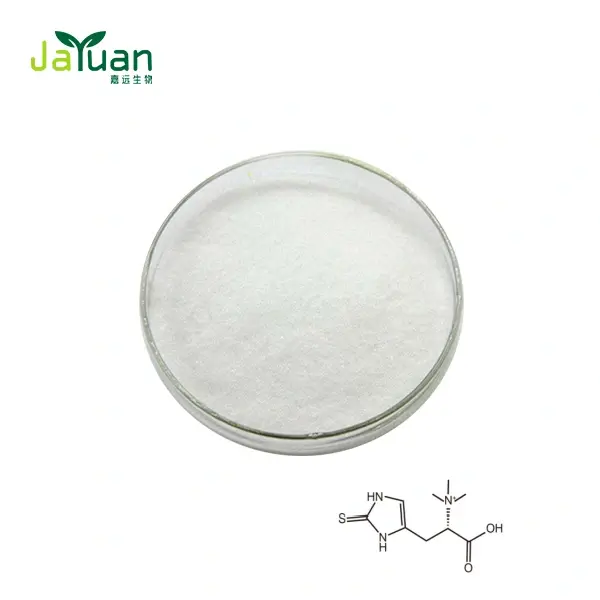

Best Ergothioneine Supplement for Healthy Aging and Wellness
When searching for the best ergothioneine supplement for healthy aging and wellness, discerning buyers prioritize purity, bioavailability, and supplier reliability. An ergothioneine supplement of superior quality delivers targeted cellular protection through a unique amino acid structure that accumulates in tissues exposed to oxidative stress. The ideal formulation combines pharmaceutical-grade purity (≥98%), verified through advanced chromatographic testing, with a manufacturing process that ensures stability and bioactivity. For B2B procurement professionals seeking to develop premium anti-aging products, partnering with suppliers who offer rigorous quality control, flexible customization, and transparent documentation becomes essential to meeting both regulatory standards and market expectations.

Understanding Ergothioneine Supplement: Benefits and Mechanisms
What Makes Ergothioneine Unique Among Antioxidants
L-Ergothioneine is unique among antioxidants in that it has a specific mechanism of entering cells. The human body produces a transporter protein, known as OCTN1, that actively takes this molecule in from sites of oxidative stress, such as the brain, eyes, liver and skin. Unlike many other antioxidants, which scatter throughout the body, this unique absorption technique allows an ergothioneine supplement to reach the cells that need it the most.
The molecular structure of L-Ergothioneine contains a thiol group in its thione tautomeric form which makes it exceptionally stable against auto-oxidation. Compared to glutathione and vitamin C, which rapidly degrade in water, this molecule is stable throughout a broad pH range (3.0 to 9.0) and does not degrade at temperatures up to about 257 °C. This stability translates into the extended shelf life of completed items and their continued functioning in the same manner throughout storage and distribution.
Mechanisms of Cellular Protection and Healthy Aging
Research indicates ergothioneine protects cells in many distinct ways. It chelates divalent metal ions like iron and copper, and so prevents Fenton reactions that produce harmful hydroxyl radicals. An ergothioneine supplement prevents these chain reactions at the start and hence reduces the damage that happens over time to DNA, proteins and cell membranes. This damage accelerates ageing and makes things less useful.
In human tissues, ergothioneine levels decline with age, clinically coinciding with increased levels of oxidative stress indicators. Supplements may assist replenish proper levels of tissue which is important for skin moisture, elasticity and overall cell strength. The compound’s capacity to aid in the protection of mitochondrial function also benefits metabolic health and long term energy output. It’s not about covering up symptoms, it’s about getting to the root causes that promote good ageing.
Safety Profile and Quality Standards
Comprehensive safety investigations have shown that L-Ergothioneine is well tolerated by a broad spectrum of human subjects. Produced by careful microbial fermentation, the molecule is free of animal impurities and conforms to high pharmaceutical criteria with 100% L-isomer stereochemical purity. Production procedures of high quality maintain a purity of not less than 99.0% that can be verified by HPLC. Optical spin between +122° and +128° is required to maintain biological activity and comply with regulatory requirements.
B2B purchasers of products destined for European and North American markets need to source an ergothioneine supplement that fulfils EP/USP pharmacopoeia criteria. Regulatory authorities and informed consumers want a third-party proof, such as reports of analysis for heavy metals, microbiological contamination, and residual solvents, to keep them satisfied.
Comparison of Ergothioneine Supplements and Related Antioxidants
Ergothioneine Versus Glutathione and NAC
Glutathione has been the most popular antioxidant supplement, but it is not very bioavailable when taken by mouth and breaks down quickly in the digestive tract. This makes it hard to make new formulations. An ergothioneine supplement is better absorbed by the body when taken by mouth and is very stable in stomach acid. It gets to target tissues without needing to be liposome-encapsulated or delivered using special systems.
N-acetylcysteine (NAC) is a building block for glutathione but the body can’t make it on its own and levels decrease drastically with age and reactive stress. L-Ergothioneine bypasses this difficulty by being taken up directly into cells via OCTN1 transporters. This means that it is always bioavailable, even if a person’s metabolism varies. This established pharmacokinetic property makes it possible for formulators to create medications that will behave the same in all sorts of patients.
In the cost-benefit analysis, ergothioneine is increasingly tipping the scales in favour of premium brands. The basic ingredients cost more than ordinary antioxidants, but the molecule is effective in smaller doses, is stable long-term and has a nice marketing narrative about research into ageing, so it’s worth the extra cost. The use of ergothioneine as an ingredient can increase the perceived value of a product, while keeping the unit economics intact in a way that favours firms focused on subscription models and high-margin anti-aging sectors.
Natural Sources Versus Purified Supplements
Mushrooms are the greatest dietary source of ergothioneine, however the levels vary a lot depending on the species, the substrate used for growth and the growing circumstances. Wild porcini mushrooms range from 500 to 2,000 mg/kg dry weight, although button mushrooms developed in the lab tend to be 100 to 300 mg/kg. However, for commercial product development, it is difficult to get therapeutic levels (5–30 mg daily) from whole meals.
Fermented foods and spirulina (Arthrospira platensis) also contain a lot, but because they vary from batch to batch, and have lower concentration levels, they can’t be utilised as the major source for consistent supplements. This difference is not seen in pure L-Ergothioneine powder produced by controlled fermentation techniques. It has the same strength, but minimal additives and you may adjust the recipe exactly.
Powder Versus Capsule Formulations
The main possibilities for B2B purchasers building bespoke formulae are raw ergothioneine powder. It is a fine, white to off-white crystalline powder. It is readily soluble in water (>100 mg/mL at room temperature) making it simple to include into beverages, skin serums and multi-ingredient capsule combinations. Pharmaceutical grade powder that is at least 99% pure is more expensive but has the most clear label claims and most applications.
Encapsulated pharmaceuticals are simpler for the end user to dose, but the process of encapsulation adds expense for excipients, encapsulation equipment and quality testing. Finished capsules are good for firms who want to make things easy for consumers and be different on shelf. But ingredient suppliers that want to cooperate with formulators and contract manufacturers often concentrate on high-purity powder forms that offer customers with the greatest alternatives, while keeping their own value chains as simple as possible.
How to Choose the Best Ergothioneine Supplement for Your Business
Critical Supplier Evaluation Criteria
To choose the right manufacturing partner, you need to carefully look at many factors. GMP certification is the minimum requirement, but suppliers that can really be trusted show more qualifications, such as ISO 13485 for medical-grade ingredients and third-party checks by foreign inspection groups. These licenses show that factories follow the rules for keeping things clean, keeping track of batches, and making sure that processes are working right. These rules are necessary to follow the rules in the markets they're aiming for.
In the specific products business, reputation is very important. Companies that have written research agreements, patent portfolios with purification innovations, and long-term partnerships with well-known brands show that they have a lot of technical knowledge and are stable in their operations. When procurement professionals are in charge of managing supply chain risk, they can feel more confident in the quality of their products and the continuity of their supplies when they work with manufacturers who are vertically integrated, which means they grow their own raw materials and clean them up at the end.
Transparency about testing methods is what sets great suppliers apart from good ones. Ask for full analytical documentation, such as HPLC chromatograms that prove the purity, GC-MS profiles that prove there are no solvent residues, and stability studies that prove the product will last in different storage conditions. When suppliers use advanced online monitoring tools like near-infrared spectroscopy during production, it shows that they know how to control the process well, which leads to tighter specification ranges and lower rejection rates.
Product Specifications and Quality Metrics
Both effectiveness and legal positioning are directly affected by purity limits. L-Ergothioneine that is pharmaceutical grade (≥99%) lets health claims be backed up by clinical study and makes it easier for products to get to markets that have strict rules. Cosmetic-grade versions (≥95%) are cheaper for skin uses where a slightly lower purity is enough, but buyers must make sure that any remaining ingredients don't cause sensitization or stability issues.
Pay close attention to the moisture content specifications; products that are properly controlled keep levels at or below 0.5%, which stops breakdown and microbial growth while they are stored. The way powder is handled and how quickly it dissolves depend on the particle size distribution. For most uses, 80% of the powder should be able to pass through 100-mesh screens. The optical rotation readings (+122° to +128°) show that the L-isomer is pure, which is very important because only the L-form has biological function through OCTN1 transport.
Matching Supplier Capabilities to Business Scale
Suppliers that offer small-batch customization and flexible minimum order quantities are good for new brands that are building their first product lines. Being able to buy trial amounts ranging from 1 kg to 5 kg lets you improve formulations and test the market without having to spend a lot of money. When brands get bigger, switching to suppliers who can make 10 tons of goods a year saves them money through economies of scale. This is because large-scale operations have lower unit costs than small-scale ones.
OEM and ODM agreements give brands that don't have their own recipe experts more value. Time-to-market is sped up and technical risk is reduced when suppliers develop the whole solution, from testing for stability to making the finished goods. These deals are especially good for brands that focus on marketing and distribution instead of manufacturing, because they let them use already-built technical infrastructure and regulatory knowledge.
Purchasing Ergothioneine Supplements: Market Options and Procurement Tips
Direct Manufacturer Relationships Versus Trading Platforms
For serious buyers, building direct relationships with manufacturers has a lot of benefits. When you deal directly with production sites, you can negotiate bulk prices, payment terms, and who gets what when there aren't enough supplies. Manufacturers can also offer expert help with formulation problems, legal information that is tailored to specific markets, and early access to new products or chemicals that are being developed as derivatives.
Online business-to-business (B2B) sites are helpful for doing initial research on the market and finding suppliers, but they usually have middlemen who add cost without adding value for smart buyers. The best way to buy something is to look at different platforms during the initial research stage and then work directly with manufacturers once you have a short list of options. This method strikes a good balance between how quickly and deeply relationships can be built, which is important for long-term supply partnership success.
Pricing Dynamics and Negotiation Strategies
Pharmaceutical-grade L-Ergothioneine powder costs between $8,000 and $15,000 per kilogram on the market right now, depending on the size of the order, the purity requirements, and the supplier's capabilities. Materials made for cosmetics are 20–30% cheaper than materials made for pharmaceuticals. Buyers should be aware that very low prices often mean that there are concerns about purity, that the stock is out of date, or that the supplier doesn't have the right certifications. These are all risks that cost more in the long run because of product rejections or regulatory problems.
When you negotiate well, you focus on the total value instead of just the unit price. When suppliers make volume commitments that last for 12 months, they can use tier pricing and see how much demand there is, which helps them plan their production. When you buy more than one thing from the same seller, like ergothioneine along with vitamins or active ingredients that work well with it, you can bundle them together and save money on the cost per unit for the whole box. Being able to offer different payment terms, such as lines of credit for foreign deals, shows that you are financially stable and makes it easier to talk about prices.
Logistics and Regulatory Considerations
When sending pharmaceutical-grade ingredients across international borders, it's important to keep an eye on the temperatures and fill out all the necessary paperwork for customs. Ergothioneine powder stays stable at room temperature, but it stays fresh longer when it's packed in nitrogen-filled packaging, which keeps it from going bad after three years for an ergothioneine supplement. It's a lot easier to buy things when suppliers offer full transportation support, such as help with clearing customs, the right HS code classification, and regulatory paperwork packages.
Before finalizing large orders, it's important to know the rules for the destination market. Novel Foods regulations are very strict in Europe, and U.S. dietary supplement brands have to make sure that their suppliers meet FDA facility registration requirements for materials they send. Because China's rules on foreign goods are always changing, you need to keep your paperwork up to date. The best providers have regulatory affairs teams that know these areas well and can help with pre-import consultations that keep costly compliance mistakes from happening.

Future Trends and Innovations in Ergothioneine Supplementation
Emerging Research and Expanding Applications
Emerging research is expanding ergothioneine applications beyond antioxidant use into brain, eye, metabolic, and healthy-aging markets. Its growing role in drug-development research further increases awareness and category credibility. Brands that translate scientific findings into clear consumer education can better position products and gain an advantage in increasingly sophisticated markets.
Product Innovation and Market Integration
Ergothioneine is expanding into premium skincare products for UV protection, collagen support, and skin-barrier health, creating co-branding opportunities across supplement and cosmetic markets. Nutraceutical innovation also combines it with resveratrol, NAD+ precursors, or mushroom extracts for targeted consumers. Suppliers offering formulation and stability expertise can accelerate product development.
Market Growth Forecasts and Strategic Positioning
The ergothioneine market is projected to grow over 20% annually through 2030, driven by aging populations and rising health awareness. Limited production capacity creates opportunities for scalable infrastructure and preferred supply partnerships. Regulatory developments may streamline approvals, while suppliers with strong safety dossiers and regulatory cooperation can support smoother launches across markets.
Conclusion
To find the best ergothioneine supplement for healthy aging and fitness, you need to carefully look at the supplier's references, the product's features, and how well they fit with your business's goals. This ingredient is at the top of the list for quality anti-aging products because of its unique biological processes, high stability, and growing scientific support. To do business-to-business (B2B) procurement well, you need to work with manufacturers that can show they are technical experts, follow the rules, and have a reliable supply chain. These are the differences between commodity suppliers and strategic partners that can help your brand grow in this fast-paced, growing market.
FAQ
1.What purity level should I specify when ordering ergothioneine powder?
For pharmaceutical-grade uses, the purity must be at least 99.0%, which can be checked by HPLC. This makes sure that food products meant for people work well and follow the rules. For topical uses, cosmetic-grade formulations may accept ≥95% purity, where slightly lower standards are enough. Always ask for analysis certificates that prove purity, optical rotation values that show L-isomer specificity, and tests for heavy metals, bacteria contamination, and solvents that are still present. Higher grades of purity cost more, but they have clearer label statements and are accepted by regulators in more foreign markets.
2.How can I verify a supplier's manufacturing capabilities and quality systems?
Not just self-declared compliance statements, but also proof that the company has GMP and ISO certifications from well-known international reporting bodies. Reliable suppliers give facility audit reports, process flow diagrams that show how the products are made, and batch records that show how the products are the same across multiple production runs. If you can, site visits are a great way to learn about the real working conditions of a factory, how advanced the equipment is, and the quality culture that exists there. References from current customers in similar market segments are a useful way to confirm how well a seller does in terms of on-time deliveries, quick technical help, and the ability to solve problems.
3.What advantages do bulk purchasing agreements offer for ergothioneine procurement?
When you commit to buying in bulk, you can usually get 15–30% off the price compared to buying on the spot. You can also get priority allocation during times of limited supply, which is very important right now because the market is so tight. Suppliers get more information about how production is planned, which helps them use their ability more efficiently and save money, which they share by offering better prices. Customization, expert help, and early access to new products are common parts of long-term agreements. Setting up contracts with staged delivery schedules strikes a balance between the costs of keeping inventory and the benefits of buying in bulk, all while ensuring a steady supply for production planning.
Partner with Jiayuan Bio-Tech: Your Trusted Ergothioneine Supplement Manufacturer
Jiayuan Bio-Tech sells pharmaceutical-grade L-Ergothioneine powder that is more than 98% pure. It is made using modern virtual moving bed chromatography, which makes sure that each batch is the same and that all regulations are followed. Our ISO-certified production sites near the Qinling Mountains, fully integrated supply chain, and unique purification processes make sure that you can always get this hard-to-find ingredient, even when the market is tight. We can handle orders of any size, from small batches for testing to large batches for production. We also offer customized formulations and OEM services, all of which come with full analytical documentation. Our experienced team can help you clear customs in both Europe and North America, and we'll bring right to your building. Email us at sales@jayuanbio.com or sales1@jayuanbio.com to talk about how our ergothioneine supplement supply services can help you make your product faster and better compete.
References
1. Cheah, I.K., and Halliwell, B. (2021). "Ergothioneine, recent developments." Redox Biology, 42: 101868.
2. Ames, B.N. (2018). "Prolonging healthy aging: Longevity vitamins and proteins." Proceedings of the National Academy of Sciences, 115(43): 10836-10844.
3. Gründemann, D., et al. (2005). "Discovery of the ergothioneine transporter." Proceedings of the National Academy of Sciences, 102(14): 5256-5261.
4. Paul, B.D., and Snyder, S.H. (2010). "The unusual amino acid L-ergothioneine is a physiologic cytoprotectant." Cell Death & Differentiation, 17(7): 1134-1140.
5. Halliwell, B., Cheah, I.K., and Tang, R.M.Y. (2018). "Ergothioneine - a diet-derived antioxidant with therapeutic potential." FEBS Letters, 592(20): 3357-3366.
6. Servillo, L., et al. (2015). "An uncommon redox behavior sheds light on the cellular antioxidant properties of ergothioneine." Free Radical Biology and Medicine, 79: 228-236.