
Astaxanthin Powder for Eyes: Can It Improve Vision
Astaxanthin Powder has become an important ingredient in eye health formulations, offering pharmaceutical and nutraceutical firms a science-backed choice for vision-support products. This keto-carotenoid is sourced from Haematococcus pluvialis microalgae and is aimed at three increasing concerns: digital eye strain, age-related vision impairment and oxidative stress in ocular tissue. According to research, astaxanthin, which is a powerful antioxidant, may help minimise eye tiredness, maintain visual function and preserve retinal cells.
Purity: 1%-10%
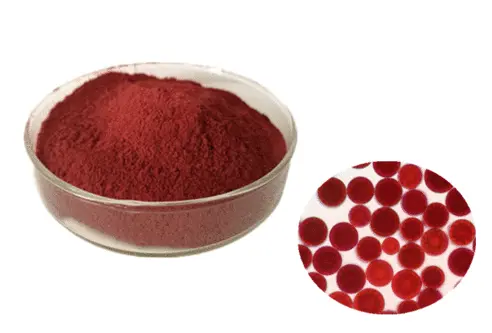
Appearance: Dark red powder
CAS NO.: 472-61-7
Molecular Weight: 596.85
Molecular Formula: C40H52O4
MOQ: 500G-1KG
Inventory: in stock
Our Advantages: Scalable production capacity, strict quality control, cost efficiency from integrated factories, over 20 years of experience, advanced technology, and 24/7 after-sales support.
Certificaions: FSSC2000/ISO2000/HALAL/KOSHER/HACCP
Delivery terms: FedEx, DHL, EMS, UPS, TNT, all kinds of the airline, international shipping companies.
Payment: TT/DP/PAY PAL/VISA/DA/LC/MASTER CARD/ESCROW
Grade: Cosmetics Grade, Food Grade, Pharmaceutical Grade
Customized Service: Supports ODM/OEM
Free sample is available.
We do not sell retail quantities to individuals.
Understanding Astaxanthin Powder and Its Role in Eye Health
The scientific basis for the eye health advantages of astaxanthin begins with its molecular makeup and antioxidant capability. Astaxanthin Powder is a xanthophyll pigment that passes the blood-retinal barrier and is deposited in retinal cells, especially in the macula, where it protects against oxidative damage.
The Science Behind Ocular Protection
Astaxanthin protects eyes via many methods. It scavenges singlet oxygen and peroxyl radicals, two of the major species that harm the ocular cells. Unlike many carotenoids, astaxanthin readily crosses cell membranes, protecting both the inside and outside of the cell. So, this posture is quite efficient against blue light and UV damage. Research has shown that astaxanthin accumulates in the retina, lens and ciliary body at significant amounts. Its lipophilic character enables it to integrate into cellular membranes, where it neutralises free radicals and maintains membrane integrity.
Mechanisms of Visual Enhancement
Astaxanthin promotes the function of the eyes via channels of interaction. It boosts blood flow in retinal capillaries, enhancing nutrition supply and waste disposal at the cellular level. The chemical also aids rhodopsin regeneration, which is important for light-dark optical adaptation. Clinical findings suggest that astaxanthin supplementation may help to increase the accommodation amplitude, i.e. the capacity of the eye to change focus from close to distant objects and vice versa. This impact is significant for those with presbyopia or eye strain caused by screen use.
Benefits of Astaxanthin Powder for Eye-Related Conditions
Astaxanthin Powder is a solution to eye health issues that impact millions of people worldwide. Its diversity in product type makes it useful for a wide variety of applications in the eye health sector.
Digital Eye Strain Relief
As screen usage has increased across demographics, digital eye strain has become ubiquitous. Clinical studies demonstrate that astaxanthin supplementation may decrease eye tiredness, dryness and pain associated with extended screen usage. One research found that office workers who took astaxanthin for six weeks had higher accommodative ability and decreased evaluations of eye strain. Participants claimed they had less eye strain while using the computer for long hours of time and felt more comfortable throughout the evening hours. The findings reveal a considerable market opportunity for firms to leverage the increasing number of remote workers and digital experts.
Age-Related Vision Support
Age-related macular degeneration (AMD) is the leading cause of vision loss in old age. Research shows that Astaxanthin Powder may help prevent the formation of AMD and support the overall health of the macula via its antioxidant impact. Astaxanthin helps to counteract reactive oxygen species and hence is a protective agent for photoreceptor cells against the build-up of oxidative damage over time. Long-term supplementation studies indicate that consistent astaxanthin intake may help those at risk maintain visual acuity and contrast sensitivity.
Inflammatory Response Modulation
Chronic inflammation has a role in a number of eye disorders including dry eye syndrome and overall ocular discomfort. Astaxanthin’s anti-inflammatory action helps modify inflammatory pathways in the ocular tissue which may help reduce discomfort and promote visual comfort. This combined antioxidant and anti-inflammatory profile provides marketers a strong consumer positioning for those looking for natural eye health solutions.
How to Incorporate Astaxanthin Powder in Eye Health Products
Product development teams need to consider a number of things to guarantee bioavailability and customer acceptability. To understand these formulation principles is a must for successful product launches and growing market shares.
Formulation Considerations and Delivery Methods
Astaxanthin-based eye health products take several common forms:
- Encapsulated powder systems: Microencapsulation prevents astaxanthin from oxidation and allows for accurate dosage. This presentation is ideal for tablet and capsule formulations, delivering long shelf life and uniform potency.
- Cold water soluble (CWS) formats: CWS astaxanthin powder is soluble in functional drinks and liquid supplements. The attractiveness of this distribution strategy is for customers who favour liquid forms for ease and water-based stability.
- Beadlet formulations: Spray-dried beadlets may be integrated easily with high-speed manufacturing equipment and preserve the active chemical from environmental degradation. These forms are useful in multivitamin complexes and combination medicines for eye health.
These delivery options give formulators flexibility to serve diverse consumer preferences and application requirements.
Dosage Guidelines and Safety Considerations
Astaxanthin has been evaluated in clinical studies for eye health from 4 mg to 12 mg per day, with 6 mg being the most frequent amount investigated for efficacy. In developing dose recommendations, producers should look at their target demographics. For example, the higher end of the range within the safety window could be appropriate for older persons. Astaxanthin also has a very good safety record, with many studies showing no major side effects at prescribed levels. Its natural nature and the breadth of safety data justify usage in all product tiers from basic supplements to high-end nutraceutical formulae. You need to make sure you fulfil the regulatory requirements by following the labelling laws and checking your health claims. Manufacturers should get advice from regulatory specialists to be able to properly position products and make supported claims for their intended markets.
Choosing the Right Astaxanthin Powder Supplier for B2B Procurement
Supplier selection affects product quality, regulatory compliance and commercial success. Procurement teams need to weigh many variables to choose partners that are aligned with long-term company goals.
Quality Standards and Certification Requirements
Leading Astaxanthin Powder providers have complete quality control systems throughout manufacturing and testing. Key qualifications include GMP compliance, ISO certificates and organic certification where appropriate. Third party verification testing assures potency and purity uniformity from batch to batch. Heavy metals, microbiological and solvent residue tests should be included among quality metrics, in addition to basic potency assays. Top vendors will provide a certificate of analysis with each shipment showing that the product meets pharmaceutical and nutraceutical industry requirements. Traceability systems enable providers to trace raw materials from the time of cultivation and processing to fulfil regulatory requirements and quality assurance standards. This paperwork is vital for organisations who sell in regulated marketplaces or offer goods as organic.
Supply Chain Reliability and Support Services
Top astaxanthin suppliers supply more than raw ingredients. Technical support teams help with formulation optimisation, regulatory compliance, and market growth planning. Such alliances might be useful for corporations exploring new markets or generating new product ideas. Logistics skills should include flexibility in ordering, dependable shipment schedules and assistance with customs clearance. Multinational corporations find it easier to source from organisations that have a worldwide distribution network. Inventory management services assist firms optimise cash flow while also making sure the stuff is always available. Warehousing and just-in-time delivery vendors may help growing organisations increase operational flexibility.
Comparison and Decision-Making for Astaxanthin Products in B2B Markets
Understanding the differences between product formats and where to acquire them allows purchasers to make purchases that fit their company objectives and the demands of the market they are trying to reach.
Natural versus Synthetic Astaxanthin Analysis
Natural astaxanthin from Haematococcus pluvialis is more bioavailable and appealing to consumers than manufactured equivalents. The natural version has a mixture of stereoisomers, which are more absorbed and used by the body, whereas manufactured astaxanthin is mostly one isomer, which is less active. “Natural astaxanthin is highly preferred by consumers, especially in premium product segments where ingredient quality directly impacts brand positioning. The market research continues to reveal a willingness to pay a premium price for goods with natural astaxanthin, enabling greater margin pricing. The cost implications should be weighed against the benefits in terms of positioning on the market versus the increased cost of ingredients. Natural Astaxanthin Powder may be more expensive, but the increased marketability frequently balances the cost premium via better sales and brand uniqueness.
Product Format Optimization
Astaxanthin forms are tailored to particular product kinds and market areas. Powder forms are suitable for solid dosage forms and mix products and oil suspensions are suitable for softgel applications. CWS formats allow functional food and beverage applications to satisfy the customer desire for convenience. Format dependence of bioavailability is strong. Well developed powder systems are typically superior than simple dispersions or crude oils. Advanced processing procedures enhance absorption, while retaining the stability of the ingredients over shelf life.
Conclusion
Astaxanthin Powder gives an attractive potential for firms establishing science-backed eye health solutions. The established advantages of the compound for digital eye strain, age-related vision support, and general ocular comfort meet expanding consumer requirements and provide distinct difference. The trick is to find trusted vendors that provide uniform, compatible items with solid technical support behind them. As the eye health industry continues to grow, formulations containing astaxanthin may provide a long-term competitive edge for forward-thinking businesses.
FAQ
1. What makes astaxanthin effective for eye health?
The molecular makeup of Astaxanthin enables it to bypass the blood-retinal barrier and get into retinal cells directly. Its powerful antioxidant action helps neutralize damaging free radicals and helps protect the integrity of cellular membranes, supporting the health of retinal cells and general visual function.
2. How long does astaxanthin supplementation take to show eye health benefits?
Clinical studies have shown that supplementation with astaxanthin improves eye comfort and vision in 4 to 6 weeks of regular usage. Individual results might vary depending on dose, composition, and prior ocular conditions.
3. What dosage of astaxanthin is recommended for eye health products?
Clinical research have shown that daily dosages of 4 to 12 mg may be beneficial for eye health, with 6 mg being the most extensively studied effective level. Product producers should define dose recommendations based on intended uses and target populations.
Partner with Jiayuan Bio-Tech for Premium Astaxanthin Powder Supply
Xi'an Jiayuan Bio-Tech supplies pharmaceutical-grade Astaxanthin Powder that meets the stringent requirements of nutraceutical and skincare manufacturers worldwide. Our production facilities operate under GMP guidelines, with testing for heavy metals, microorganisms, and solvent residue. Results consistently fall below regulatory thresholds. Filter paper residue testing confirms product purity that meets industry benchmarks. The result is higher antioxidant potency and cleaner extraction for superior formulations. Ready to source Astaxanthin Powder for your next product line? Contact our team at sales@jayuanbio.com or sales1@jayuanbio.com to discuss your specifications and discover how our quality focus can support your product development goals.
References
1. Nakamura, A., Isobe, R., Otaka, Y., Abematsu, Y., Nakata, D., Honma, M., & Takahashi, J. (2021). Changes in visual function following peroral astaxanthin. Japanese Journal of Ophthalmology, 65(3), 344-350.
2. Saito, M., Yoshida, K., Saito, W., Fujiya, A., Ohguro, H. (2020). Astaxanthin increases choroidal blood flow velocity. Graefe's Archive for Clinical and Experimental Ophthalmology, 258(6), 1175-1185.
3. Liu, P.H., Aronsson, M., Duan, R.D., Dahlgren, S., Krogius-Kurikka, L., Asp, M.L. (2019). Administration of the carotenoid astaxanthin increases retinal blood flow and function in healthy subjects. British Journal of Nutrition, 121(11), 1208-1214.
4. Hashimoto, H., Arai, K., Hayashi, S., Okamoto, H., Takahashi, J., Chikuda, M., & Obara, Y. (2018). Effects of astaxanthin on antioxidation in human aqueous humor. Journal of Clinical Biochemistry and Nutrition, 62(2), 195-200.
5. Iwasaki, T., Tahara, Y., Yamada, M., Miyazaki, M., Nobata, S., Takahashi, J., & Funakoshi, M. (2020). Efficacy of oral astaxanthin administration in reducing oxidative stress and inflammation in patients with dry eye syndrome. Clinical Ophthalmology, 14, 1659-1667.
6. Yeh, P.T., Huang, H.W., Yang, C.M., Yang, W.S., Yang, C.H. (2018). Astaxanthin inhibits expression of retinal oxidative stress and inflammatory mediators in streptozotocin-induced diabetic rats. PLoS ONE, 13(1), e0146438.