
Astaxanthin Powder Bulk for Supplements, Foods, and Beverages
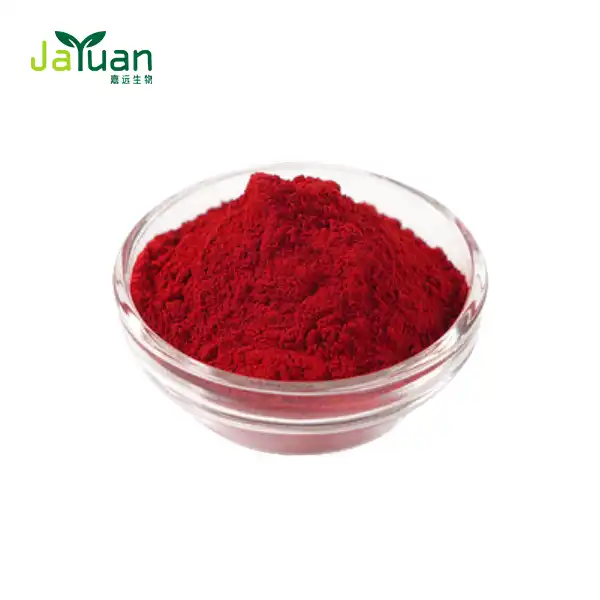
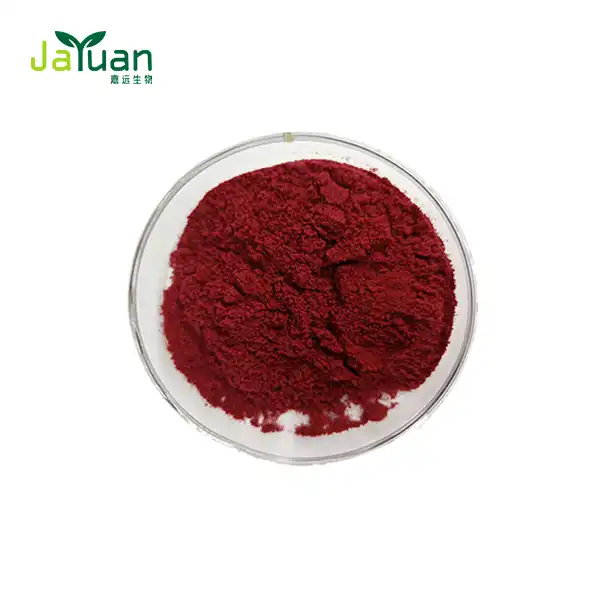
Astaxanthin Powder Bulk is one of the most powerful natural antioxidants available on the market today for finding active ingredients for your next product line. It is a fine powder of dark red to brownish-red colour and is mostly obtained from the microalgae Haematococcus pluvialis. It has a remarkable free radical scavenging potential and hence is widely sought after by supplement producers, functional food creators and beverage companies. Its lipophilic properties and unusual chemical framework with conjugated double bonds, hydroxyl and keto groups allow it to cross the whole bilayer of cell membranes, delivering twofold protection against oxidative stress. For procurement directors and supply chain managers overseeing mass production, knowledge of the technical standards, quality benchmarks and sourcing strategies for this ingredient is the starting point for informed decision-making.
What Is Astaxanthin Powder Bulk and Why It Matters for Your Products
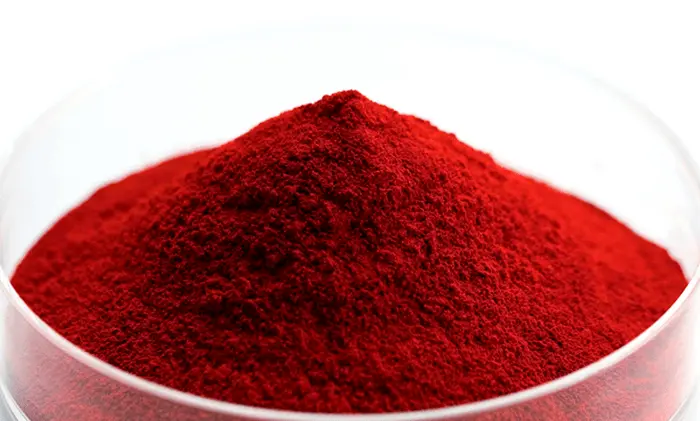
Astaxanthin powder is a powerful natural carotenoid, known to have far greater quantities of antioxidants than both beta-carotene and vitamin E. Beta-carotene does not behave as a pro-oxidant, even at high quantities. This makes it a safer option for a broad variety of items. Our Astaxanthin Powder Bulk has unique lipophilic properties and test requirements from 1% to 5% for microencapsulated beadlets and up to 10 to 20% for pure algal biomass. The transmembrane orientation of this substance may protect all cells which is more attractive for application in food items that target skin health, heart health and inflammation.
Technical Specifications That Define Quality
The physical qualities are highly essential in determining the feasibility of mass manufacturing of astaxanthin powder. The bulk density is typically between 0.4 to 0.7 g/mL which impacts the flowability during automated filling procedures. High grade powders contain “Double-Shell Protection” meaning the primary active ingredient is protected from air and heat by starch or gelatine structures so it stays stable while being stored and distributed. This encapsulation method is highly useful for firms with large stock, it reduces the danger of deterioration and enhances the shelf life to 24 months when kept below 25 o C in sealed containers.
Stereo-Isomer Profile and Bioactivity
Natural astaxanthin powder works biologically based on its stereoisomer structure, mostly the 3S, 3'S form. The biological activity of this particular form is higher than that of the racemic mixture found in manufactured versions. To meet strict quality standards, the biomass or extract powder must have an HPLC test of 1% to 5%, the cell walls must be broken at a rate higher than 98% to make sure it can be digested, and the bacteria load and pheophorbide levels must be strictly controlled. Many tests have been done on our product to make sure it is safe and won't harm anyone. This is very important for brands that care about consumer safety and following the rules.
Comparing Astaxanthin Powder Bulk Options: Choosing the Right Raw Material
To choose the best form of Astaxanthin Powder Bulk, you need to carefully look at the source's legitimacy, purity, and absorption. Natural astaxanthin powder from Haematococcus pluvialis works better and is accepted by more regulatory bodies than manmade options. However, end users may have doubts about how good the powder is. More people want goods with clear labels, which has made ingredient disclosure more important. This has made natural sources more appealing for brands that want to stand out in the market.
Natural vs. Synthetic: What Procurement Teams Need to Know
Astaxanthin powder that comes from nature has the biologically active 3S, 3'S stereoisomer, while synthetic versions usually have a racemic mixture that is less effective as an antioxidant. This difference has a direct effect on how well the product works, which in turn changes the dosage needs and the cost of formulation. Brands that want to sell high-end supplements or functional drinks can benefit from natural sources because they are more bioavailable and consumers trust them. Our filter paper residue test shows that our product is cleaner and freer of impurities than rival products. This means that it has higher extraction purity and stronger antioxidant capacity, which makes it better at removing free radicals.
Microencapsulated vs. Pure Biomass: Formulation Flexibility
There are different kinds of bulk powder, ranging from pure algae biomass with a 10–20% concentration to microencapsulated beads with a 1–5% concentration. Microencapsulation makes things more stable and easier to handle in high-throughput production settings. This is especially true for companies that make capsules and tablets. On the other hand, brands that can make their own formulations can save money by using pure wood. Cold Water Dispersible (CWD) powder types use emulsion technology to make the naturally hydrophobic molecule mix with water. This is an important property for beverage applications where solubility affects how clear the product is and how well customers like it.
Certifications and Specialty Grades
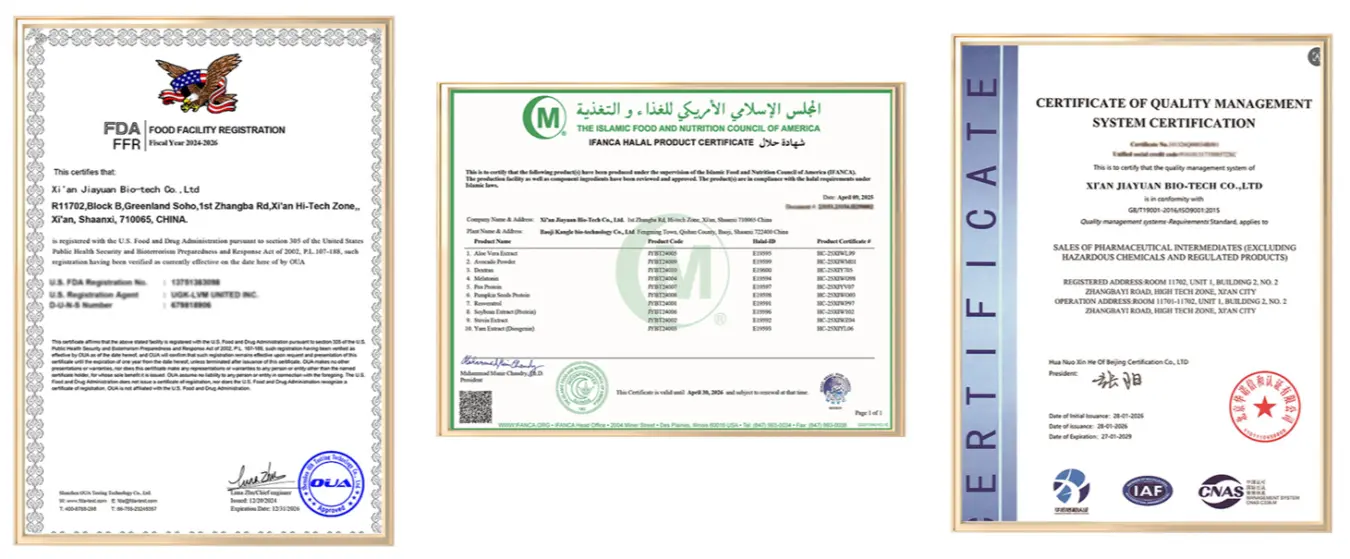
To keep up with changing market needs, you need to pay attention to certifications like organic status, non-GMO verification, and specialty grades that meet Kosher and Halal standards. These credentials not only make it easier to get into many different types of markets, but they also show that the supply chain is honest. Our company has passed product certificates for ISO, SGS, and HALAL, which means that every batch meets international quality standards.
Procurement Guide: Finding and Buying Astaxanthin Powder Bulk for B2B Needs
To buy Astaxanthin Powder Bulk effectively, you need to find sellers who offer strict quality control, clear certification, and reliable logistics. Key factors include meeting FDA standards, being open with Certificates of Analysis (CoA), and being able to offer uniform quality from batch to batch. Knowing the minimum order quantity (MOQ) levels, how prices work, and how to negotiate for ton-level sales can have a big effect on how much they cost and how well the supply chain works.
Evaluating Supplier Credentials
Reliable suppliers keep their production lines up to GMP standards and test their products with state-of-the-art tools to make sure they are pure. Microorganisms, solvent residues, heavy metals, and foreign nucleic acid residues all need to stay within the parameters set by the government. We have two production lines that meet GMP standards, and we keep an eye on where our raw materials come from to make sure that every shipment meets our strict quality standards. Our lab works as an extension of your quality control team and is committed to giving your customers the best healthy ingredients.
Pricing Models and Volume Discounts
There are usually multiple discounts for bulk purchases based on the amount you buy. At 500 kg, 1 ton, and multi-ton levels, you can get big cost savings. There are more benefits to annual framework deals, which lock in good prices and ensure stable supply for long periods of time. Direct factory supply gets rid of markups by middlemen, which lowers the costs of buying things, moving them, and paying customs fees. We store inventory in several locations, so we can fulfilll orders with just a few items. This saves you money on logistics costs that you'll only have to pay for once.
Navigating Shipping and Import Regulations
For cross-border operations to work, you need to pay close attention to rules for packing, keeping things cool while they're in transit, and paperwork needed to get through customs. We work with many foreign shipping companies, including FedEx, DHL, EMS, UPS, TNT, and more, to make sure that your package gets to you on time. Our team can handle clearing local customs for you, even if you have never brought ingredients into the country before. This way, the goods will be sent directly to your facility. At the moment, we offer customs clearance services for Europe, the USA, and other areas. This makes the whole process of buying things easier.
Application of Astaxanthin Powder Bulk in Supplements, Foods, and Beverages
Because it is so flexible, Astaxanthin Powder Bulk can be easily added to a wide range of products, from healthy bars and drinks to pills and tablets. Best practices for formulating take into account how stable and compatible ingredients are so that the product's strength and sensory quality stay the same over time. Figuring out how to use this ingredient's special qualities can help you come up with new products and stand out in the market.
Dietary Supplements: Capsules, Softgels, and Tablets
When it comes to making food supplements, astaxanthin powder is one of the main active ingredients used to support heart health, eye health, and skin health. Depending on the health claim and the regulatory setting, the suggested dose is usually between 4 mg and 12 mg per serving. Softgel encapsulation is very popular because the ingredient is lipophilic, which means that oil-based delivery systems work well to help the body absorb it. Our microencapsulated beadlets work well with tablet formulas because they offer stable content regularity and good flowability during high-speed production runs.
Functional Foods: Bars, Snacks, and Premixes
Functional food makers are adding astaxanthin powder to more and more ready-to-eat foods and superfood premixes. The powder keeps its deep purple-red color and polyphenol profile during processing, even when it is mixed quickly and exposed to moderate heat. Its fine mesh size makes it easy to mix into dry recipes or oil-in-water emulsions. This lets it work as anti-aging and skin-protecting ingredients without changing the way the product feels. Astaxanthin's anti-inflammatory properties help brands that sell sports nutrition products help muscles recover and keep going.
Beverages: RTD Drinks, Smoothies, and Functional Waters
Because of the needs for solubility and stability, beverage uses pose special recipe challenges. Some types of Cold Water Dispersible powder are designed to dissolve 95 to 100% in cold water, making them perfect for clear liquid formulas. This feature is necessary for ready-to-drink functional drinks because clear images and even color distribution have a direct effect on how people see the drinks. The element stays stable during UHT pasteurization, so it keeps its antioxidant power for as long as the product is stored. Taxane-based hydration drinks, beauty waters, and sports recovery drinks have been successful for beverage companies, thanks to the ingredient's clean label appeal and well-known health benefits.
By understanding these use cases, buying teams can better match the standards of ingredients with the needs of production, resulting in better performance and lower costs. If you're having trouble with compatibility testing or scaling up, our technical support team can help you with formulation consultation.
Why Choose Trusted, Certified Astaxanthin Powder Bulk Manufacturers
To keep product quality high, make sure regulations are followed, and support scalable production, it's important to work with certified and experienced manufacturers. The biggest sellers spend money on patented extraction technologies and offer custom services like private labeling that let B2B customers get exactly what they need. Building long-term partnerships with dependable makers increases the openness of the supply chain, lowers the risk of concentration, and ensures a steady return on investment for buying Astaxanthin Powder Bulk.
Certifications That Open Global Markets
Certifications like GMP, FDA, Kosher, and Halal give your business more credibility and make it easier to reach customers in many places. These credentials are proof from a third party that the product is made correctly and that the ingredients are pure. We are committed to meeting world quality standards, as shown by our ISO, SGS, and HALAL certificates. This set of certifications helps your brand enter controlled markets, which cuts down on time-to-market and safety risks.
Advanced Extraction and Quality Control
The best makers use unique extraction methods that increase yield while protecting bioactive compounds' purity. Our production methods use advanced cell-wall-breaking techniques and supercritical CO2 extraction to get extraction purity levels that are higher than the average in the industry. Every batch is tested over and over again for heavy metals, microorganisms, solvent residues, and exogenous nucleic acid residues to make sure it meets strict safety standards. Filter paper residue tests constantly show that our product is more pure, proving that it has higher antioxidant levels and better free radical scavenger abilities.
Value-Added Services for OEM and Private Label Clients
Leading manufacturers do more than just give raw materials. They also offer services that add value, like private labeling, contract manufacturing, and creating unique formulations. With these features, brands can speed up the time it takes to launch a product while still keeping control of the recipe IP. We offer flexible options for bulk orders, free samples for you to try, and expert procurement advice to help you make your choice. Just-in-time shipping is possible with our storage stocking service. This cuts down on the costs of keeping inventory and the capital that is stuck in raw materials.
Long-Term Partnership Benefits
Building long-term relationships with dependable suppliers has many strategic benefits. Consistent quality from batch to batch gets rid of formulation variability, which cuts down on the costs of quality control and rework. Clear lines of contact make it easier to solve problems quickly and keep making things better. Every year, framework deals lock in good prices and make sure that supplies don't run out. This lowers the risks that come with market instability and supply concentration. Our team has a lot of experience, our production processes are stable, and we have high-tech testing and production tools. This makes us a reliable partner for your long-term growth.
Conclusion
To find high-quality Astaxanthin Powder Bulk, you have to balance technical requirements, supplier credentials, and cost concerns in order to get the best product performance and supply chain resilience. Compared to manufactured options, natural astaxanthin powder from Haematococcus pluvialis is more bioactive, accepted by regulators, and liked by consumers. Product safety and effectiveness are guarantyd by strict quality control measures, such as checking the levels of heavy metals, microbes, and extraction purity. Your business will have a better chance of succeeding in the supplement, food, and drink markets if you work with certified makers who offer clear COAs, flexible MOQs, and services that add value. Procurement teams can get consistent quality, good prices, and a supply that can grow with the market by putting a high value on supplier reliability and long-term collaboration.
FAQ
1.What is the recommended dosage of astaxanthin in finished products?
The usual amount of dietary supplements in a serving is between 4 mg and 12 mg, but this can change depending on the health benefit desired and the rules in place. To find a good mix between effectiveness and cost, functional drinks usually have 2 mg to 6 mg per dose.
2.How does natural astaxanthin differ from synthetic versions?
Astaxanthin found in nature mostly has the 3S, 3'S stereoisomer, which is more biologically active and has better antioxidant properties. Synthetic versions have a racemic mix that is less powerful and may be closely watched by regulators in some markets.
3.What certifications should I verify when selecting a supplier?
Check for GMP, FDA, ISO, Kosher, and Halal certifications to make sure the quality of the production and that it follows the rules. To make sure the quality of the batch, ask for Certificates of Analysis for heavy metals, microbial load, test accuracy, and leftover solvents.
4.Is astaxanthin powder stable during processing and storage?
High-quality microencapsulated astaxanthin powder has Double-Shell Protection, which keeps it stable during processing and lets it last up to 24 months in sealed containers kept below 25°C. Stay away from light and temperatures above 40°C for long periods of time.
5.Can astaxanthin powder be used in water-based formulations?
Cold Water Dispersible types use emulsion technology to dissolve 95–100% of the time in cold water. This makes them perfect for making clear drinks and useful waters.
Partner with Jiayuan Bio-Tech for Premium Astaxanthin Powder Bulk
Jiayuan Bio-Tech is ready to help you with your buying needs by providing factory-direct supplies, strict quality control, and full transportation solutions. As a reliable Astaxanthin Powder Bulk seller, we only send products that are certified by ISO, SGS, and HALAL to meet the strictest international standards. Our two GMP-compliant production lines make sure that the quality of each batch is the same, and our high-tech testing tools make sure that the product is pure and effective in a number of ways. We offer a range of flexible bulk order options, starting at tons, as well as free samples for you to try. Our team handles clearing customs in Europe, the US, and other places, so delivery straight to your facility is easy. Contact us right away at sales@jayuanbio.com or sales1@jayuanbio.com to talk about your unique needs, ask for CoAs, and look into custom recipe options. You can find out more about our wide range of natural plant products and OEM processing services at jayuanbio.com. Premium astaxanthin can help you come up with new products, and a reliable, open supply chain partnership can give you an edge over your competitors.
References
1. Ambati, R.R., Phang, S.M., Ravi, S., & Aswathanarayana, R.G. (2014). "Astaxanthin: Sources, Extraction, Stability, Biological Activities and Its Commercial Applications—A Review." Marine Drugs, 12(1), 128-152.
2. Guerin, M., Huntley, M.E., & Olaizola, M. (2003). "Haematococcus astaxanthin: Applications for Human Health and Nutrition." Trends in Biotechnology, 21(5), 210-216.
3. Higuera-Ciapara, I., Felix-Valenzuela, L., & Goycoolea, F.M. (2006). "Astaxanthin: A Review of its Chemistry and Applications." Critical Reviews in Food Science and Nutrition, 46(2), 185-196.
4. Yamashita, E. (2013). "Astaxanthin as a Medical Food." Functional Foods in Health and Disease, 3(7), 254-258.
5. Capelli, B., Bagchi, D., & Cysewski, G.R. (2013). "Synthetic Astaxanthin is Significantly Inferior to Algal-Based Astaxanthin as an Antioxidant and May Not be Suitable as a Human Nutraceutical Supplement." Nutrafoods, 12(4), 145-152.
6. Yuan, J.P., Peng, J., Yin, K., & Wang, J.H. (2011). "Potential Health-Promoting Effects of Astaxanthin: A High-Value Carotenoid Mostly from Microalgae." Molecular Nutrition & Food Research, 55(1), 150-165.