Astaxanthin Powder Bulk: Benefits, Uses, and How It Works
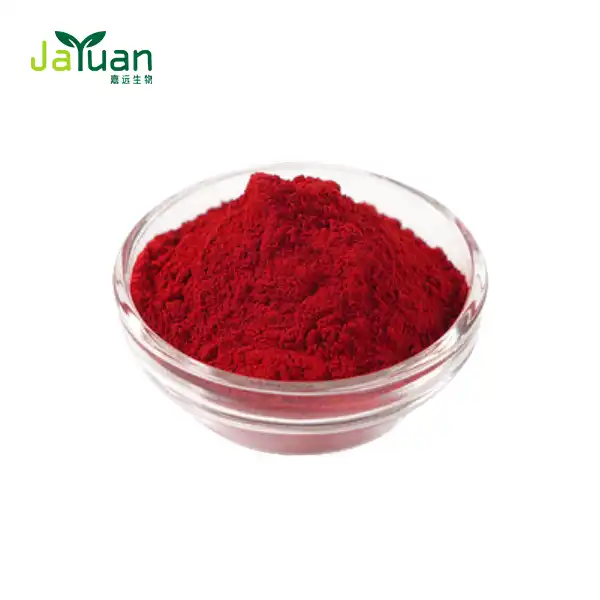
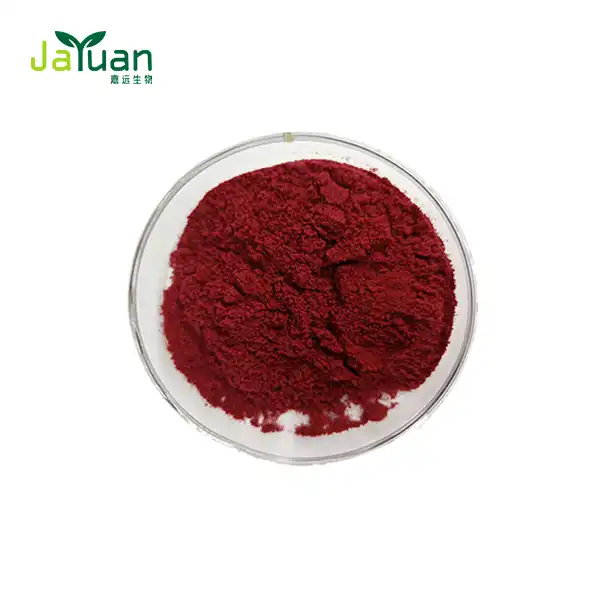
If you are a procurement director or supply chain manager sourcing high-volume antioxidant ingredients, astaxanthin powder bulk deserves a prominent place on your evaluation list. Derived primarily from the microalgae Haematococcus pluvialis via supercritical CO₂ extraction, this keto-carotenoid raw material is widely recognized as the "King of Carotenoids." Its unique molecular structure spans the entire cell membrane, delivering antioxidant protection that surpasses beta-carotene and Vitamin E. This guide walks through what astaxanthin powder bulk is, how it is manufactured, its core benefits, and how to source it intelligently at scale.
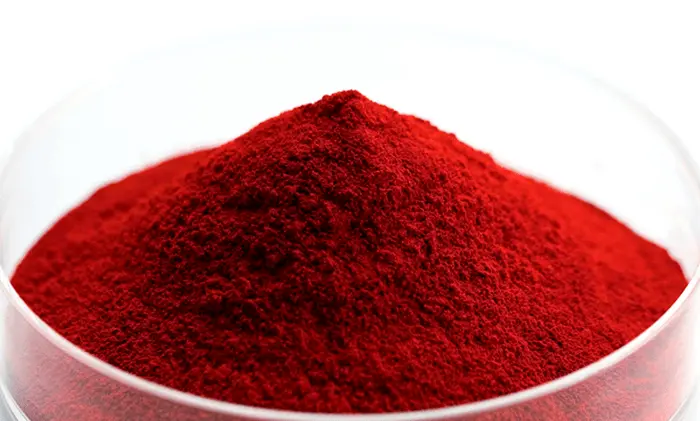
What Is Astaxanthin Powder Bulk and How Is It Made?
Astaxanthin powder bulk is the concentrated form of the keto-carotenoid pigment astaxanthin that has been processed in factories. It is defined for use in B2B manufacturing. Getting to know the product's production process helps purchasing teams judge its quality before agreeing to buy a lot of it.
Natural vs. Synthetic Origin
Haematococcus pluvialis microalgae, which stores astaxanthin under pressure, is the source of natural astaxanthin powder bulk. The natural form is mostly the 3S,3'S isomer in an esterified form, which research shows has better bioactivity than the synthetic racemic mixture. Synthetic forms come from synthetic starting materials and have a mix of stereoisomers that aren't as important in biology. When it comes to food supplements and nutraceuticals aimed at the U.S. market, natural-source material always gets better reviews from customers and regulators.
Supercritical CO₂ Extraction and Purification
Supercritical CO₂ fluid technology is the best way to get oil out of the ground for businesses. This process doesn't use any solvents, so it keeps the astaxanthin molecule intact while getting rid of any leftover solvents. This is a big compliance benefit for companies that make finished goods. After being extracted, the crude oleoresin goes through microencapsulation or beadlet processing to make a standard powder that usually has between 1.0% and 10.0% astaxanthin. This standardization makes sure that formulators can figure out the exact amount of active ingredient to put in softgels, chews, and functional food materials.
At Jiayuan Bio-Tech, our astaxanthin powder bulk goes through strict quality checks. Heavy metals, microorganisms, solvent residues, and exogenous nucleic acid residues are all below the acceptable levels. Our filter paper residue test always shows a cleaner, more impurity-free profile than rival goods. This means that our extract is purer and has a higher antioxidant capacity, which means that it can get rid of free radicals more effectively per gram of input material. Safety and non-toxicity have been proven over and over again through experiments.
Key Benefits and Uses of Astaxanthin Powder Bulk
There are many more uses for astaxanthin powder bulk that go beyond its use as a pigment. Because its molecules can cross the whole lipid bilayer, it can work as an antioxidant on both the inside and outside of cell membranes, which is something that neither Vitamin C nor Vitamin E can do.
Astaxanthin powder bulk is most useful for the following applications:
- Dietary supplement formulations: Softgel and hard-shell pills are the most common ways to give supplements. From 4 mg to 12 mg per day has been shown to work in clinical tests. Using a 2% assay powder, that means 200–600 mg of raw material per dose. This is an easy number to figure out for bulk formulators who are in charge of big production runs.
- Functional gummies and chewable formats: Cold-water-soluble (CWS) beads of astaxanthin powder bulk, usually at a strength of 1% to 2.5%, are mixed into gummy mixtures. Starch or gum arabic is used to surround the active ingredient in these beadlets and keep it from breaking down during processing.
- Cosmeceutical and topical ingredient supply: Astaxanthin powder bulk is used as a strong active ingredient in skin-supporting products. Because it can change oxidative stress at the cellular level, it is a good ingredient for anti-aging and sun protection products.
- Aquaculture feed additives: Astaxanthin works as both a colorant and an antioxidant in aquaculture feed, helping salmon and shrimp get their color while also helping to control oxidative stress.
These application groups show what the market really wants. According to Grand View Research (2023), the global astaxanthin market was worth about USD 1.1 billion in 2022. It is expected to grow at a rate of about 7% per year until 2030, with the nutrition and skincare industries leading the way. As the demand for brand-name supplements grows, procurement teams that source astaxanthin powder bulk are in a good situation to make money.
How to Choose the Best Astaxanthin Powder Bulk for Your Business
Selecting a reliable source of astaxanthin powder bulk requires more than comparing price sheets. When purchasing directors look at suppliers, they should use structured criteria that cover things like quality, compliance, and financial stability.
Purity, Assay, and Certification Standards
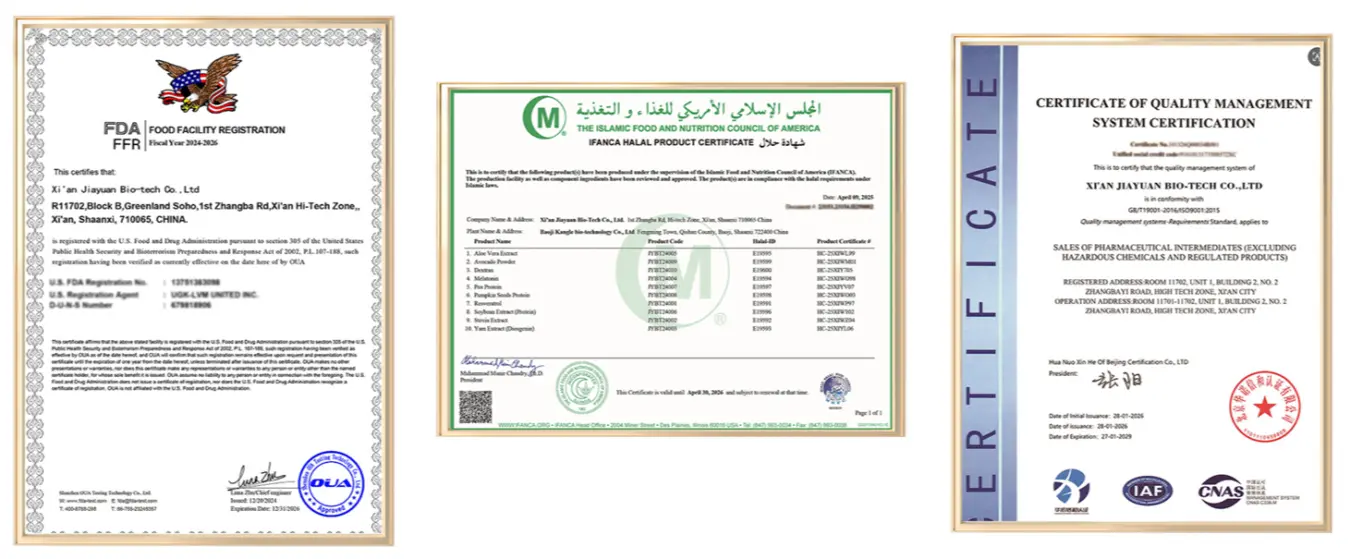
You should ask for a full Certificate of Analysis (CoA) that confirms the astaxanthin test percentage, the heavy metal content, the microbial counts, and the liquid residue levels. A standard of industrial control is provided by suppliers whose production lines are GMP-certified and whose companies are ISO-certified. Our two GMP-standard production lines at Jiayuan Bio-Tech are certified by ISO, SGS, and Halal. This gives buying teams a solid basis for compliance that can be checked.
Natural vs. Synthetic: A Procurement Decision
While natural astaxanthin powder bulk costs more than fake grades, this difference is important for U.S. supplement makers from a business point of view. The usual way to check is to use chiral analysis to separate the 3S,3'S isomer from the manufactured racemic mixture. When looking at natural astaxanthin raw materials, you should always ask for isomer profile data along with the CoA.
Pricing Structure and Volume Agreements
Reputable astaxanthin powder bulk suppliers offer tiered pricing based on volume, with prices starting at 25 kg drum quantities and going up to metric ton commitments. Having annual framework deals with clear price ranges helps procurement teams plan their budgets and lower their risk of being affected by changes in the spot market. Lead times for shipments going to the U.S. can be cut down by a lot for suppliers who keep their inventory in bonded warehouses in key logistics hubs.
Bulk Procurement: Best Practices and Market Insights
A structured method to seller qualification, transportation, and contract terms is necessary for effective large-scale astaxanthin powder bulk buying. Director or VP-level procurement teams usually find what they need by using a mix of trade platforms, industry shows, and direct conversations with suppliers.
For well-known producers, the minimum order quantity for astaxanthin powder bulk is usually 25 kg per SKU, with volume savings starting at 100 kg and up. For U.S. importers, suppliers who have experience with FDA-compliant paperwork, helping with customs clearance, and keeping records that are in line with FSMA cut down on administrative work a lot. Jiayuan Bio-Tech works with foreign shipping companies like FedEx, DHL, UPS, EMS, and more. They also help with customs clearance for the U.S. market and send products directly to buyers' facilities so buyers don't have to handle import logistics on their own.
When purchasing astaxanthin powder bulk from a single source, supply concentration risk is a real issue. Purchasing plans that include secondary seller approval and keep safety stock levels equal to 60–90 days of consumption offer real protection against problems with shipping or changes in production during certain times of the year.
Conclusion
Astaxanthin powder bulk has a strong place in the global market for antioxidant ingredients. Its bioactivity has been proven, its use in new ways is growing, and consumers in the U.S. supplement sector continue to demand it. It's easy for procurement directors and supply chain leaders to make decisions: choose suppliers who offer confirmed purity, GMP-certified manufacturing, clear assay paperwork, and transportation infrastructure that can handle large, regular orders. Quality of the ingredients affects the integrity of the end product, and that responsibility starts with the choices made earlier in the process about where to get the ingredients.
FAQ
1.How do you distinguish natural astaxanthin powder bulk from synthetic?
The usual way to do it is with chiral analysis. Astaxanthin found in nature is mostly the 3S,3'S isomer and comes in the form of an ester. A racemic mixture of isomers makes up synthetic material, which is mostly free (unesterified). As part of the supplier documentation, you should always ask for the isomer profile.
2.What is the shelf life and proper storage condition?
Most things can be kept for 24 to 36 months. Light and air can damage astaxanthin, so it needs to be kept in vacuum-sealed aluminum foil below 25°C or in the fridge at 4°C to keep its effectiveness from fading over time.
3.Is astaxanthin powder bulk Non-GMO and vegan?
Most of the time, Haematococcus pluvialis-derived materials are non-GMO and vegan. But the final vegan status of beadlet forms depends on the packaging carrier—gelatin or starch. Before ensuring that your product line is vegan-friendly, ask for the full carrier formula sheet.
4.What assay percentage is standard for supplement manufacturing?
Most commercial grades fall between 1.0% and 10%. To get 4 mg of active astaxanthin per dose from a 2% assay powder, 200 mg of raw material is needed. This is a typical measurement standard for making softgels and gummies.
Source Astaxanthin Powder Bulk With Confidence — Request a Quote From Jiayuan Bio-Tech
Jiayuan Bio-Tech is a verified astaxanthin powder bulk manufacturer and supplier with GMP-certified production lines, ISO and SGS certifications, and direct logistics support for buyers in the United States. Our factory-direct pricing, tiered volume structures, and customs clearance services get rid of all the problems that come up during the buying process. Get in touch with our team right away to ask for a sample, a CoA, or to talk about an annual supply agreement. Email us at sales@jayuanbio.com or sales1@jayuanbio.com, or go to jayuanbio.com to see our full list of products.
References
1. Grand View Research. Astaxanthin Market Size, Share & Trends Analysis Report. 2023.
2. Guerin, M., Huntley, M. E., & Olaizola, M. Haematococcus astaxanthin: applications for human health and nutrition. Trends in Biotechnology, 2003.
3. Nishida, Y., Yamashita, E., & Miki, W. Quenching activities of common hydrophilic and lipophilic antioxidants against singlet oxygen using chemiluminescence detection system. Carotenoid Science, 2007.
4. Shah, M. M. R., Liang, Y., Cheng, J. J., & Daroch, M. Astaxanthin-producing green microalga Haematococcus pluvialis: from single cell to high value commercial products. Frontiers in Plant Science, 2016.
5. Fassett, R. G., & Coombes, J. S. Astaxanthin: a potential therapeutic agent in cardiovascular disease. Marine Drugs, 2011.
6. Yuan, J. P., Peng, J., Yin, K., & Wang, J. H. Potential health-promoting effects of astaxanthin: a high-value carotenoid mostly from microalgae. Molecular Nutrition & Food Research, 2011.