Pure Melatonin Reviews: Key Features Before You Buy
In pharmaceutical manufacture, supplement formulation, and laboratory research, material quality affects product quality. Pure melatonin is a popular sleep support chemical in the B2B market, and finding the proper source is more important than most customers realise. Quality and registration teams should consider purity criteria, COA paperwork, supplier audits, and procurement logistics before making a bulk purchase. This review covers everything they need to make an informed choice.
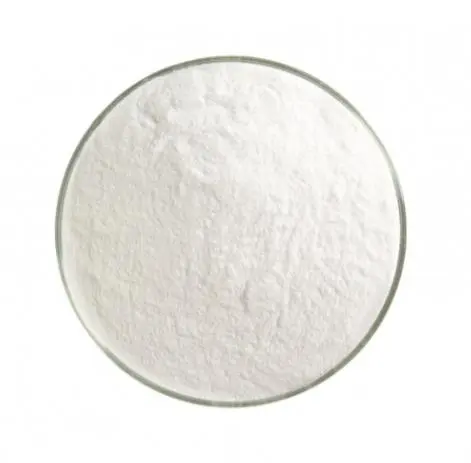
Understanding Pure Melatonin – What It Is and How It Works
Chemical Identity and Origin
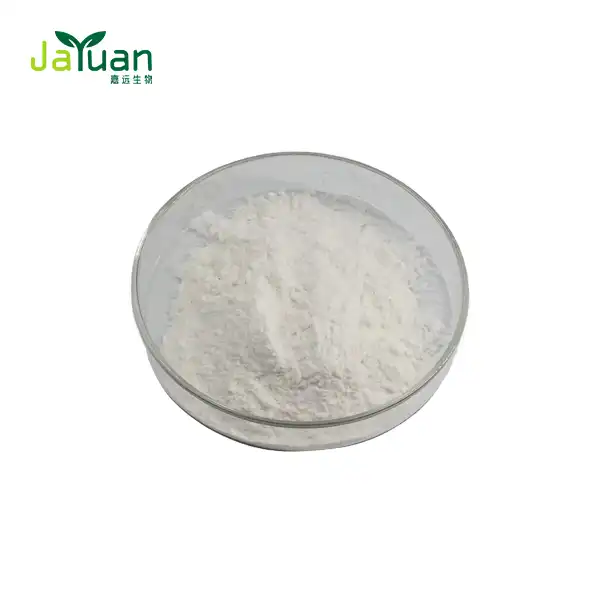
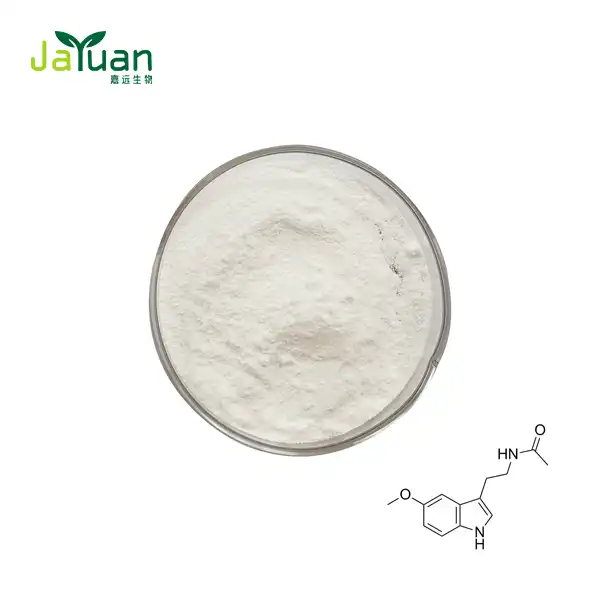
Pure melatonin is N-acetyl-5-methoxytryptamine (CAS 73-31-4), a white to off-white solid powder synthesized from tryptophan-derived substances. A melting point of 117°C to 120°C is the major purity indicator of pharmaceutical-grade batches. For business-to-business buyers, synthetic phytomelatonin is better than plant-based phytomelatonin because it is consistent from batch to batch, vegan-friendly, and comes with paperwork that can be tracked, all of which are needed for GMP production lines.
Physiological Role in Circadian Regulation
The pineal gland releases melatonin when it becomes dark, signalling the body to prepare for sleep. Melatonin changes the circadian phase and shortens sleep onset latency, according to Sleep Medicine Reviews. This established method supports strong label claims in sleep aid pill lines without over-promising therapeutic effects, as regulatory authorities need for ingredient buyers.
Safety Profile and Formulation Considerations
Several pharmacopeial investigations have found normal ingredient levels of pure melatonin powder safe. The formulation method is linked to physicochemical properties like poor water solubility (0.1 mg/mL) and high ethanol solubility. Immediate release capsules, controlled release tablets, sublingual strips, and gummy matrices need different particle sizes and excipients. Preventing costly reformulation requires specifying the powder grade at purchasing.
Comparing Pure Melatonin with Other Sleep Aid Ingredients
Synthetic Melatonin vs. Phytomelatonin
In purity, regulatory clearance, and cost predictability, synthetic melatonin powder always outperforms phytomelatonin extracts. Variable co-extract profiles from phytomelatonin sources complicate COA documentation and cause USP 43 related-substance failures. A pharmaceutical or high-end supplement specification sheet should demonstrate at least 99% purity and no known limits on contaminants such 1,1'-Ethylidenebis(tryptophan), which has been linked to eosinophilia-myalgia syndrome.
Dosage Form Comparison
For solid oral dosage (IR/XR tablets, capsules): standard crystalline powder with steady bulk density suitable for direct compression; equal particle distribution prevents dose separation in micro-dose formulations.- Sublingual & ODT forms: Micronized powder (d90 < 20 µm) allows for rapid mucosal absorption, avoiding first pass metabolism, vital for fast acting sleep aids.
- Functional drinks and liquid drops:Liposomal encapsulation or cyclodextrin inclusion complexes are needed because the ingredient doesn't like water.
- Oral solid dosage (IR/XR tablets, capsules): Standard crystalline powder with consistent bulk density to support direct compression; uniform particle distribution prevents dose segregation in micro-dose formulations.
- Sublingual and ODT formats: Micronized pure melatonin powder (d90 < 20 µm) supports rapid mucosal absorption, bypassing first-pass metabolism — critical for fast-onset sleep-aid products.
- Functional beverages and liquid drops: Liposomal encapsulation or cyclodextrin inclusion complexes are required due to the hydrophobic nature of the ingredient.
- Cosmeceutical night creams and serums: The antioxidant activity of melatonin makes it applicable in topical anti-aging formulations, requiring pH-controlled bases (4.0–5.0) to prevent oxidative degradation.
Using the proper powder standard at time of purchase, reduces reformulation cost and accelerates time to market. The varied forms mentioned also have variable particle size, moisture content and packing requirements. It is crucial to review these in the COA before signing a provider contract
Herbal Alternatives and Their Limitations
Valerian root, passionflower and L-theanine are all natural sleep aids but they don't have the same regulatory definition and set amount as pure melatonin does. Quality teams responsible for product registration have far less of a challenge supporting an ingredient that has USP 43 and EP 10.0 pharmacopeial monographs via dossier submissions than supporting a botanical extract that has varied ranges of active compounds.
Procurement Guide – How to Source Melatonin Ingredient in Bulk
Supplier Qualification Criteria
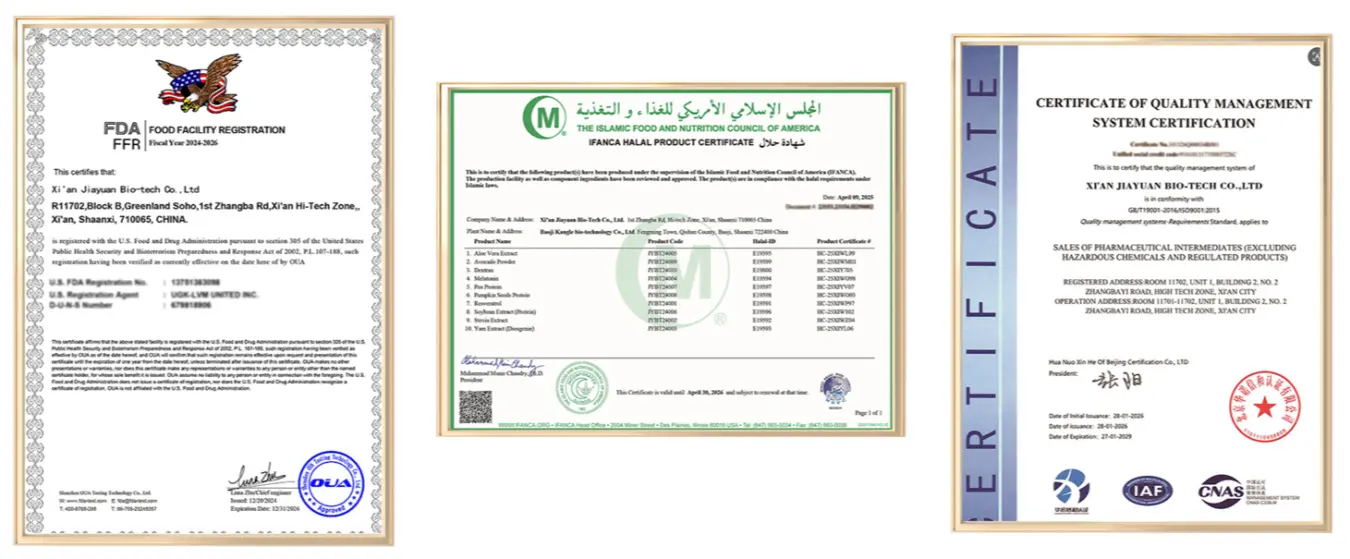
Before you place a large order for pharmaceutical-grade melatonin powder, your quality team should make sure that each potential provider can do the following:
- GMP certification aligned with FDA 21 CFR Part 211 or EU GMP Annex 1
- ISO certification (ISO 9001 at minimum; ISO 13485 for medical-grade supply chains)
- Full COA covering: assay purity, related substances, heavy metals (Pb < 1 ppm, As < 1 ppm), loss on drying (≤1.0%), residue on ignition (≤0.1%), and melting point
- Third-party laboratory verification from SGS, Eurofins, or equivalent
These four requirements must be met by all pharmaceutical or high-quality supplement ingredients. If a supplier can't give you all four within a reasonable amount of time, they probably can't meet the documentation needs of your registration team.
Pricing, MOQ, and Shipment Terms
The price of melatonin in bulk varies on its quality and on how much you buy. Pharmaceutical-grade (≥99%) is more expensive than cosmetic-grade (≥95%) because of stricter manufacturing criteria. You purchase manufacturer direct so you do not pay distributor markups and you get the unit cost significantly cheaper. Ask for pricing comparison between FOB and CIF. Make sure that the photosensitive ingredient is packed in nitrogen-filled, light-resistant packaging for transportation. The product should be guarantied to last at least three years if kept properly (cold, dry and out of the sun).

Customs and Logistics for US and EU Markets
If you want to bring melatonin ingredients into the US, you need to get the right HS code and FDA facility registration paperwork from the seller. EU buyers must make sure that the supplier has an EU GMP certificate or a certificate that is accepted by the EMA as being comparable. Choosing a supplier who knows how to clear customs in both the US and the EU lowers the chance that your shipment will be late. As a normal shipment package, make sure the seller includes business invoices, packing lists, a certificate of analysis, and proof of country of origin.
Trusted Suppliers of Pure Melatonin – What to Look For
Certifications and Audit Transparency
A trustworthy company that makes melatonin powder should keep their GMP and ISO 13485 certifications and be open to facility audits. Third-party inspection notes from SGS or Eurofins and online audit records are more reliable than quality claims made by the company itself. Before making a big commitment, look for suppliers who are willing to share batch-specific COA data and offer reference samples.
Private Label and Custom Manufacturing
Some customers demand melatonin ingredient matching to a certain particle size, moisture content or packaging requirement. Suppliers with flexible manufacturing lines can manage both cosmetic-grade (≥95%) and pharmaceutical-grade (≥99%) output, as well as small-batch bespoke orders to create new products. This provides you additional alternatives as your product line expands or when a new recipe demands a guideline that is not typical.
Long-Term Supply Stability
Supply that stays steady is just as important as quality at first. Vertically integrated suppliers, whose supply lines include controlled buying of raw materials, can handle changes in market prices better than those who buy on the spot market. A 10-ton-per-year production line spreads out fixed costs and makes unit prices 40–60% lower than those of a small workshop. Make sure you know the yearly production capacity and wait times for inventory before you sign supply deals.
Conclusion
To find pharmaceutical-grade pure melatonin ingredient, you need to do more than just compare prices. Your quality team needs to see proof of purity (≥99%), a full COA that meets USP 43 standards, confirmed heavy metal limits, and supplier paperwork that helps your registration files stay in order. Often, the difference between a source who follows the rules and one who doesn't is seen in how full the paperwork is before it shows up in the product itself. The best way to build a low-risk, long-term sourcing relationship is to match your specification needs with a provider that has GMP/ISO certifications, third-party testing support, and stable supply capacity.
FAQ
1. Is pharmaceutical-grade melatonin powder safe for supplement manufacturing?
Yes. Pharmaceutical-grade melatonin powder that meets USP 43 and EP 10.0 monograph specifications has an established safety profile for use as a supplement ingredient. The key is confirming that the COA shows compliant limits for related substances, heavy metals, and residual solvents. Always request batch-specific test data from the supplier.
2. What is the difference between 99% and 98% purity grades?
The 1% difference in assay may appear minor, but the regulatory and formulation implications are significant. At ≥99% purity, the ingredient qualifies for pharmaceutical dossier submissions and premium supplement labeling. The 98% grade may carry higher levels of related substances that complicate stability studies. For pharmaceutical-grade input material, always specify ≥99%.
3. How should bulk melatonin powder be stored?
Store in sealed, nitrogen-filled, light-resistant containers at room temperature (15–25°C), away from moisture and direct light. These conditions maintain potency and support a verified shelf life of over three years.
Partner with Jiayuan Bio-Tech for Your Melatonin Ingredient Supply
Jiayuan Bio-Tech is a reliable company that makes pure melatonin. They have GMP and ISO 13485 certifications, and their products are assay-confirmed to be ≥99% pure. They also offer full COA paperwork and third-party testing help from SGS/Eurofins. Our factory-direct prices and nitrogen-sealed packaging keep the quality of our ingredients safe from the time they are made until they get to your facility. We clear customs for both the US and the EU, so your buying process stays on track. Email our team at sales@jiayuanbio.com, sales1@jiayuanbio.com, or jayuanbio.com to get a sample or talk about bulk prices.
References
1. Brzezinski, A. (1997). Melatonin in humans. New England Journal of Medicine, 336(3), 186–195.
2. Ferracioli-Oda, E., Qawasmi, A., & Bloch, M. H. (2013). Meta-analysis: Melatonin for the treatment of primary sleep disorders. PLOS ONE, 8(5), e63773.
3. Hardeland, R., Madrid, J. A., Tan, D. X., & Reiter, R. J. (2012). Melatonin, the circadian multioscillator system and health. Journal of Pineal Research, 51(1), 21–52.
4. United States Pharmacopeia. (2020). USP 43–NF 38: Melatonin Monograph. United States Pharmacopeial Convention.
5. Arendt, J. (2006). Melatonin and human rhythms. Chronobiology International, 23(1–2), 21–37.
6. European Medicines Agency. (2018). Assessment report on melatonin — EMA/HMPC/55082/2011. Committee on Herbal Medicinal Products (HMPC).