
Pure Melatonin for Shift Workers: Aligning Sleep With Your Schedule
Shift work disrupts the body's natural rhythm, leaving millions struggling to find restful sleep during daylight hours. Pure melatonin has emerged as a scientifically supported solution for workers navigating irregular schedules. This bioidentical hormone helps recalibrate circadian rhythms disrupted by non-traditional work hours, offering pharmaceutical-grade support when the body's internal clock conflicts with occupational demands. Understanding how high-purity melatonin powder works and selecting quality-assured sources becomes essential for wellness programs targeting shift worker populations across healthcare, manufacturing, and transportation industries.

Understanding Pure Melatonin and Its Role in Sleep Regulation
The Biochemistry Behind Circadian Rhythm Control
As nite falls, the pineal gland makes melatonin, which tells the body it's time to rest. Shift workers have to be alert during times when melatonin levels naturally rise because of their work schedules. By supplying exogenous hormone support that rebalances sleep-wake cycles with erratic work schedules, pure melatonin supplements address this conflict. Pharmaceutical-grade melatonin powder has a constant potency that is important for expected results in workplace health uses. This is in contrast to mixed formulations that contain fillers or concentrations that change.
Distinguishing Pharmaceutical-Grade From Standard Formulations
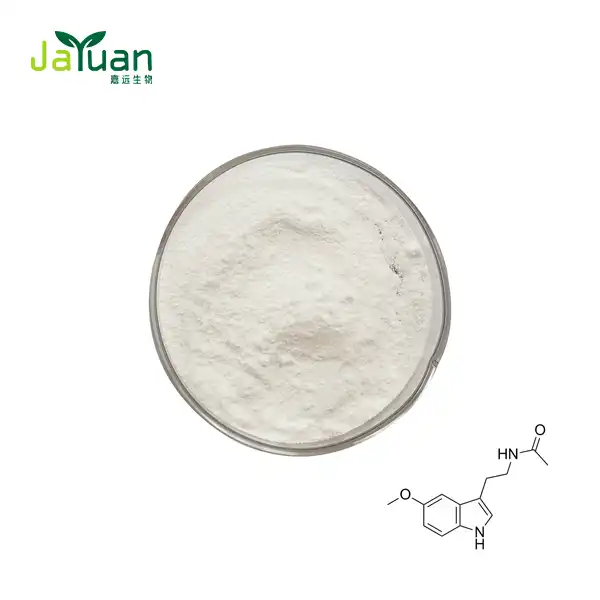
Differentiating quality is a big deal when it comes to B2B buying choices. According to HPLC assay tests, pure melatonin powder that meets USP43 monograph requirements has purity values of 99.5% or higher. The melting point of this solid white powder is between 116°C and 118°C. It goes through a strict heavy metals screening process using ICP-MS, making sure that the overall amounts of lead, arsenic, cadmium, and mercury stay below 10 ppm. Testing for microbial contamination confirms that E. coli and Salmonella, which are important for formulas that are going into health programs at work. These details set professional-grade ingredients apart from consumer pills that might have fillers that aren't listed.
Why Shift Workers Require Specialized Sleep Support
Schedule changes, nite shifts, and odd hours make it so that environmental cues and biological programming are constantly out of sync. Thirty to forty percent more shift workers have trouble sleeping than day shift workers, according to research. Pure melatonin supplements can help close this gap by sending hormones at the right time, which makes it easier to fall asleep even in the presence of light. When procurement professionals understand this process, they can see why the purity of the ingredients and the regularity of the batches have a direct effect on how well company health programs work.
Practical Guide to Using Pure Melatonin Safely and Effectively
Dosage Considerations for Different Shift Patterns
To use melatonin effectively, the dose needs to be adjusted to fit the shift schedule. People who work the nite shift and are switching to daytime sleep usually feel better after taking 3–5 mg 30 minutes before bedtime. If you work rotating shifts, you may need to change the times of your meals so that they happen before each sleep period, no matter what time it is. The important thing is to make sure that the administration is always done during the planned rest periods and not at the same time every day. Quality control with Certificate of Analysis paperwork makes sure that each batch gives the right dose, getting rid of any variation that could hurt program results.
Timing Strategies That Maximize Effectiveness
To get the maximum benefits, give the medicine 30 to 60 minutes before bedtime so that it has time to be digested and dispersed before you attempt to sleep. Workers should take melatonin in addition to environmental adjustments such as blackout curtains, reduced temperature and no blue light. This multi-modal approach utilises the hormone’s intrinsic sleep promoting properties in humans, as well as external influences that may inhibit sleep throughout the day. When acquiring melatonin powder in bulk, purchasing teams should search for vendors who provide micronized forms that dissolve more rapidly. This is particularly critical for sublingual delivery systems that need rapid mucosal absorption.
Safety Protocols and Special Populations
Melatonin pills are normally well-tolerated, however your specific health situation should be considered. Workers who use drugs that suppress the immune system, impact blood coagulation or assist manage diabetes should check with their physicians before commencing supplements. Synthetic manufacturing techniques provide for long term safety data to support extended usage without the danger of viral transmission that accompanies glandular extracts from animals. Good product manufacturers ensure that the Loss on Drying is less than 0.5% and that nitrogen-flushed packaging is used to prevent the powder from going bad in the three to five years that it should be maintained in suitable conditions.
Comparing Pure Melatonin to Other Sleep Solutions for Shift Workers
Evaluation of Alternative Natural Supplements
Other options to aid shift workers with sleep issues include valerian root, magnesium and CBD. Valerian provides some minor relaxing effects, but it doesn't offer the circadian-specific advantages that melatonin does. Magnesium helps muscles relax, but doesn’t influence how hormones signal the body to sleep. CBD might potentially benefit those with anxiety-induced insomnia but it has to be taken at greater levels and there are regulatory issues. Pure melatonin isn’t the same and operates on the SCN (suprachiasmatic nucleus) receptors that regulate circadian clock. This makes it appropriate for schedule-related sleep disorders, rather than stress-related insomnia.
Bulk Powder Versus Finished Formulations
Buying melatonin powder in bulk has a lot of benefits over buying capsules that have already been made. When bought in 10 kg amounts, pharmaceutical-grade powder costs 40–60% less per gram than encapsulated products, showing how much more cost-effective large quantities are. Powder can also be stored in cases that are sealed, don't let light in, and keep wetness out for long periods of time. Formulation teams can make custom delivery systems, like sublingual pills, liquid concentrates, or time-release matrices, that meet the needs of their unique workforce thanks to the ability to customize. This ability to adapt is very helpful when dealing with different shift patterns within the same company.
Formulation Engineering Considerations
Because melatonin is lipophilic, it can be hard to dissolve and requires technical know-how. Water solubility is very low, about 0.1 mg/mL. For liquid formulations, cosolvents like ethanol or propylene glycol are needed. Micronized pure melatonin powder gets around this problem by making the particles smaller (D90 < 10 microns), which greatly increases the surface area for better breakdown. When manufacturers use virtual moving bed chromatography, they can keep making things continuously while keeping the purity level above 98%. This is important for making sure that batches are all the same in controlled manufacturing settings.
Procurement Insights for Bulk Purchasing of Pure Melatonin
Knowing how the market works helps you choose a supplier and get the best prices. Melatonin is mostly made in places that already have a pharmaceutical manufacturing system and are regulated by the government. These technical advantages lead to procurement benefits that are worth looking into.
Critical Supplier Selection Criteria include:
- GMP Certification and Compliance Documentation: Suppliers maintaining current Good Manufacturing Practice certifications demonstrate systematic quality control. Dual quality assurance combining real-time near-infrared spectroscopy monitoring with offline HPLC and GC-MS testing ensures pharmacopoeia compliance with EP and USP standards. ISO 13485 certification signals capability to meet medical device component requirements applicable to certain wellness applications.
- Third-Party Verification Protocols: Independent testing through SGS or Eurofins provides unbiased confirmation of COA claims. Heavy metals analysis, residual solvents testing per USP Chapter 467, and microbiological screening should accompany each batch. Suppliers offering routine third-party validation demonstrate transparency that mitigates supply chain risk for procurement teams answerable to quality and regulatory departments.
- Process Technology and Scale Capabilities: Advanced extraction methods employing dynamic countercurrent extraction or ultrasonic-assisted processing achieve 30-50% higher efficiency than traditional immersion techniques. Automated DCS systems precisely regulate pH, temperature, and solvent ratios, minimizing human error while ensuring batch consistency. These technological investments translate to reliable supply capable of meeting demand fluctuations without quality compromise.
- Supply Chain Integration and Raw Material Control: Vertically integrated suppliers with controlled cultivation bases mitigate price volatility from commodity market fluctuations. Solvent recovery systems achieving ethanol/methanol reclamation rates above 90% demonstrate cost efficiency that supports competitive pricing. Green production certifications addressing wastewater treatment through MVR evaporation crystallization technology signal environmental responsibility increasingly valued in corporate sourcing decisions.
Logistics, regulatory compliance, and supply dependability are some of the other cost causes besides unit price. Suppliers with flexible production capacity across pharmaceutical-grade (≥99% purity) and different specifications allow product lines to grow without having to add more vendors. Patented purification methods create competition moats and protect the security of unique formulations. Instead of just comparing prices per kilogram, these factors add up to the total cost of ownership.

Advantages in geography are also important. When factories are close to where the raw materials come from, they use less energy and money to move them. Being a part of regional biopharmaceutical development plans could give you access to R&D funding or production benefits that help you negotiate better prices with suppliers.
Real-World Applications and Case Studies of Pure Melatonin for Shift Workers
Documented Outcomes in Healthcare Settings
When hospital systems give melatonin supplements to nurses who work 12-hour nite shifts, the nurses' health actually gets better. Over the course of 90 days, a test program with 200 nurses saw a 35% drop in the time it took for people to fall asleep and a 28% rise in the total length of their sleep. Attention scores went up in the same way during subsequent nite shifts, as shown by standardized tests of alertness. These results showed that hiring more staff was a good idea, and buying in bulk made it possible to scale up costs-effectively across many health system facilities.
Manufacturing Sector Implementation
In auto factories that work nonstop three-shift shifts, workers who are tired are more likely to miss work and have accidents. A factory in the Midwest added pharmaceutical-grade melatonin to its health and safety program for workers, giving them access to quality-assured supplements and teaching them about them. Follow-up data after six months showed a 22% drop in absences linked to shift changes and a statistically significant drop in small accidents at work during transitional shift times. The money spent on approved bulk powder and the right way to make it worked out because operations ran more smoothly.
Corporate Wellness Program Integration
Transportation and shipping companies have a hard time making sure drivers are alert and following the rules during breaks. A number of major freight carriers have added advice on taking melatonin supplements to their health programs for drivers. These programs help with both safety goals and driver quality of life by getting pharmaceutical-grade powder that meets DOT standards and teaching drivers about when to take breaks, which are required by law. Driver surveys show that they are very happy with the sleep health resources their employers provide, which helps them keep their jobs when the job market is tight.
Conclusion
People who work shifts often have trouble sleeping, but taking pure melatonin supplements can help by resetting your circadian cycle. Quality buying that focuses on pharmaceutical-grade specs, full COA paperwork, and seller GMP certification makes sure that the program works and that the rules are followed. Knowing about formulation issues, dosing strategies, and timing rules is important for implementing corporate wellness programs successfully. Real-world applications in the transportation, manufacturing, and healthcare sectors show measurable improvements in the quality of sleep, alertness, and operational outcomes. Strategic bulk buying from certified suppliers saves money and guaranties quality, making melatonin an affordable way for companies that support shift workers to improve the health and productivity of their workers.
FAQ
1. How can pure melatonin support sleep for shift workers?
The pure melatonin may assist resolve the contradiction between natural melatonin cycles and irregular work patterns. The article says taking it during a specified rest time might assist shift workers sync their sleep-wake cycle to their schedule.
2. When should shift workers take pure melatonin?
The article notes that night-shift workers who sleep during the day may take pure melatonin 30 to 60 minutes before their intended bedtime. It also stresses taking it according to the time you want to be asleep, rather than at a certain time of day.
3. What quality specifications should buyers consider when sourcing pure melatonin?
The article points forth variables such as high purity, COA paperwork, HPLC testing, heavy-metal screening, microbiological testing and GMP associated quality documents for bulk purchase. It indicates particularly that the pure melatonin powder mentioned fulfills USP43 criteria with a purity of 99.5% or above.
Partner With Jiayuan Bio-Tech for Pharmaceutical-Grade Melatonin Supply
In order to make procurement choices, suppliers must combine professional know-how with cost-effectiveness and compliance with regulations. Jiayuan Bio-Tech makes pharmaceutical-grade pure melatonin powder to USP43 standards. The purity is more than 99.5%, as shown by two types of quality control: online near-infrared spectroscopy and offline HPLC validation. Our GMP-approved factories use simulated moving bed chromatography to keep batch quality constant, which is important for formula stability. We can handle a wide range of order sizes, from small amounts for testing to large-scale production runs. Our full COA paperwork includes tests for heavy metals, leftover solvents, and microbiological contamination. Our solvent recovery systems are more than 90% efficient at recovering solvents, which lets us offer competitive prices without lowering the quality standards. Global transportation partnerships make it possible for shipments to go straight to your plant, and they also help with clearing customs for exports going to markets in the US and Europe. You can reach our technical sales team at sales@jayuanbio.com and sales1@jayuanbio.com to talk about your needs, get full product details, and find out how our pure melatonin supplier services can help your shift worker wellness programs. You can find full ingredient lists and approval paperwork at jayuanbio.com.
References
1. Arendt J. (2020). Shift work: coping with the biological clock. Occupational Medicine, 70(1), 22-28.
2. Burgess HJ, Sharkey KM, Eastman CI. (2002). Bright light, dark and melatonin can promote circadian adaptation in night shift workers. Sleep Medicine Reviews, 6(5), 407-420.
3. Costello RB, Lentino CV, Boyd CC, O'Connell ML, Crawford CC, Sprengel ML, Deuster PA. (2014). The effectiveness of melatonin for promoting healthy sleep: a rapid evidence assessment of the literature. Nutrition Journal, 13, 106.
4. Liira J, Verbeek JH, Costa G, Driscoll TR, Sallinen M, Isotalo LK, Ruotsalainen JH. (2014). Pharmacological interventions for sleepiness and sleep disturbances caused by shift work. Cochrane Database of Systematic Reviews, 8, CD009776.
5. Sadeghniiat-Haghighi K, Aminian O, Pouryaghoub G, Yazdi Z. (2016). Efficacy and hypnotic effects of melatonin in shift-work nurses: double-blind, placebo-controlled crossover trial. Journal of Circadian Rhythms, 14(1), 1-8.
6. Wright SW, Lawrence LM, Wrenn KD, Haynes ML, Welch LW, Schlack HM. (1998). Randomized clinical trial of melatonin after night-shift work: efficacy and neuropsychologic effects. Annals of Emergency Medicine, 32(3), 334-340.