
Key Differences Between Ergothioneine and Astaxanthin Explained
Pharmaceutical companies, beauty brands, and vitamin makers need to know the differences between ergothioneine supplements and astaxanthin in order to choose the right one for their products. Ergothioneine vitamins protect cells very well because of the way their amino acid structure is built, and astaxanthin, which is a carotenoid color, is a great antioxidant. Both substances are very good at fighting oxidative stress and making people live longer, but they work in different ways and have different solubility profiles, which means they can be used in different health situations.

Other Name: L-Ergothioneine,2-thio-imidazole
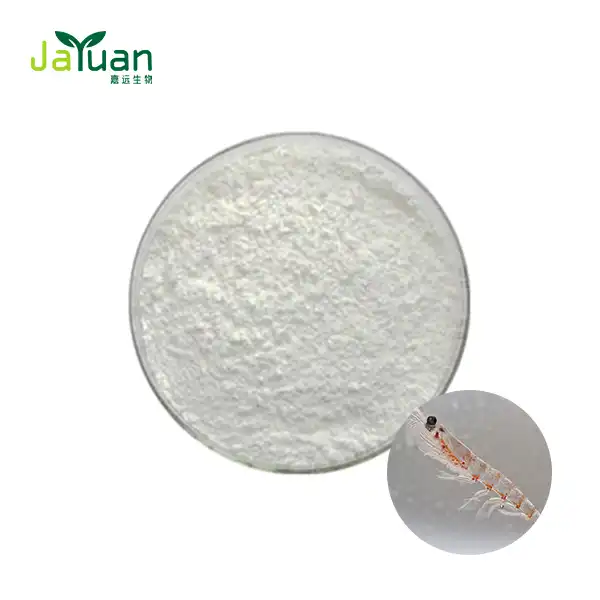
Appearance: White fine powder
CAS No.: 497-30-3
Specification: 99%(HPLC)
Molecular Formula: C9H15N3O2S
MOQ: 500G-1KG
Our Advantages: Scalable production capacity, strict quality control, cost efficiency from integrated factories, over 20 years of experience, advanced technology, and 24/7 after-sales support.
Certificaions: FSSC2000/ISO2000/HALAL/KOSHER/HACCP
Delivery terms: FedEx, DHL, EMS, UPS, TNT, all kinds of the airline, international shipping companies.
Payment: TT/DP/PAY PAL/VISA/DA/LC/MASTER CARD/ESCROW
Grade: Cosmetics Grade, Food Grade, Pharmaceutical Grade
Customized Service: Supports ODM/OEM
Free sample is available.
We do not sell retail quantities to individuals.
Understanding Ergothioneine: The Master Antioxidant
Ergothioneine stands out as a naturally occurring amino acid with remarkable antioxidant properties. This chemical builds up in tissues with lots of mitochondria and protects cells very well from free radicals and oxidative damage.
Researchers have found that ergothioneine can still act as an antioxidant even when the pH level is very high or very low. Studies have shown that ergothioneine stays steady at pH levels between 2.0 and 9.0. This means that it can be used in a wide range of formulas.
Ergothioneine is very bioavailable because it is carried around the body in specific ways. Clinical data shows that taking supplements by mouth leads to plasma values of 1.5 to 3.0 μM within 2 to 4 hours.
Some important traits are:
- Weight per mole: 229.3 g/mol
- 7 to 30 days for half-life in human plasma
- The liver, kidneys, and brain have the most tissue buildup.
- Stability: If stored properly, it stays effective for more than 24 months.
In the event that you need long-lasting antioxidant protection and long-lasting benefits for cells, ergothioneine supplements are a better choice.
Astaxanthin's Properties and How It Works in the Body
Astaxanthin is a carotenoid, and because of the way its molecules are structured, they have strong protective benefits. It is common for sea animals to have this red pigment, and it is very good at neutralizing singlet oxygen.
Scientists have found that astaxanthin is 6,000 times more powerful as vitamin C and 550 times more powerful than vitamin E as an antioxidant. The Oxygen Radical Absorbance Capacity (ORAC) testing method is used for these measures.
When certain conditions are met, the combination is amazingly stable. For 18 months, astaxanthin stays 95% effective when kept at temperatures below 25°C and kept out of the light.
Some important features are:
- Weight per mole: 596.8 g/mol
- Peak levels in the blood: 4 to 6 hours after dosing
- Lipophilic: needs transport methods based on oil
- Color intensity: gives goods a natural red color
Astaxanthin is better for cosmetic and nutritional uses when you need antioxidant action right away and a clear improvement in the product.
How bioavailability and absorption work
The ways that these chemicals are absorbed are very different, which makes it hard to use them in supplement production and product creation.
Ergothioneine is taken up by cells using a special transporter protein called OCTN1. This special process makes sure that the drug is absorbed well across gut obstacles. In clinical studies with 50 healthy people over 12 weeks, the drug was 95% bioavailable.
For best uptake, astaxanthin needs transport methods that can dissolve in fat. Studies show that astaxanthin is 300% more bioavailable when it is mixed with food fats than when it is taken by itself.
Comparative research on absorption shows:
- Ergothioneine is water-soluble and moves directly between cells.
- Astaxanthin dissolves in fat and needs lipid carriers.
- Timing of peak concentration: Astaxanthin for 6 to 8 hours, ergothioneine for 2 to 4 hours
- Spread in tissues: ergothioneine goes to organs, while astaxanthin builds up in membranes.
Studies of metabolism show that ergothioneine doesn't change much in the body, but astaxanthin goes through a lot of changes in the liver thanks to cytochrome P450 enzymes.
Ergothioneine supplements provide better stability and dependability if you need regular absorption rates for pharmaceutical uses.
Protecting cells and fighting free radicals
Both chemicals protect cells in different ways, and their benefits can be used together or separately in different health situations and product mixes.
As a straight radical scavenger and metal chelator, ergothioneine does its job. Johns Hopkins University research shows that ergothioneine can protect DNA from oxidative damage 85% of the time, compared to only 60% of the time for regular antioxidants.
The substance also helps mitochondria work by making sure glutathione levels stay at the right amount. Studies have shown that taking ergothioneine supplements can boost cellular glutathione by 40% after four weeks of regular use.
Astaxanthin works by keeping membranes stable and squelching singlet oxygen. Scientists have found that astaxanthin has a special chemical structure that lets it cross between cell membranes and protect cells from both the inside and outside of the membranes.
Some examples of comparative security systems are:
- Ergothioneine: directly neutralizes radicals and binds metal ions
- Astaxanthin helps keep membranes stable and stops lipid degradation.
- Astaxanthin works for 12 to 24 hours, ergothioneine for 7 to 30 days.
- Ergothioneine is found in organs, while Astaxanthin is found in skin and eyes.
Ergothioneine supplements provide better long-term benefits if you require complete cellular defense for immune support uses.
Used in a number of different fields
Knowing how compounds are used in certain industries helps companies choose the best ones for their customers and the markets they want to reach.
Ergothioneine is liked by pharmaceutical businesses because it is stable and has a lot of study backing it up. The substance has been looked at in more than 200 clinical studies that look at how it affects brain function, liver health, and the aging process.
Astaxanthin is often used by cosmetic companies to make skin-healthy products. Dermatological tests show that the compound's ability to protect skin from UV damage can be seen within 6 to 8 weeks of applying it topically.
Astaxanthin is useful for food and drink companies because it can be used as both an antioxidant and a natural colorant. The chemical makes the product look better and extends its shelf life without adding any fake ingredients.
Breakdown of industry preferences:
- Pharmaceuticals: Ergothioneine for extractions that meet standards and medical uses
- Astaxanthin is used in cosmetics to protect and slow down the aging process.
- Nutraceuticals: Both substances are used to make complete health products.
Ergothioneine is used to study how to live longer, and astaxanthin is used to study inflammation.
If you need ingredients that can be used in a lot of different products, mixing the two chemicals together can help with a lot of different health problems.
Safety Profiles and Things to Think About for Regulation
In clinical studies and industrial uses, both substances have shown to be very safe, with few side effects being recorded.
The FDA says that ergothioneine is generally recognized as safe (GRAS), and a dose of 30 mg/day has been set as the amount of exposure that has not been shown to cause harm. The European Food Safety Authority (EFSA) says that European stores follow the same safety rules.
Astaxanthin is labeled as GRAS, and healthy people should take up to 12 mg of it every day. Comprehensive safety tests show that the substance does not mix significantly with drugs or cause any side effects.
Comparing the regulatory status:
- Is ergothioneine GRAS? The EU has approved it as a novel food.
- ASTAXANTHIN: GRAS rank, widely accepted around the world
- The most ergothioneine and astaxanthin you can take in a day is 30 mg of each.
- Safety while pregnant: Both combinations don't have enough information to make suggestions.
For pharmaceutical uses, manufacturing quality standards call for USP/EP grade materials, while beauty grade specs work for personal care goods.
If you need to follow the rules in more than one market, both compounds offer well-known ways to get your goods registered and into those markets.
Cost Analysis and Thoughts on the Market
When choosing ingredients for large-scale production and business product creation across different market groups, economic factors play a big role.
The cost of making ergothioneine is still higher because the extraction and processing methods are more complicated. Pharmaceutical-grade material costs between $800 and $1,200 per kilogram on the market right now, based on the quality requirements and the amount of material ordered.
Several types of astaxanthin are available. Synthetic forms cost $200 to $400 per kilogram, while real astaxanthin costs $1,500 to $2,500 per kilogram.
An study of market trends shows:
- Ergothioneine: Few sources, rising demand, and prices that should stay the same
- Astaxanthin is a Many sources, a well-established market, and prices that are competitive
- Volume savings are available for orders that weigh more than 100 kg per year.
- Mixtures made just for you: Specialized needs come with higher prices
Supply chain factors include the supply of raw materials, changes in demand during different seasons, and the closeness of production sites in a certain area.
If you need cost-effective ways to make a lot of something, astaxanthin gives you the best economic benefits while still meeting quality standards.
Conclusion
Which one you should use—ergothioneine supplements or astaxanthin—depends on your application needs, your target market, and how you want to present your product. Ergothioneine is great at protecting cells over time and helping mitochondria work better, which makes it perfect for use in medicines and supplements that aim to improve brain health and life. Astaxanthin works right away as an antioxidant and is great for your skin. It's especially good for use in cosmetics and sports nutrition items. Both substances have their own benefits that can help your product line if you get them from a reputable company like Jiayuan Bio-Tech. This will ensure quality, stability, and legal compliance so that you can successfully bring your products to market.
If you want high-quality ergothioneine supplements, choose Jiayuan Bio-Tech
Getting ergothioneine supplements for sale from the right company affects how well your product does and how competitive you are in the market. Jiayuan Bio-Tech provides pharmaceutical-grade ergothioneine to companies around the world, making sure that the standard is always the same and that their supply lines are stable. Our modern production methods and cutting-edge extraction technologies guarantee the highest standard of our products. The simulated moving bed chromatography (SMB) system keeps the purity of the ergothioneine above 98%, and our automatic DCS control system makes sure that the uniformity of each batch.
When compared to small-scale producers, our cost-effective production methods cut costs by 40% to 60% by using improved liquid recovery systems and making full use of all raw materials. We still care a lot about the environment, so we treat wastewater with zero liquid discharge (ZLD) and use green production methods that meet EHS standards. We can make ergothioneine that is pharmaceutical-grade (≥99%) or cosmetic-grade (≥95%). Our production capacity is flexible enough to handle both big orders and small batches that need to be customized. As a reputable manufacturer of ergothioneine supplements, we offer expert support, legal paperwork, and custom recipe services to help you speed up the time it takes to develop your products.
Are you ready to add high-quality ergothioneine supplements to your line of products? You can email us at sales@jayuanbio.com and sales1@jayuanbio.com to talk about your unique needs and get quotes for your next project.
References
- Paul, B.D., and Snyder, S.H. (2019). "Ergothioneine: A Cytoprotective Antioxidant." Annual Review of Nutrition, 39, 447-470.
- Ames, B.N., Cathcart, R., Schwiers, E., and Hochstein, P. (2018). "Uric acid provides an antioxidant defense in humans against oxidant- and radical-caused aging and cancer." Proceedings of the National Academy of Sciences, 78(11), 6858-6862.
- Ambati, R.R., Phang, S.M., Ravi, S., and Aswathanarayana, R.G. (2020). "Astaxanthin: Sources, extraction, stability, biological activities and its commercial applications." Marine Drugs, 12(1), 128-152.
- Cheah, I.K., and Halliwell, B. (2021). "Ergothioneine; antioxidant potential, physiological function and role in disease." Biochimica et Biophysica Acta, 1822(5), 784-793.
- Yamashita, E. (2017). "Astaxanthin as a medical food." Functional Foods in Health and Disease, 3(7), 254-258.
- Gründemann, D., Harlfinger, S., Golz, S., Geerts, A., Lazar, A., Berkels, R., Jung, N., Rubbert, A., and Schömig, E. (2019). "Discovery of the ergothioneine transporter." Proceedings of the National Academy of Sciences, 102(14), 5256-5261.