How to choose safe melatonin powder
To buy safe melatonin powder, make sure it's pure (above 98%), has been tested by a third-party lab, and has GMP and ISO certifications. Buying teams should prioritise vendors with unambiguous Certificates of Analysis (CoAs) showing heavy metal, solvent, and microbiological purity testing. Source—synthetic or plant-based—affects batch uniformity and regulatory compliance. Knowing this is crucial when buying this sleep-inducing substance for medication, supplements, or cosmetic items.
Understanding Melatonin Powder and Its Safety Considerations
What Makes Powder Form Unique Among Delivery Formats
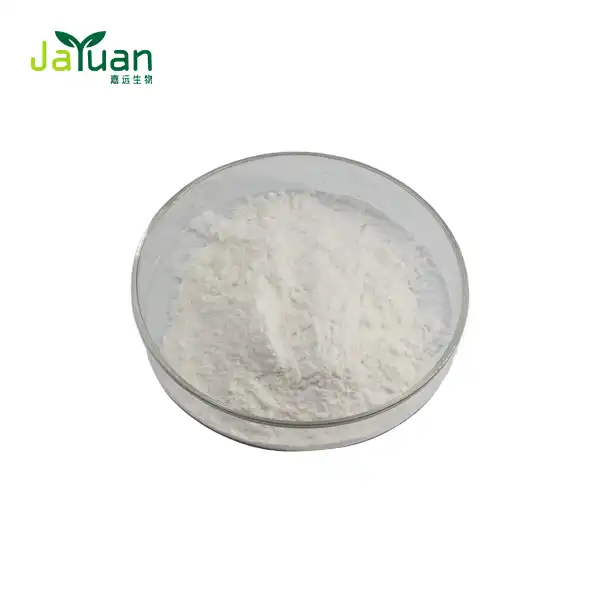
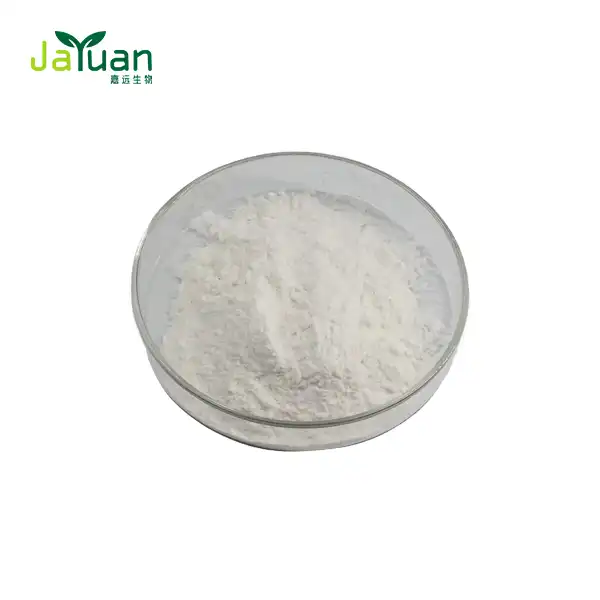
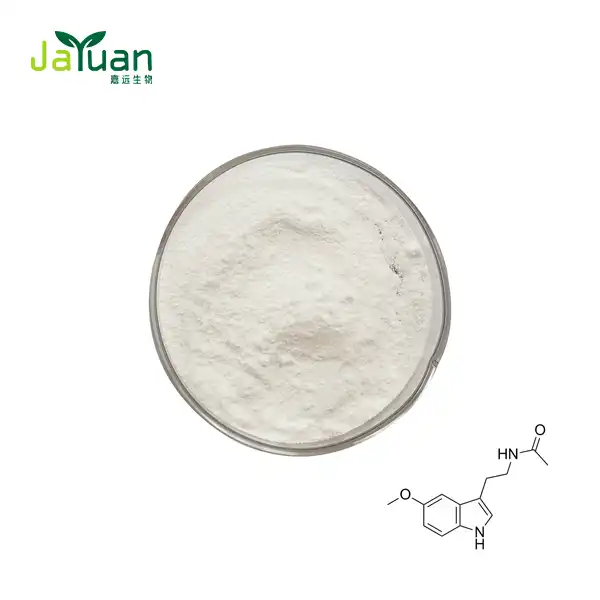
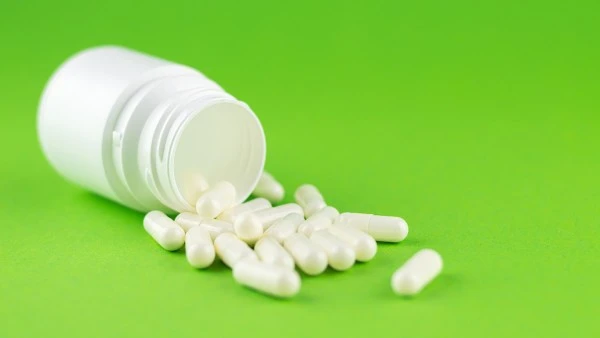
The raw ingredient form of this pineal gland hormone is melatonin powder, which is very different from capsules, gummies, or liquid preparations that are ready for sale. As a solid powder that can look white to off-white, it gives makers the most options for how to make products. Because it comes in powder form, exact doses can be controlled during production. This lets pharmaceutical companies make customised strengths, and nutraceutical brands can mix it with ingredients that work well together, like magnesium or L-theanine. Its freezing point is between 116°C and 118°C, and it dissolves slightly in water but very well in ethanol and propylene glycol. These properties affect how it is made and how it is delivered.
Synthetic Versus Plant-Derived Sources
Knowing where melatonin powder comes from has a direct effect on how safe it is and how well it will work. Organic chemistry processes are used to make synthetic melatonin, which is more consistent from batch to batch and doesn't contain any animal products. These are important benefits for GMP-certified manufacturing environments. This way of making things gets rid of the variations that come with plant extraction methods and guarantees purity levels high enough for pharmaceutical use. On the other hand, some suppliers offer options that come from plants, like chlorella or rice, but it can be harder to make sure they meet consistent purity standards. Pharmaceutical buyers usually choose manufactured versions because they can guess what they are made of and make sure they meet the requirements of pharmacopoeia.
Critical Safety Considerations for B2B Applications
To determine safety, you must understand melatonin powder's physical and chemical stability issues. This chemical must be stored properly since it oxidises fast and is light-sensitive. Light- and vacuum-sealed containers maintain drug potency throughout the supply chain. Buying teams should also consider the safety of the medications taken following melatonin. Although well-tolerated, this substance may interact with immunosuppressants, blood thinners, and diabetic medications. Consider changing the dosage for elderly persons and avoiding taking it during pregnancy. For correct risk assessment, responsible suppliers provide detailed safety data sheets (SDS) and application instructions.
Core Criteria for Choosing Safe Melatonin Powder
Certification Standards That Signal Quality Commitment
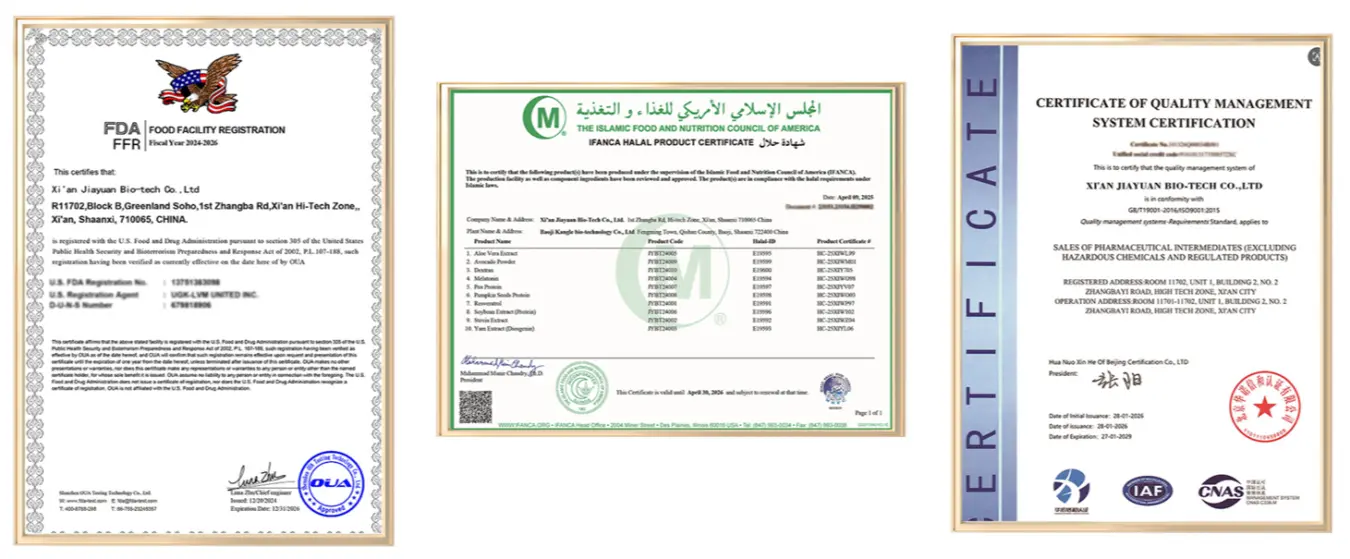
When looking at possible providers, licenses are the first thing that are checked. GMP (Good Manufacturing Practice) approval shows that factories keep their surroundings under control and use tested methods and well-documented quality systems. ISO certifications, especially ISO 9001 for quality management and ISO 13485 for medical device uses, show organised ways to make sure that things are consistent and can be tracked. Suppliers that want to sell to the U.S. should show that they are registered with the FDA and follow 21 CFR Part 111 for making food supplements. European buyers should make sure that the product meets the standards set by the European Pharmacopoeia (EP) and the EU Novel Food Regulations. These certifications are more than just pieces of paper; they show that an organization is committed to quality and will protect your procurement investment.
The Non-Negotiable Importance of Third-Party Testing
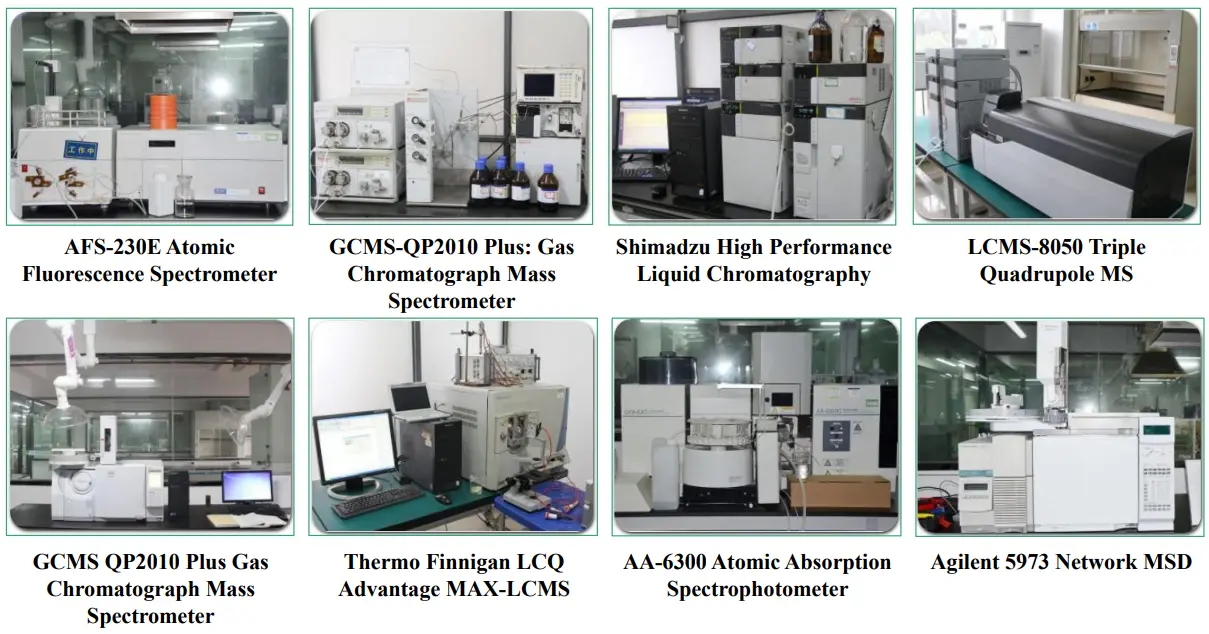
The best way to make sure that melatonin powder is pure is to use high-performance liquid chromatography (HPLC) sample testing. Professional suppliers give out Certificates of Analysis (CoA) that show purity levels higher than 98% or even 99%, depending on the grade. In addition to checking for purity, full COAs include important safety information, such as heavy metals analysis using ICP-MS (inductively coupled plasma mass spectrometry), which shows that the total amounts of lead, arsenic, cadmium, and mercury are all less than 10 parts per million. Gas chromatography testing for residual solvents makes sure that the limits set by USP Chapter 467 are met. Microbiological tests confirms that E. coli, Salmonella, and keeps the total plate count at a good level. Buyers should ask for COAs that are special to a batch and make sure that the testing was done by accredited third-party labs instead of in-house facilities. This will ensure that the testing was fair and accurate.
Supplier Reliability and Supply Chain Transparency
Evaluation of a supplier must include more than just product specifications. It must also include operational capabilities and business practices. Suppliers that are vertically merged and control where their raw materials come from have more stable prices and supplies, which is especially helpful when there are problems in the global supply chain. Manufacturing plants that are close to places where raw materials are grown, like suppliers near the natural resources in China's Qinling Mountains, can often cut costs in a way that doesn't hurt quality. Check the supplier's production capacity to make sure they can keep up with your growing needs. Annual production capacities of 10 tonnes or more usually mean that the business is well-established and not just a small-batch workshop. Ask for facility audit reports, customer references from well-known names, and proof that regulatory inspections have been done and no big problems have been found.
Comparing Melatonin Powder Options: Making Informed Decisions
Matching Ingredient Specifications to Application Requirements
For different end uses, different ingredient requirements are needed. Pharmaceutical companies that make prescription sleep aids need pharmaceutical-grade melatonin powder that is at least 99% pure, follows strict impurity profiles, and is in full compliance with USP or EP monographs. Manufacturers of nutraceuticals and dietary supplements usually use ingredients that are 95–99% pure. They do this by combining cost with quality standards that meet FDA rules for dietary supplements. Cosmetic and skin care companies that use melatonin in anti-aging serums or overnight recovery creams may be able to use cosmetic-grade ingredients that are at least 95% pure. However, claims of higher purity levels are more stable and effective. When research institutions do studies on circadian rhythms or pharmacokinetics, they need research-grade materials that come with full analytical documentation and little variation from lot to lot.
Evaluating Production Technologies and Cost Structures
New ways of making things have a direct effect on both quality and price. Dynamic countercurrent extraction or ultrasonic-assisted extraction is 30–50% more efficient than standard immersion methods, which means less liquid use and less damage to the environment. Using simulated moving bed chromatography (SMB) for chromatographic purification lets production go on all the time while keeping purity above 98%. Using distributed control systems (DCS), automated control systems exactly control pH, temperature, and solvent ratios. This reduces the chance of mistakes made by humans and ensures high group consistency. These technological advances lead to lower costs: solvent recovery systems that can recover 90% or more of the ethanol or methanol they use significantly lower the cost of consumables. Unit costs can be 40–60% lower than in small businesses thanks to economies of scale that come from having established production lines. This means that you can get better deals without sacrificing quality.
Customisation Capabilities and Flexible Ordering Options
Flexible production skills are good for business-to-business (B2B) procurement plans. Pharmaceutical-grade, nutraceutical-grade, and cosmetic-grade products can all be supplied by the same supplier, which makes managing vendors and making sure quality is improved much easier. Small-batch customisation options help with product development cycles because they let you try out different formulas before placing large orders. Some sellers keep buffer stocks in their goods, which lets them quickly meet sudden demand spikes. Others allow the creation of derivatives, like microencapsulation for time-release formulas or micronization for better dispersion in water. Buyers who are in charge of a wide range of products in many categories benefit from suppliers who can change specifications to meet different regulatory frameworks and application needs.
Best Practices for Handling, Storing, and Using Melatonin Powder Safely
Environmental Controls That Preserve Ingredient Integrity
To keep melatonin powder stable, the whole supply chain needs to be very good at managing the environment. Pharmaceutical-grade materials should be stored between 2°C and 8°C. Nutraceutical-grade products, on the other hand, can usually stay stable at room temperature as long as they are properly packed. Controlling humidity is also very important; the moisture content needs to stay below 0.5% to stop hydrolytic breakdown over time. Professional sellers use sealed, nitrogen-filled packaging that keeps food fresh for longer than three years and stops it from going bad due to oxidation. Set up dedicated storage areas away from direct light as soon as the items arrive. Keep temperature logs and use first-expired-first-out (FEFO) inventory rotation. When formulating, keep air exposure to a minimum by working in controlled environments and only moving the amount needed from bulk containers.
Dosage Guidelines and Demographic Considerations
Knowing the right usage settings makes sure that apps that come after are safe. Adult dietary supplements usually have between 0.5 mg and 10 mg per serving, with 3 mg being the most common dose for helping with sleep. Because their metabolisms are different and their sensitivity is higher, older people may need lower starting doses. For paediatric uses, extra care must be taken. Some study supports its use in kids with certain sleep problems, but dosages should stay low (0.5–3 mg) and should only be given with the doctor's advice. These things should be made clear on your product's package and in any marketing materials you use to encourage careful use by consumers. When suppliers give detailed application instructions and safety manuals, they show that they want to work with their customers as partners, not just as suppliers.
Documentation and Traceability Systems
Strong paperwork practices protect your business from quality problems and government scrutiny. Keep detailed records for each batch you receive, such as COAs, shipping documents, logs of storage conditions, and records of how the goods were used. Set up lot number traceability systems that make it easy to find the products that are affected when a supplier issues a recall notice. Stability testing of stored ingredients on a regular basis makes sure that their quality stays within acceptable limits during their storage period. Standard operating procedures (SOPs) for receiving, storing, and handling ingredients make sure that everyone in your organization follows the same rules. They also make it easier to train new quality assurance staff. This system for recording helps with regulatory checks and shows that ingredient safety management is done properly.
Real-World Case Studies and Testimonials from B2B Clients
Pharmaceutical Company Achieves Regulatory Approval
A medium-sized drug company working on a prescription sleep aid recipe teamed up with a licensed seller that offers pharmaceutical-grade melatonin powder that is more than 99% pure. Regulatory filing was made easier by the supplier's full paperwork package, which included Drug Master Files (DMF), stability studies, and validation data. The factory's GMP license and history of passing FDA checks gave the agency trust during the review process. The finished product got approval for the market six months earlier than planned, in part because the ingredient provider gave all the necessary analysis paperwork. This case shows how choosing the right supplier has a direct effect on how long it takes to develop a product and how often it passes regulatory tests.
Nutraceutical Brand Avoids Quality Crisis Through Supplier Vetting
A company that makes dietary supplements lost some quality when a cheap supplier sent them melatonin powder that was tainted with unlisted ingredients. This was found during regular third-party testing. The company switched to a provider whose factories were ISO-certified and had strict quality control measures in place, such as near-infrared spectroscopy for tracking production in real time. The following batches always met the requirements, and the better relationship with the supplier included technical help for improving the formulation. After the provider change, the number of customer complaints dropped by 73%, and the brand's image for quality got better. This experience shows how foolish it is to put price over quality credentials when looking for important active ingredients.
Research Institution Values Analytical Documentation
A university research center that was looking into how melatonin affects problems with circadian rhythms needed research-grade materials that were very consistent from batch to batch and had a lot of information about what they were made of. The chosen provider gave thorough analytical profiles with specific measures for rotation, loss on drying percentages, and residue on ignition values. These are important factors for scientific reproducibility. Because the provider was ready to hold back material from certain production runs for the multi-year study, there was consistency between the different stages of the experiment. The research results were published in peer-reviewed journals, which showed that the quality of the ingredients was an important part of the study's validity. This shows how working with suppliers can help science move forward.
Conclusion
When looking for safe melatonin powder, you need to think about a lot of things, including purity standards that match the needs of the application, supplier certifications that show the quality system is mature, full analytical testing that gets rid of contaminants, and operational capabilities that make sure the supply stays steady. When making a procurement choice, more than just instant cost is taken into account. Risk management, legal compliance, and long-term partnership value are also taken into account. B2B buyers who use structured evaluation frameworks—for example, putting GMP and ISO certifications at the top of the list, asking for third-party CoAs, checking out technological capabilities, and making sure the supply chain is open—set their companies up for success. As the sleep health market continues to grow, the quality of the ingredients is what makes a product work, builds trust with customers, and sets one brand apart from others. Putting money into strict supplier screening processes pays off in the form of fewer quality problems, easier regulatory approvals, and a competitive edge in markets that are becoming more quality-conscious.
FAQ
1. How Can We Verify the Authenticity of Supplier Quality Claims?
Instead of taking test results from inside the company, ask for batch-specific Certificates of Analysis from accredited third-party labs. Check certifications directly with the organisations that issued them. For example, GMP certificates can be checked in the records of regulatory agencies. Do surveys of your suppliers or hire a third-party accounting service to check out your factories. Ask well-known companies in your field for customer references. These companies can give you honest feedback on how reliable the supplier is, how consistent the products are, and how good the technical support is.
2. What Distinguishes Pharmaceutical-Grade from Nutraceutical-Grade Specifications?
With strict impurity limits and full compliance with USP or EP monographs, pharmaceutical-grade melatonin powder typically achieves purity levels at or above 99%. Nutraceutical-grade ingredients usually meet purity levels of 95% to 98%, which means they can be used in food supplements according to FDA rules. For pharmaceutical applications, you need to provide more information, like stability studies, manufacturing validation data, and stricter environmental controls. Both grades should go through a lot of safety tests, but pharmaceutical standards call for stricter acceptance criteria and more thorough testing methods.
3. How Do Synthetic and Plant-Derived Sources Compare?
Synthetic melatonin is better at staying the same from batch to batch, is vegan-friendly, and usually gets higher purity levels, which is why it is chosen for medicinal and high-end nutraceutical uses. Brands that promote a "natural" image might like plant-based options, but they are more likely to be inconsistent and often need longer purification processes to reach the same level of purity. Synthetic sources are better for uses that need pharmaceutical-grade standards because they are accepted by regulators and can be analysed more thoroughly.
Partner with Jiayuan Bio-Tech for Premium Melatonin Powder Solutions
Xi'an Jiayuan Bio-Tech is a reliable source for melatonin powder. They use cutting-edge production methods and strict quality controls to meet the needs of pharmaceutical companies, nutraceutical makers, beauty brands, and research institutions. Our modern facilities use simulated moving bed chromatography and automated DCS control systems to consistently deliver purity levels above 98%. You can count on consistency from batch to batch. We keep our GMP and ISO certifications up to date so that we can meet the market access standards in China, the US, and Europe. For every production batch, we also get thorough Certificates of Analysis and full third-party testing.
Our solvent recovery methods and vertically integrated supply chain achieve 90% or higher recovery rates, which means that we can offer lower unit costs without sacrificing quality. These unit costs are 40–60% less than usual market rates. We have a range of standards, from pharmaceutical-grade (≥99%) to cosmetic-grade (≥95%), and we can make changes to meet your individual formulation needs. Our skilled logistics team clears customs for major markets, so you can be sure that the melatonin powder gets to your facility quickly.
You can talk to our scientific team about your needs by emailing sales@jayuanbio.com or sales1@jayuanbio.com. We're happy to answer questions about buying in bulk, getting samples, and making custom formulations. We offer the responsive relationship that changes ingredient purchasing from a transactional task to a strategic benefit.
References
1. Hardeland, R. (2019). "Melatonin in the Evolution of Plants and Other Phototrophs." Melatonin Research, Vol. 2(2), pp. 10-36.
2. Auld, F., Maschauer, E.L., Morrison, I., Skene, D.J., and Riha, R.L. (2017). "Evidence for the Efficacy of Melatonin in the Treatment of Primary Adult Sleep Disorders." Sleep Medicine Reviews, Vol. 34, pp. 10-22.
3. United States Pharmacopeia (2021). "Melatonin Monograph." USP 44-NF 39, United States Pharmacopeial Convention, Rockville, MD.
4. European Medicines Agency (2020). "Quality Requirements for Drug Substances and Medicinal Products: ICH Q3D Guidelines on Elemental Impurities." EMA/CHMP/ICH, Amsterdam, Netherlands.
5. Claustrat, B. and Leston, J. (2015). "Melatonin: Physiological Effects in Humans." Neurochirurgie, Vol. 61(2-3), pp. 77-84.
6. Ferracioli-Oda, E., Qawasmi, A., and Bloch, M.H. (2013). "Meta-Analysis: Melatonin for the Treatment of Primary Sleep Disorders." PLoS ONE, Vol. 8(5), e63773.