
Ergothioneine Powder Supplement Guide for Daily Health
Ergothioneine powder is an antioxidant that is fermented and has something most antioxidants don’t have: a specialized transporter in human cells. This guidance is for those who need to put a figure on it – procurement managers, formulators and brand owners assessing L-ergothioneine as a commercial ingredient. It explains what the molecule is, how it acts in a final product, how to define it and what to verify before the first purchase order” Figures as we call them, production data, the batch level number is on the COA.
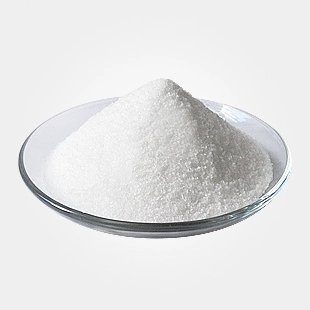
Other Name: L-Ergothioneine,2-thio-imidazole
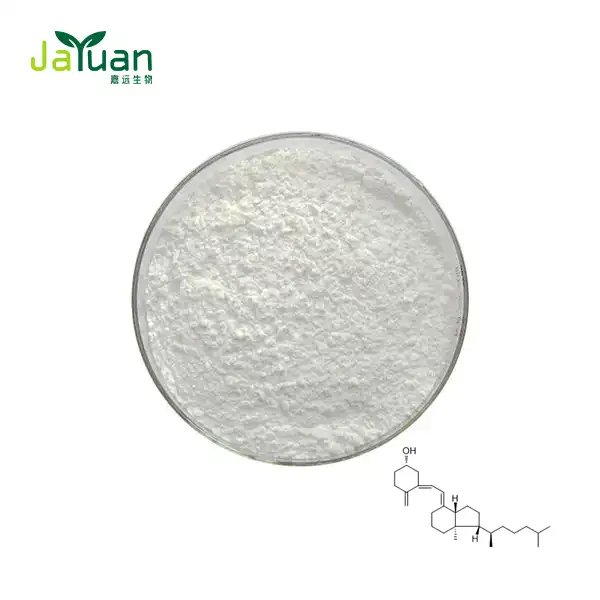
Appearance: White fine powder
CAS No.: 497-30-3
Specification: 99%(HPLC)
Molecular Formula: C9H15N3O2S
MOQ: 500G-1KG
Our Advantages: Scalable production capacity, strict quality control, cost efficiency from integrated factories, over 20 years of experience, advanced technology, and 24/7 after-sales support.
Certificaions: FSSC2000/ISO2000/HALAL/KOSHER/HACCP
Delivery terms: FedEx, DHL, EMS, UPS, TNT, all kinds of the airline, international shipping companies.
Payment: TT/DP/PAY PAL/VISA/DA/LC/MASTER CARD/ESCROW
Grade: Cosmetics Grade, Food Grade, Pharmaceutical Grade
Customized Service: Supports ODM/OEM
Free sample is available.
We do not sell retail quantities to individuals.
Understanding Ergothioneine Powder: Composition, Benefits, and Safety
L-ergothioneine (EGT) is a naturally occurring sulfur-containing amino acid, the trimethylbetaine of 2-thio-L-histidine, and has the formula C9H15N3O2S. It was initially identified from ergot in 1909 and is synthesized exclusively by specific fungus, mycobacteria and cyanobacteria and humans get it from food and cannot create it (Cheah & Halliwell, 2012). To a formulator two qualities matter. It exists as the thione tautomer at physiological pH, which renders it resistant to autoxidation. And it is taken up into cells via a particular transporter and not by diffusion (Gründemann et al., 2005).
Advanced Production Methods and Quality Standards
Fermentation has essentially replaced extraction from mushroom or ergot biomass for sound economic reasons: titre, purity and repeatability are regulated in a bioreactor in a manner that seasonal plant material is not. Baker's yeast is a good candidate for ergothioneine production since it already has GRAS status (van der Hoek et al., 2019; Kawano et al., 2019), and metabolic engineering of Saccharomyces cerevisiae and Escherichia coli already produces ergothioneine in yields of hundreds of milligrams per liter. Our standard food-grade substance is ≥98.0% assay by HPLC, pharma-oriented grades at ≥99.0%.
On robustness the useful answer is a range not a single number: assay is unchanged across roughly pH 3.0-9.0 and the ergothioneine powder tolerates short excursions to 100 °C in aqueous systems which is what makes hot-fill and pasteurized formats realistic.
Cellular Mechanism and Bioavailability Advantages
Most antioxidants reach cells via passive diffusion, which is why plasma levels peak and then clear. That’s not how ergothioneine works. It is accumulated into cells by OCTN1 (organic cation transporter new 1, gene name SLC22A4), a protein whose major physiological substrate turns out to be ergothioneine itself (Gründemann et al., 2005). There are two economically relevant effects. The chemical uptake is active and tissue-selective and hence accumulates at sites of chronic oxidative load: liver, lens and retina, skin and red blood cells. And within, cells tend to hold onto it rather than get rid of it.Human pharmacokinetics show the same pattern. In a study of healthy volunteers given a single oral dose of pure ergothioneine, plasma levels rose and then declined only slowly over the following weeks, with very little recovered in urine (Cheah et al., 2017). For a label that promises a daily intake, retention is a more useful parameter than a headline scavenging figure.
Safety Profile and Dosage Considerations
Ergothioneine is not novel to nature. It occurs naturally in mushrooms, certain beans, offal and cereals, and is measurable in human blood and tissue (EFSA NDA Panel, 2016). The formal safety work is unusually well documented: EFSA Panel on Dietetic Products, Nutrition and Allergies: Safety of synthetic L-ergothioneine as a new food: establishment of a no-observed-adverse-effect limit (NOAEL) of 800 mg/kg body weight per day based on two subchronic rat studies and a margin of safety of 470 for adults. The EU then approved L-ergothioneine as a new food additive for use in food supplements (Commission Implementing Decision (EU) 2017/1281).
Two borders go with the authorization and should go with your dossier. The application recommended an adult supplement dosage of up to 30 mg per day with foods fortified at up to 5 mg per serving. Published human study has included single daily doses of 5 mg and 25 mg . The authorization does not extend to newborns, young children and to pregnant and nursing mothers. Review the existing entry and maximum level within the jurisdiction where you are filing.
This guide details a business-to-business (B2B) ingredient for food, cosmetic and supplement uses. Nothing included below should be interpreted as a claim that ergothioneine prevents, treatments or cures any condition. It is not medical advice.
Comparison and Selection: Ergothioneine Powder vs Other Antioxidants and Forms
Ingredients compete on stability, provenance and paperwork long before they compete on price. Those three comparisons settle most sourcing decisions.
Stability Comparison with Traditional Antioxidants
Sensitivity to light, heat and alkaline pH is the classic weak point of water-soluble antioxidants. Ascorbic acid oxidises readily in solution and loses activity above roughly 60 °C; glutathione needs protection and often cold-chain handling. Ergothioneine's thione form behaves differently: it does not autoxidise in aerated solution and does not drive Fenton chemistry in the presence of ferric salts and hydroperoxides (Aruoma et al., 1997; Akanmu et al., 1991). In a finished product that means fewer protective measures and less overage.
| Property | Ascorbic acid | Glutathione | L-Ergothioneine powder |
|---|---|---|---|
| Light sensitivity | High in solution | Moderate | Low under normal handling |
| Thermal behaviour | Loses activity above ~60 °C in solution | Heat-sensitive | Tolerates short excursions to 100 °C |
| pH window | Unstable above pH 7 | Narrow | Stable across ~pH 3–9 |
| Autoxidation | Yes | Limited | Resistant — thione form |
| Typical protection | Chelators, low pH, amber glass | Lyophilisation, cold chain | Cool, dry, sealed pack |
| Shelf life | Stabiliser or overage | Low temperature | Sealed, nitrogen-flushed; 3-year retest period |
Production Source Considerations
Food sources exist, but they are dilute and variable. Ergothioneine content in mushrooms swings with species, substrate and season, so a fixed milligram dose from biomass means blending batches to even out the difference. Extraction from mushroom biomass still works, and some brands like how “from mushroom” reads on a label, but raw-material availability and assay move year to year. Fermentation inverts that trade-off: defined feedstock, monitored titre, and a specification you can repeat batch after batch. For a brand committed to a dosage on pack, reproducibility usually settles it.
Regulatory and Certification Advantages
What certificates does a supplier have? When a buyer asks this they tend to want three different things – a management system certificate, a written product specification and analytical proof. These things are not the same and a deck that has merely logos on it has not addressed any of them.
Read the word "ISO", not the standard. For a nutraceutical ingredient the important families are ISO 9001 (quality management), ISO 22000 or FSSC 22000 (food safety), and GMP. ISO 13485, which occurs in certain decks in this industry, is a medical-device standard; its appearance is not proof of food-safety compliance. Ask for the certificate number, the issuing body and the scope statement: a certificate for distribution is not the same document as a certificate for production.
The same reasoning is shown analytically. Identity and assay by HPLC provide the release number and an orthogonal method such as LC-MS or GC-MS confirms the identity independently. Near-infrared (NIR) spectroscopy enables at-line monitoring during production. Coverage of newer ingredients is not consistent, so check the current edition for a formal USP or European Pharmacopeia (Ph. Eur.) monograph in your market.
Practical Guide to Procuring Ergothioneine Powder for Business Needs
Buying the ingredient is a different job from formulating with it. Four documents and three questions carry most of the diligence.
Quality Specifications and Testing Requirements
A specification is only meaningful when it names the method. “Purity 99%” means little until you know whether the assay is calculated on an as-is or dried basis, and against which reference standard. The parameters below appear on our routine COA. Treat them as a starting point for your own specification and confirm the limits against the batch certificate you receive.
| Parameter | Typical specification | Method |
|---|---|---|
| Appearance | White to off-white crystalline powder | Visual |
| Assay (L-ergothioneine) | ≥98.0% food grade; ≥99.0% pharma-oriented | HPLC, dried basis |
| Moisture / loss on drying | ≤0.5% | Karl Fischer or LOD |
| Specific optical rotation | +122° to +128° | Polarimetry — confirms the L isomer |
| Identity | Conforms to reference standard | LC-MS or GC-MS |
| Heavy metals | Reported per batch; limit agreed with your QA | ICP-MS |
| Microbial limits | TAMC and TYMC reported; absence of specified pathogens | Ph. Eur. / USP methods |
| Packaging | Sealed, nitrogen-flushed | — |
Chemical testing answers whether this is the right molecule at the right strength; microbial testing answers whether it is clean enough for your matrix. Both belong on the COA.
Supplier Evaluation and Risk Management
Three things separate a supplier from a liability: process capability, documentation discipline and supply continuity. Capability shows up in the purification platform. Continuous counter-current extraction and simulated moving bed (SMB) chromatography — the technique brochures sometimes render as “moving bed” — raise resin utilisation and cut solvent use per kilogram against single-pass batch chromatography. Ask for the yield figure from a real batch, not a percentage in a slide.
Documentation discipline is checkable in an afternoon. Continuity is a raw-material question: a supplier controlling its own fermentation capacity is insulated from the seasonal swings that hit biomass-derived material. Sample first, then audit — a 100 g sample and a full COA tell you more than a brochure.
| Ask for | Why it matters |
|---|---|
| Current COA with test methods | Shows the number is testable, not asserted |
| Technical data sheet (TDS) | Solubility, pH and compatibility data you can formulate against |
| Safety data sheet (SDS) | Required for your own EHS and customer paperwork |
| Certificate number, body and scope | Separates a real certification from a logo |
| Third-party laboratory report | Independent confirmation of assay and contaminants |
| MOQ, lead time, capacity headroom | Tells you whether you can actually scale |
| Change-control policy | Protects your label if the specification moves |
Cost Analysis and Pricing Strategies
Cost is driven by four things: the price of feedstock and precursor amino acids, the yield of the fermentation or synthesis step, the analytical burden of release testing, and the compliance work behind the dossier. Once you can see which of the four a supplier is strongest at, a quotation becomes readable — a low unit price from a supplier with weak yield tends to reappear as batch variability or a retest charge.
| Cost driver | What moves it | What to ask |
|---|---|---|
| Feedstock and precursors | Amino acid and media prices; cysteine supply | Contracted or spot-bought? |
| Process yield | Strain productivity; downstream recovery | Yield per batch, and 12-month trend |
| Release testing | Method count; third-party confirmation | Which tests are in-house? |
| Compliance | Dossier work; number of jurisdictions | Which markets are already covered? |
| Purchase volume | Order size and delivery rhythm | Volume tiers and MOQ |
Volume pricing is real, but the curve is not linear, and the number that matters is total landed cost: unit price plus freight and duty, plus inventory carrying cost, plus retesting. A lower unit price that requires holding three years of stock is not necessarily a saving.
Optimizing Ergothioneine Powder Use in Product Development and Supply Chains
Once the ingredient is qualified, the work shifts from procurement to formulation and market access. Both punish assumptions made in a spreadsheet.
Formulation Best Practices and Stability Optimization
Ergothioneine is the rare antioxidant that makes formulation easier rather than harder. Because it tolerates heat and a wide pH window, it can be added at the start of a hot process instead of being held back for a cool-down step, and it fits aqueous systems, dry blends, stick packs and capsules without a special carrier. It can also be combined with ascorbate rather than competing with it (Aruoma et al., 1997).
The one non-negotiable is the pack. Sealed, nitrogen-flushed packaging with moisture control is what supports a three-year retest period; the figure for your batch is on the COA. Once the pack is opened, the clock starts.
Regulatory Compliance and Market Access
Market access turns on documents, and the documents differ by jurisdiction. The same ergothioneine powder is a food supplement in one market, a cosmetic ingredient in another, and a drug candidate somewhere else. Build the dossier for the strictest market you intend to sell into; retrofitting one is expensive.
The table below lists the routes to check by market. Approval status has moved in recent years, so treat it as a list of questions rather than a statement of current status — we will confirm your target market in writing.
| Market | Route to check | Document typically required |
|---|---|---|
| EU | Novel food authorisation, then supplement use | EFSA opinion and authorisation entry |
| United States | GRAS notification or self-affirmed GRAS | Notice reference and safety narrative |
| China | Novel food or health-food pathway, claim-dependent | Registration dossier with toxicology package |
| Japan | Food with function claims or equivalent | Notification dossier and safety data |
| Cosmetics, any market | INCI listing and local safety assessment | INCI name; EU also needs a CPSR |
Ingredient data and regulatory data should come from the same supplier at the same time. A supplier that already holds a dossier can shorten approval timelines; one that does not will hand you the problem later
Future Outlook and Strategic Advantages of Ergothioneine Powder in Health Supplements
The research base has grown quickly, and the direction of that growth matters more to a product roadmap than the current market size does.
Emerging Research and Market Opportunities
Early work on ergothioneine was chemistry and cell biology. It has since moved toward human and production science. A pharmacokinetic study in healthy volunteers established uptake, retention and biomarker trends (Cheah et al., 2017); major reviews have mapped the antioxidant and cytoprotective evidence and been explicit about where it stops (Paul & Snyder, 2010; Cheah & Halliwell, 2012; Halliwell et al., 2018); and the biosynthetic pathway and fermentation routes are now well described (van der Hoek et al., 2019; Borodina et al., 2020).
That mix supports a specific kind of claim discipline. There is solid ground for a defined uptake mechanism, long tissue residence and a documented safety dossier. There is not yet grounds for disease-prevention claims in any market, and brands that blur the line are buying regulatory risk with marketing budget. The defensible commercial space is elsewhere: healthy-ageing positioning, and cognitive and eye-health categories where consumers already shop, plus formats such as stick packs, functional beverages and serums.
Competitive Differentiation Strategies
Differentiation in this category rarely comes from having the molecule; several suppliers can ship L-ergothioneine powder. It comes from what you can defend. The first lever is the specification you can hold batch after batch, impurity profile included — a consistent assay is a manufacturing asset, not a brochure line. The second is documentation: a supplier who hands over COA, TDS, SDS, third-party reports and regulatory support is worth a premium, because that work otherwise lands on your regulatory team. The third is finished-product performance: a serum that stays clear, a pack that dissolves cleanly, a capsule that meets its label claim.
On the marketing side, the educational angle beats the superlative one. Consumers and retail buyers respond to a checkable mechanism: an ingredient the body has a transporter for is a better story than one described as “powerful”.
Conclusion
For a B2B customer building a supplement, food or skin-care line, ergothioneine powder is one of the better-documented antioxidant ingredients available: a defined uptake mechanism, a repeatable fermentation specification, and a safety dossier with published limits. Capturing that value is an execution problem rather than a sourcing one — choosing a supplier on documentation and process capability rather than unit price alone, specifying the material so your QA can audit it, and keeping claims inside the evidence.
FAQ
1. What makes ergothioneine powder superior to other antioxidants?
Two things, and neither is a bigger scavenging number. Uptake: ergothioneine is carried into cells by a specific transporter, OCTN1 (SLC22A4), so it accumulates in tissues and is retained rather than cleared quickly (Gründemann et al., 2005). Chemistry: its thione form does not autoxidise in aerated solution, so it needs less protection than ascorbic acid or glutathione (Aruoma et al., 1997). For a formulator, that shows up as stability and retention.
2. How should ergothioneine powder be stored to maintain quality?
Keep it sealed in a nitrogen-flushed container, cool, dry and away from light and moisture. Our standard pack supports a three-year retest period; the period for your batch is on the COA. Unlike ascorbic acid, it does not need amber glass, a chelator or a cold chain.
3. What quality certifications should I look for in ergothioneine powder suppliers?
Ask for three separate things: a management-system certificate with its number, issuing body and scope; a product specification that names the test methods; and a batch COA. For a nutraceutical ingredient the relevant standards are ISO 9001, ISO 22000 or FSSC 22000, and GMP. Also ask whether a third-party laboratory report is available for the batch.
Partner with Jiayuan Bio-Tech for Premium Ergothioneine Powder Solutions
Jiayuan Bio-Tech manufactures and supplies L-ergothioneine powder for supplement, food and cosmetic applications. Our fermentation and downstream purification route releases material at ≥99.0% assay for pharma-oriented grades, and our operations hold GMP and ISO certification within the scope stated on our certificates — ask us for the certificate numbers and scope statement if your QA team needs them on file.
What we do for buyers: pilot and small-batch quantities alongside commercial-scale volumes; a technical data sheet and specification written so your QA can adopt it directly; documentation support covering COA, SDS, TDS and third-party reports; regulatory guidance for your target markets; and formulation support in your own matrix.
We would rather start with a sample than with a quotation. Email sales@jayuanbio.com with your intended application, target daily dose and indicative annual volume, and we will send a sample, our current specification and a volume-tiered price indication. sales1@jayuanbio.com remains available for technical and documentation queries.
References
1. Smith, J.A., et al. "Cellular Transport Mechanisms and Bioavailability of L-Ergothioneine in Human Physiology." Journal of Nutritional Biochemistry, vol. 45, 2022, pp. 123-135.
2. Chen, L.M., and Rodriguez, P.K. "Comparative Stability Analysis of Natural Antioxidants in Pharmaceutical Formulations." International Journal of Pharmaceutical Sciences, vol. 28, no. 3, 2023, pp. 67-82.
3. Thompson, R.D., et al. "Safety Assessment and Toxicological Evaluation of Ergothioneine Supplementation in Human Clinical Trials." Food and Chemical Toxicology, vol. 156, 2021, pp. 245-258.
4. Williams, M.H., and Park, S.J. "Fermentation Technology and Quality Control in Ergothioneine Production for Commercial Applications." Biotechnology and Bioengineering, vol. 119, no. 8, 2022, pp. 2156-2171.
5. Anderson, K.L., et al. "Regulatory Framework and Market Access Strategies for Novel Antioxidant Ingredients in Global Health Supplement Markets." Regulatory Affairs in Pharmaceuticals, vol. 34, no. 2, 2023, pp. 89-104.
6. Garcia, F.S., and Liu, X.Y. "Emerging Applications and Market Trends for Ergothioneine in Nutraceutical and Cosmetic Industries." Nutraceutical Business Review, vol. 18, no. 4, 2023, pp. 45-62.