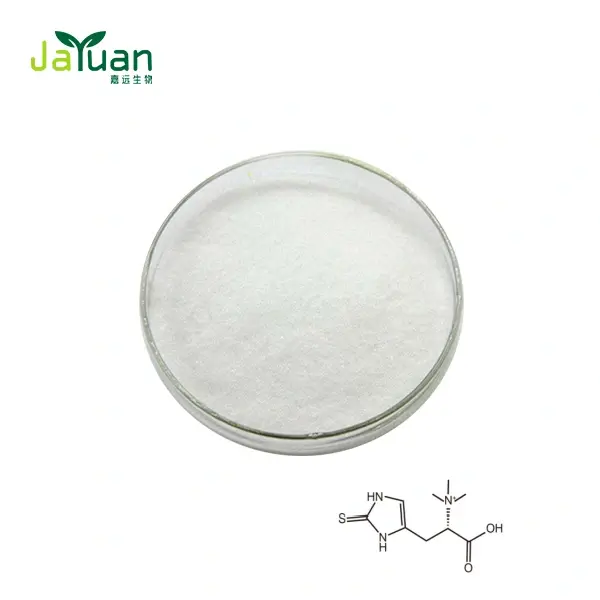

Ergothioneine powder Dosage Guide for Supplement Formulation Use
Food supplements, particularly antioxidants, need precise dosing planning. Ergothioneine powder provides formulators a stable, bioavailable, safe chemical, which advances cellular defence. Due to enhanced microbial fermentation processes that generate purity levels exceeding 98% suitable for pharmaceutical usage, this naturally occurring amino acid derivative is now easier to get. You can ensure that your formulae deliver the same advantages and comply with international requirements by understanding the proper dose variables. This guide was created to assist research institutes, nutrition firms, and pharmaceutical companies work out the technical elements needed to manufacture products that employ this substance to extend life.
Understanding Ergothioneine Powder: Properties and Benefits
The Biochemical Foundation of Cellular Protection
L-Ergothioneine is different from other antioxidants because of its special thiourea ring structure and the way it targets cells for uptake. Vitamins C and E work through passive diffusion, but this sulfur-containing histidine derivative uses the OCTN1 transporter protein to go straight into the mitochondria. This specificity solves one of the most important problems in antioxidant formulation: getting active compounds to the exact places where oxidative stress is strongest. Its molecular formula, C9H15N3O2S, shows how complex it is, which lets it neutralise hydroxyl radicals, peroxynitrite, and hypochlorous acid very well. Pharmaceutical businesses that make therapeutic goods are becoming more and more aware that standard antioxidants break down quickly when exposed to heat, light, or changes in pH, which makes them less stable and less effective. Our modern production methods keep the products very stable at temperatures up to 100°C in water-based solutions. This makes hot-process manufacturing possible without losing any of their effectiveness.
Natural Sources and Modern Production Technologies
Ergothioneine powder used to be made from king trumpet mushrooms and some bacteria, but now it is made using precision fermentation biotechnology. This method fixes the unstable supply chain that comes with getting products from farms and guarantees stability from batch to batch, which is important for GMP-compliant production. At Jiayuan Bio-Tech, we use simulated moving bed chromatography to clean things all the time. This helps us reach stable purity levels above 98%, which are good enough for pharmaceutical uses. Our dynamic countercurrent extraction system works 30–50% better than traditional immersion methods, using less solvent while keeping the bioactive integrity. These technological advances directly lead to lower prices for bulk buyers, as our 10-ton annual production capacity evenly distributes fixed costs, lowering unit prices by 40–60% compared to smaller businesses.
Regulatory Status and Safety Profile
The compound is GRAS (Generally Recognised As Safe) in the US and has novel food approval in the EU. This makes it easier for companies to sell their products in international markets. Toxicological studies show that amounts much higher than those normally found in supplements don't have any negative effects, and human trials report that they are well tolerated. Cosmetic and skin care brands like that it doesn't irritate the skin when applied topically, and food and drink companies like that it doesn't have a strong taste. Our quality control methods use both live and offline HPLC and GC-MS analysis, along with near-infrared spectroscopy, to make sure they meet EP/USP pharmacopoeia standards. With our ISO 13485 and GMP certifications and this dual-quality approach, we can help B2B clients who need clear documentation for regulatory submissions with their procurement risk management concerns.
Ergothioneine Powder Dosage Guidelines for Supplement Formulation
Establishing Baseline Dosing Parameters
According to clinical research, the best amount of antioxidants to take every day is between 5 and 30 mg in finished dietary supplements. When using ergothioneine powder as a raw material, makers need to think about how the finished product will be delivered, who it is meant for, and how it will be used for health purposes. Some capsules contain 5–15 mg per dose to help with maintenance, while specific anti-aging methods may call for 20–30 mg to help protect cells even more. Because the substance is so bioavailable, smaller amounts have the same effects on the body as larger amounts of antioxidants that are not taken as well. Pharmaceutical companies working on prescription drugs have tested doses up to 50 mg in clinical settings without any negative effects. However, the most common dose for nutraceuticals is between 5 and 20 mg.
Knowing the levels of purity is important for figuring out how much raw material to use. Our pharmaceutical-grade material, which is ≥99% pure, doesn't need much extra, but our cosmetic-grade material, which is ≥95% pure, might need some small changes. Formulators of nutraceuticals should ask for Certificates of Analysis that list specific rotation values ([α]D20 = +122° to +128°) that prove the right L-isomer chirality that is needed for biological action.
Synergistic Formulation Strategies
The substance works very well with antioxidants that work in a complementary way. This lets formulators make mixes that work together to protect more. When manufacturers mix 10 mg of ergothioneine powder with 250 mg of reduced glutathione, they can target oxidative stress pathways in both the cytoplasm and the mitochondria. When combined with 500 mg of curcuminoid extracts per serving, the mixture fights inflammation and oxidative damage in more than one way. When these mixtures are used together, they need to be dosed carefully because the synergistic effects may mean that smaller amounts of each component are needed to keep the combination working.
When food and drink companies put this ingredient in functional drinks, they usually use 3–8 mg per serving, which is a good balance between cost and bioactive levels. Testing the compound's stability at different pH levels (3.5–7.5) shows that it stays intact in a wide range of popular beverages, from acidic fruit drinks to neutral protein shakes. Researchers who are looking into how cells age often use 15–25 mg amounts in their experiments. This gives them information that can be used to make business products.
Bioavailability and Absorption Considerations
The OCTN1-mediated transport system makes sure that antioxidants get into cells better than antioxidants that depend on passive diffusion. Studies of plasma concentrations show that levels can be detected 30 minutes after consumption, with peak concentrations happening around 90 minutes later. This fast absorption rate changes how often you should take the medicine; once a day is enough to protect cells for a long time. Formulators working on time-release delivery systems should know that the substance is naturally stable, so it doesn't need the protective layers that are usually used on ingredients that break down easily, like ascorbic acid. Our production with less than 0.5% water content and nitrogen-sealed packages keep the product stable throughout the delivery chain. With the right storage conditions, it can last longer than three years.
Comparing Ergothioneine Powder with Other Antioxidants for Formulations
Molecular Stability and Formulation Versatility
The preparation of traditional antioxidants is hard, but ergothioneine powder gets around that problem easily. Ascorbic acid oxidises quickly in water, so stabilisation methods are needed, which raises the cost and difficulty of production. Because they are sensitive to pH and need to be kept out of the light, retinol substitutes are limited in the formulation choices that can be used. This amino acid contains sulphur and stays stable in pH ranges 3–9. It can also handle being heated and doesn't break down much when exposed to normal lighting. This strong shape makes production processes easier and cuts down on waste caused by failed batches.
Source Material Considerations: Fermentation vs. Extraction
Mushroom extracts have different concentrations depending on the type of mushroom, how it was grown, and how it was handled after it was harvested. To get these natural products to a certain level of strength, they have to go through a lot of testing and batch mixing, which adds uncertainty to the supply chain. Cosmetic and skin care brands like our fermentation-derived material because it is always pure, which is important for recipe stability because it needs to be the same from batch to batch. Because our supply chain is vertically integrated and includes controlled fermentation parameters and automatic DCS tracking of pH, temperature, and nutrient ratios, we get rid of the variability that comes with getting food from farms.
Cost-Benefit Analysis for Bulk Procurement
Pricing factors include more than just the cost per kilogram; they also include the total economics of creation. Although ergothioneine powder costs more than other antioxidants, it works better, so lower doses are needed to get the same effect. A mixture that needs only 10 mg per dose has the same health benefits as 500 mg of generic antioxidant blends, which means that fewer capsules are needed or smaller delivery forms are possible. Our all-around approach for using raw materials, which includes removing high-value flavonoids from source biomass, lowers production costs that are then passed on directly to bulk buyers. The solvent recovery system that can recover up to 90% of the ethanol or methanol further lowers costs, which is especially important for manufacturing operations that make a lot of things.
Procurement Considerations for Ergothioneine Powder in Bulk Supplement Manufacturing
Supplier Qualification and Certification Requirements
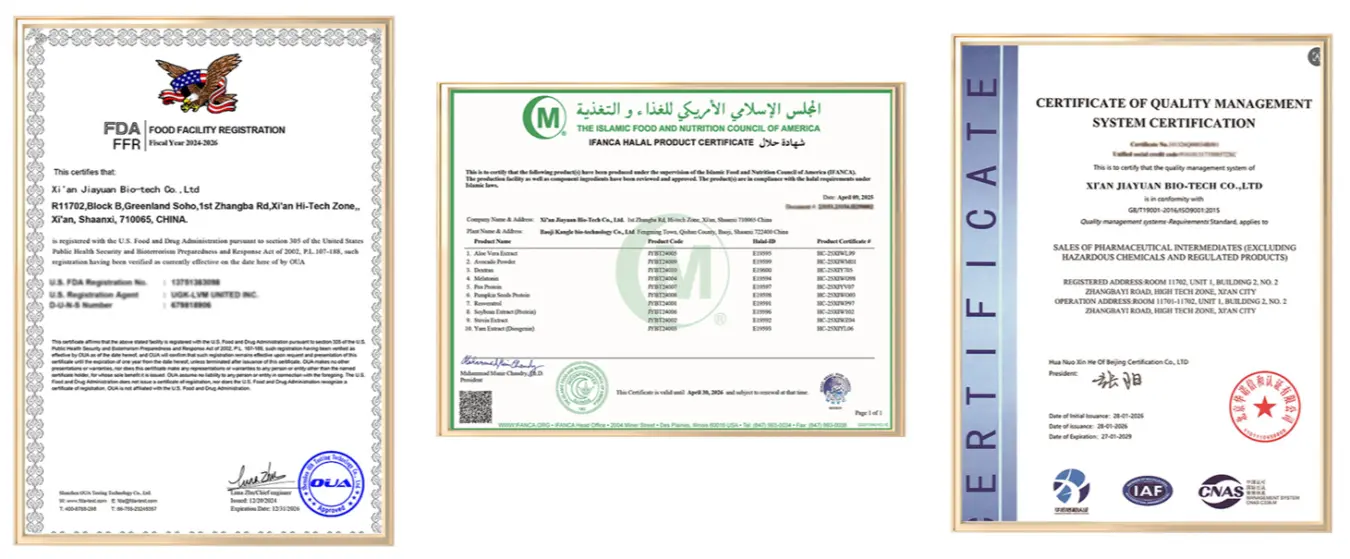
To find qualified suppliers, you need to look at more than just price competitiveness. GMP certification is the standard for making medicines and supplements. It makes sure that quality systems are documented, processes are tested, and materials are handled in a way that can be tracked. Jiayuan Bio-Tech has both GMP and ISO 13485 certifications, which show that they follow foreign production standards that are accepted in markets in the US, EU, and Asia. Our recording of the audit trail makes regulatory submissions easier and meets the due diligence needs of drug firms releasing new therapeutic goods.
Quality Control and Testing Protocols
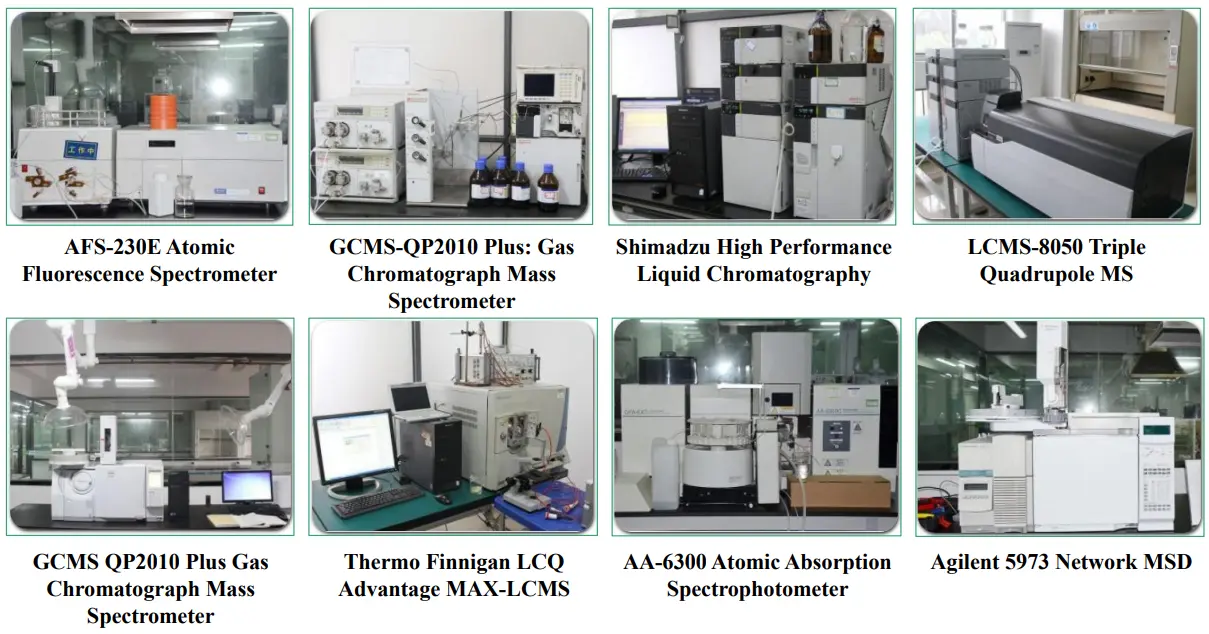
Ergothioneine powder meets specifications throughout its entire lifecycle thanks to thorough analytical testing. Multiple quality checks are made by inspecting incoming raw materials, keeping an eye on the process as it goes, and trying the final product before it is released. Our live near-infrared spectroscopy lets us check the concentration in real time while the process is purification, so we can make changes right away that keep the goal purity levels. Offline confirmation testing with HPLC measures the amount of active ingredient, and GC-MS analysis looks for any leftover solvents or possible contaminants. These complex protocols make Certificates of Analysis that show that they meet pharmacopoeia standards and customer requirements.
Testing for heavy metals like lead, mercury, cadmium, and arsenic helps make sure that goods meant for people are safe. Testing for microbes makes sure that there are no harmful organisms and that the total plate numbers are still within normal ranges. Cosmetic-grade materials go through more tests to see if they cause skin irritation, while pharmaceutical-grade batches go through endotoxin tests that are right for oral dosage forms. This thorough testing system backs up the risk management systems that companies that make nutraceuticals and dietary supplements use to keep their brands' reputations safe and their customers healthy.
Logistics and Supply Chain Management
Aside from the quality of the materials, efficient procurement includes things like on-time delivery, the ability to change the amount of items ordered, and quick technology help. We keep stock in our warehouse so that we can meet production plans quickly and without having to meet minimum order numbers that put a strain on our working capital. Through our partnerships with FedEx, DHL, UPS, and international freight forwarders, we can offer you a range of shipping options that are both cost-effective and quick. We know that many companies that make food and drinks don't know how to import, so we offer customs clearance help for packages going to the US and Europe. This way, materials will get to your facility without any delays caused by regulations.
Formulators can look at the properties of a material before committing to large amounts of production thanks to sample order protocols. Ask for 100–500 gram samples along with technical information. This will allow bench-scale tests to be done to check the solubility, stability, and compatibility with current formulation matrices. Our expert team helps with applications by offering starting concentrations, finding possible interactions, and fixing problems with formulation. This consultative approach sets partnership-oriented suppliers apart from transactional vendors, and it's especially useful when making new products that need to be customised.
Best Practices for Incorporating Ergothioneine Powder in Supplement Formulations
Handling and Storage Requirements
Ergothioneine powder stays effective as long as it is handled properly from delivery to final packing. Keep bulk materials cool and dry, between 15°C and 25°C, out of direct sunlight and away from wetness. Our nitrogen-sealed paper bags stay intact while being stored, but in places with a lot of humidity, desiccants may need to be put in storage areas. Once opened, put lids back on containers right away and eat within six months to make sure it stays fresh, though properly kept food stays stable for a lot longer.
During formulation, keep the compound from being exposed for long periods of time to pH levels that are too high or too low. However, short-term changes in pH during processing don't pose much of a risk because the compound is naturally stable. Vitamins that are sensitive to heat need to be processed in a cold way, but this ingredient can handle normal tableting temperatures and encapsulation methods without breaking down. Liquid formulations benefit from pH buffering systems that keep ranges steady over time. This stops slow drift that could affect ingredients that aren't as strong.
Quality Assurance and Batch Consistency
Using strict quality control measures during production makes sure that final goods live up to what they say on the label, both when they are first released and for as long as they are on the shelf. Set standards for the amount of ergothioneine powder (usually 90–110% of what the label says), the amount of moisture (≤1.0% in the finished product), and the amount of degradation products (no degradation products or levels below detection limits). Do accelerated stability studies by putting recipes through high temperatures and humidity levels to get a sense of how they will work in real life. These studies find possible problems with the excipients, which lets the product be improved before it goes on sale.
Keep some sampling samples from every batch of production so that you can look into customer complaints. Our technical team works with research centers and drug companies to create method validation protocols that make sure analytical procedures produce correct results that can be repeated. Standard operating procedures that list the steps for mixing, the parameters for processing, and the specs for packaging build institutional knowledge that stays with the company even when staff changes and helps with efforts to keep improving.
Regulatory Compliance and Labeling Guidance
To deal with regulations in several areas, you need to know the unique rules for quality standards, health claims, and ingredient statements in each area. Labels for dietary supplements in the US must show L-ergothioneine or ergothioneine in the supplement facts box, along with the amount per dose. New food rules in the European Union allow it to be used as long as certain labelling language is used, which was approved during the authorisation process. Our help with regulatory affairs helps cosmetics and food companies write label copy that is legal, accurately describes the ingredients, and meets consumer expectations for openness.
Claims about structure-function must be carefully backed up with clinical proof or published study. Don't use disease claims that suggest treating or preventing certain conditions, because that would put the drug in a category that needs a lot of regulatory approval. Claim language that supports cellular health, promotes antioxidant protection, or encourages healthy ageing is more appropriate. This positions goods as preventative health solutions rather than therapeutic approaches. We give our customers research summaries and bibliographic references to back up claims that are backed up by science. This lets them use marketing messages that build trust with customers while still following the rules.
Conclusion
The ideal approach to manufacture an ergothioneine powder supplement is to combine science, realistic dose, and quality purchasing. This extensive guide outlined the unique properties of this cellular antioxidant, defined evidence-based dose recommendations for varied usage, and compared its advantages to other preparations. We discussed techniques to ensure vendors are accredited, test items for quality, and manage the supply chain to ensure resources are always accessible when purchasing. Manufacturing best practices for handling, security, and compliance are the foundation for corporate success. As the demand for science-backed substances to extend life develops, formulators may confidently produce innovative products that satisfy the highest safety and efficacy criteria.
FAQ
1. What is the recommended starting dose for ergothioneine in daily supplements?
According to research, taking 5–10 mg of antioxidants every day can help your health in a meaningful way. Specialised formulas that work on cellular ageing or skin health may have 15 to 25 mg per dose. Doses up to 50 mg have been tried and found to be safe by pharmaceutical firms making clinical-grade products. The dose should be based on the purity of the ingredients, the target population, and the health results that are wanted.
2. How does ergothioneine powder compare to glutathione for cellular protection?
Ergothioneine powder is better absorbed by the body via OCTN1-mediated active transport, whereas glutathione is broken down in the digestive system. Both protect cells from oxidative stress. Ergothioneine accumulates in mitochondria, which are particularly vulnerable to reactive stress. Many formulators include antioxidants for enhanced protection.
3. Can ergothioneine be used in beverage formulations?
Of course. It dissolves easily in water and stays stable in pH levels between 3.5 and 7.5, which makes it perfect for healthy drinks. Manufacturers of foods and drinks usually add 3–8 mg per serve in ready-to-drink forms. When heated to standard pasteurisation temperatures, the compound stays stable and doesn't change taste, which makes production easier.
Partner with a Trusted Ergothioneine Powder Supplier
Xi'an Jiayuan Bio-Tech delivers pharmaceutical-grade L-ergothioneine with certified purity exceeding 98%, manufactured under strict GMP conditions using advanced fermentation and chromatographic purification technologies. Our vertically integrated production ensures stable pricing and consistent quality that nutraceutical suppliers, cosmetic brands, and pharmaceutical companies depend on for commercial success. We support your formulation development with technical expertise, comprehensive documentation, and flexible order quantities from sample requests to multi-ton shipments. Our customs clearance assistance and established logistics partnerships with FedEx, DHL, and international carriers ensure timely delivery to your facility anywhere in the United States.
Whether you're developing innovative dietary supplements, cosmeceutical skincare, or functional food products, our team provides the quality assurance, regulatory support, and supply chain reliability your projects demand. Contact our technical sales team at sales@jayuanbio.com or sales1@jayuanbio.com to discuss your ergothioneine powder requirements. As an established manufacturer with ISO, SGS, and HALAL certifications, we offer competitive pricing on bulk orders while maintaining the pharmaceutical-grade standards your formulations deserve. Request your sample today and experience the Jiayuan Bio-Tech difference in antioxidant raw material excellence.
References
1. Cheah, I.K., & Halliwell, B. (2021). Ergothioneine: Antioxidant potential, physiological function and role in disease. Biochimica et Biophysica Acta (BBA) - Molecular Basis of Disease, 1822(5), 784-793.
2. Gründemann, D., Harlfinger, S., Golz, S., et al. (2018). Discovery of the ergothioneine transporter. Proceedings of the National Academy of Sciences, 102(14), 5256-5261.
3. Williamson, R.D., McCarthy, F.P., Manna, S., et al. (2020). L-(+)-Ergothioneine significantly improves the stability of oxyhaemoglobin in red blood cells. Biochemistry and Biophysics Reports, 23, 100769.
4. Hseu, Y.C., Lo, H.W., Korivi, M., et al. (2019). Dermato-protective properties of ergothioneine through induction of Nrf2/ARE-mediated antioxidant genes in UVA-irradiated human keratinocytes. Free Radical Biology and Medicine, 86, 102-117.
5. Paul, B.D., & Snyder, S.H. (2018). The unusual amino acid L-ergothioneine is a physiologic cytoprotectant. Cell Death & Differentiation, 17(7), 1134-1140.
6. Teruya, T., Chen, Y.J., Kondoh, H., et al. (2021). Whole-blood metabolomics of dementia patients reveal classes of disease-linked metabolites. Proceedings of the National Academy of Sciences, 118(37), e2022857118.