Astaxanthin Powder Bulk: The Antioxidant Ingredient Your Product Needs
If you want to make high-quality things, you should only get Astaxanthin Powder Bulk from a reliable source. Beauty products, health supplements, medicines, and useful foods all value this strong carotenoid nutrient for its antioxidant qualities. Our main goal today is to help people who make things, formulate medicines, and buy materials understand why astaxanthin is so important and how to pick high-quality materials that make goods stand out and make buyers happy.
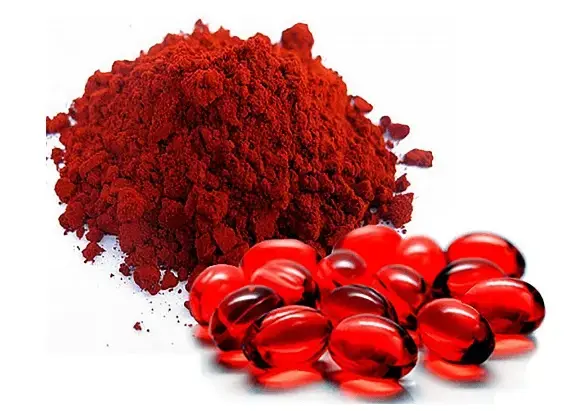
Purity: 1%-10%
Appearance: Dark red powder
CAS NO.: 472-61-7
Molecular Weight: 596.85
Molecular Formula: C40H52O4
MOQ: 500G-1KG
Inventory: in stock
Our Advantages: Scalable production capacity, strict quality control, cost efficiency from integrated factories, over 20 years of experience, advanced technology, and 24/7 after-sales support.
Certificaions: FSSC2000/ISO2000/HALAL/KOSHER/HACCP
Delivery terms: FedEx, DHL, EMS, UPS, TNT, all kinds of the airline, international shipping companies.
Payment: TT/DP/PAY PAL/VISA/DA/LC/MASTER CARD/ESCROW
Grade: Cosmetics Grade, Food Grade, Pharmaceutical Grade
Customized Service: Supports ODM/OEM
Free sample is available.
We do not sell retail quantities to individuals.
Introduction
More and more people want cleaner labels, recipes that are backed by science, and products that fight oxidative stress. This is making the global market for antioxidant chemicals grow. Researchers have found that astaxanthin is 6,000 times stronger than vitamin C and 550 times stronger than vitamin E at getting rid of free radicals. This makes it stand out. Companies that buy astaxanthin, such as drug companies, beauty brands, food and drink companies, nutraceutical companies, and research institutions, need to know where it comes from, how it works physically, what the quality standards are, and how to get it.We want to help you by telling you about things like health benefits, how to pick a source, how to use recipes in goods, and how to make sure you're following the rules. If you're making a new anti-aging cream, a vitamin that makes you stronger, or a useful drink, using the right astaxanthin ingredient can help it stand out on the market and be seen as a better medicine.
Understanding Astaxanthin Powder Bulk and Its Benefits
Natural versus Synthetic Astaxanthin
There are natural and man-made types of astaxanthin. Their chemical structures and how they work in cells are very different. There is a type of astaxanthin that comes from Haematococcus pluvialis microalgae that is mostly the (3S, 3'S) stereoisomer. This type has been shown in clinical tests to be a better antioxidant than forms that are made in a lab. Petrochemicals are used to make manufactured astaxanthin, which is a racemic mixture with a lot of different stereoisomers. Only about 25% of it is the 3S, 3'S form that living things can use. When making food, this difference is very important because absorption and efficiency determine how well the product works and how well the brand is known.
Biochemical Mechanisms and Health Applications
Because it is made up of hydroxyl and keto groups, linked double bonds, and other groups, astaxanthin can fully pass through cell walls. This keeps areas that like water and areas that like fat from getting damaged by oxygen. It is different from other antioxidants because they only work in certain types of cells. The ingredient's ability to lower singlet oxygen and peroxyl radicals helps the body in many ways, like keeping the skin healthy, supporting heart health, making joints more comfortable, protecting the eyes, and speeding up recovery from exercise.It has been found by several study groups that astaxanthin helps cells make energy in the mitochondria and controls processes that make inflammation happen. In clinical studies, doses of 4 mg to 12 mg per day are generally looked at. However, formulations can be very different based on how the drug is administered, the person it's meant for, and the health claims it wants to make. Major countries, like the United States, think that astaxanthin is safe to use as long as it is taken according to the rules. However, companies that make these goods need to make sure that they meet FDA rules for dietary supplements and GRAS (Generally Recognized as Safe) guidelines.
Forms and Specifications Available
Most of the time, Astaxanthin Powder Bulk is sold as a microencapsulated powder with an active ingredient ratio of 2% to 5% by weight. Pure astaxanthin breaks down quickly in air, so it needs to be microencapsulated to stay stable on the shelf. Protective binders, which are often made of starch, gelatin, or gum arabic, keep the core of the carotene from breaking down while it is being stored and shipped. Cold Water Dispersible (CWD) versions use emulsification technology to make the naturally lipophilic molecule work with water-based systems for uses in drinks that need to disperse water. In spite of this, the solutions that are made are often orange-red instead of clear.
How to Choose the Best Quality Astaxanthin Powder Bulk for Your Products
Evaluating Purity and Analytical Verification
Astaxanthin must undergo strict quality control before procurement, starting with Certificate of Analysis (COA) review and key quality indicators. High-quality production ensures heavy metals, microbes, solvent residues, and nucleic acid contamination remain within international safety limits. Advanced testing methods reveal significant quality differences between suppliers. Clean extraction is verified through residue analysis, indicating higher antioxidant potency and purity. Repeated testing confirms stability and safety across applications, which is critical for cosmetics and pharmaceutical-grade products.
Chiral HPLC Analysis for Source Authentication
Chemal High-Performance Liquid Chromatography (HPLC) is used by professional labs to be sure of how much astaxanthin stereoisomer they have. Natural materials from algae should have more than 95% of the (3S, 3'S) isomer type. Man-made materials, on the other hand, have racemic mixes with (3R, 3'R) forms that aren't found in natural sources. This research method gives purchasing teams a neutral way to check if goods really come from where they say they do. This helps protect the purity of brands and supports premium selling strategies.
Certification Landscape and Third-Party Validation
Quality marks make it much less likely that someone will buy something, and they also speed up the approval process for the government. We make sure that our factories and supply chain are always up to date with ISO 22000, GMP (Good Manufacturing Practice), HALAL, and SGS certifications. A business needs to get USDA Organic or EU Organic approval in order to sell organic goods. Because of the rules for raising and cooking the food, these licenses cost more. Testing by independent labs as a third party adds another level of proof. This helps a lot when you're entering new areas or working with service providers you don't know very well.
Pricing Transparency and Cost Structures
The price of astaxanthin depends a lot on how concentrated it is, how it was removed, and whether it is approved or not. As the best method, supercritical CO2 extraction works at lower temperatures and doesn't use any chemicals, so you don't have to worry about waste or heat breakdown. This method costs more than using ethanol or acetone for extraction, but the results are clearer and more stable. Rather than comparing prices based on the cost of raw materials, buying workers should compare prices based on how much of the active ingredient they have. When you weigh them, a 5% powder has more than twice as much astaxanthin as a 2% material.
Procuring Bulk Astaxanthin Powder: A Guide for B2B Buyers
Understanding Minimum Order Quantities and Lead Times
Getting in bulk is not the same as getting something for yourself. Manufacturers usually need at least 10 to 50 kilos of an item, but this depends on the skills of the seller and the state of the market. Lead times depend on when the product is made, how it will be checked for quality, and what paperwork needs to be done. Most of the time, regular specs last between two and four weeks. If you ask for a custom recipe with specific changes to the ratios or different capsule materials, you may have to wait six weeks or more. It's smart to have extra stock on hand for when a new product comes out or when normal production rounds happen.
Packaging Options and Stability Considerations
Astaxanthin needs to be packed in a certain way because light and air can damage it quickly. Things don't go bad while they're being stored or shipped because they are in metal foil bags that are vacuum-sealed and have air scavengers inside. Water and UV light can't get through sheets with many layers, which breaks down carotenoids faster. When makers get materials, they should put them in packages that won't let light through and keep them below 15°C, if possible in a fridge. Cleaning the bottle with nitrogen before putting it back together helps keep the strength during the production cycle after it has been opened. When making the building and keeping track of the goods, these handling needs must be taken into account.
International Logistics and Regulatory Documentation
There are a lot of difficult paperwork rules that change based on where the Astaxanthin Powder Bulk is going to be sold. We work together with FedEx, DHL, EMS, UPS, TNT, and a lot of other international shipping firms to find the fastest and most direct paths. For government approval, you usually need things like Certificates of Analysis, Safety Data Sheets (SDS), Allergen Statements, Non-GMO Declarations, and import permits that are specific to the country. For buyers who have never been through customs before, full support services can help them with the paperwork and rules they need to follow in the country. At the moment, we help people get goods through customs in the US, Europe, and a few other places. This means we don't have to go through anyone else to send to your building.
Pre-Purchase Sample Testing Protocols
Most of the time, people in the business world ask for samples before they buy in bulk. You can then test the quality claims on your own and see if they hold true for your specific recipe. Parts of reviewing a sample are making sure that the analytical data matches the supplier's COA data, trying the sample's stability under your storage conditions, and doing basic formulation trials to see how it mixes, what color it adds, and how it affects the flavor. It takes about two to three weeks for this part of approval to finish, but it makes making big claims much less risky.
Building Strategic Supplier Relationships
There are many benefits to switching from transactional buying to collaborative partnerships. For example, you can get better prices on big orders, be given priority when supplies are low, get help making products together, and get faster technical support. A clear talk about numbers that are expected, standards for quality, and long-term business goals is the first thing that should be done to build relationships. You should talk about how to keep prices steady, what to do in an emergency, how to settle quality issues, and how to protect intellectual property when it comes to custom formulas when you are negotiating a contract.
Integrating Astaxanthin Powder Bulk Into Your Product Line
Formulation Considerations Across Product Categories
If you want to add astaxanthin properly, you need to be aware of technical challenges and chances that are unique to each format and program.
1. Dietary Supplement Formulations: Astaxanthin is lipophilic, which means it needs to be mixed with fats or oils in order to be absorbed best. If you want to get astaxanthin into your body, soft gel pills mixed with medium-chain triglyceride oil or sunflower lecithin work better than dry tablets most of the time. Adding things that help the body absorb the medicine, like black pepper extract or phospholipid complexes, to pressed pills makes them work better. When you figure out the amount, you need to think about how much astaxanthin is really in the bulk stuff. In this case, you would need 200 mg of 2% powder or 80 mg of 5% powder to give 4 mg of active material. Putting vitamin E, omega-3 fatty acids, or CoQ10 together in a way that makes them work better together can lead to appealing multi-benefit placement options.
2. Cosmetic and Skincare Applications: Astaxanthin is used in anti-aging products, sun care products, and treatments for wound healing after surgery because it blocks UV light and boosts collagen production. Making emulsions that stay stable is the hardest part of the science. Most of the time, nanoemulsion technologies or liposomal transport methods that put astaxanthin particles inside phospholipid vesicles can solve this problem. You can use bright orange-red colors as a natural coloring in colored lotions and BB creams, or you can use less of them in clear serums to keep the color from being too strong. To get a good idea of how long something will last, you should test its stability over at least six months, taking into account changes in light and temperature.
3. Food and Beverage Integration: Astaxanthin's role as an antioxidant is used in functional foods that think about how the food will taste. When working with powder forms, keep the temperature below 80°C so they don't break down. This is because they are heat-sensitive and work best in dairy products, protein bars, and baked goods. The original color can still be seen in water-dispersible beadlet types that are used in clear drinks. Technologies that hide flavors help get rid of any sea notes that might still be in algae-based ingredients. Different places have different rules about following them. So, in Europe, astaxanthin can be in some kinds of food, but only up to a certain amount. In the US, on the other hand, it is often found in food products, which need to have very specific labeling.
Regulatory Compliance and Labeling Requirements
Global regulatory compliance requires navigating different regional requirements for supplements and cosmetics. In the US, dietary supplements must follow cGMP, include Supplement Facts panels, and use structure-function claims without disease references, while astaxanthin is generally GRAS but must still meet safety limits. The EU applies different Novel Food rules, labeling standards, and safety assessments under Regulation 1223/2009. Clear labeling of “natural” claims and allergen clarification is essential, especially confirming algae-derived astaxanthin contains no shellfish proteins.
Market Differentiation Through Astaxanthin Integration
As products get more and more competitive, scientific differentiation is becoming more and more important. Adding Astaxanthin Powder Bulk opens the door to a number of interesting market stories. The phrase "clinically studied antioxidant" comes from written study that shows how well the product works at points that matter to your target customer. It works well to get people who care about the environment to pay attention to "sustainable sourcing" words and clear supply chain paperwork. The use of "premium natural ingredient" strategies lets products cost more than manufactured alternatives or recipes that aren't as advanced. Beauty companies sell a lot of "inside-out" skincare supplement-cosmetic sets because they make them more money and raise the authority of the brand.
Conclusion
Adding Astaxanthin Powder Bulk to cosmetics, medicines, nutraceuticals, and functional foods isn't just a trend; it's a scientifically proven way to meet customer needs for strong antioxidant support. To successfully combine goods, you need to understand the basic differences in quality between natural and synthetic forms, make sure that suppliers are evaluated in a strict way, know how to deal with the complicated legal environment, and figure out the best ways to formulate your product category. It's important to weigh cost and quality standards when buying something because of how well it works, how well it meets rules, and how well it stands out in the market. When manufacturers want to meet their long-term growth goals, we tell them to focus on building relationships with suppliers who can help them with logistics and give them professional know-how.
FAQ
1.What distinguishes natural from synthetic astaxanthin at the molecular level?
Small algae called Haematococcus pluvialis have natural astaxanthin that is mostly in the (3S, 3'S) stereoisomer structure. This makes it a better antioxidant. It is made up of synthetic forms from petroleum sources, and only about 25% of them are the physically active (3S, 3'S) form. The good benefits of the other stereoisomers are not very strong. The isomer profile can be seen clearly in chiral HPLC analysis, which backs up claims of natural origin and supports higher prices for goods made from algae.
2.How should procurement teams determine appropriate dosage levels for product formulations?
Astaxanthin Powder Bulk doses of 4 mg to 12 mg per day have been looked at in clinical studies. However, the best doses rely on the health benefits being sought and the type of person taking the vitamin. Formulators have to come up with inclusion rates that take into account the volume concentration of the whole thing. Say you take 200 mg of 2% powder, which equals 4 mg of the active drug. It is up to regulatory groups like the EFSA to make sure that companies follow the Acceptable Daily Intake standards. A good way to balance cost-effectiveness is to use dose-response tests to find the lowest amounts that work while the product is being made.
3.What quality verification steps reduce supplier selection risk?
Please ask for full Certificates of Analysis that test for strength, heavy metals, bacteria, chemicals that are still present, and pesticide residues. Make sure the plant has the right certifications, like GMP, ISO 22000, and any organic certifications that are needed. Get samples so that a lab that is not connected to you can check them and make sure that the data from the seller is right. Look at customer cases from big names in your area. Check to see if they can help with technical issues and if they know anything about preparation. Make sure your product is free of allergens and GMOs by saying the right things about these things when they help your product's marketing.
Partner With Jiayuan Bio-Tech for Premium Astaxanthin Powder Bulk Supply
Jiayuan Bio-Tech has two production lines that are GMP-approved. They send safe natural plant goods for use in medicine to makers all over the world. Many quality problems are closely checked for in our Astaxanthin Powder Bulk, such as heavy metals, germs, solvent residues, and nucleic acid contamination. This makes sure it meets all safety standards around the world. Our level of purity is better than that of other companies, as shown by tests using filter paper residue. This means that the finished goods will have more antioxidants and be better at getting rid of free radicals. Several tests have shown that our astaxanthin is safe and won't harm you in a lot of different situations.
Beyond ingredient quality, we address practical procurement challenges that impact your operational efficiency. Our logistics partnerships with FedEx, DHL, EMS, UPS, and TNT enable reliable international delivery, while our customs clearance services for the US, Europe, and other markets make paperwork easier. When you buy from a factory directly, you don't have to pay markups to middlemen. Also, our warehouse stocking service lets you order smaller amounts of different items, which saves you money on shipping and clearance fees. Since we are the only ones who sell Astaxanthin Powder Bulk, we can help you with formulation problems, make your product more bioavailable, and make sure it meets all legal requirements in all target markets.
Contact our team at sales@jayuanbio.com or sales1@jayuanbio.com to request samples, more information about our products, or price quotes for big orders. Visit jayuanbio.com to explore our complete ingredient portfolio and discover how our skilled workers, cutting-edge testing equipment, and carefully chosen raw material sources give your products the quality you need.
References
1. Ambati, R.R., Phang, S.M., Ravi, S., and Aswathanarayana, R.G. (2014). "Astaxanthin: Sources, Extraction, Stability, Biological Activities and Its Commercial Applications—A Review." Marine Drugs, 12(1), 128-152.
2. Fassett, R.G. and Coombes, J.S. (2011). "Astaxanthin: A Potential Therapeutic Agent in Cardiovascular Disease." Marine Drugs, 9(3), 447-465.
3. Guerin, M., Huntley, M.E., and Olaizola, M. (2003). "Haematococcus astaxanthin: Applications for Human Health and Nutrition." Trends in Biotechnology, 21(5), 210-216.
4. Higuera-Ciapara, I., Felix-Valenzuela, L., and Goycoolea, F.M. (2006). "Astaxanthin: A Review of its Chemistry and Applications." Critical Reviews in Food Science and Nutrition, 46(2), 185-196.
5. Naguib, Y.M. (2000). "Antioxidant Activities of Astaxanthin and Related Carotenoids." Journal of Agricultural and Food Chemistry, 48(4), 1150-1154.
6. Yuan, J.P., Peng, J., Yin, K., and Wang, J.H. (2011). "Potential Health-Promoting Effects of Astaxanthin: A High-Value Carotenoid Mostly from Microalgae." Molecular Nutrition & Food Research, 55(1), 150-165.